Quick summary
Inside a drone soccer ball is a small FPV-style electronics stack protected by a spherical cage. At minimum you will find a flight controller, an electronic speed controller (ESC), a brushless motor, a battery, a radio receiver, status LEDs and a power connector. Some balls add a video transmitter and camera. The flight controller is the computer: it reads the gyroscope, calculates corrections and sends commands to the ESC, which drives the motor. The receiver links the ball to the pilot’s radio. These parts work together to make the ball hover, spin and steer during a match.
Key Takeaways
- A drone soccer ball is an FPV electronics stack inside a protective cage, not a toy-grade circuit.
- The core components are flight controller, ESC, motor, battery, receiver, LEDs and wiring.
- The flight controller is a computer that reads sensors and commands the ESC to control motor thrust.
- Firmware such as Betaflight runs on many flight controllers and supports multiple receiver and ESC protocols.
- When buying for a club or school, confirm exact electronics, spares and traceability in writing with your supplier.
What Is a Drone Soccer Ball?
A drone soccer ball, often called a BKZ ball, is a small quadcopter enclosed in a rigid spherical cage. Players fly it through hoops to score. Because the ball must survive impacts, the electronics sit inside a frame designed to absorb bumps rather than on an open carbon plate.
The term BKZ originates from the Korean drone soccer format and is widely used in school and club programs. If you are procuring for a team, treat the ball as a repairable electronics product, not a sealed disposable item.
The Core Electronics Inside a Drone Soccer Ball
Most drone soccer balls share the same functional blocks. The exact boards and ratings vary by manufacturer and model, so always ask for a component list before ordering a fleet.
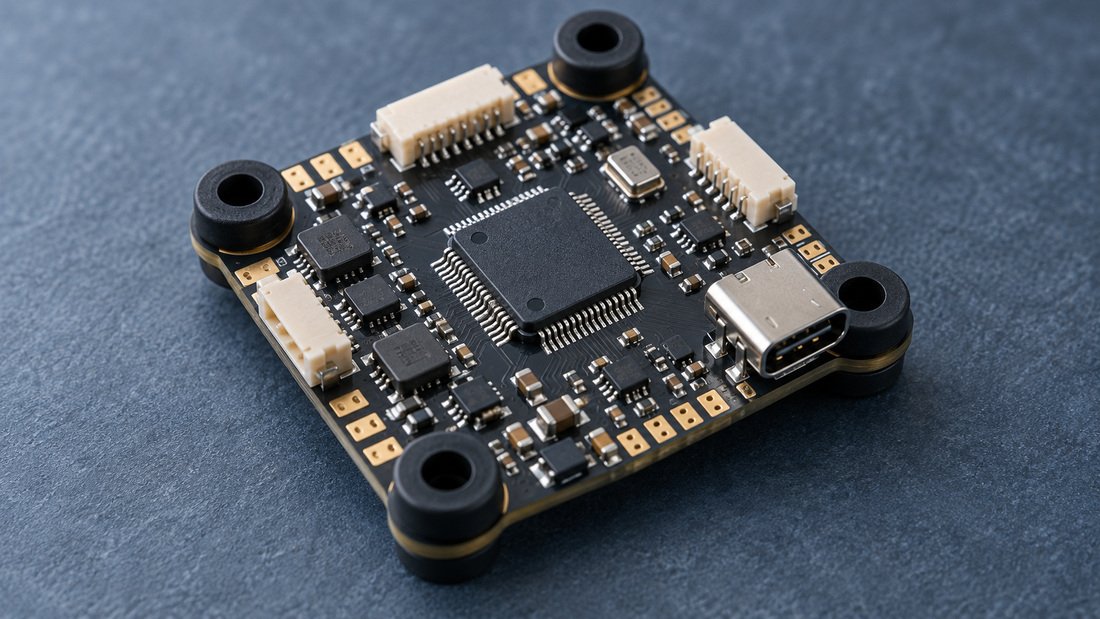
Flight Controller
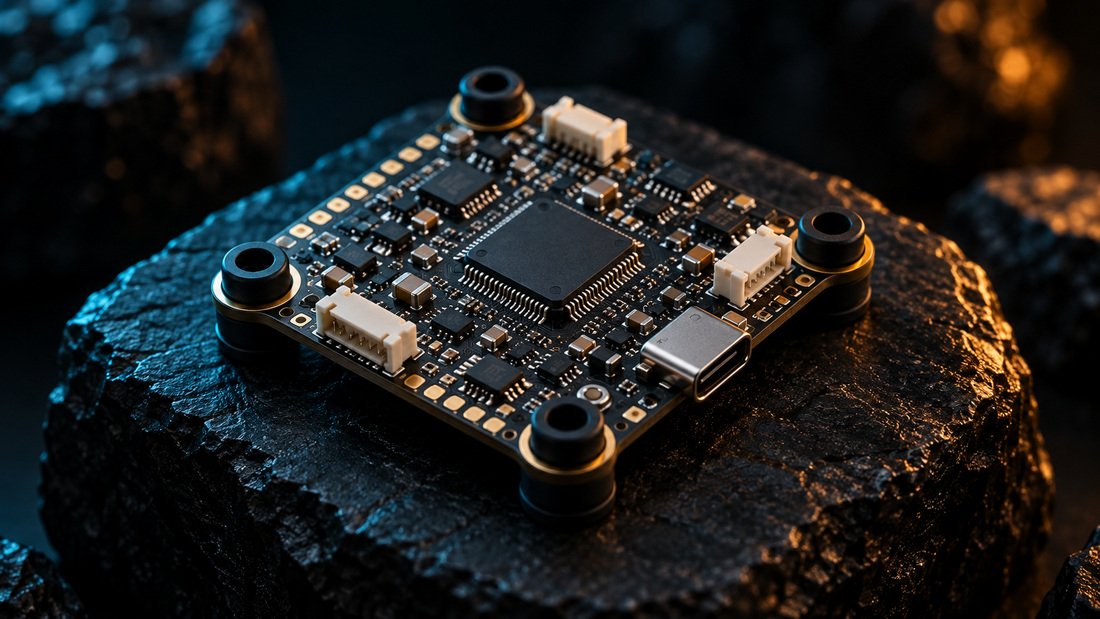
The flight controller (FC) is the central computer. According to the Betaflight documentation, a flight controller “is basically a computer that reads the sensors (gyro, accelerometer, GPS, etc.), computes the desired actions to take, sends the commands to the ESC to control the motors, generate thrust, and keep the quadcopter in the air” (Betaflight, Getting Started).
In a drone soccer ball the FC handles stabilisation, motor mixing and often LED or telemetry output. It is also the board you flash firmware onto. You can explore DPF’s flight controllers to see how these boards are typically laid out.
Electronic Speed Controller (ESC)
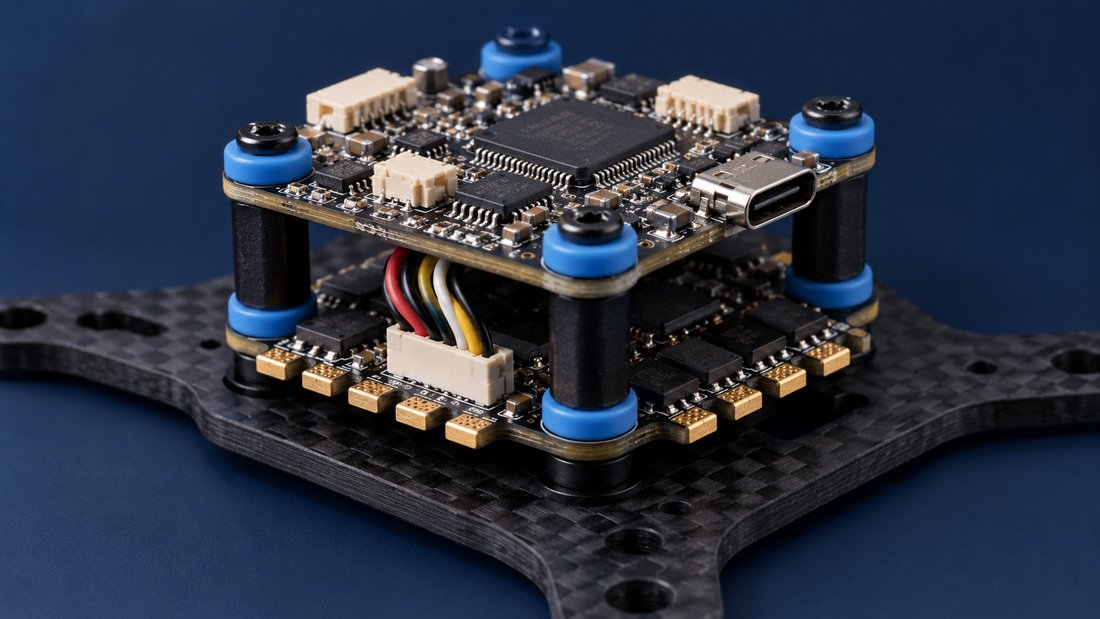
The ESC converts low-voltage control signals from the FC into the timed power pulses that spin the brushless motor. Betaflight’s documentation notes that it “supports a wide variety of ESC protocols. The main one used on nearly everything is DShot, but there are also other protocols like Oneshot, Multishot, and even PWM” (Betaflight, Getting Started).
Drone soccer balls are usually single-motor designs, so the ESC may be a small standalone board or integrated into a 4-in-1 stack. See DPF’s electronic speed controllers for the general categories.
Brushless Motor
A single brushless motor provides lift and thrust. Unlike a racing quadcopter, the ball motor is tuned for durability and predictable response rather than top speed. Motor size, KV rating and propeller or impeller design determine how the ball feels to a young pilot.
Radio Receiver
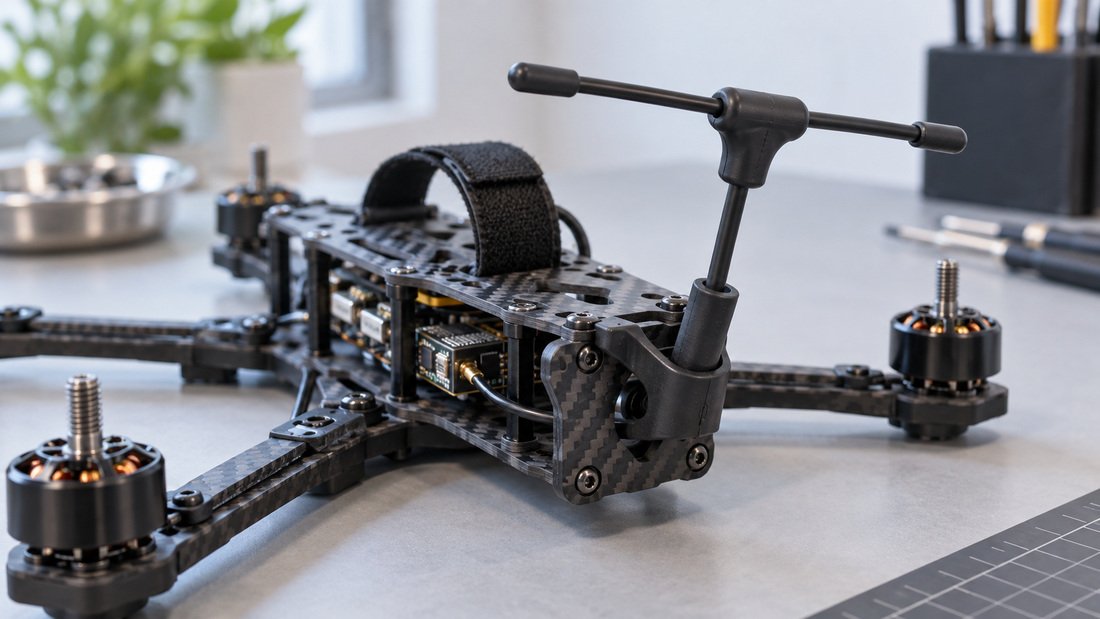
The receiver translates the pilot’s radio commands into a signal the FC understands. Betaflight lists supported protocols including “CRSF, Ghost, FPort, SBUS, Spektrum, and more” (Betaflight, Getting Started). Many modern drone soccer programs use ExpressLRS (ELRS), a long-range open-source radio link. DPF lists FPV electronics covering receivers and related components.
Battery and Power Distribution
A lithium-polymer (LiPo) battery powers the ball. Capacity, cell count and connector type affect flight time and weight. Power distribution may be a simple wired harness or a small board. Battery safety training should be part of any youth program.
LEDs and Status Indicators
LEDs show battery level, flight mode or team colour. Betaflight notes that with a standard WS2811 LED strip you can “even use the LEDs to display flight information, like battery level warnings, flight mode, status for troubleshooting, and more” (Betaflight, Getting Started). In drone soccer, LEDs also help spectators and referees follow the ball.
Optional Video and Telemetry
Some balls include a camera and video transmitter (VTX) for first-person view. If your program uses video, you will also need FPV video receivers on the ground and possibly an FPV DVR for review or training. Confirm whether your chosen ball model actually includes video before budgeting for ground equipment.
How the Electronics Work Together
The sequence is simple to describe even if the tuning is not. The pilot moves a stick. The radio sends a signal to the receiver. The receiver passes commands to the FC. The FC compares those commands with gyro data and calculates how much thrust the motor needs. It sends that command to the ESC, which pulses the motor. The ball moves, the gyro senses the change, and the loop repeats hundreds of times per second.
Betaflight describes this loop as reading sensors, computing desired actions, sending commands to the ESC to control the motors, and keeping the craft in the air (Betaflight, Getting Started). Understanding this chain helps coaches diagnose problems: if the ball drifts, the issue could be in the FC tune, the ESC, the motor, the receiver or the mechanical frame.
Drone Soccer Ball Electronics vs Standard FPV Quad Electronics
The table below compares general characteristics. It is a conceptual guide, not a specification for any particular product.
| Feature | Drone soccer ball | Standard FPV quadcopter |
|---|---|---|
| Enclosure | Spherical protective cage | Open frame or enclosed canopy |
| Motor count | Usually one motor | Typically four motors |
| Flight controller | Small FC, often shared with micro quads | Full-size or micro FC depending on class |
| ESC | Single-channel or integrated | 4-in-1 or individual ESCs |
| Receiver | Compact receiver, often ELRS | Wide protocol choice |
| Video | Optional on some models | Common on most builds |
| Primary goal | Durability, safety, repeatable team play | Speed, agility, camera quality |
Because drone soccer is a team sport, procurement is usually about consistency across many balls rather than peak performance in one. If you are sourcing electronics for a program, DPF can discuss club and education requirements through our quote request channel.
Common Mistakes When Evaluating Drone Soccer Ball Electronics
- Assuming all balls are identical. Electronics vary widely between brands and even between versions of the same model.
- Ignoring spares. A club with 20 balls needs spare ESCs, motors, receivers and batteries, not just complete units.
- Mixing firmware assumptions. Do not assume a ball runs Betaflight just because it uses similar hardware; confirm the firmware with the supplier.
- Overlooking radio compatibility. If your team already owns radios, confirm the receiver protocol and frequency match before buying new balls.
- Skipping battery safety. LiPo handling, charging and storage rules should be written into program policy.
- Buying on unit price alone. Total cost of ownership includes spares, tools, training and repair labour.
Buyer Checklist for Schools, Clubs and Distributors
Use this list when requesting information or samples. Ask for written confirmation on each point.
- Component list: flight controller model, ESC rating, motor specification, receiver protocol, battery type and connector.
- Firmware: which firmware ships on the flight controller and whether updates are supported.
- Radio compatibility: frequency band, protocol and binding procedure.
- Spare parts availability: individual boards, motors, batteries, cages and propellers.
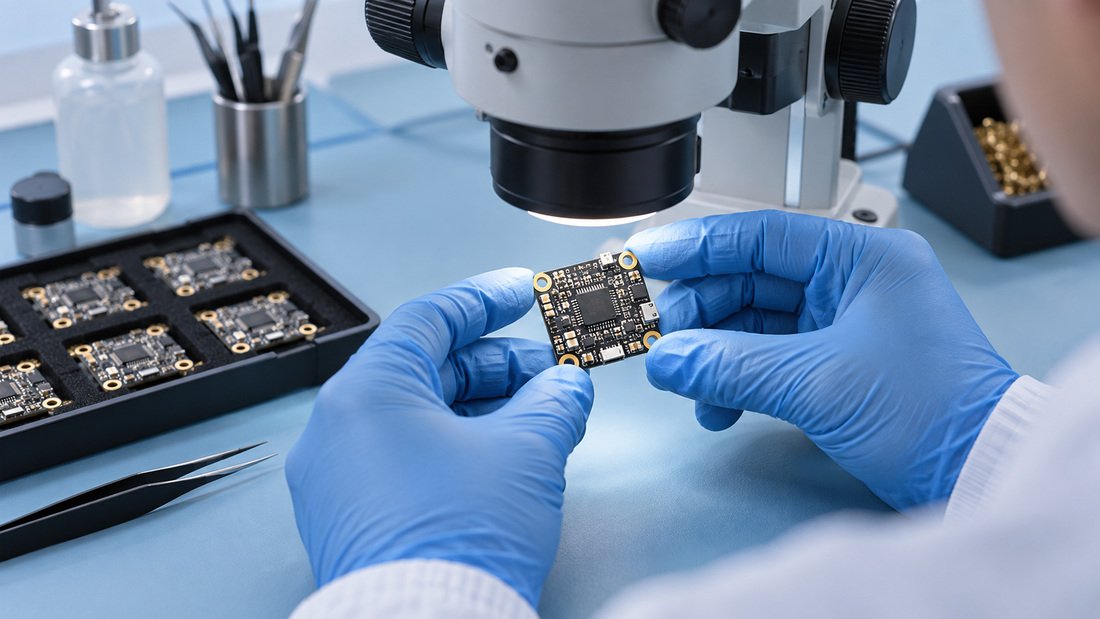
- Repair documentation: wiring diagrams, board layouts and torque or mounting guidance.
- Compliance and safety: battery transport documentation and any applicable regional rules you must verify yourself.
- Consistency: whether replacement electronics match the batch already in use.
- Training: what setup, tuning and safety guidance the supplier provides.
- Commercial terms: pricing tiers, lead times, minimum order quantities and warranty. These must be confirmed in writing; they are not assumed here.
Trade-Offs to Discuss With Your Supplier
No drone soccer ball electronics design is best at everything. The main trade-offs are weight versus durability, cost versus serviceability, and simplicity versus features.
A heavier cage and thicker boards survive more impacts but reduce flight time. Integrated electronics save weight and cost but can be harder to repair. Separate, replaceable boards cost more initially but keep a fleet flying when one component fails. Video capability adds training value but also adds cost, weight and another failure point.
Discuss these trade-offs with your supplier before committing to a large order. Ask which configuration they recommend for beginners, for competition and for mixed-age programs.
Frequently Asked Questions
What is the main computer inside a drone soccer ball?
The flight controller. It reads sensor data, calculates corrections and sends commands to the ESC to control the motor.
Does a drone soccer ball use Betaflight?
Some do, some do not. Betaflight is open-source flight control software that runs on many flight controllers across drone types. Confirm the actual firmware with your supplier rather than assuming.
How many motors does a drone soccer ball have?
Most designs use a single brushless motor for lift and thrust. Multi-motor designs exist, so verify the specification before ordering.
What radio protocol do drone soccer balls use?
It varies. ELRS is common in modern equipment, but protocols such as CRSF, FPort and SBUS also exist. Match the ball receiver to the radios your team already owns.
Can I repair a drone soccer ball myself?
Often yes, if spare boards and motors are available and you have basic soldering skills. Ask your supplier for wiring diagrams and repair guidance. Some programs prefer to return units for service instead.
Do I need special ground equipment for video?
Only if your ball model includes a camera and video transmitter. In that case you will need compatible video receivers, and optionally a DVR for recording.
How should a school evaluate a supplier?
Request a component list, spare parts availability, sample units for testing, safety documentation and written commercial terms. Compare total cost of ownership, not just unit price.
Conclusion
A drone soccer ball is a compact FPV electronics system inside a protective cage. The essential parts are the flight controller, ESC, motor, battery, receiver and LEDs. Understanding what each part does helps coaches teach, helps technicians repair and helps buyers ask better questions.
For clubs, schools and distributors, the practical next step is to specify your requirements, request samples and confirm spares and terms in writing. DPF supports drone soccer, flight controller and receiver categories for education and team programs.
Ready to equip your program? Request a Team Kit Quote and tell us how many balls, spares and radios you need.