Quick summary
A standard drone soccer ball — the protective outer cage plus the drone inside — is measured in grams, and organisers of most school and club leagues publish a maximum take-off mass rather than a single fixed number. The practical range for training-class equipment is roughly 150–220 g, while competition-class balls are often heavier. Exact limits vary by rulebook, age group and season, so always confirm the current figure with your league or sanctioning body before you buy.
Key Takeaways
- Drone soccer ball “weight” usually means all-up weight: cage or bumper shell, airframe, motors, propeller guards, battery and any ball-tracking hardware.
- Mass drives three things a club cares about most: safety energy in a collision, achievable flight time, and stress on motors and ESCs.
- Two identical-looking balls can differ significantly in mass depending on shell material, battery capacity and how many spares are bolted on.
- Weigh every ball yourself on a kitchen or postal scale at the start of the season; label it and log it.
- Ask suppliers for a written all-up weight per configuration, plus the tolerance they hold in production.
What exactly does “drone soccer ball weight” mean?
Direct answer: it is the total mass of the complete flying assembly — the protective sphere or cage, the drone frame, motors, propellers and guards, the battery, and any sensor or LED hardware — measured ready to fly, not just the outer shell.
All-up weight vs. shell weight
Shell weight alone tells you very little. A hollow carbon or polymer bumper can be light, but the battery inside is often the single heaviest component. When a rulebook states a limit, it is normally referring to the complete ball as it leaves the launch line.
Why rulebooks specify mass limits at all
Mass is a proxy for safety and fairness. A heavier ball carries more kinetic energy at the same speed, which changes what happens when it strikes a goal ring, a net, a wall or a person. A shared upper limit also stops one team turning up with equipment that flies noticeably longer or hits noticeably harder than everyone else’s.
Class differences: training, competition and age groups
Many programmes run more than one class. Younger or beginner groups typically fly lighter, slower, more protected configurations, while senior competition classes allow more performance. Because classes and age brackets differ, treat any single figure you read online as an illustration rather than a universal standard.
Why weight matters: the four practical effects
1. Safety and collision energy
Kinetic energy rises with mass, so a heavier ball at the same closing speed delivers more impact to a goal frame, a net, a gym wall or a bystander. For school programmes this is usually the deciding factor in choosing a lighter training class first and moving up only when pilots and venue rules allow.
2. Flight time and battery choice
Extra grams cost flight time. A bigger battery adds capacity but also adds mass, and at some point the added weight cancels out the added energy. Clubs often find that a modest reduction in shell or hardware mass buys more usable playing time than a battery upgrade does.
3. Motor, ESC and propeller load
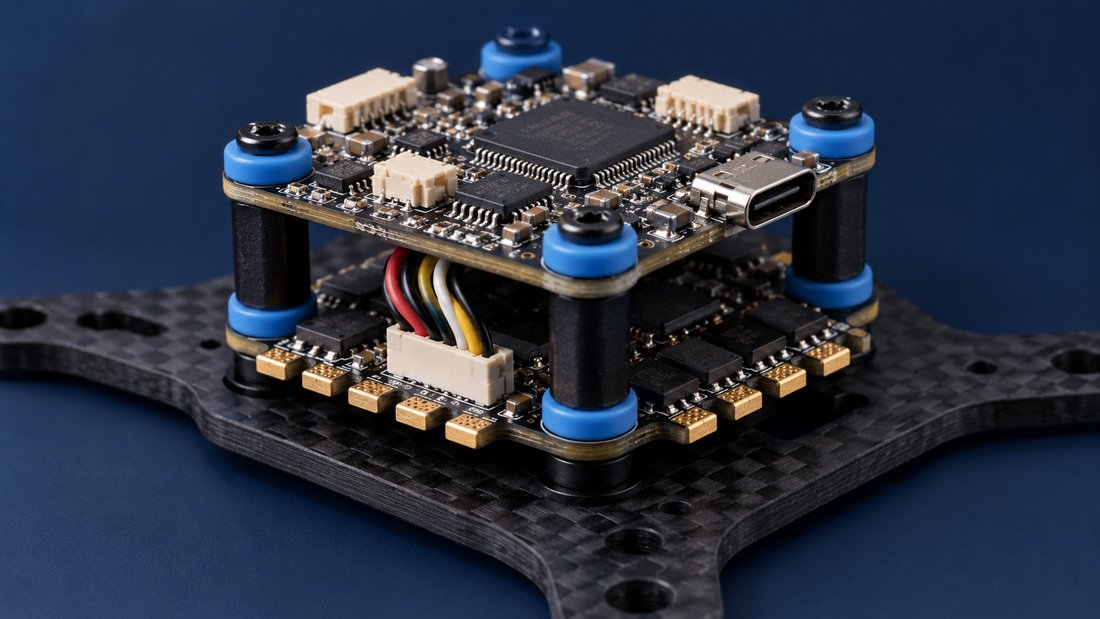
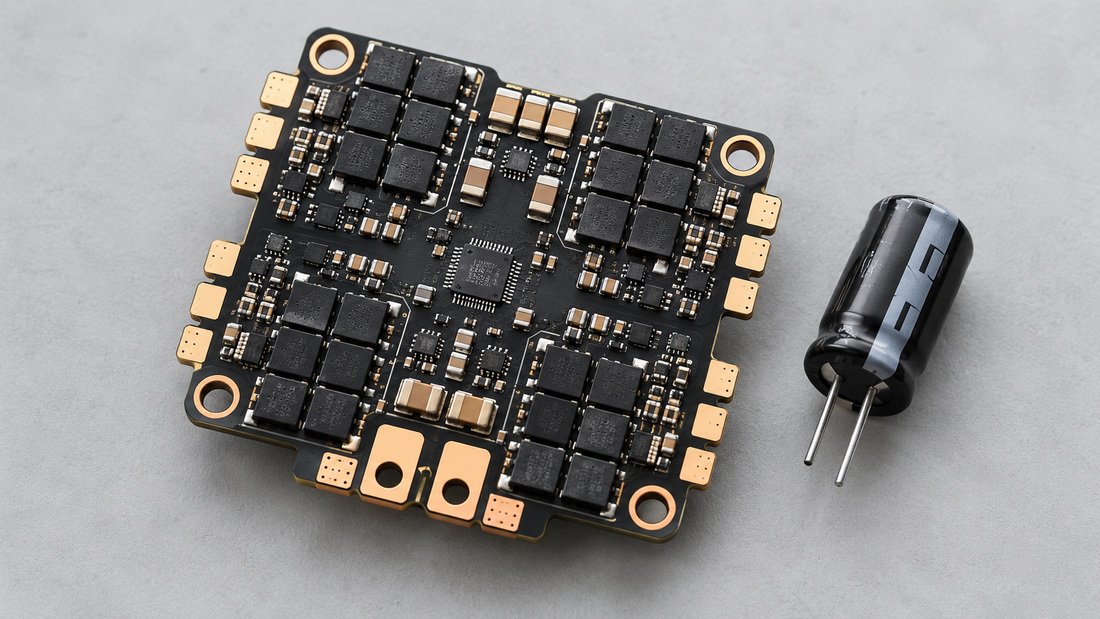
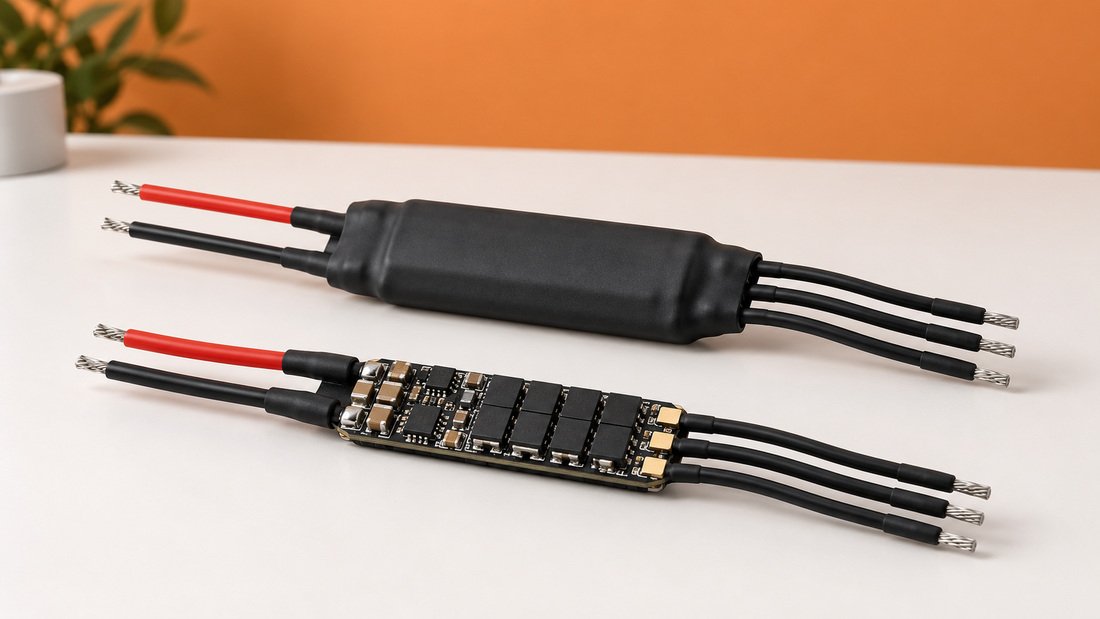
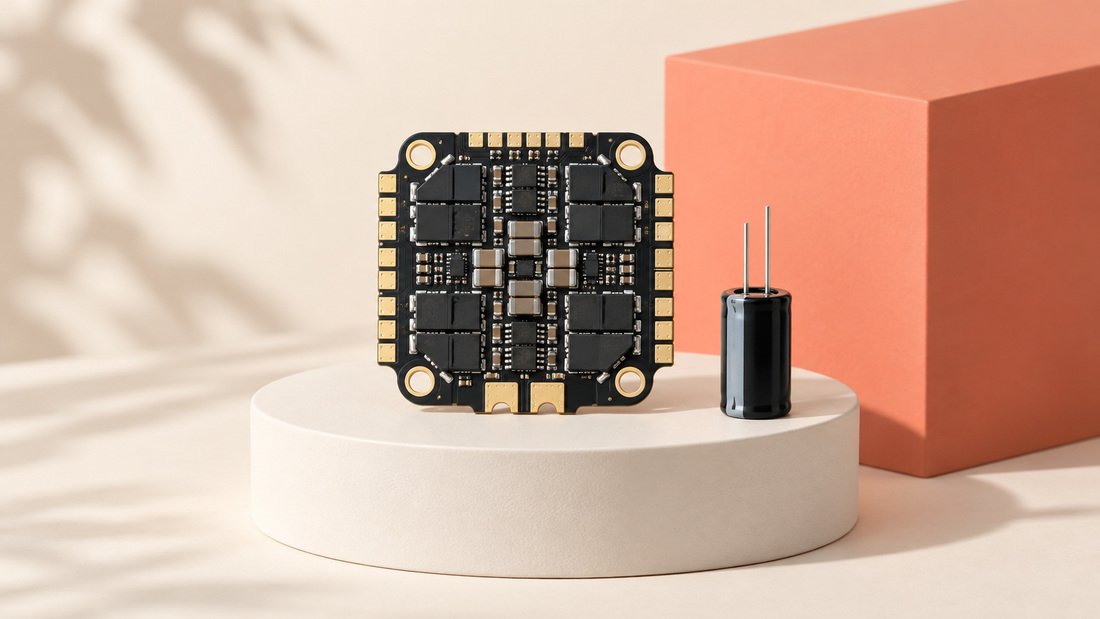
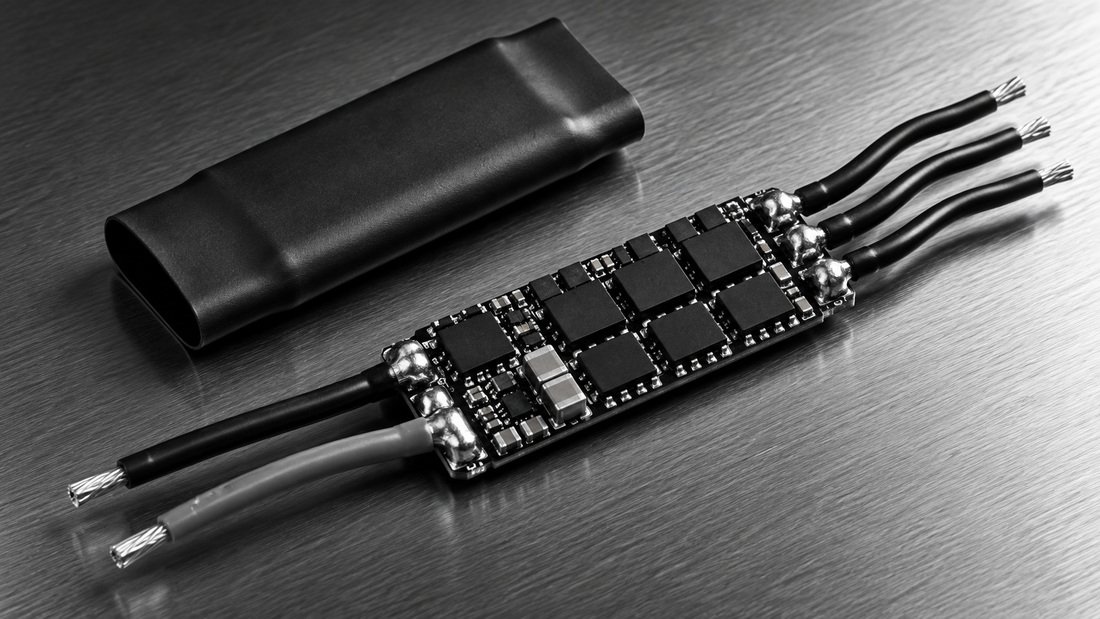
Heavier balls demand more thrust, which means higher current draw, hotter motors and more stress on the electronic speed controllers (ESCs — the units that regulate motor speed). That affects parts choice in a real way. A ball that is 20–30 g heavier than the one a parts list was written for may need a different motor and ESC pairing to stay within sensible temperature limits. DPF’s drone soccer systems page groups ball frames, motors and ESCs so clubs can compare complete configurations rather than mismatched parts.
4. Handling, durability and repair cost
Mass changes how a ball feels to a beginner: heavier balls carry momentum through turns, punish late corrections and tend to break more parts in a hard landing. For drone soccer clubs running weekly practice sessions, that difference shows up directly in the spares budget.
Comparison: light vs. heavy configurations
The table below is illustrative, not a specification. It shows the general trade-offs clubs report between lighter and heavier ball builds so you can frame the right questions for your supplier.
| Factor | Lighter ball build | Heavier ball build |
|---|---|---|
| Impact energy at equal speed | Lower | Higher |
| Typical flight time | Generally longer per battery | Generally shorter per battery |
| Motor and ESC current draw | Lower | Higher |
| Beginner handling | More forgiving | More demanding |
| Crash damage tendency | Often less | Often more |
| Suitability | Youth, school, first-season training | Senior competition classes |
How to weigh and document your fleet (step by step)
- Use a scale with at least 1 g resolution; a 0.1 g scale is better for small parts.
- Weigh each complete ball ready to fly, exactly as it will be launched.
- Then strip it down and record shell, airframe, motor set, propeller set, ESC set and battery separately.
- Log the numbers in a shared spreadsheet with the ball’s ID number and battery serial.
- Reweigh after any repair or part substitution — a swapped battery alone can shift total mass noticeably.
- Keep a copy of the league’s current mass limit next to the log so every coach checks the same number.
This takes one evening and saves arguments later. It also gives you hard data when you talk to a supplier about whether a proposed upgrade will push your fleet out of class.
Common mistakes clubs make with ball mass
- Assuming all balls in a kit weigh the same. Production tolerance and battery variation mean they usually do not; weigh each one.
- Upgrading the battery first. Extra capacity adds mass that can reduce flight time or push you over a class limit.
- Ignoring the sensors. Tracking hardware, LEDs or extra mounts all count toward all-up mass.
- Mixing parts from different classes. A motor from a high-performance class on a light training frame usually brings heat and current problems rather than performance.
- Relying on a supplier’s marketing figure. Ask for the measured all-up weight of the exact configuration you are buying, in writing.
- Forgetting the rulebook age. Limits change between seasons; a figure quoted two seasons ago may no longer apply.
Procurement checklist for drone soccer equipment
- Current written mass limit from your league or sanctioning body, with the class and age group stated.
- Measured all-up weight supplied for the exact configuration you intend to buy.
- Production weight tolerance stated per unit, not per batch.
- Breakdown mass by component: shell, frame, motor set, propeller set, ESC set, battery.
- Recommended motor, propeller and ESC pairing for that mass, with the current draw and thermal expectations you should expect.
- Spare parts list with matching masses so repairs do not silently change class.
- Written confirmation of any commercial terms you are relying on — price, quantity, warranty terms and delivery schedule. DPF does not publish blanket figures here; request them for your specific order.
- Battery handling and charging guidance appropriate to your venue and age group.
Where DPF’s motor and ESC lines fit
Because mass and power are linked, DPF’s Drone Soccer (BKZ), Motors (BKM) and ESC (BKE) lines are usually specified together rather than one part at a time. For education programmes, the STEM drone education and training overview explains how equipment choice interacts with curriculum and age group. If you are preparing for events, the drone soccer competitions page covers the venue and rulebook side, which is where mass limits are enforced.
Flight rules: what weight means in a regulated context
Mass limits inside a drone soccer rulebook sit alongside national aviation rules. In the United States, educational drone flying is handled under either the Exception for Limited Recreational Operations of Unmanned Aircraft (49 U.S.C. § 44809) or the Small Unmanned Aircraft Systems Rule (14 CFR Part 107), which covers aircraft weighing less than 55 pounds. The FAA educational users page explains that qualifying educational organisations can operate under § 44809, while others must operate under Part 107, and notes that eligible educational institutions can request a FAA-Recognized Identification Area (FRIA) where drones may be flown without Remote ID.
Two practical implications for clubs: check which rule set applies to your programme before the season starts, and remember that a ball’s 200 g competition limit is a sporting rule, not an aviation threshold. Outside the United States, rules differ — confirm with your national authority rather than assuming FAA language transfers.
Middle-of-article next step
If you are writing a specification for a school, club or event and need help matching ball mass to motor and ESC choices, our team can review your numbers. Send us your current configuration and target mass and we will advise on realistic component pairings.
Frequently asked questions
How heavy is a drone soccer ball?
There is no single universal figure. Training-class balls commonly sit in the 150–220 g range, and competition classes are often heavier, but the number that matters is the maximum all-up mass printed in your own league rulebook for your class and age group. Confirm it directly with the organiser.
Does the weight include the battery?
In rulebook terms, yes — all-up mass normally covers the ball exactly as it is launched, battery included. That is why swapping batteries can move a ball into a different class even if nothing else changes.
Can we reduce ball weight to get longer flight time?
Often yes, but check the rulebook first. If your class has a minimum as well as a maximum mass, removing material may take you out of spec. Where rules allow, reducing shell or hardware mass usually helps more predictably than increasing battery capacity.
Will a heavier ball damage our gym floor or nets?
Mass increases impact energy at the same speed. Concrete floors, wooden gym floors, nets and goal frames all respond differently, and venue owners may impose their own conditions. Ask the venue what it permits and consider a lighter training class for indoor use.
Do we need different motors if we move to a heavier class?
Very likely, yes. More mass requires more thrust, which raises current draw and heat. Ask your supplier to confirm the motor, propeller and ESC combination matched to the exact all-up mass you are targeting, and to state the expected current draw for that combination.
How tight should the production weight tolerance be?
That depends on your class margin. If you are close to the limit, a wide tolerance is a real risk, so ask what tolerance the supplier holds and whether they can weigh and label units individually. If they cannot, plan your fleet around the upper end of the tolerance.
Does ball weight affect how many spare parts we should stock?
Indirectly, yes. Heavier balls generally see more crash damage in beginner hands, so clubs running heavier builds often carry more frames, propellers and guards. Track your own breakage rates over a season and order against your data rather than a generic list.
Where can schools and training organisations get specification help?
For programmes setting up equipment for the first time, the schools and training organizations section covers the broader planning questions. Bring your league’s mass limit and intended class, and we will help you translate it into a parts list.
Conclusion
Drone soccer ball weight is not trivia — it decides which class you fly in, how long a ball stays in the air, how much stress the motors and ESCs absorb, and how hard an impact feels on the day. Because limits vary by rulebook and season, the reliable method is straightforward: get the current number in writing, weigh every ball yourself, and keep a per-unit log you can hand to a supplier.
Ready to specify a fleet against a real mass limit? Request a Team Kit Quote with your class, age group and target all-up weight, and our team will come back with a matched ball, motor and ESC configuration for your programme.