Quick summary
Most drone soccer balls use a two-material cage: carbon fiber or glass-fiber composite for the rigid inner frame that carries motor loads, and polypropylene (PP) or a similar impact-modified polymer for the outer protective shell that absorbs collisions. Carbon fiber gives the best stiffness-to-weight ratio, while PP gives flexibility, low cost, and easy replacement. The right mix depends on league rules, ball size, age group, and how often the cage must survive full-speed contact. This guide explains both materials, the trade-offs, a comparison table, and a procurement checklist for clubs, schools, and OEM buyers sourcing a drone soccer ball cage and structure.
Key Takeaways
- Drone soccer cages are usually a hybrid: a rigid composite frame plus a flexible polymer outer shell.
- Carbon fiber is chosen for stiffness and low weight in the structural frame; it is brittle under point impacts.
- Polypropylene (PP) is chosen for the protective shell because it flexes, resists repeated hits, and is inexpensive to replace.
- Material choice must match league rules, ball diameter, motor thrust, and the age/skill of the players.
- Always confirm shell thickness, fiber content, spare-part availability, and inspection criteria in writing before ordering a team kit.
What is a drone soccer ball cage and structure?
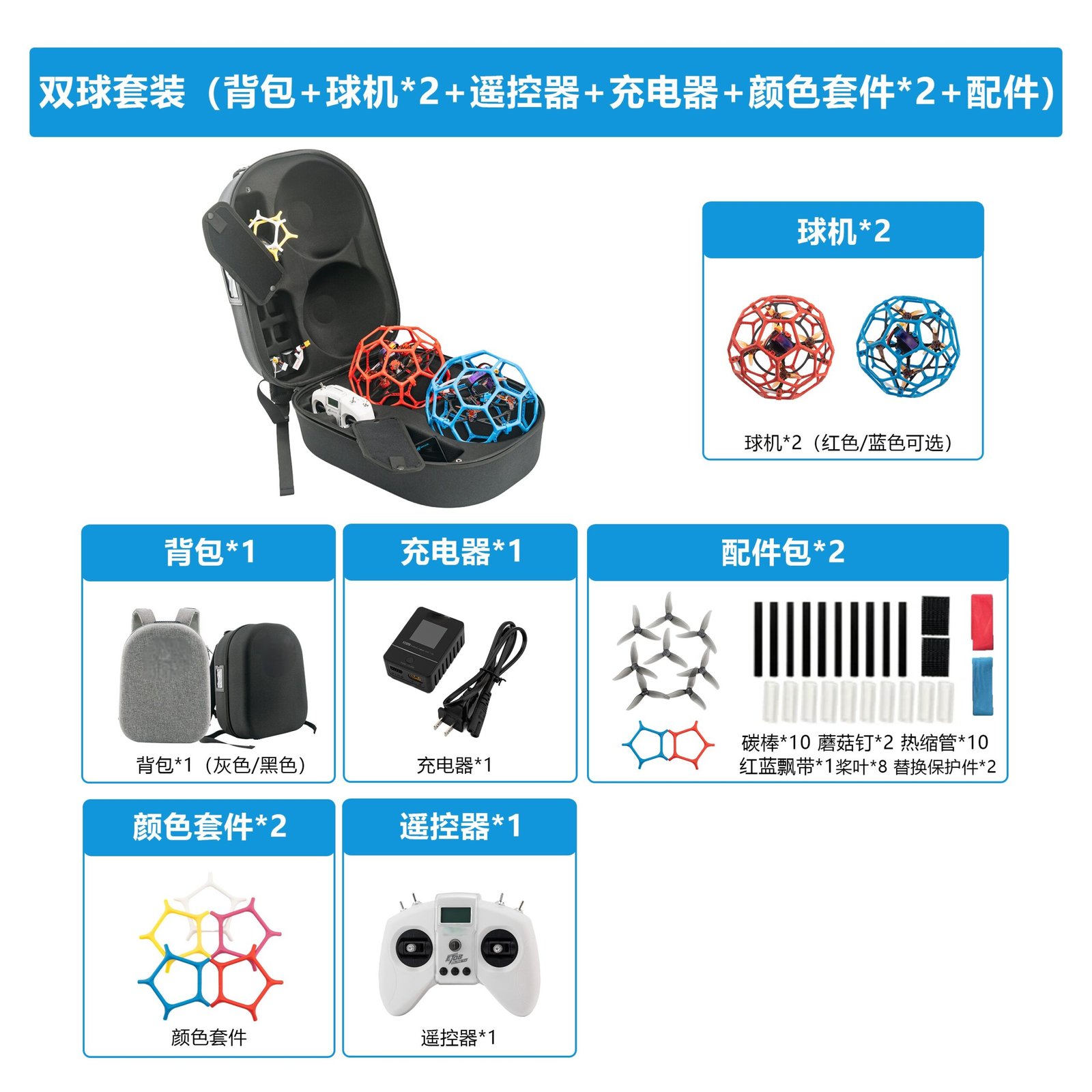
A drone soccer ball is a protective spherical cage that surrounds a small quadcopter. The cage lets the drone roll, bounce, and survive collisions while the inner frame holds the motors, propellers, flight controller, ESCs (electronic speed controllers), and battery.
The structure has two jobs: carry flight loads and absorb impact. Those jobs favor different materials, which is why nearly all competitive balls use a combination of a stiff structural frame and a tough outer shell. The outer shell is the part that most often needs replacing after hard play, so clubs treat it as a consumable.
Which materials are used in a drone soccer cage?
The short answer is carbon fiber (or a glass/carbon composite) for the structural frame and polypropylene (PP) for the flexible protective shell. Some parts, such as motor mounts and brackets, may use aluminum, nylon, or glass-filled nylon. The exact bill of materials is set by the ball designer and league rules, so always ask the supplier for the material specification sheet.
Carbon fiber in the structural frame
Carbon fiber reinforced polymer (CFRP) is a composite of carbon fibers in a resin matrix. It is popular in drone frames because it is stiff and light, which helps the drone respond quickly and fly longer for a given battery. In a drone soccer ball and structure, carbon fiber is typically used for plates, arms, and rings that must stay rigid under motor thrust.
Trade-offs: carbon fiber is brittle under sharp point loads and can crack or delaminate after repeated hard hits. It also costs more than polymer alternatives and can splinter, so edges should be finished and protected. For clubs, a carbon frame may be the right choice for competition balls, while practice balls may use a more forgiving composite.
Polypropylene (PP) in the outer protective shell
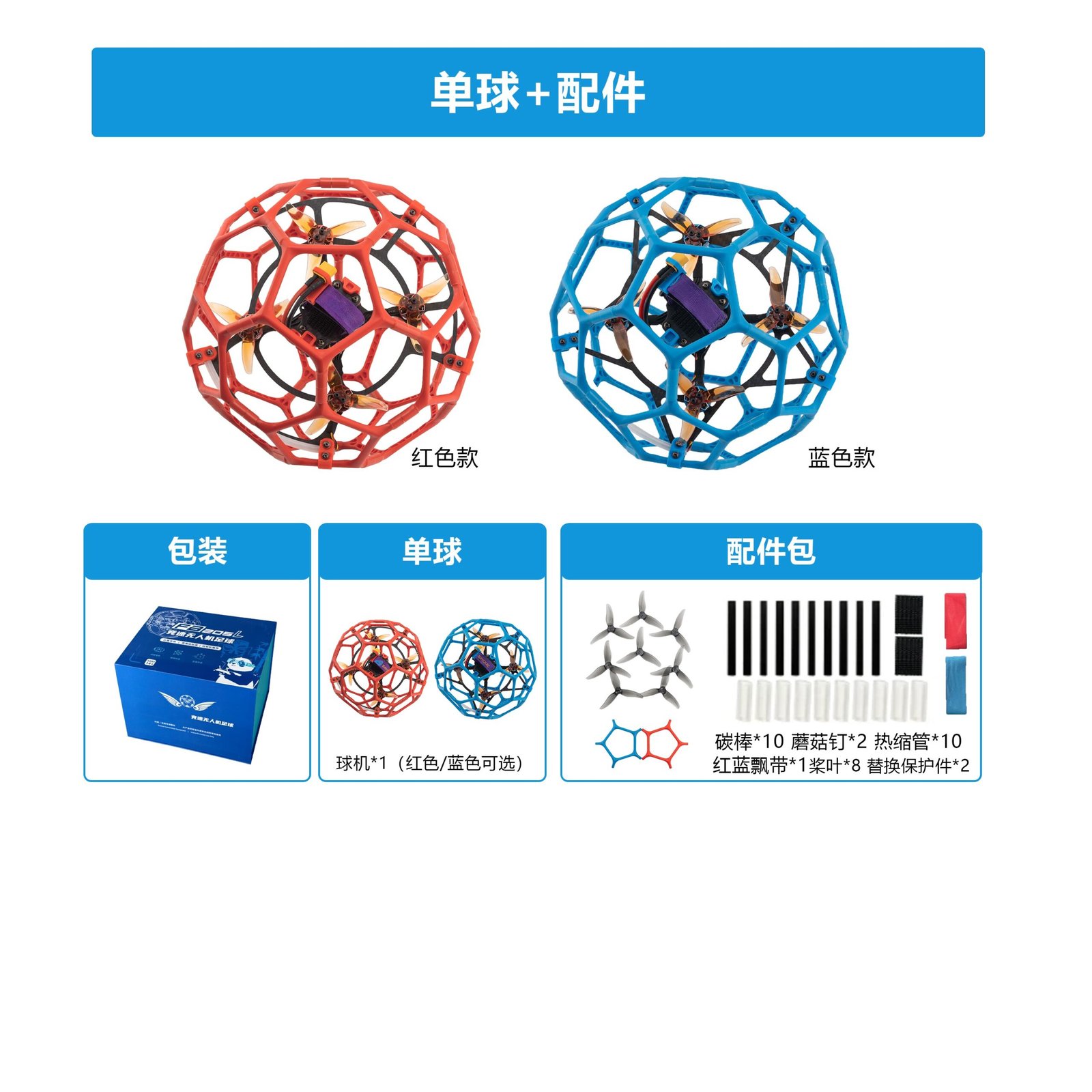
PP is a thermoplastic known for toughness, chemical resistance, and low cost. In a drone soccer ball, PP is commonly used for the outer spherical shell or bumper because it flexes on impact and returns to shape, protecting the inner frame and electronics. PP shells are also easy to mold in bright colors and easy to replace when they crack or scuff.
Trade-offs: PP is less stiff than carbon fiber, so it is not ideal for the main load-bearing frame. It can also deform under sustained heat or heavy compression, so wall thickness and rib design matter. A thicker PP shell adds weight and reduces flight time, so designers balance protection against payload.
Carbon fiber vs PP: comparison table
Use this table as a general guide. Actual values depend on fiber layup, resin, wall thickness, and part geometry, so request datasheets rather than assuming.
| Property | Carbon fiber (CFRP) frame | Polypropylene (PP) shell |
|---|---|---|
| Stiffness | Very high | Low |
| Weight | Very light | Light to moderate |
| Impact behavior | Brittle; can crack or delaminate | Tough; flexes and absorbs hits |
| Repairability | Difficult; usually replace the part | Easy; shell is a common spare |
| Relative cost | Higher | Lower |
| Best role in a ball | Structural frame, arms, mounting plates | Outer protective shell, bumpers |
| Main risk | Splintering and point-load cracks | Creep, heat deformation, flex fatigue |
How electronics and structure interact
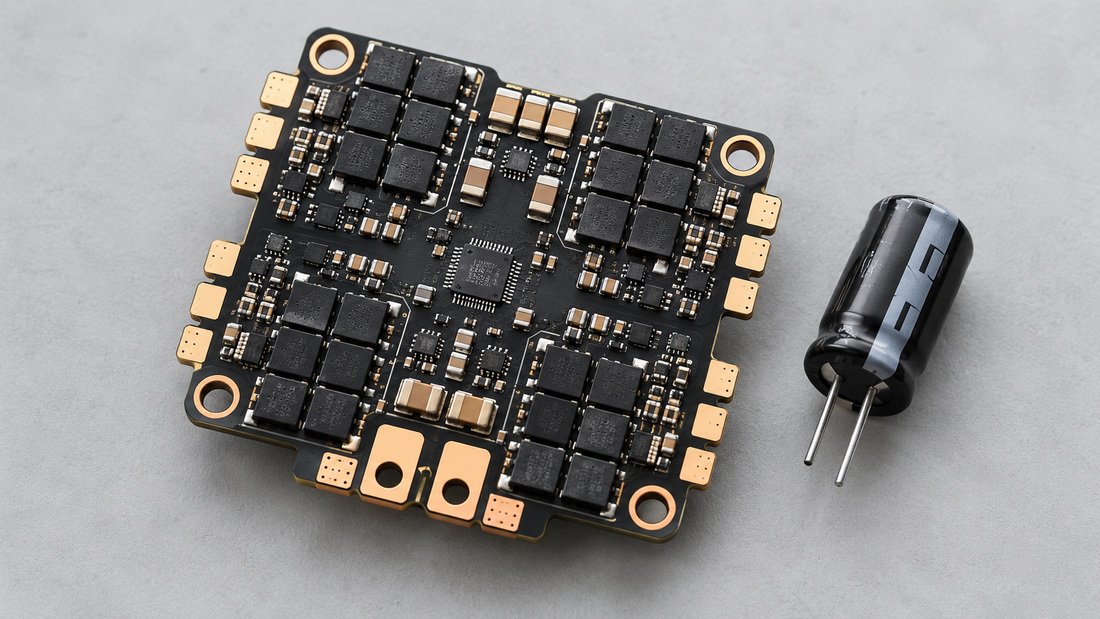
The cage material affects how the electronics survive crashes. A stiff carbon frame transmits shock directly to the flight controller and ESCs (electronic speed controllers), while a flexible PP shell dampens the hit before it reaches the frame. That is why the two materials are usually paired.
The flight controller runs firmware that reads sensors and sends commands to the ESC to control motor thrust. Betaflight is one widely used open-source firmware for multirotor flight controllers, and it supports multiple ESC protocols including DShot, as well as receiver protocols such as CRSF, SBUS, and FPort (source: Betaflight Getting Started). If your club standardizes on a particular flight controller and ESC protocol, confirm the ball’s internal mounting pattern and vibration isolation before ordering, because a rigid carbon mount can transmit more vibration than a polymer mount.
Choosing materials by program type
There is no single best material. The right choice depends on who is playing, how often, and what the league allows.
- School and youth programs: prioritize durability and low replacement cost. A thicker PP shell and a glass-filled nylon or composite frame may survive beginner crashes better than exposed carbon.
- Competitive clubs: prioritize stiffness and weight for responsiveness. A carbon fiber frame with a PP shell is a common compromise.
- Event organizers: prioritize serviceability and quick swaps. Standardized, field-replaceable PP shells reduce downtime between matches.
- OEM/ODM buyers: prioritize consistent tooling, material traceability, and documented tolerances across production batches.
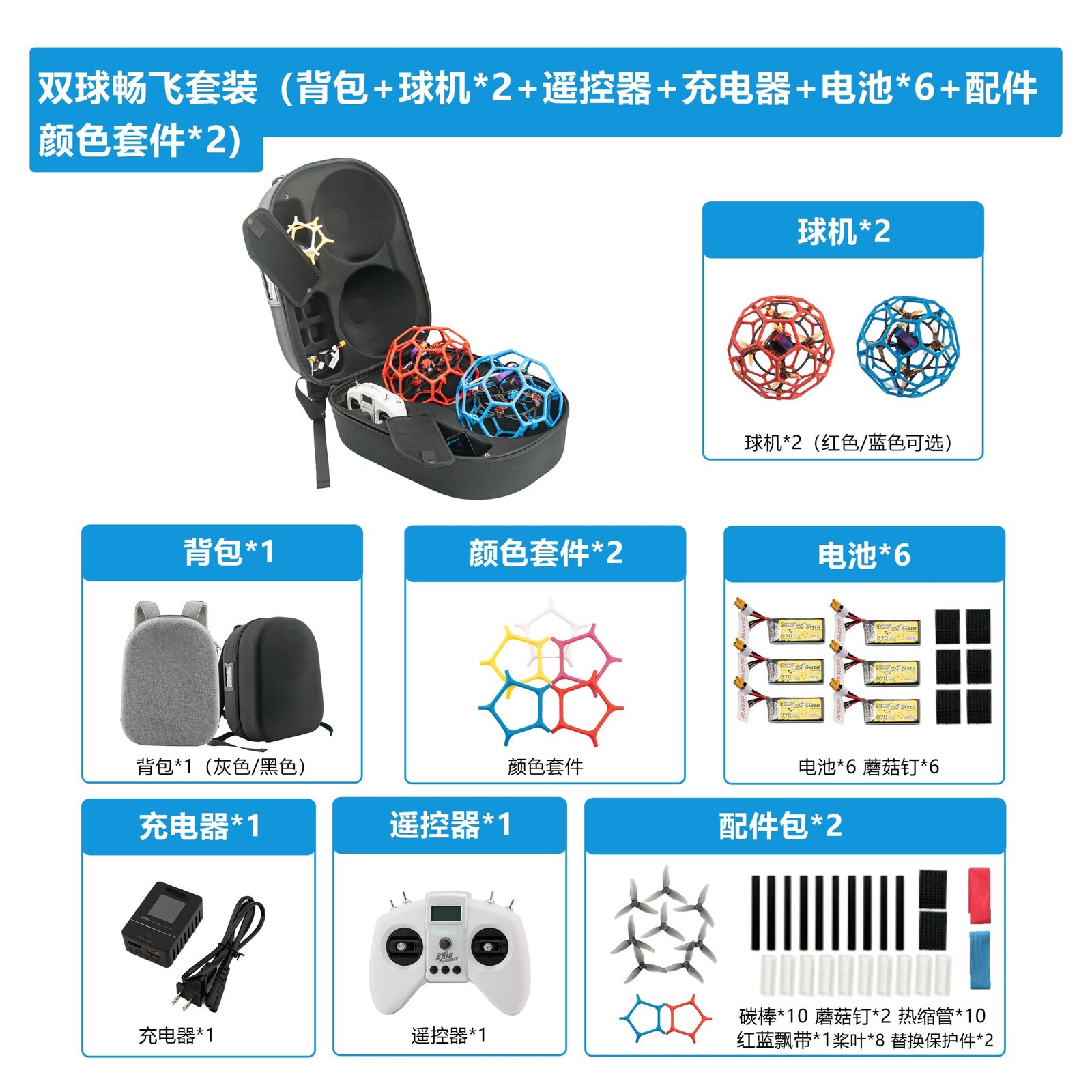
If you are also selecting the airframe and power system, review the available drone frames and propulsion combo kits so the cage, frame, and motors are matched rather than assembled from mismatched parts.
Common mistakes when specifying cage materials
- Assuming carbon fiber is always stronger. Carbon is stiff, not tough. It can crack under point impacts that a PP shell would shrug off.
- Ignoring weight. A heavier shell reduces flight time and agility. Confirm the assembled ball weight against league limits.
- Forgetting spares. Clubs should stock the parts that fail most: shells, arms, motor mounts, and fasteners. DPF lists drone soccer replacement parts and protective shells for this reason.
- Mixing batches. Slight differences in shell thickness or frame layup can change handling across a team’s balls. Ask how the supplier controls batch consistency.
- Skipping the inspection routine. Cracked carbon and fatigued PP both fail suddenly. A pre-match visual check of the cage is cheap insurance.
Ready to standardize your club’s balls? Request a Team Kit Quote and share your league rules, ball size, and expected match volume so the material spec can be matched to your program.
Buyer checklist for drone soccer cages
Use this checklist before confirming any purchase order. For any item you cannot verify from a datasheet or sample, ask the supplier to confirm it in writing.
- League rules: ball diameter, weight limit, and any material restrictions.
- Frame material: carbon fiber, glass fiber, or composite; fiber content and layup.
- Shell material: PP grade, wall thickness, UV and color stability.
- Assembled weight and center of gravity.
- Motor mount pattern and compatibility with your chosen propulsion combo.
- Vibration isolation for the flight controller and ESC.
- Field-serviceable parts list and expected replacement frequency.
- Spare-part availability and how to reorder.
- Inspection criteria: what counts as a failed shell or frame.
- Commercial terms: pricing tiers, sample policy, and lead time in writing.
Frequently asked questions
Is carbon fiber or PP better for a drone soccer ball cage?
Neither is better on its own. Carbon fiber is better for the rigid structural frame because it is stiff and light. PP is better for the outer shell because it flexes and absorbs impacts. Most balls combine both.
Can a drone soccer cage be made entirely of plastic?
Some recreational or beginner balls use a polymer frame and shell to reduce cost and improve durability. The trade-off is lower stiffness and usually more weight or less responsiveness. Confirm whether your league permits a fully polymer ball.
How often do PP protective shells need replacing?
Replacement frequency depends on impact energy, wall thickness, and how hard the ball is used. Ask your supplier for inspection guidance and keep spare shells on hand for match days. There is no universal interval that applies to every program.
Does carbon fiber interfere with radio signals?
Carbon fiber is electrically conductive and can attenuate radio signals if it surrounds an antenna. Antenna placement matters. Ask the supplier how the receiver antenna is positioned relative to the carbon structure.
What should OEM buyers request from a supplier?
Request material datasheets, dimensional drawings, tolerances, sample balls for validation, batch-consistency controls, and written commercial terms. Do not rely on verbal assurances for specifications or lead times.
Are there safety concerns with cracked carbon frames?
Yes. Cracked or delaminated carbon can splinter and may fail suddenly. Inspect frames and shells before play and remove any ball with visible damage. Follow your league’s safety rules.
Can DPF supply a complete team kit?
DPF lists drone soccer systems, replacement parts, and protective shells. For exact kit contents, pricing, and lead time, submit your requirements through the quote form so the team can confirm specifications in writing.
Conclusion
A drone soccer ball cage and structure is a materials compromise: carbon fiber or composite for stiffness and low weight in the frame, and polypropylene for a tough, low-cost, replaceable outer shell. The right choice depends on league rules, player age and skill, match volume, and how much replacement cost your program can absorb.
Before you order, confirm the material spec, assembled weight, spare-part list, and commercial terms in writing. Then Request a Team Kit Quote with your league rules and ball requirements so DPF can match the cage and structure to your program.