Quick summary
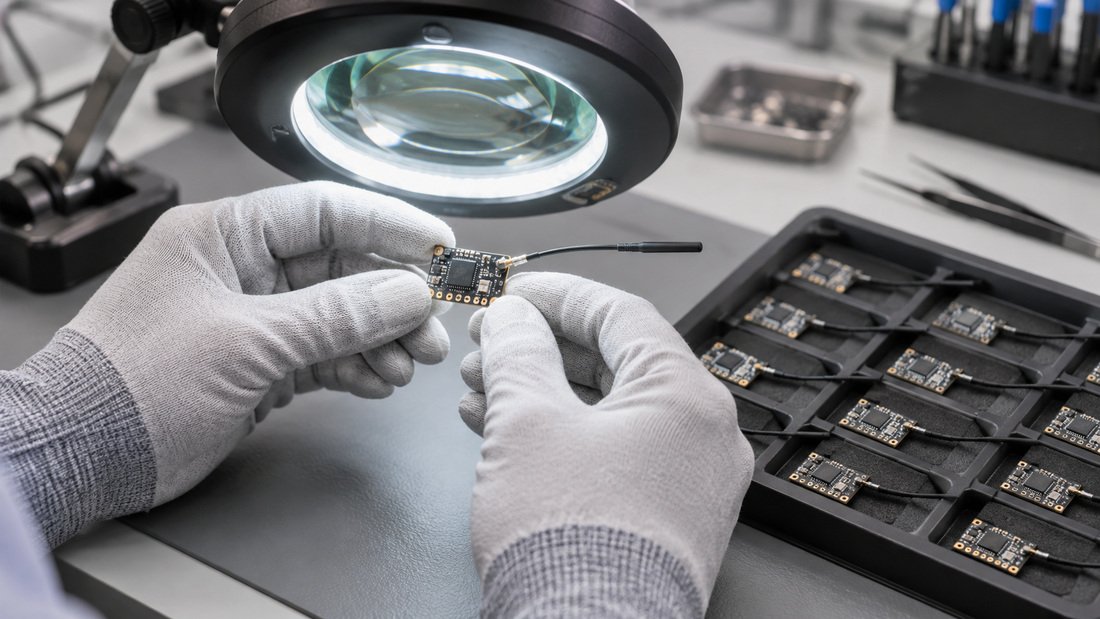
A dual-band ELRS receiver combines two radio links in one unit: a sub-GHz band (typically 868 MHz in Europe or 915 MHz in the Americas) and the 2.4 GHz band used by most ExpressLRS systems. The receiver listens on both and uses the stronger or more reliable signal, which can improve link stability in RF-noisy gyms or crowded outdoor venues. For drone sports clubs, the practical benefit is fewer failsafes and more consistent control during matches and training. Understanding how these bands differ is the first step in smarter ELRS receiver selection.
Key Takeaways
- A dual-band ELRS receiver listens on both a sub-GHz band (868/915 MHz) and 2.4 GHz, switching or combining signals to maintain control.
- Sub-GHz generally penetrates obstacles and handles long range better; 2.4 GHz usually offers higher packet rates and smaller antennas.
- Dual-band adds cost, weight, and antenna complexity — it is not automatically the right choice for every drone soccer airframe.
- ELRS receiver selection should start with your venue, flight style, and existing transmitter module, not with the receiver alone.
- Always confirm firmware targets, antenna connectors, and regional band legality with your supplier in writing before ordering team kits.
What is a dual-band ELRS receiver?
A dual-band ELRS receiver is a radio receiver that operates on two frequency bands simultaneously or selectably. In ExpressLRS, the common pairing is a sub-GHz band — 868 MHz in many European countries or 915 MHz in regions such as North America — plus the 2.4 GHz band. The receiver may include two separate RF front-ends or a single chipset configured for both, and it reports link quality on either band.
The goal is resilience. If one band suffers interference or a fade, the other may still carry control data. That said, dual-band receivers are not magic: they still depend on antenna placement, transmitter power, and firmware configuration. They simply give the link more than one path to succeed.
Why does band choice matter for drone sports?
Drone soccer and similar indoor team sports happen in gyms full of Wi-Fi, Bluetooth, and other 2.4 GHz traffic. Outdoor FPV practice may involve longer distances and obstacles. The two bands behave differently in these environments, which is why band choice is central to ELRS receiver selection.
Sub-GHz (868/915 MHz) characteristics
Sub-GHz signals generally travel farther and penetrate walls, bleachers, and bodies with less loss than 2.4 GHz. Antennas are physically larger, which can be awkward on small drone soccer airframes. In many regions, sub-GHz bands have duty-cycle or power limits that differ from 2.4 GHz. Confirm local rules before relying on sub-GHz for competition use.
2.4 GHz characteristics
2.4 GHz is the default ELRS band for most pilots. It supports high packet rates, uses compact antennas, and is widely supported by transmitter modules. The trade-off is that 2.4 GHz is crowded in indoor venues and attenuates faster through obstacles. A dual-band receiver keeps 2.4 GHz as the primary link while using sub-GHz as a fallback.
How dual-band ELRS receivers work in practice
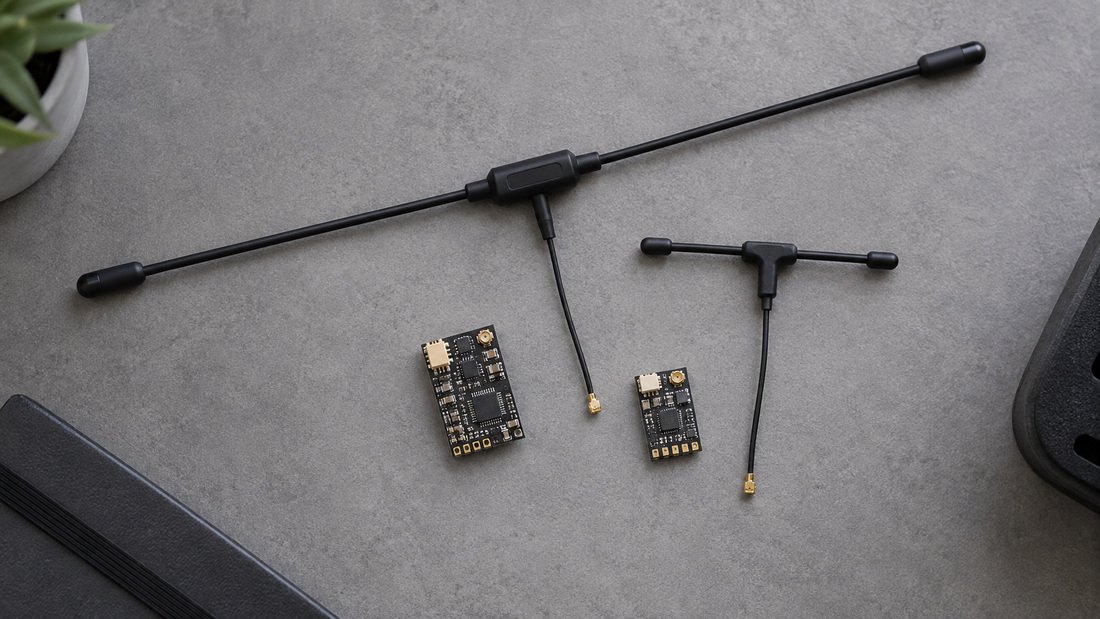
Most dual-band receivers do not transmit on both bands at once. Instead, they receive telemetry and control frames on one or both bands and select the best signal according to firmware logic. Some implementations switch bands when link quality drops; others combine signals for diversity. The exact behavior depends on the receiver firmware and hardware design.
Because ExpressLRS is an open-source project, features evolve. Two receivers with similar names may behave differently depending on firmware version. Buyers should ask for the specific firmware target and confirm that the receiver supports the band and packet rate they intend to use.
Dual-band vs single-band receivers: a practical comparison
The table below summarizes general differences. It is guidance, not a guarantee of performance in your venue.
| Factor | Single-band 2.4 GHz ELRS | Single-band sub-GHz (868/915 MHz) | Dual-band ELRS |
|---|---|---|---|
| Antenna size | Small, easy to mount | Larger, may need more space | Two antennas or a combined antenna; more mounting consideration |
| Indoor resilience | Can struggle in crowded 2.4 GHz gyms | May penetrate obstacles better | Can fall back to the other band when one is degraded |
| Outdoor range | Good with clear line of sight | Generally better through obstacles | Potentially more robust, but depends on implementation |
| Weight and complexity | Lowest | Moderate | Higher; extra RF path and antennas |
| Cost | Typically lowest | Typically moderate | Typically highest of the three |
| Best for | Most indoor racing and freestyle | Long-range or obstacle-heavy outdoor flying | Venues with mixed interference or teams wanting redundancy |
Common mistakes in ELRS receiver selection
Teams often choose a receiver based on a single specification or a recommendation without checking compatibility. These mistakes are common:
- Ignoring the transmitter band. A dual-band receiver still needs a compatible transmitter module or external module that supports the bands you plan to use.
- Assuming dual-band always means better. Added weight and antenna complexity can hurt small drone soccer builds if not managed.
- Forgetting regional band rules. 868 MHz and 915 MHz are not universally legal at the same power levels. Check local regulations.
- Mixing firmware targets. Flashing the wrong firmware can disable a band or cause unstable behavior.
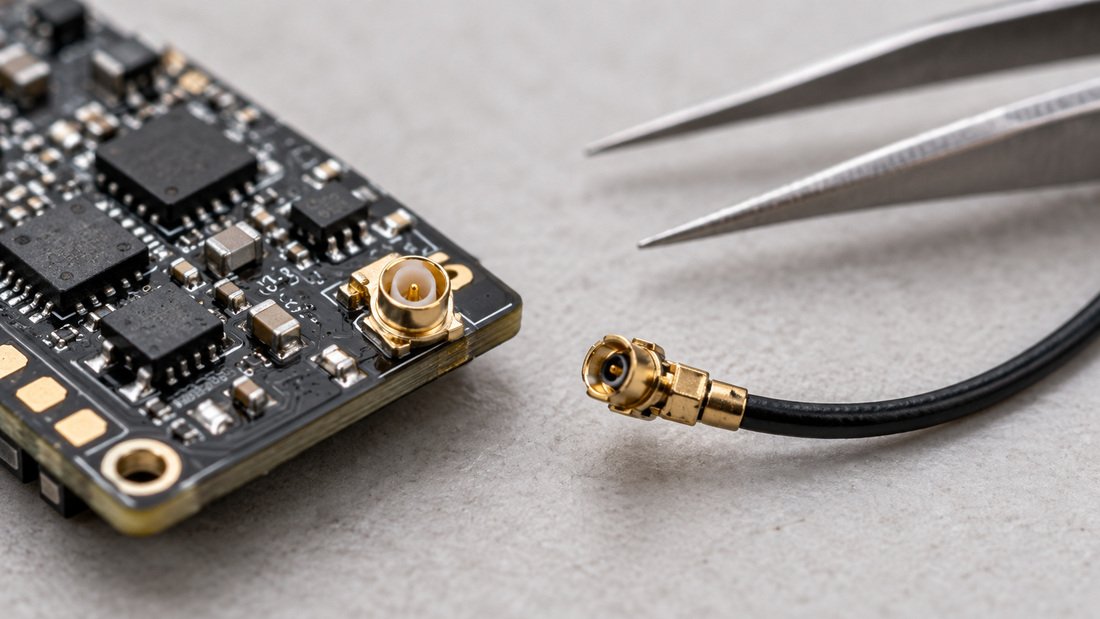
- Neglecting antenna connectors. U.FL, IPEX, and SMA are not interchangeable without the right cable or adapter.
Buyer checklist for team kit procurement
Use this checklist when specifying dual-band ELRS receivers for a club, school, or association. It separates general guidance from what you must confirm with your supplier.
- Define the venue and flight profile. Indoor gym, outdoor field, or both? This drives band priority.
- Confirm transmitter compatibility. List the transmitter modules your team uses and verify supported bands and firmware.
- Check regional band legality. Ask your supplier which bands and power levels are appropriate for your country.
- Verify antenna connector type. Match receiver connectors to your antennas or plan for adapters.
- Request firmware target details. Ask for the exact target name and version. Confirm it is actively maintained.
- Ask about physical size and weight. Dual-band receivers may be larger; confirm they fit your airframes.
- Request a sample or small batch. Test in your actual venue before committing to a full team kit.
- Confirm support and documentation. Ask what setup guides, wiring diagrams, or configuration files are provided.
For unverified commercial terms such as minimum order quantity, lead time, warranty, or customization options, request written confirmation from DronePartsFactory before ordering.
Antennas and installation considerations
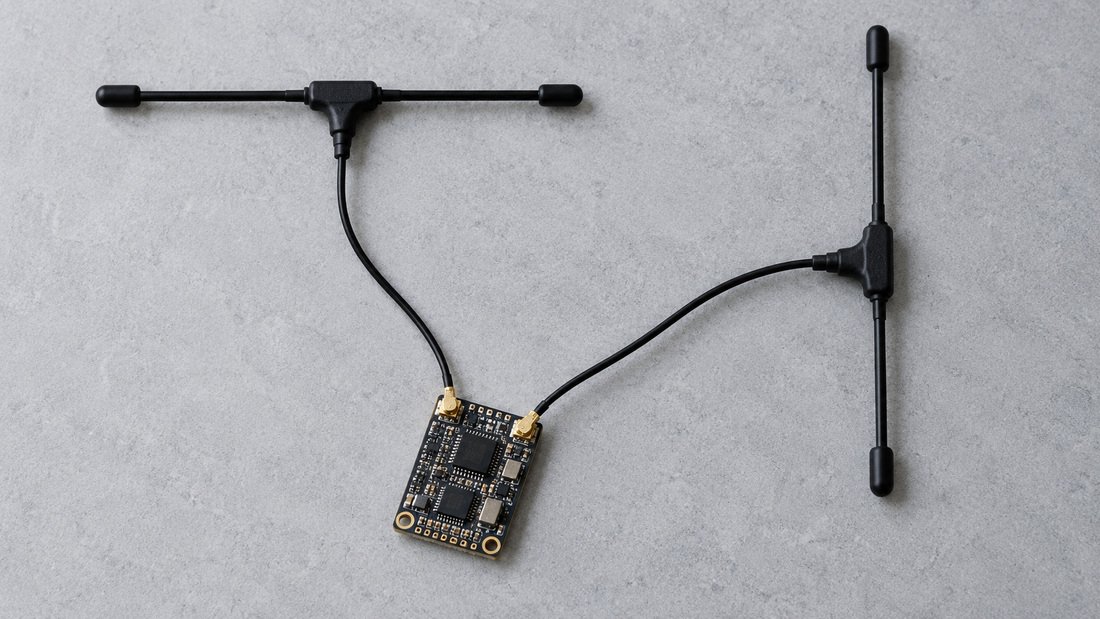
Antenna choice can matter as much as the receiver itself. A dual-band receiver may use separate antennas for each band or a single dual-band antenna. Placement should keep antennas away from carbon fiber, battery cables, and metal frame parts that can detune or block RF.
Diversity receivers use two antennas to improve signal reception. If you are considering a diversity model, plan mounting positions that are physically separated and oriented differently. This is a general principle; test in your venue to see what works.
Where dual-band ELRS fits in a team program
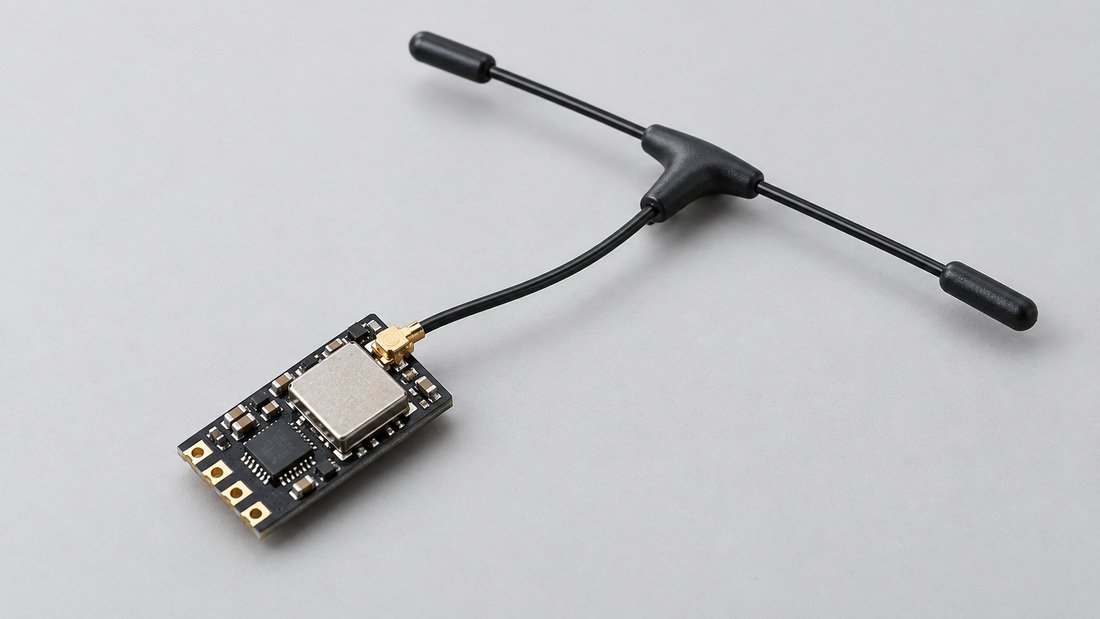
For drone soccer clubs, consistency across many airframes matters. A dual-band receiver can be a sensible choice for venues with known 2.4 GHz congestion, but it may be overkill for a controlled indoor space with little interference. Some programs standardize on one receiver type to simplify training and spares. Others use dual-band for match airframes and single-band for practice builds.
If your team is new to ELRS, start by reviewing ELRS and RF systems to understand the ecosystem. Then compare ELRS receivers and ELRS transmitter modules as a matched pair rather than separate purchases.
Planning a team kit? Tell us your venue, transmitter modules, and airframe constraints. We can help you narrow down dual-band versus single-band options and confirm compatibility details in writing.
Frequently asked questions
Is a dual-band ELRS receiver always better than a single-band receiver?
No. Dual-band adds a second RF path, which can improve resilience in some environments but also adds weight, cost, and antenna complexity. For a simple indoor drone soccer setup, a well-installed single-band 2.4 GHz receiver may perform perfectly. Choose based on your venue and testing.
Do I need a special transmitter for a dual-band receiver?
You need a transmitter module that supports the bands you intend to use. Some modules support both sub-GHz and 2.4 GHz; others are single-band. Confirm the exact module model and firmware with your supplier or the module manufacturer.
Are 868 MHz and 915 MHz the same thing?
They are both sub-GHz bands but are used in different regions and have different regulatory limits. Hardware may be region-specific. Always check local rules and confirm with your supplier which band is appropriate for your country.
Can I use a dual-band receiver for drone soccer matches?
Yes, provided it is legal in your region and compatible with your transmitter. Some competitions may have equipment rules; check with your league or sanctioning body before relying on a specific receiver model.
How do I know if a dual-band receiver will fit my airframe?
Check the receiver dimensions and antenna connector type against your frame. Dual-band receivers can be larger than nano 2.4 GHz receivers. Request dimensioned drawings or a sample before committing to a full team order.
What antenna should I use with a dual-band ELRS receiver?
The receiver’s antenna connector and band support determine your options. Some units use separate antennas per band; others use a combined antenna. Review RF antennas that match your connector and band, and test placement in your venue.
How can I verify ELRS receiver compatibility before buying?
Ask your supplier for the firmware target, supported bands, and connector type. Compare that against your transmitter module and planned antennas. DronePartsFactory’s ELRS receiver compatibility resources are one place to start, and written confirmation from the supplier is recommended for team purchases.
Conclusion: choose the band strategy that fits your program
A dual-band ELRS receiver is a tool for link resilience, not an automatic upgrade. The right choice depends on your venue, your transmitter, your airframes, and your local RF rules. For many drone sports clubs, the most reliable approach is to test a small batch in the actual gym or field, then standardize what works.
Start by mapping your current transmitters and receivers, then identify where interference or range issues actually occur. Use the checklist above to ask suppliers precise questions, and request written confirmation on firmware targets, connectors, and regional band suitability. If you are equipping a team, Request a Team Kit Quote and include your venue details so recommendations can be tailored to your program.