Quick summary
An ELRS Nano receiver and a PWM receiver differ mainly in output type, size, and intended use. ELRS Nano receivers are tiny serial-output radio links that connect to a flight controller over a digital protocol. PWM receivers output separate electrical pulses for each channel and are typically used to drive servos, ESCs, or systems without a flight controller. For most drone soccer and FPV team builds, an ELRS Nano receiver is the better fit because it saves weight and integrates with modern flight controllers, while PWM receivers are reserved for legacy or direct-drive setups.
Key Takeaways
- ELRS Nano receivers are compact serial devices; PWM receivers output one pulse per channel.
- Choose ELRS Nano for weight-sensitive drone soccer airframes with a flight controller.
- Choose PWM only when the device expects direct channel pulses, such as some servos or older equipment.
- Receiver choice affects wiring, firmware setup, and how many channels you can control.
- Always confirm antenna connector type, voltage range, and supported protocol with DPF before ordering.
What Is an ELRS Nano Receiver?
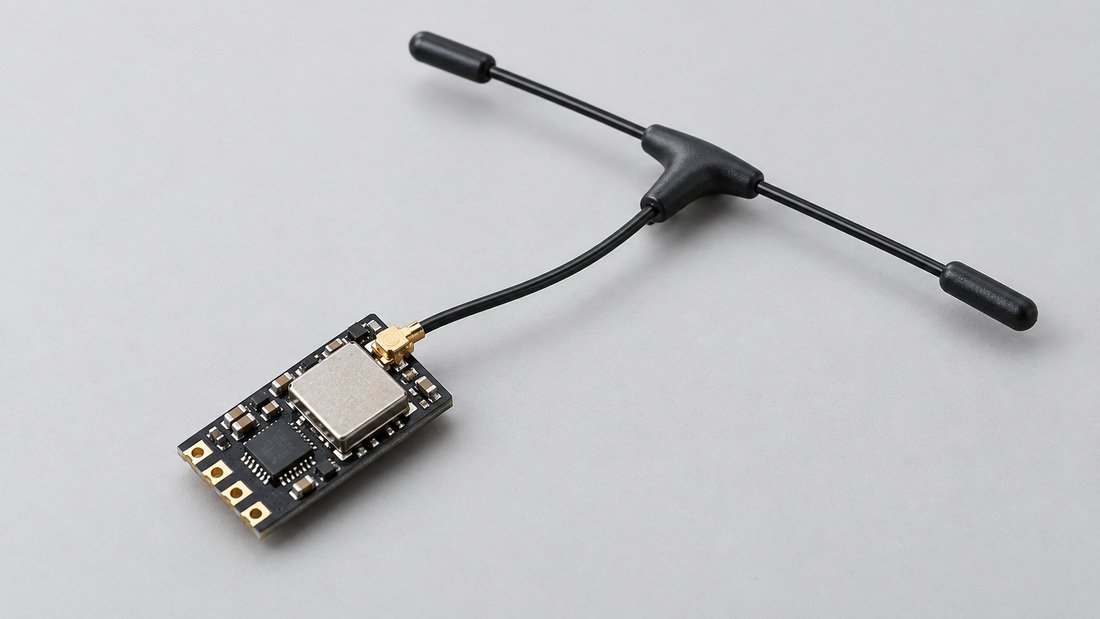
An ELRS Nano receiver is a small radio receiver that uses ExpressLRS, an open-source radio link protocol. The “Nano” part refers to the physical size and mounting pattern, not a separate protocol. It receives control signals from an ELRS transmitter module and passes them to a flight controller using a serial protocol.
These receivers are popular in drone soccer and FPV because they are light and compact. Many use a ceramic or T-style antenna and connect with a small plug rather than solder pads. The exact connectors, voltage input, and supported firmware vary by product, so teams should verify those details before purchase.
How ELRS Nano Receivers Connect
In a typical build, the Nano receiver’s serial output goes to a UART port on the flight controller. Power comes from a regulated 5V pad or connector. The flight controller then handles motor mixing, stabilization, and failsafe behavior. This keeps wiring simple and reduces the number of signal wires compared with PWM.
Because the signal is digital, the receiver does not need one wire per channel. That is a major advantage when an airframe has limited space or when the team wants to standardize builds across many drones. It also means the flight controller must be configured for the correct serial protocol and channel map.
Where ELRS Nano Fits in Drone Soccer
Drone soccer airframes are usually small, lightweight, and built for repeated indoor use. An ELRS Nano receiver can be mounted inside the frame with minimal added mass. Teams that run many identical drones benefit from a consistent receiver model because setup, spares, and troubleshooting become easier to manage.
ELRS transmitter modules are also part of the same ecosystem. If your team already uses an ELRS module, adding Nano receivers keeps the radio link consistent across the fleet. Explore the wider ELRS and RF systems range if you are standardizing multiple drones.
What Is a PWM Receiver?
A PWM receiver outputs a separate pulse-width modulation signal for each channel. Instead of sending a digital data stream, it sends one wire per channel, each carrying a timed pulse. The connected device reads the pulse width to determine stick position or switch state.
PWM stands for pulse-width modulation. It is a simple and widely understood method, but it becomes impractical when you need many channels or very small wiring. PWM receivers are still common in older RC planes, some ground vehicles, and direct-drive setups where no flight controller is present.
How PWM Receivers Connect
Each channel uses a three-wire servo-style connector: signal, positive, and ground. A six-channel receiver may have six separate connectors or a single block of pins. This wiring is straightforward for a few channels but adds weight and clutter as channel count grows.
Because there is no serial data link, PWM receivers do not need protocol configuration in the same way. However, they also cannot carry telemetry or advanced features unless the receiver and transmitter support them separately. For drone soccer, the lack of a flight controller in some direct-drive designs is the main reason a team might still use PWM.
When PWM Still Makes Sense
PWM is useful when the receiving device expects a direct pulse. Examples include certain servos, older ESCs, and simple test rigs. It can also be a fallback if a team has existing equipment that cannot accept a serial signal. In those cases, a PWM receiver may be the only practical option without replacing other parts.
For a new drone soccer build with a modern flight controller, PWM is usually not the first choice. The extra wiring and channel limits make it harder to scale across a team. It is better treated as a compatibility solution than a default selection.
ELRS Nano vs PWM Receiver: Comparison Table
| Feature | ELRS Nano Receiver | PWM Receiver |
|---|---|---|
| Output type | Serial digital data | One pulse per channel |
| Typical size | Very small, lightweight | Larger, more connectors |
| Wiring | Few wires to flight controller | Three wires per channel |
| Channel expansion | Handled by serial protocol | Requires more pins and wires |
| Best use case | Drone soccer and FPV with flight controller | Legacy, servo, or direct-drive systems |
| Firmware setup | Protocol and channel map needed | Usually minimal |
| Telemetry potential | Supported by protocol and hardware | Depends on receiver model |
| Weight impact | Lower | Higher as channels increase |
This table is a general comparison. Actual weight, dimensions, voltage, and channel support depend on the specific product. Teams should request a datasheet for any receiver they plan to buy in volume.
Why Receiver Choice Matters for Team Fleets
For a club or school program, receiver choice is not just a technical detail. It affects how quickly new drones can be built, how easily students can repair them, and how many spare parts the team needs to stock. A consistent receiver standard reduces training time and confusion.
If half the fleet uses serial receivers and half uses PWM, coaches and students must learn two wiring styles and two setup processes. Standardizing on one type, usually an ELRS Nano receiver for flight-controller builds, simplifies inventory and support.
Weight and Space in Small Airframes
Drone soccer frames are often tight. A Nano receiver with a small antenna can fit where a PWM receiver with a block of servo connectors cannot. Lower weight also helps flight time and agility, though the exact effect depends on the whole build.
Repair and Spare Parts
Small receivers can be damaged in crashes. Teams should keep spare receivers, antennas, and cables on hand. A receiver that uses a common connector type is easier to swap. Before ordering, confirm the antenna connector and cable type so spares match the fleet.
Antennas, Connectors, and Range Considerations
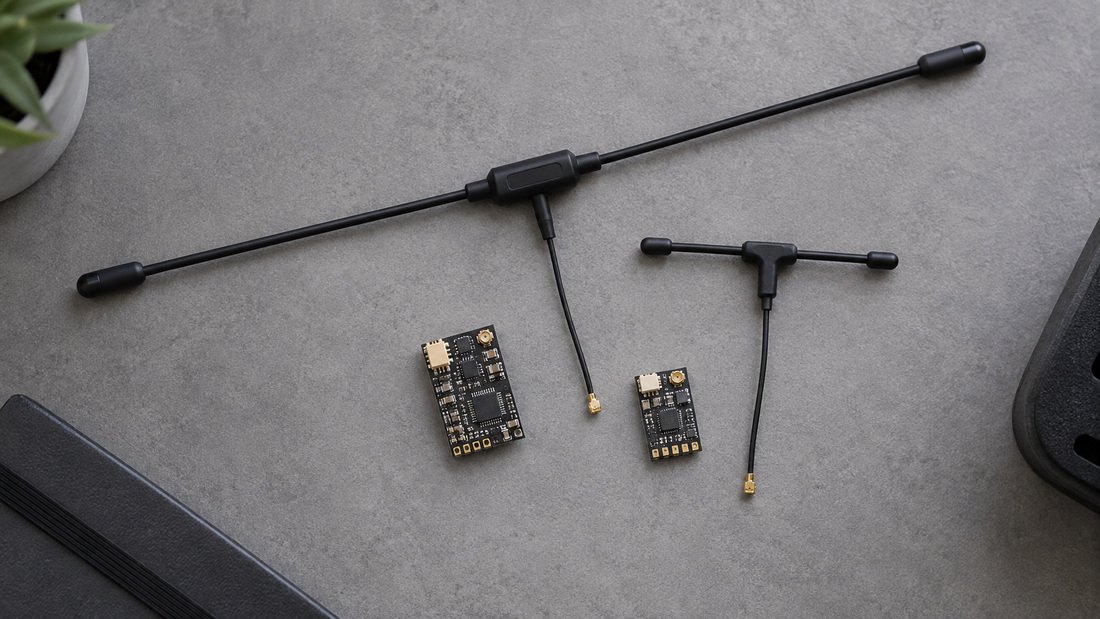
Receiver performance depends heavily on the antenna. ELRS Nano receivers may use a ceramic antenna, a T-style antenna, or an external antenna with a connector. The right choice depends on the airframe, the radio band, and how the drone is oriented during flight.
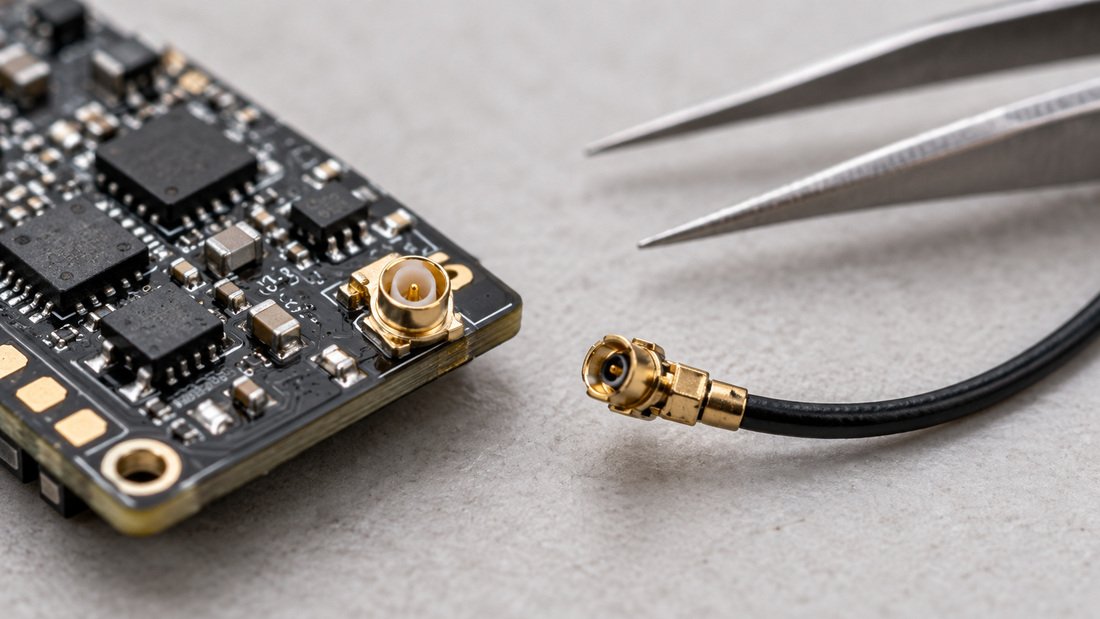
Antenna connectors are a common source of ordering mistakes. U.FL, IPEX, and other small connectors look similar but are not always compatible. Teams should confirm the exact connector on both the receiver and the antenna before purchase. The RF antennas category can help you match antennas to receiver hardware.
Diversity and Antenna Placement
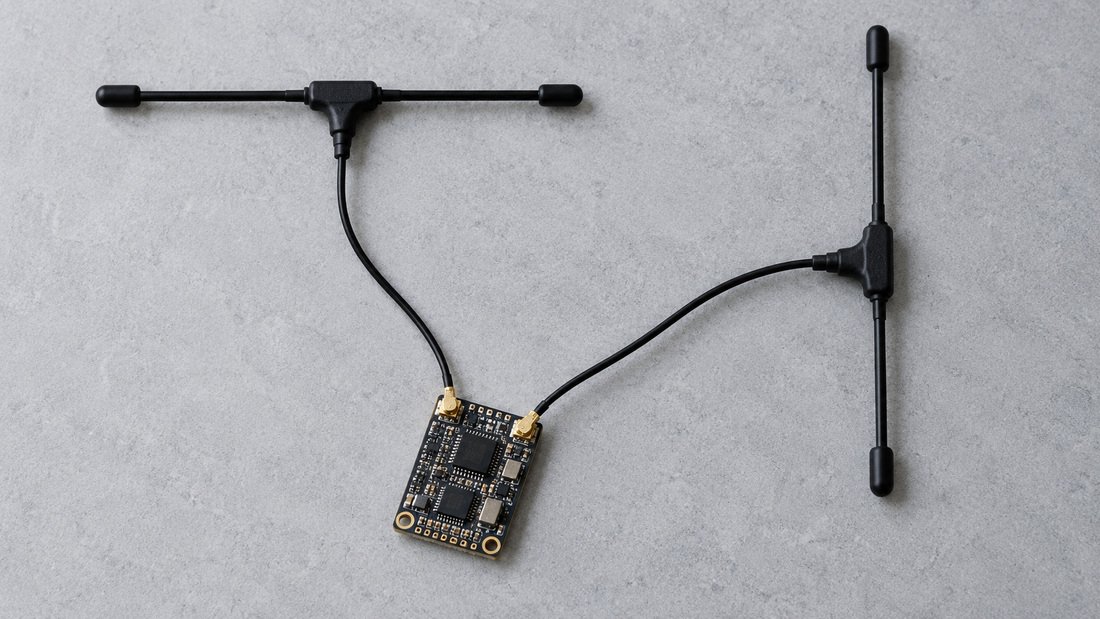
Some receivers support antenna diversity, which means two antennas and automatic switching or combining. This can help in indoor environments with reflections, but it also adds size and cost. For drone soccer, the benefit depends on the venue and how the receiver is mounted.
Placement matters as much as the antenna type. Antennas should not be blocked by carbon fiber or metal. Keep them away from power wires and noisy components. A well-placed simple antenna can outperform a poorly placed advanced one.
Compatibility and Firmware: What to Verify
ELRS is an ecosystem, but not every receiver works with every transmitter module out of the box. Firmware version, target, and binding method can vary. Teams should confirm compatibility before buying a large batch.
PWM receivers may be simpler in firmware terms, but they still need to match the transmitter’s protocol. If your team uses multiple radio brands, check whether each receiver supports the required mode. The ELRS receiver compatibility center is a good starting point for checking matches.
Serial Protocol on the Flight Controller
For ELRS Nano receivers, the flight controller must support the correct serial protocol and have a free UART. Some flight controllers label UARTs differently, so check the pinout diagram. Also confirm the receiver’s input voltage range; connecting a 5V-only receiver to a higher voltage can damage it.
Channel Count and Mixing
Serial receivers can carry many channels over a single link, but the flight controller must be configured to map them. PWM receivers are limited by the number of physical pins. If your drone soccer setup needs arming, flight modes, and a game-specific function, count the required channels early.
When in doubt, ask the supplier for a recommended wiring diagram and channel map for your exact flight controller. This is especially important for schools and clubs building many identical drones.
Common Mistakes in ELRS Receiver Selection
- Buying a receiver without checking the antenna connector type.
- Assuming all ELRS receivers are the same size or use the same firmware target.
- Mixing PWM and serial receivers across a team fleet without a clear reason.
- Forgetting to confirm input voltage and UART availability.
- Ordering antennas separately without matching them to the receiver connector.
- Overlooking spare parts and cables for crash repairs.
These mistakes are avoidable with a short checklist before ordering. They are also easier to catch when one person on the team owns the receiver standard and documents it for everyone.
Buyer Checklist for Teams and Programs
- Confirm whether your airframe uses a flight controller or direct-drive control.
- Decide on one receiver type for the fleet, usually ELRS Nano for flight-controller builds.
- Check the receiver’s input voltage and serial protocol support.
- Verify the antenna connector and order matching antennas and cables.
- Request the firmware target and binding instructions in writing.
- Ask about spare receivers, antennas, and cables for repairs.
- Confirm MOQ, lead time, and warranty terms in writing before purchase.
- Order a sample unit to test with your transmitter and flight controller.
This checklist is general guidance. Actual DPF product specifications, MOQs, lead times, and warranty terms should be confirmed directly with the DPF team for your order.
Procurement Guidance for Distributors and OEM Teams
Distributors and OEM procurement teams often need consistent batches and clear documentation. For ELRS receiver selection, ask for the exact model number, firmware target, antenna connector, voltage range, and packaging details. If you need custom labeling or bundles, confirm what is possible and what is not.
Do not assume that a sample unit and a bulk order are identical in firmware or accessories. Ask for the batch specification in writing. If you are building team kits, request a sample kit first so you can test the full setup before committing to a larger order.
For team kit planning, visit DPF’s contact page to discuss your receiver requirements and request a quote.
Frequently Asked Questions
1. Is an ELRS Nano receiver always better than a PWM receiver?
No. The better choice depends on your setup. ELRS Nano is usually better for drone soccer and FPV builds with a flight controller because it is smaller and uses fewer wires. PWM is better when a device needs direct channel pulses and no flight controller is involved.
2. Can I use a PWM receiver with a modern flight controller?
Some flight controllers support PWM input, but it is less common on modern small boards. Check your flight controller manual before buying. If it only supports serial input, a PWM receiver will not work without additional hardware.
3. Do ELRS Nano receivers work with all ELRS transmitters?
Not automatically. Firmware version and target must match, and the binding method can vary. Confirm compatibility with your transmitter module before ordering. The DPF compatibility center can help you check specific combinations.
4. How many channels do I need for drone soccer?
It depends on your game rules and airframe. At minimum you need throttle, roll, pitch, yaw, and an arming switch. Additional channels may be used for flight modes or game functions. Count your requirements before choosing a receiver.
5. What antenna should I use with an ELRS Nano receiver?
Match the antenna to the receiver’s connector and frequency band. For indoor drone soccer, placement often matters more than antenna gain. Confirm the connector type before ordering, and keep spare antennas for repairs.
6. Can DPF supply receivers pre-configured for our team?
Configuration services depend on the order and product. Ask DPF directly what is possible for your team kit. Any pre-configuration, labeling, or bundling should be confirmed in writing before purchase.
7. How do we handle spares for a school or club fleet?
Standardize on one receiver model and stock spare receivers, antennas, and cables. Keep a simple wiring diagram for students and coaches. Confirm spare part availability and lead times with DPF when planning your order.
Conclusion
The difference between an ELRS Nano receiver and a PWM receiver comes down to output type and intended use. ELRS Nano receivers are compact serial devices built for modern flight controllers, making them a strong default for drone soccer and FPV team fleets. PWM receivers output one pulse per channel and remain useful for legacy or direct-drive systems without a flight controller.
For most clubs, schools, and youth programs, standardizing on an ELRS Nano receiver simplifies builds, repairs, and training. Before ordering, confirm voltage, protocol, antenna connector, firmware target, and spare part availability. If you are equipping a team or planning a distributor order, start by requesting a sample and a written specification.
Next step: Request a Team Kit Quote and confirm the receiver details for your fleet.