Quick summary
ExpressLRS (ELRS) receivers commonly use either an IPEX/U.FL connector for a small external antenna, a fixed T-style antenna, or — on some diversity receivers — two antenna ports. The right choice depends on your airframe, how the antenna is mounted, crash exposure, and whether you need serviceable parts for a school or club fleet. This guide explains the differences and gives a practical selection and procurement process for coaches, program managers and buyers.
Key Takeaways
- IPEX/U.FL receivers let you replace or upgrade the antenna; fixed T-antenna receivers simplify handling and reduce loose-part risk.
- Diversity receivers use two antennas to improve signal robustness, but they add mounting and inspection work.
- Antenna orientation and cable routing often affect practical range more than the connector type alone.
- For youth programs, prioritize rugged mounting, standard connectors and consistent spares over peak specifications.
- Always confirm connector type, antenna gain pattern and spare-parts availability in writing before ordering.
What antenna types do ELRS receivers use?
ELRS receivers generally fall into three antenna arrangements: a connectorized IPEX/U.FL port, a permanently attached T-style (dipole) antenna, or a dual-antenna diversity layout. The connectorized option is serviceable; the fixed T is simpler; diversity is a reliability strategy. Each has trade-offs for drone soccer, indoor racing and training fleets.
IPEX/U.FL connectorized receivers
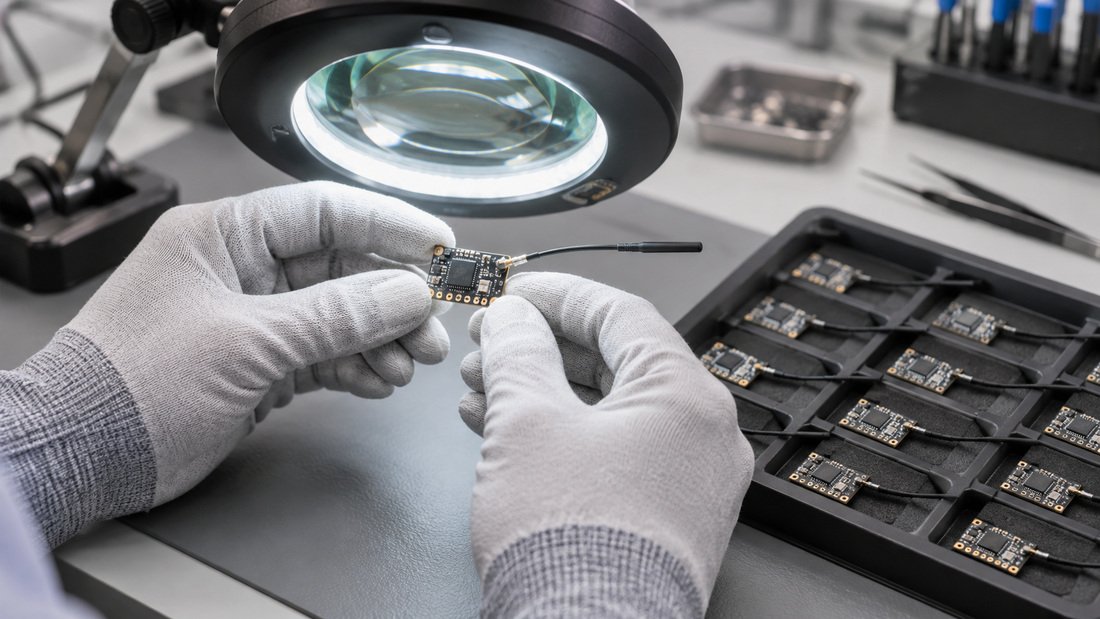
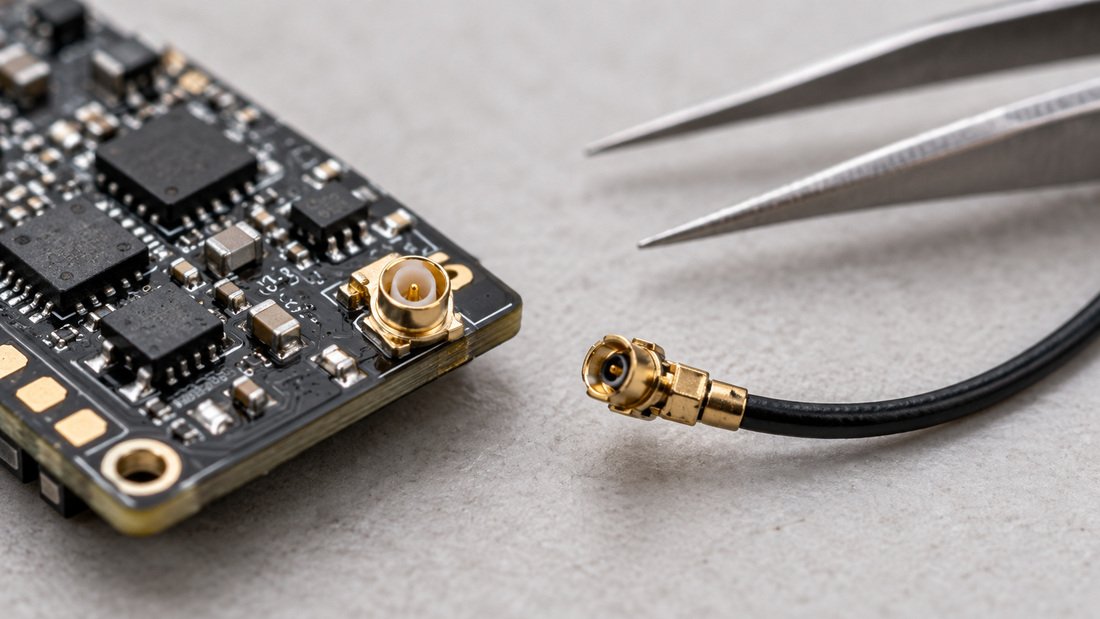
These receivers have a tiny U.FL/IPEX socket where an external antenna cable plugs in. The antenna itself is often a small flexible whip or a T-style element on a short pigtail. This is useful when the receiver is buried inside a frame or when an antenna gets damaged during practice and you want to swap it without replacing the whole receiver.
Connectorized designs also let you match the antenna to how the drone is oriented. If your drone soccer frame carries the receiver low and central, you may be able to route the antenna away from carbon fiber and battery wiring, which can reduce shielding and interference.
Fixed T-antenna receivers
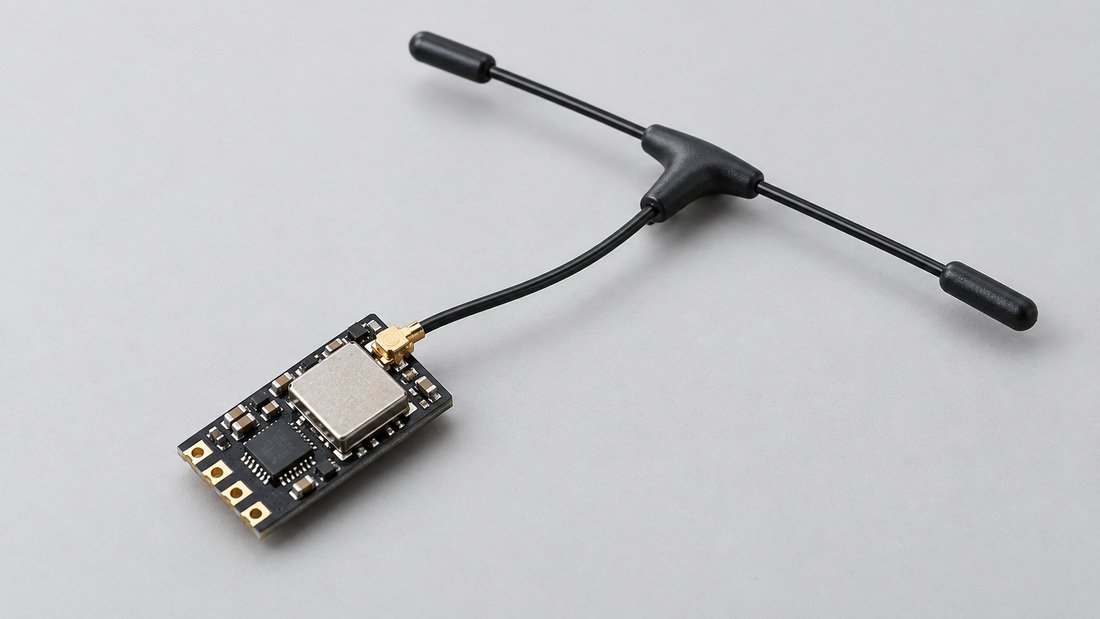
A T antenna is permanently attached to the receiver board. It is usually a dipole design with two elements forming a T shape. Because there is no connector, there is less to come loose, fewer handling steps, and no risk of a student disconnecting the pigtail during a repair. For school fleets, this can reduce maintenance time and lost parts.
The trade-off is repairability: if the antenna is damaged, the receiver may need to be replaced rather than re-antennaed. A fixed T antenna also constrains how you can position the antenna, since you cannot reposition the cable freely to avoid interference.
Diversity receivers with two antennas
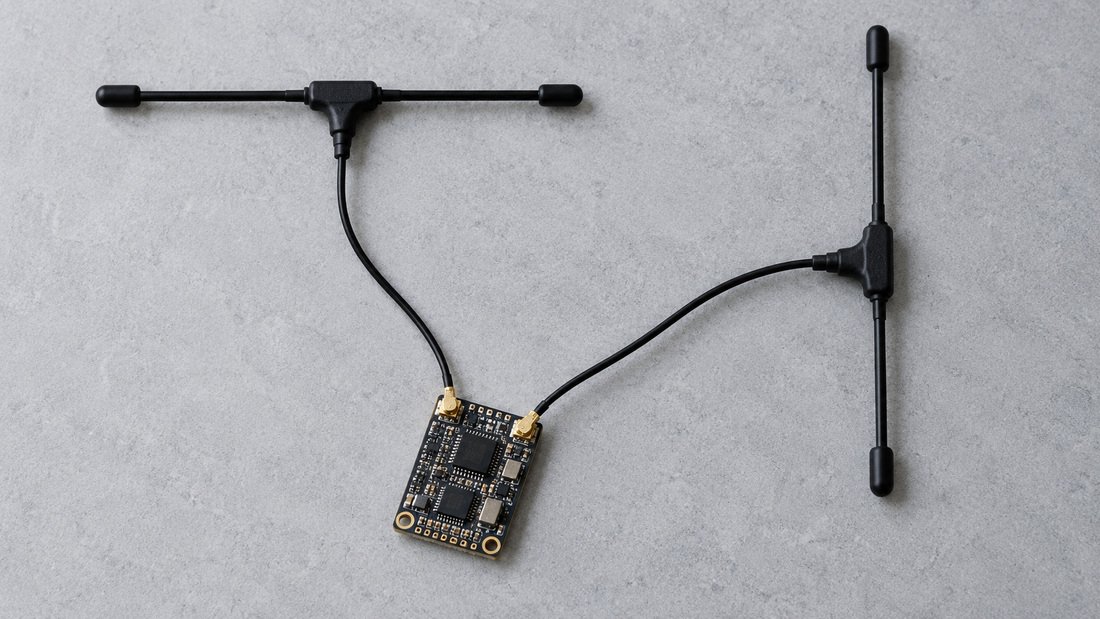
Diversity receivers have two antenna ports or two antennas, and the receiver can use both to improve link reliability. In practice, this means the receiver is better able to cope with one antenna being shadowed by the frame, a battery or a pilot’s body. For drone soccer, where drones turn tightly and the body can block signal, diversity can be worth the extra mounting effort.
However, two antennas also mean two things that can be knocked, two cables to inspect, and more weight. On a small indoor drone soccer frame, that trade-off matters. Teams should test whether the added reliability outweighs the added maintenance.
IPEX vs T antenna: side-by-side comparison
The table below summarizes the practical differences for clubs and programs. Use it as a starting point, then confirm details with your supplier, because individual receiver designs vary.
| Factor | IPEX/U.FL connectorized | Fixed T antenna | Diversity (dual antenna) |
|---|---|---|---|
| Repairability | High — antenna can be replaced | Low — antenna integrated | Medium — two antennas, more parts |
| Handling simplicity | Medium — connector care needed | High — no connector to manage | Lower — two antennas to manage |
| Mounting flexibility | High — cable can be routed | Low — antenna position fixed | Medium — two positions but more routing |
| Weight (general tendency) | Often lower with small external antenna | Generally similar or slightly higher | Often higher due to second antenna |
| Best for | Frames with tight internals, repairable fleets | Beginner teams, simple builds | Competitive teams needing link robustness |
| Spares strategy | Keep spare antennas and pigtails | Keep spare receivers | Keep spare antennas and receivers |
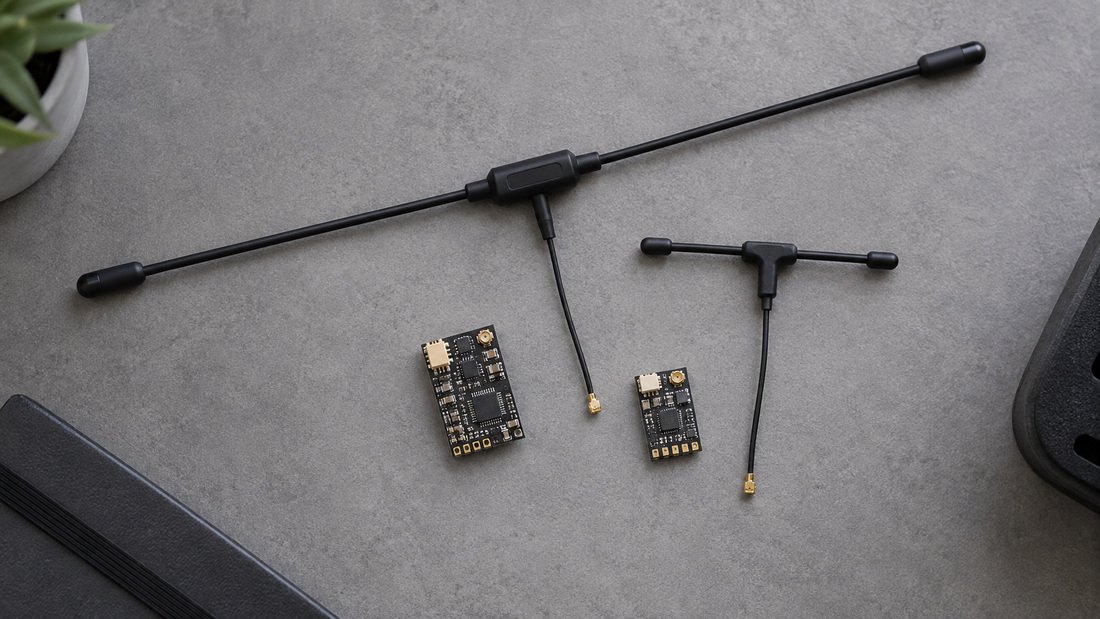
For a wider view of the RF ecosystem, see our ELRS and RF systems category. If you are comparing receiver boards, start with the ELRS receivers range. Teams upgrading their ground side can also review ELRS transmitter modules.
How to choose for drone soccer and school programs
There is no single best antenna type. The right ELRS receiver selection depends on your airframe, skill level and maintenance capacity. Below are the decision factors that matter most.
Airframe and space constraints
Small drone soccer frames often have very little room. A connectorized IPEX receiver with a short pigtail can be easier to fit because the antenna can be routed to a clear area. A fixed T antenna may be simpler but can force the antenna to sit close to carbon fiber or wiring, which can degrade performance.
Pilot skill and crash exposure
Beginner teams crash more often. A fixed T antenna may survive some impacts, but a damaged antenna often means replacing the receiver. An IPEX receiver lets you replace just the antenna, which can lower long-run cost if your team has many small crashes. For advanced teams, diversity may reduce the chance of a failsafe during a critical maneuver, but it adds parts to inspect.
Maintenance and spares
School programs often run in short sessions with volunteers or coaches. Simplicity is valuable. If your program cannot easily solder or handle tiny connectors, a fixed T antenna may be the better default. If you have a repair station and want to keep receivers in service longer, IPEX is more flexible.
Regulatory and venue considerations
RF power and antenna choices may be subject to local rules. No specific limits are asserted here; check with your national regulator and venue. Ask your supplier for documentation that helps you confirm compliance for your region.
Common mistakes when selecting ELRS receiver antennas
- Ignoring antenna orientation. A poorly placed antenna can reduce range regardless of connector type. Keep antennas away from carbon fiber and battery cables.
- Mixing connector standards. IPEX/U.FL and other small RF connectors are not all interchangeable. Confirm the exact connector on both receiver and antenna.
- Overlooking strain relief. On IPEX receivers, a tug on the pigtail can damage the socket. Plan cable routing and use a small amount of strain relief where possible.
- Buying diversity without the mounting plan. Two antennas need two well-placed positions; otherwise the second antenna adds little.
- Assuming more gain is always better. Antenna gain patterns affect coverage shape. A high-gain antenna may not suit tight indoor flying.
Procurement checklist for clubs and programs
Use this checklist when requesting quotes from suppliers. It is written for teams that need repeatable, maintainable fleets rather than one-off builds.
- Confirm the antenna type on each receiver: IPEX/U.FL, fixed T, or diversity.
- Confirm the exact connector standard and whether antennas and pigtails are available as spares.
- Ask for the antenna’s frequency band and gain pattern so you can match it to your flying environment.
- Request the receiver dimensions and weight if you are fitting a small drone soccer frame.
- Ask whether the receiver supports the ELRS firmware and packet rates your team uses; verify with the supplier.
- Ask for a sample unit before a large order so your team can test mounting and handling.
- Request written confirmation of warranty, minimum order quantity, lead time and return policy if these matter to your program.
- Ask if the supplier can provide antennas as separate line items to simplify spares planning.
If you need help matching receivers to your existing radios, see our ELRS receiver compatibility page. For antenna options, browse RF antennas.
Planning a fleet for a school or drone soccer club? Tell us your airframe, quantity and spare-parts needs, and we can help you compare receiver and antenna options. Request a Team Kit Quote.
Frequently asked questions
1. What does IPEX mean on an ELRS receiver?
IPEX, often called U.FL, is a small RF connector used to attach an external antenna to a receiver board. It allows the antenna to be replaced or repositioned. The exact connector standard should be confirmed with your supplier because similar-looking connectors are not always compatible.
2. Is a T antenna better than an IPEX antenna for drone soccer?
Neither is universally better. A T antenna is simpler and has fewer loose parts, which can suit beginner teams. An IPEX antenna is more repairable and can be repositioned. Choose based on airframe space, crash frequency and your maintenance capacity.
3. Do diversity receivers always give better range?
Diversity can improve link reliability when one antenna is blocked, but it does not automatically increase range. Results depend on antenna placement, the environment and the rest of the RF system. Test in your actual flying space before committing a fleet.
4. Can I replace a broken T antenna?
Usually not easily, because the T antenna is often permanently attached. In many cases the receiver must be replaced. If repairability matters, choose a connectorized IPEX receiver and keep spare antennas.
5. How should I orient the antenna on a small drone?
Keep the active antenna element away from carbon fiber, battery cables and metal parts. For diversity receivers, try to position the two antennas so that at least one has a clear path to the transmitter during typical flight attitudes. Verify by testing in your venue.
6. What should I confirm before ordering ELRS receivers for a club?
Confirm antenna type, connector standard, frequency band, receiver size and weight, firmware and packet-rate compatibility, spare-parts availability, and the commercial terms you need in writing. Ask for a sample unit before a large order.
7. Are there regulations about antenna choice or transmit power?
Rules vary by country and venue. This article does not assert specific limits. Check with your national regulator and event organizer, and ask your supplier for documentation that helps you verify compliance in your region.
Conclusion
For ELRS receiver selection, the antenna question is really a maintenance and mounting question. IPEX/U.FL receivers offer repairability and routing flexibility. Fixed T antennas offer simplicity and fewer loose parts. Diversity receivers add link robustness at the cost of extra mounting and inspection. The best choice for a school or drone soccer club depends on airframe space, crash exposure and how much maintenance your team can handle.
Start by sampling one receiver of each relevant type, test it in your own venue, and then standardize your fleet. Before you order, confirm connector type, antenna spares, firmware compatibility and commercial terms in writing with your supplier. To move from evaluation to procurement, Request a Team Kit Quote and tell us your frame, quantity and spare-parts needs.