Quick summary
Selecting an ELRS receiver for a micro or whoop build means matching the receiver to your frame, flight controller UART, antenna mounting and radio link requirements. For most indoor whoops, a lightweight single-antenna receiver is enough. For outdoor micro freestyle, drone soccer practice or longer-range flights, a receiver with better antenna options or diversity may be more appropriate. The right choice depends less on brand hype and more on weight, connector type, firmware compatibility and how you plan to mount the antenna.
Key Takeaways
- For tiny whoops, prioritize low weight and a compact antenna solution; for outdoor micros, prioritize antenna flexibility and link reliability.
- Check the receiver’s antenna connector type (for example IPEX/U.FL, solder pad or onboard antenna) before buying; it determines how you mount it.
- Confirm firmware target and compatibility with your radio transmitter and flight controller before ordering in volume.
- For teams and clubs, standardize on one or two receiver variants to simplify spares and troubleshooting.
- Ask suppliers for written confirmation of weight, connector, firmware version and packaging before committing to a team order.
What does an ELRS receiver do in a micro or whoop build?
An ELRS (ExpressLRS) receiver receives control commands from your radio transmitter and passes them to the flight controller. In micro and whoop builds, the receiver must fit a very small frame, add minimal weight and work reliably in indoor or crowded RF environments. It connects to a UART on the flight controller and is powered from the flight controller’s regulated supply. The receiver’s antenna type and placement have a large effect on real-world link quality.
How to choose the right ELRS receiver for micro and whoop builds
1. Start with weight and size
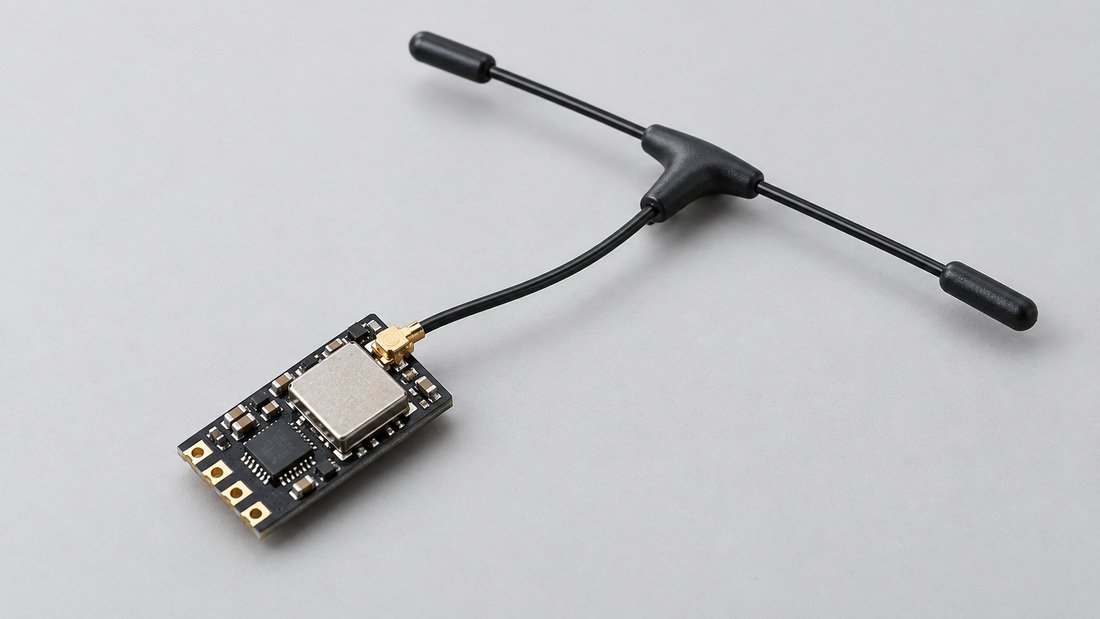
Every gram matters on a whoop. A receiver that is slightly heavier or larger may force you to move or remove other components. Look at the receiver’s stated weight including antenna, because an external antenna and connector can add noticeable mass. For indoor whoops, many builders accept a very small receiver with an onboard or short wire antenna. For outdoor micros, a slightly heavier receiver with a better antenna may be worth the trade-off.
2. Understand antenna types and connectors
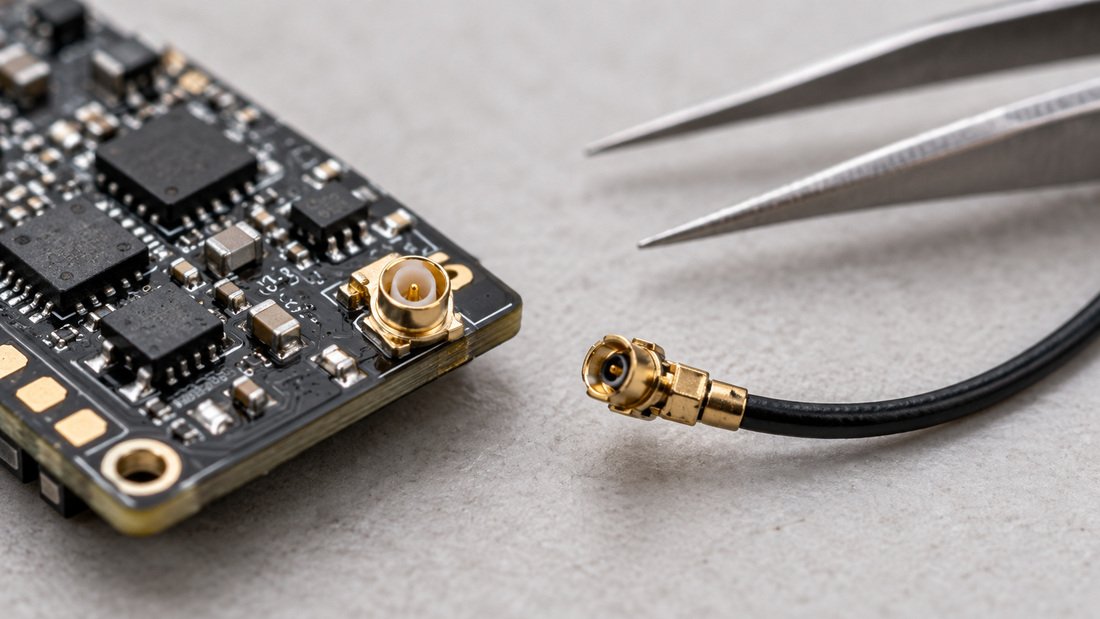
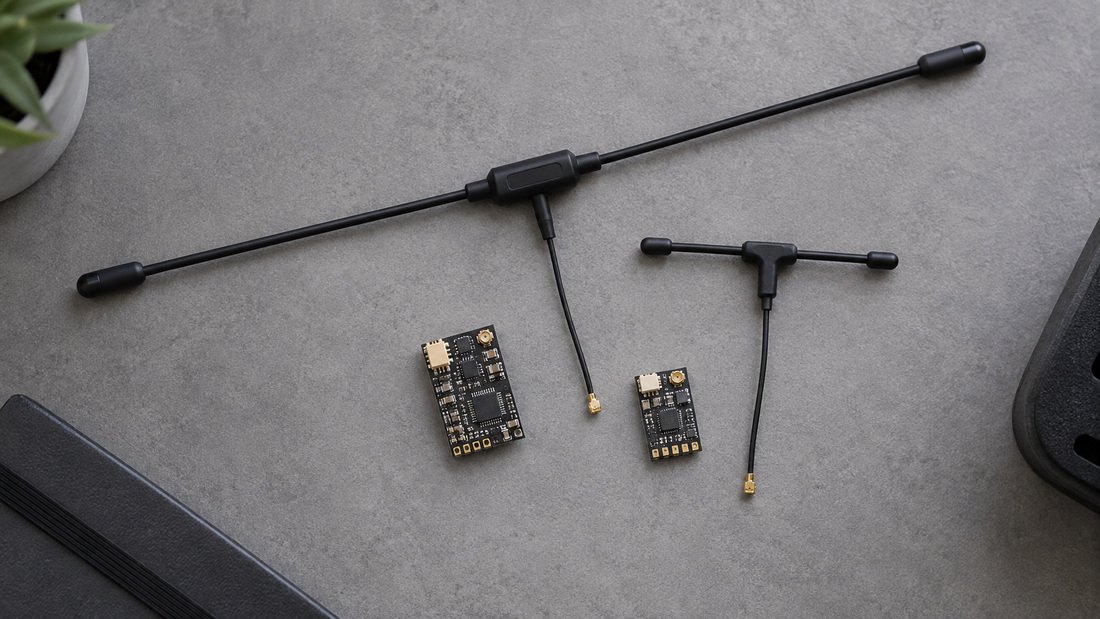
Receiver antennas commonly come in a few forms: onboard ceramic or chip antennas, wire antennas, T-style antennas, and external antennas with a connector such as IPEX/U.FL or SMA. The connector type decides how you mount and replace the antenna. If you plan to swap antennas or use a specific antenna for drone soccer arenas, choose a receiver with the matching connector. A soldered antenna can be lighter and more secure but is harder to replace. An IPEX/U.FL connector allows replacement but adds a small amount of weight and a potential failure point if not secured.
3. Decide whether you need diversity
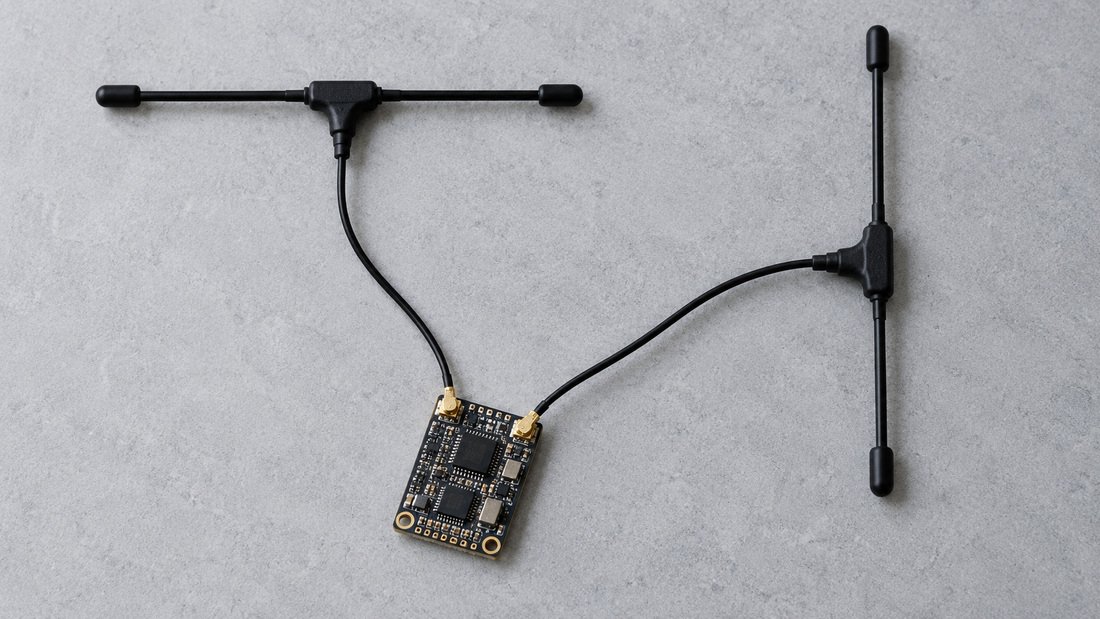
Diversity receivers use two antennas and two receiver chains to improve signal reliability when one antenna is blocked. On a micro or whoop, diversity adds weight and size. It can help in environments with many obstacles or when the antenna orientation changes quickly, such as drone soccer. For simple indoor whoops, a single well-placed antenna is often enough. Consider diversity only if you have a specific link problem or fly in RF-congested spaces.
4. Match firmware and protocol
ELRS receivers run firmware that must match your transmitter module and configuration. Before buying, confirm the receiver’s firmware target and whether it supports the ELRS version you use. Also check that your flight controller has a free UART and that the receiver’s output protocol (for example CRSF) is supported. For teams, keep a record of firmware versions so that all receivers can be updated consistently. See our ELRS receiver compatibility page for guidance on matching receivers to transmitters and flight controllers.
5. Consider power supply and wiring
Most micro receivers accept a range of input voltages, but you should confirm the exact range and whether it matches your flight controller’s available pad. Some receivers include a built-in voltage regulator; others expect a stable supply. Wiring should be short and secure. On whoops, excessive wire length adds weight and can interfere with the stack. If you are buying for a club, ask the supplier for a wiring diagram or pinout document.
Comparison table: receiver types for micro and whoop builds
| Receiver type | Typical use | Weight consideration | Antenna mounting | Trade-offs |
|---|---|---|---|---|
| Single antenna, onboard antenna | Indoor whoops, tight frames | Usually lightest | No external antenna | Limited placement options; may be blocked by frame |
| Single antenna, external connector | Micros, whoops with antenna mounts | Light to moderate | IPEX/U.FL or solder pad | More flexible but connector can add weight and failure point |
| Diversity, two antennas | Outdoor micros, drone soccer, RF-heavy areas | Heavier | Two connectors or soldered antennas | Better link reliability but more weight and complexity |
| Receiver with integrated telemetry | Builds needing telemetry feedback | Varies | Depends on antenna design | Useful data but may add cost and setup time |
This table is general guidance. Actual weights and features vary by product. Always check the specific product datasheet.
Common mistakes in ELRS receiver selection for micro builds
- Buying by brand name only. Two receivers from the same brand can have different connectors, firmware targets and weights. Check the exact variant.
- Ignoring antenna connector type. Ordering an IPEX receiver when your frame and antenna use solder pads creates unnecessary work.
- Overlooking firmware compatibility. A receiver that cannot run your ELRS version may require reflashing or may not work with your transmitter module.
- Forgetting weight of antenna and connector. The receiver alone may be light, but the complete antenna assembly adds mass.
- Not planning for spares. For clubs, a single receiver failure can ground a pilot. Standardizing on one or two models simplifies replacements.
Buyer checklist for schools, clubs and teams
Use this checklist when comparing ELRS receivers for a group purchase. It is written for procurement teams who need consistent, repeatable specifications.
- Confirm the receiver’s weight including antenna and connector.
- Confirm antenna type and connector (onboard, solder pad, IPEX/U.FL, SMA).
- Confirm supported ELRS firmware version and update method.
- Confirm output protocol (for example CRSF) and UART requirements.
- Confirm input voltage range and whether a regulator is included.
- Confirm pinout and wiring diagram availability.
- Confirm packaging and labeling suitable for a team kit.
- Ask for a sample unit to test with your transmitter and flight controller before bulk ordering.
- Request written confirmation of any warranty, return policy and lead time.
Practical mounting tips for micro and whoop builds
Mount the receiver away from power wires, ESCs and video transmitters where possible. Antenna orientation matters: keep the active element clear of carbon fiber and metal. On whoops, a short wire antenna routed along a frame arm can work well. For drone soccer, where the drone may be enclosed in a cage, plan antenna placement so it is not fully shielded. Secure connectors with a small amount of adhesive or heatshrink to reduce vibration damage. If you use an external antenna, consider a flexible mount that can absorb impacts.
Middle CTA: need help specifying receivers for a team?
If you are equipping a school program, club or drone soccer team, our team can help you compare receiver options and build a consistent parts list. Request a Team Kit Quote to discuss your requirements.
ELRS receiver quality and what to verify before ordering
Quality can vary between production batches. For clubs and schools, consistency matters as much as peak performance. Before ordering in volume, ask the supplier for details on how they inspect receivers and what tests are performed. Request documentation where available. Our ELRS receivers product page lists available options, but you should confirm specifications for your specific order in writing.
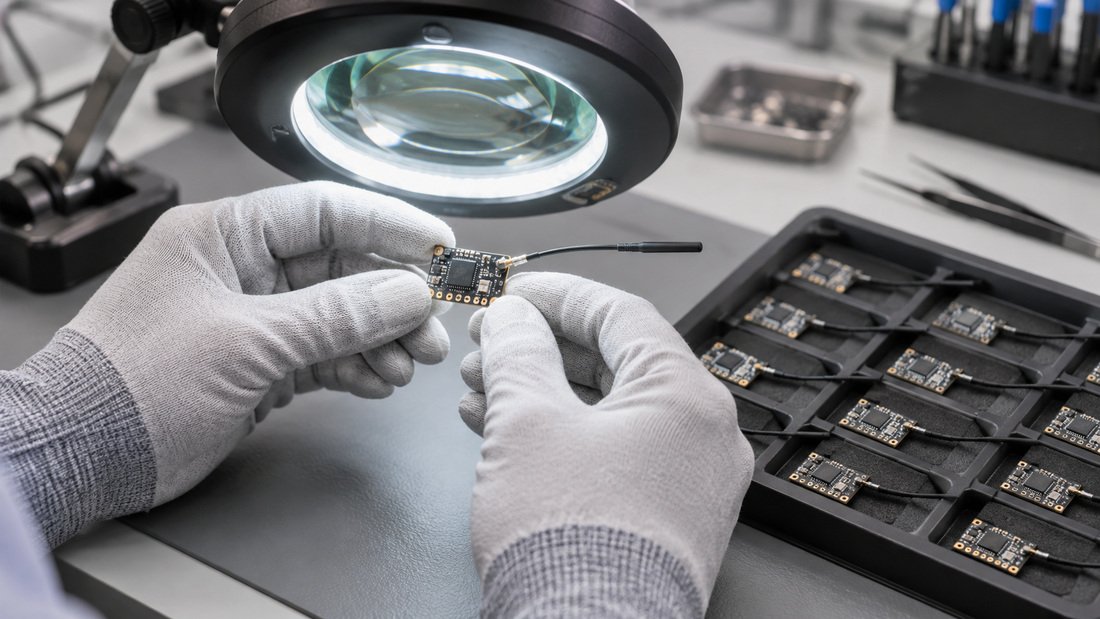
When comparing suppliers, ask whether receivers are tested for bind, range and failsafe behavior. For team use, a simple incoming inspection procedure can save time: bind each receiver, check telemetry and confirm failsafe on a test bench. Keep records by serial number or batch. If you also need transmitters or antennas, our ELRS transmitter modules and RF antennas pages show related components that may be part of a complete kit. For an overview of the category, see ELRS and RF systems.
Frequently asked questions
1. What is the best ELRS receiver for a tiny whoop?
There is no single best receiver for every whoop. For most indoor whoops, a lightweight single-antenna receiver with a compact antenna is appropriate. Choose a receiver that fits your frame, matches your flight controller’s UART and supports your ELRS firmware version. Test one unit before buying for a whole team.
2. Do I need a diversity receiver for micro builds?
Diversity can improve link reliability when one antenna is blocked, but it adds weight and size. For simple indoor flying, a single antenna is often enough. For outdoor micros or drone soccer in RF-heavy environments, diversity may be worth considering. Decide based on your actual flying environment and weight budget.
3. What antenna connector should I choose?
It depends on how you want to mount the antenna. IPEX/U.FL connectors allow easy antenna replacement but add a small connector and potential failure point. Solder pads are lighter and more secure but harder to change. Onboard antennas are simplest but least flexible. Check your frame and antenna plans before ordering.
4. Will any ELRS receiver work with my transmitter?
ELRS is a protocol family, but firmware versions and targets must match. Your transmitter module and receiver should run compatible ELRS firmware. Some receivers may require updating before use. Always confirm compatibility with your specific transmitter module and flight controller. Our ELRS receiver compatibility page provides general guidance.
5. How many spare receivers should a club keep?
There is no universal number. A reasonable approach is to keep enough spares to cover expected failures during an event plus a small buffer. For a team, standardizing on one or two receiver models makes spares easier to manage. Ask your supplier about pack sizes and whether they can provide a team kit configuration.
6. What should I ask a supplier before ordering in bulk?
Ask for written confirmation of weight, antenna type and connector, firmware version, input voltage range, pinout, packaging and any warranty or return policy. Request a sample to test with your own transmitter and flight controller. Also ask about lead time and whether they can supply consistent batches for future orders.
7. Are ELRS receivers suitable for drone soccer?
ELRS receivers are widely used in FPV and drone soccer builds, but suitability depends on the specific receiver, antenna placement and RF environment. Drone soccer often involves enclosed frames and close proximity to other drones, which can affect link quality. For team use, choose a receiver that can be mounted to keep its antenna clear and test it in your actual venue before committing to a full team kit.
Conclusion and next step
ELRS receiver selection for micro and whoop builds comes down to matching weight, antenna type, firmware and mounting to your actual flying needs. For schools and clubs, consistency and testability matter as much as specs. Start by defining your weight budget, antenna strategy and firmware requirements, then compare receivers against a written checklist. Before a bulk order, request samples and confirm all commercial terms in writing.
Ready to equip your team? Request a Team Kit Quote and tell us about your build, fleet size and timeline. We can help you review receiver options and plan a consistent kit for your program.