Quick summary
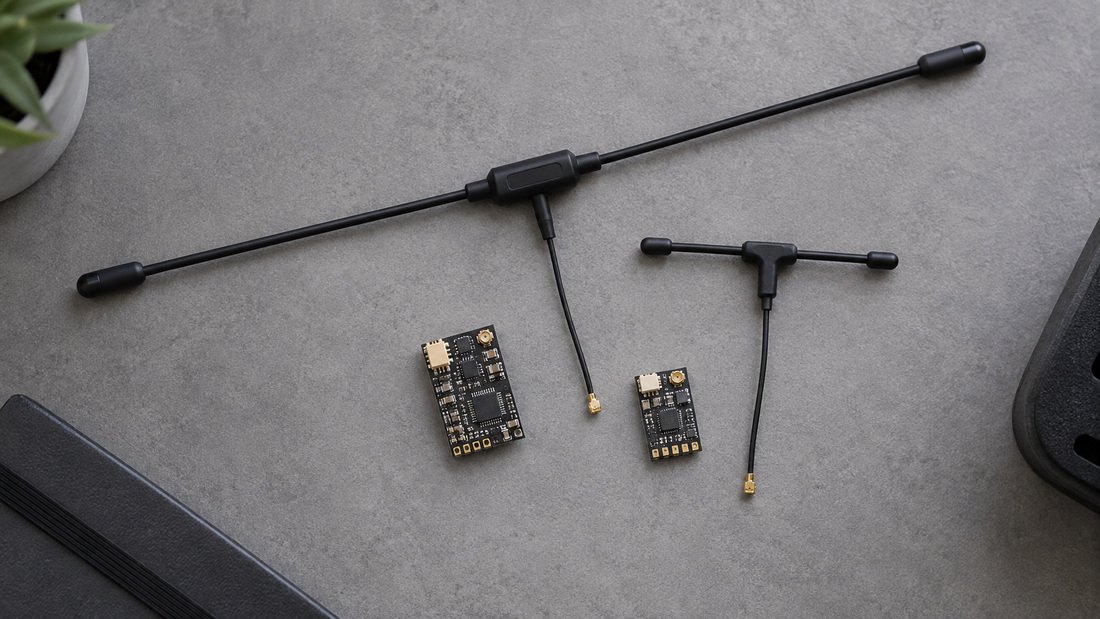
ELRS receivers do not output a single protocol. Modern ExpressLRS (ELRS, a long-range open-source radio control system) receivers typically support CRSF (Crossfire serial, also called CSRF) and PWM (pulse-width modulation) outputs, and many add SBUS (serial bus) for flight controllers or servos. What your receiver actually outputs depends on the model, firmware build, target options and how you wire it. For drone soccer, FPV and school programs, the practical answer is: choose a receiver whose output mode matches your flight controller or actuator, and confirm that in writing before ordering. This ELRS receiver selection guide explains how to compare CRSF, SBUS and PWM for team kits.
Key Takeaways
- CRSF is a bidirectional serial protocol common on ELRS receivers; it is often the default for flight controllers.
- SBUS is a serial protocol frequently used by older flight controllers, servos and some robotics boards.
- PWM is a per-channel output; on ELRS it is usually available on certain receiver models or via firmware/target options.
- Not every ELRS receiver supports every output mode. Verify output type, channel count and firmware before bulk purchase.
- For school and drone soccer programs, standardize one protocol across your fleet to simplify spares, training and repairs.
What protocols can an ELRS receiver output?
The short answer is CRSF, SBUS and PWM, but they are not interchangeable outputs on the same pin at the same time. An ELRS receiver is a radio link device: it receives the 2.4 GHz (or other band) signal from your ELRS transmitter module and passes commands to your aircraft. How those commands leave the receiver is the output protocol. CRSF and SBUS are serial protocols that send many channels over a single signal wire. PWM sends one channel per wire, so a six-channel PWM output needs six signal wires plus power and ground.
In practice, the receiver’s firmware target and hardware determine which outputs are possible. A receiver advertised as “CRSF” may still expose PWM pads on some versions, while a PWM receiver may not output CRSF at all. That is why a datasheet or product page alone is not enough for team procurement; ask for the exact firmware target and output configuration.
CRSF, SBUS and PWM compared for team use
Before comparing, define the job. A flight controller reads serial data; a servo or simple actuator usually needs PWM; a legacy board may only accept SBUS. The table below summarizes general trade-offs, not guaranteed specifications for any particular DPF model.
| Output | Signal type | Typical use | Wiring | Trade-off to check |
|---|---|---|---|---|
| CRSF | Bidirectional serial | Flight controllers, telemetry | One signal wire plus power/ground | Confirm firmware and UART configuration |
| SBUS | Serial, often unidirectional | Older FCs, some servos and boards | One signal wire plus power/ground | Inverted/non-inverted signal varies by receiver |
| PWM | One wire per channel | Servos, simple actuators, test rigs | Multiple signal wires plus power/ground | Channel count and cable bulk; mapping required |
Which output should your team standardize on?
For most drone soccer and FPV builds, CRSF is the most flexible starting point because it is a single-wire serial link that carries control and telemetry. If your flight controller and firmware support CRSF, you reduce wiring and simplify builds. SBUS remains useful when you are reusing older controllers, and PWM is the practical choice when you are driving servos, relays or teaching basic control theory without a flight controller.
The decision should follow your airframe, not the receiver catalog. Start with the flight controller or actuator, note the input protocol it expects, then select an ELRS receivers model that can output that protocol. If you are equipping multiple teams, standardizing on one receiver model and one output mode reduces training time and spare-part confusion.
Drone soccer and club considerations
Drone soccer teams often run repeated short flights, collisions and battery swaps. A consistent receiver output makes field troubleshooting faster: any coach can swap a receiver and know which port it plugs into. If your team uses a shared transmitter fleet, confirm that receiver output settings match across all airframes so one student does not unknowingly change a configuration.
School and youth program considerations
For classrooms, PWM can be easier to demonstrate because each channel maps to a visible wire and servo movement. CRSF is better once students move to flight controllers and telemetry. Many programs keep both: PWM receivers for bench learning and CRSF receivers for flight builds. Label each receiver clearly with its output mode to avoid mix-ups.
How firmware and binding affect output behavior
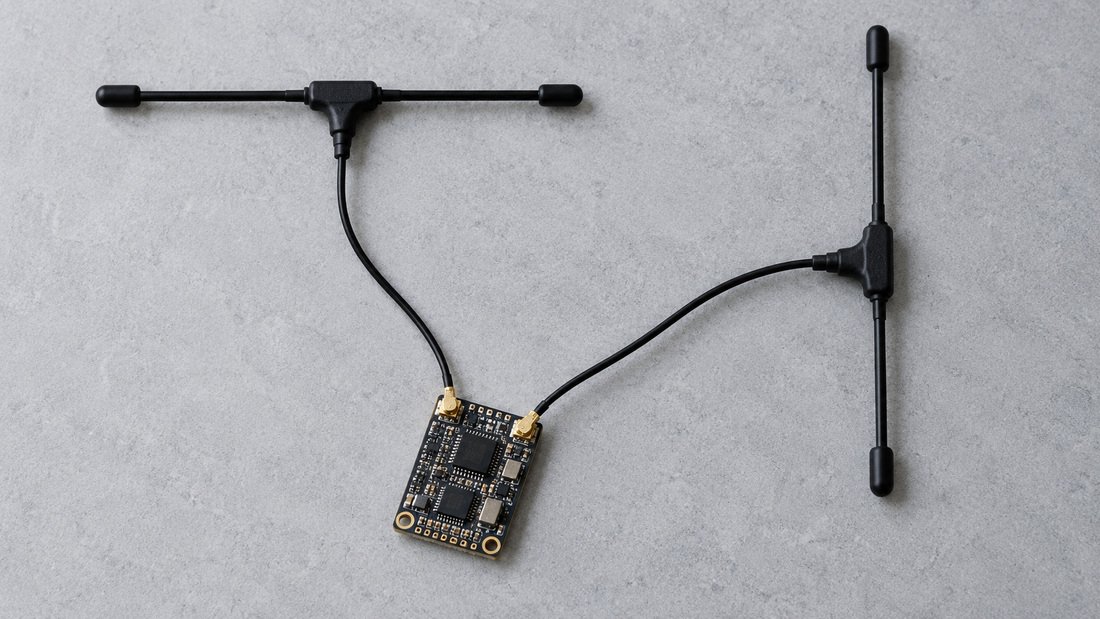
ELRS receivers run firmware that must match the transmitter’s major version and region settings. The output mode is usually selected in the receiver’s firmware target or configuration, not simply by the physical connector. Two receivers with the same board layout can behave differently after flashing. Before a bulk order, ask your supplier which firmware build is pre-installed and whether output mode can be changed after purchase.
Binding method matters too. Some receivers use a bind button, others a bind phrase, and some are bound at the factory. If your club issues receivers to students, a consistent binding procedure is as important as the output protocol. Write the procedure into your kit documentation. For a general overview of the product family, see ELRS and RF systems.
Common mistakes in ELRS receiver selection
- Assuming all ELRS receivers output all protocols. Output support varies by model and firmware. Verify before ordering.
- Matching only the connector, not the protocol. A plug that fits does not guarantee the signal type your flight controller expects.
- Ignoring signal inversion. SBUS implementations can differ; check whether your board expects inverted or non-inverted signal.
- Buying mixed receiver models for one fleet. This increases spare parts, firmware versions and training burden.
- Forgetting channel mapping. PWM outputs need channel-to-function mapping; test on the bench before flight day.
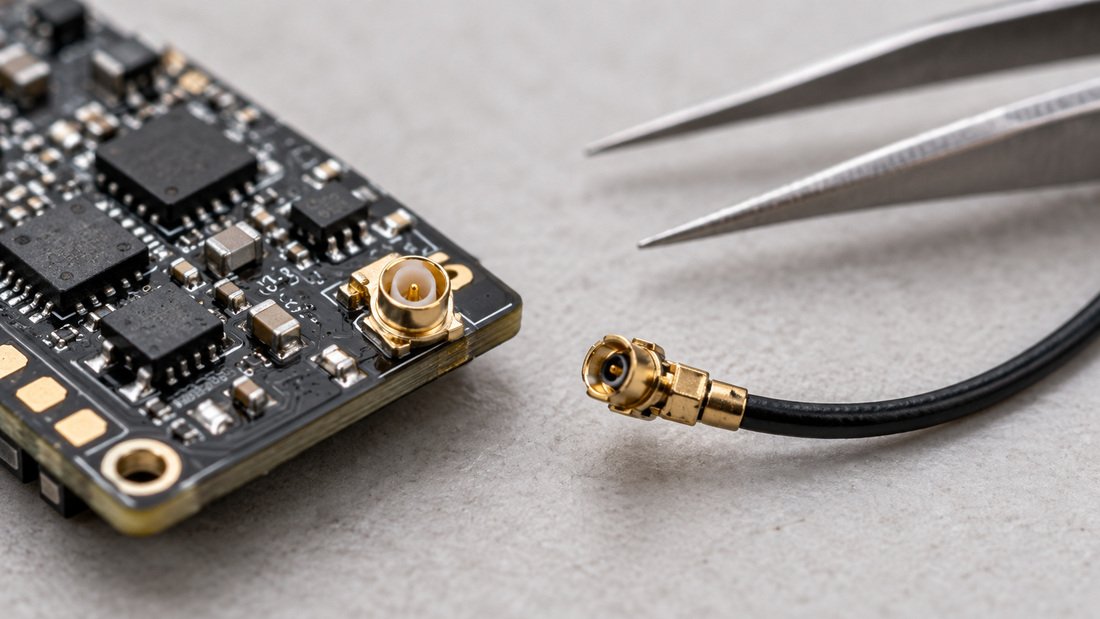
- Overlooking antenna and connector type. Antenna connector and mounting affect installation; match them to your airframe. See RF antennas for related options.
Procurement checklist for clubs, schools and distributors
Use this checklist before you request pricing. It separates technical requirements from commercial terms you should confirm in writing.
- Required output protocol: CRSF, SBUS, PWM or a combination. State it explicitly.
- Channel count: how many channels your airframe or actuator needs.
- Firmware version and region: which build ships, and whether it matches your transmitters.
- Binding method: button, bind phrase or factory bound; document the procedure.
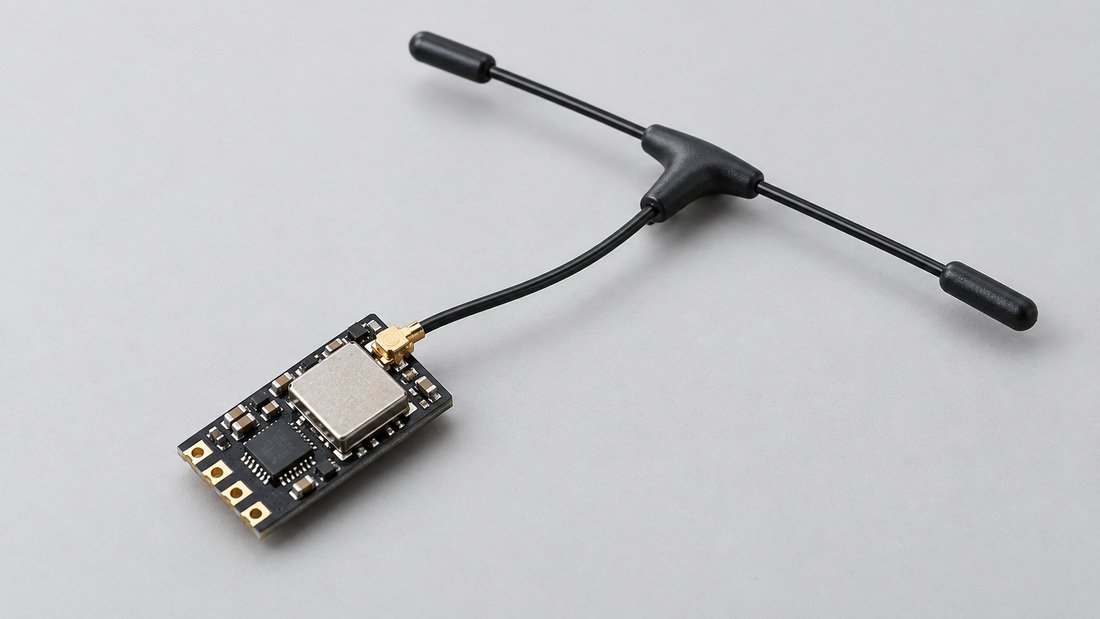
- Antenna and connector: type, mounting and replacement options.
- Physical size and mounting: fit inside your airframe and shock mounting.
- Power requirements: voltage range and connector type for your build.
- Documentation: wiring diagram, pinout and configuration notes for coaches.
- Sample evaluation: request samples to test output mode and binding before bulk purchase.
- Commercial terms to confirm in writing: price validity, payment terms, shipping method, warranty terms, lead time, minimum order quantity and return policy. Ask your supplier for these in a written quotation.
Verification steps before you commit
Because ELRS is an open ecosystem, documentation quality varies. Treat any protocol claim as something to verify. A practical sequence is: (1) identify the input protocol of your flight controller or actuator; (2) shortlist receivers that list that output; (3) request the exact firmware target and pinout; (4) order one or two samples; (5) bind, configure and test on the bench; (6) only then place a bulk order. For compatibility questions, the ELRS receiver compatibility resource is a reasonable starting point, but always confirm the final configuration with your supplier.
If you are equipping a league or school district, ask for a single technical contact who can answer protocol and firmware questions. This reduces the risk of receiving a mixed batch with inconsistent firmware.
Need help matching receivers to your team’s flight controllers? Share your build list and output requirements through our Get a Quote page and we will help you confirm the right configuration before you order.
Frequently asked questions
Do all ELRS receivers output CRSF, SBUS and PWM?
No. Support depends on the specific receiver model, its hardware and the installed firmware target. Some receivers support multiple output modes; others are limited. Always confirm the exact output options for the model you are considering.
Which output is best for a drone soccer build?
Most drone soccer builds use a flight controller, and CRSF is commonly used because it carries control and telemetry over one wire. However, the correct choice depends on what your flight controller accepts. Confirm the input protocol first, then select the receiver.
Can I change an ELRS receiver’s output protocol after purchase?
Sometimes, but not always. Output mode may be selectable through firmware or configuration, but this depends on the model and target. Ask your supplier whether the output can be changed and how, before you buy in volume.
What is the difference between CRSF and SBUS?
Both are serial protocols, but CRSF is bidirectional and typically supports telemetry, while SBUS is often used as a one-way control link. Wiring is similar, but firmware, signal inversion and flight controller support differ. Check both ends of the link.
Why do PWM receivers have more wires?
PWM sends one channel per signal wire, so a receiver with six PWM channels needs six signal wires plus power and ground. Serial protocols send many channels over a single signal wire, which reduces wiring but requires a compatible controller.
Can we mix different ELRS receiver models in one club fleet?
You can, but it complicates spares, firmware management and training. For teams and schools, standardizing on one or two receiver models with the same output mode usually saves time and reduces configuration errors.
What should we confirm in writing before a bulk order?
Confirm output protocol, firmware version and region, binding method, pinout, antenna type, warranty terms, lead time, minimum order quantity, price validity and return policy. Request samples first so your team can verify behavior on the bench.
Conclusion and next step
ELRS receivers can output CRSF, SBUS and PWM, but not every receiver supports every mode. For team, school and club procurement, the safe process is to start from your flight controller or actuator, confirm the required output, verify firmware and binding details, and test samples before committing to a bulk order. Standardizing across your fleet will pay off in faster repairs and simpler training.
Ready to equip your team? Request a Team Kit Quote and include your required output protocol, channel count and fleet size so we can help you confirm the right ELRS receivers configuration.