Quick summary
For most drone soccer teams and school programs, 100 mW is the sensible default for ELRS receiver selection: it minimizes heat, current draw and interference risk while comfortably covering typical indoor arenas and small outdoor fields. Move to 500 mW when you need more margin through concrete, metal structures or dense 2.4 GHz traffic. Choose 1 W only for long-range, high-interference or large outdoor venues where the extra link budget outweighs added heat, power consumption and regulatory duty-cycle considerations.
Key Takeaways
- Telemetry power affects both the uplink and downlink link budget; higher wattage is not automatically better for every venue.
- 100 mW suits typical indoor drone soccer arenas and school gyms where receivers stay within a few hundred meters of the transmitter.
- 500 mW is a practical middle ground for larger indoor spaces, outdoor fields and RF-congested sites.
- 1 W demands more attention to cooling, power supply quality and antenna placement.
- Confirm your local RF regulations and event rules before buying high-power hardware.
- Antennas, receiver diversity and mounting often influence link reliability more than raw power alone.
What does telemetry power mean in ELRS?
ExpressLRS (ELRS) is an open-source radio control link. Telemetry power refers to the transmit power of the radio link, usually stated in milliwatts (mW) or watts (W). 100 mW equals 0.1 W; 500 mW equals 0.5 W.
In a typical ELRS setup, the transmitter module sends control commands to the receiver, and the receiver sends telemetry back. The power setting you choose affects the strength of the signal your hardware emits. Higher power can extend range and improve penetration, but it also increases heat, battery draw and the potential to interfere with nearby radios.
For drone soccer, the receiver is usually a small board mounted on a lightweight, impact-prone airframe. The transmitter is often a handheld radio or a module in a ground station. Both ends of the link matter. A high-power transmitter paired with a poorly placed receiver antenna can still produce dropouts.
Is higher power always better?
No. Higher power can help in specific situations, but it is not a universal upgrade. In a school gym with dozens of drones flying at once, excessive power can raise the noise floor and make it harder for everyone’s receivers to hear their own transmitter. More power also means more heat, which can shorten component life if cooling is inadequate.
The better question is: what link margin does my venue actually require? That depends on distance, obstacles, antenna quality and how many other 2.4 GHz devices are operating nearby.
100 mW: the indoor and school default
100 mW is the most common starting point for indoor drone soccer and youth education programs. It balances reliability with low heat and modest power consumption.
In a standard indoor arena, the distance between transmitter and receiver is often under 100 meters. Walls, bleachers and spectators can attenuate the signal, but a well-placed antenna and a receiver with diversity can maintain a stable link at 100 mW. This power level is also easier to manage in terms of battery life and thermal design, which matters when students are handling hardware.
If your team flies exclusively indoors and you have not experienced dropouts, 100 mW is likely sufficient. It is also a safer choice when you are unsure about local RF rules or event regulations.
When 100 mW is not enough
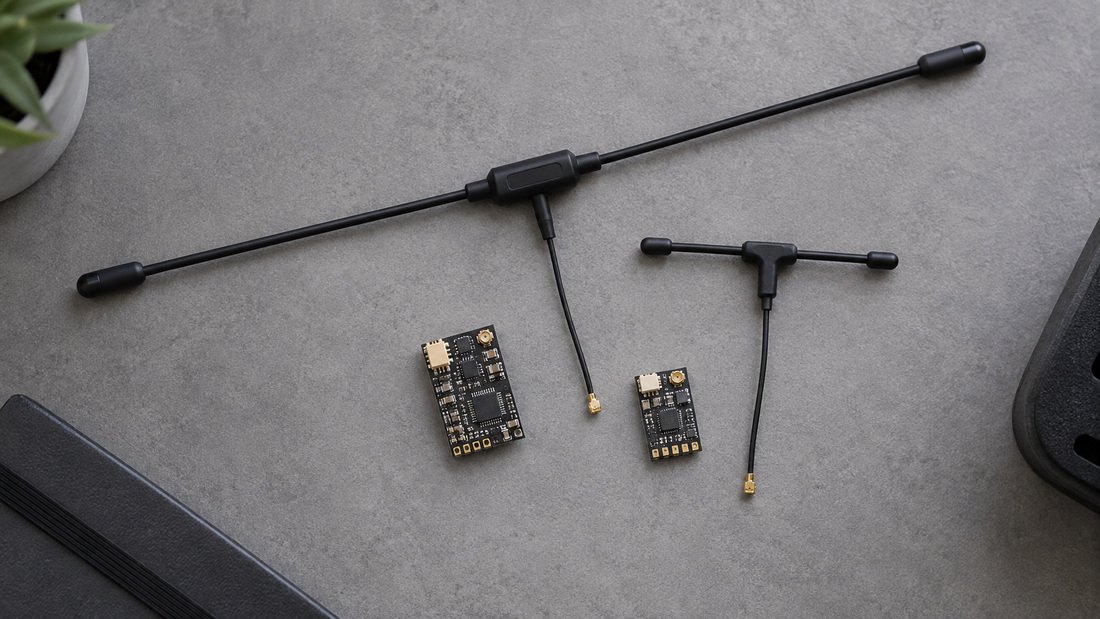
You may need more power if your arena has thick concrete walls, metal roofing or a high level of Wi-Fi congestion. Outdoor practice sessions on a large field can also push 100 mW to its limits, especially if the receiver is close to the ground or surrounded by carbon fiber.
Before jumping to 1 W, check antenna placement, receiver mounting and whether your transmitter and receiver are actually compatible. Our ELRS receiver compatibility guide can help you verify firmware and protocol matching.
500 mW: the flexible middle ground
500 mW is a popular choice for clubs that fly both indoors and outdoors. It provides extra link margin without the thermal and power demands of 1 W.
In a larger indoor facility or an outdoor field with moderate obstacles, 500 mW can reduce the chance of failsafe events. It is also useful when multiple teams are practicing nearby and the 2.4 GHz band is busy. Many ELRS transmitter modules and receivers support adjustable power, so you can switch between 100 mW and 500 mW depending on the session.
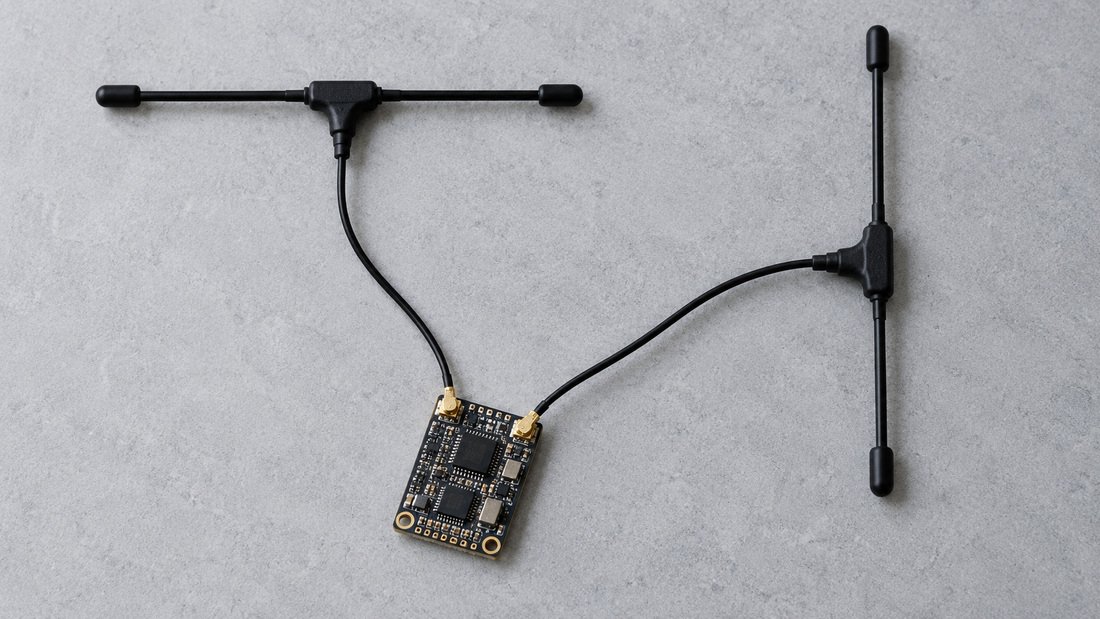
For drone soccer events, 500 mW may be a practical compromise if the venue is not fully controlled and you cannot guarantee a clean RF environment. However, higher power is not a substitute for good antenna selection. A poor antenna at 500 mW can perform worse than a good antenna at 100 mW.
Power vs. antenna trade-offs
Antenna gain and diversity can improve link reliability without increasing transmit power. If you are considering 500 mW, also review your RF antennas. A better antenna can sometimes solve a range problem at 100 mW, saving weight and heat.
1 W: when it makes sense and when it does not
1 W (1000 mW) is the highest common power level for ELRS hardware. It is intended for long-range or highly obstructed environments, not for typical indoor drone soccer.
In a large outdoor venue with trees, buildings or hills, 1 W can provide the link margin needed to maintain control. It may also help in urban areas where 2.4 GHz is crowded. However, 1 W generates significant heat and draws more current. It requires careful thermal management and a robust power supply. If your receiver or transmitter is not designed for sustained 1 W operation, you may damage components or experience thermal throttling.
For most drone soccer clubs and school programs, 1 W is overkill. It can also violate local RF power limits or event rules. Always verify what is allowed before transmitting at 1 W.
Thermal and power considerations at 1 W
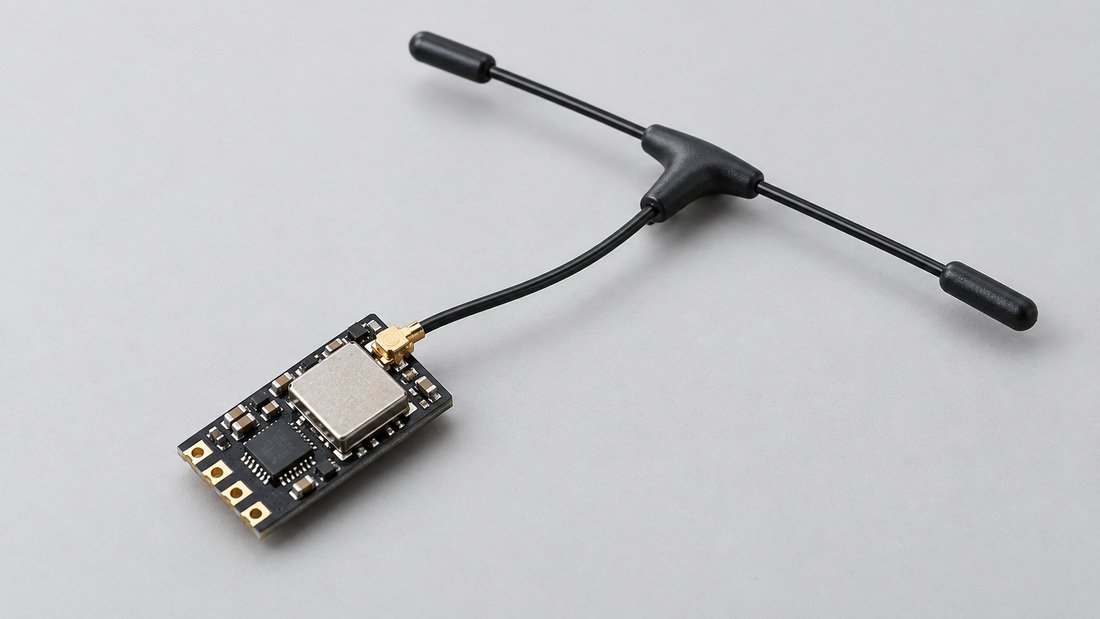
At 1 W, the transmitter module and receiver may become hot to the touch. Ensure adequate airflow and avoid enclosing the module in insulated material. Check that your battery can supply the required current without voltage sag. If you are unsure, consult the manufacturer’s documentation or ask your supplier for thermal guidelines.
For teams, a safer approach is to use 500 mW as the maximum and reserve 1 W for specific outdoor events with clear justification.
Comparison table: 100 mW vs 500 mW vs 1 W
| Factor | 100 mW | 500 mW | 1 W |
|---|---|---|---|
| Typical use | Indoor arenas, school gyms | Large indoor, outdoor fields, congested RF | Long-range, heavily obstructed outdoor |
| Relative range | Baseline | More than 100 mW in many conditions | Longest among the three |
| Heat generation | Low | Moderate | High |
| Power consumption | Low | Moderate | High |
| Interference risk | Lower | Moderate | Higher |
| Regulatory attention | Usually easier | Check local rules | Verify local limits and event rules |
| Best for drone soccer | Most indoor matches | Mixed indoor/outdoor clubs | Rare, specialized outdoor use |
How to choose for drone soccer and school programs
Start with your venue. Measure the maximum distance between where the pilot stands and where the drone flies. Note any walls, metal structures or crowds. Then consider how many other drones and Wi-Fi networks operate nearby.
If you fly in a standard gym with a handful of drones, 100 mW with quality antennas is likely enough. If you fly outdoors or in a large, busy facility, 500 mW gives you flexibility. Only move to 1 W if you have a specific long-range need and can manage heat and regulations.
Remember that ELRS receiver selection is about the whole system: transmitter power, receiver sensitivity, antenna type, mounting and firmware. Buying a 1 W module will not fix a poorly designed antenna setup.
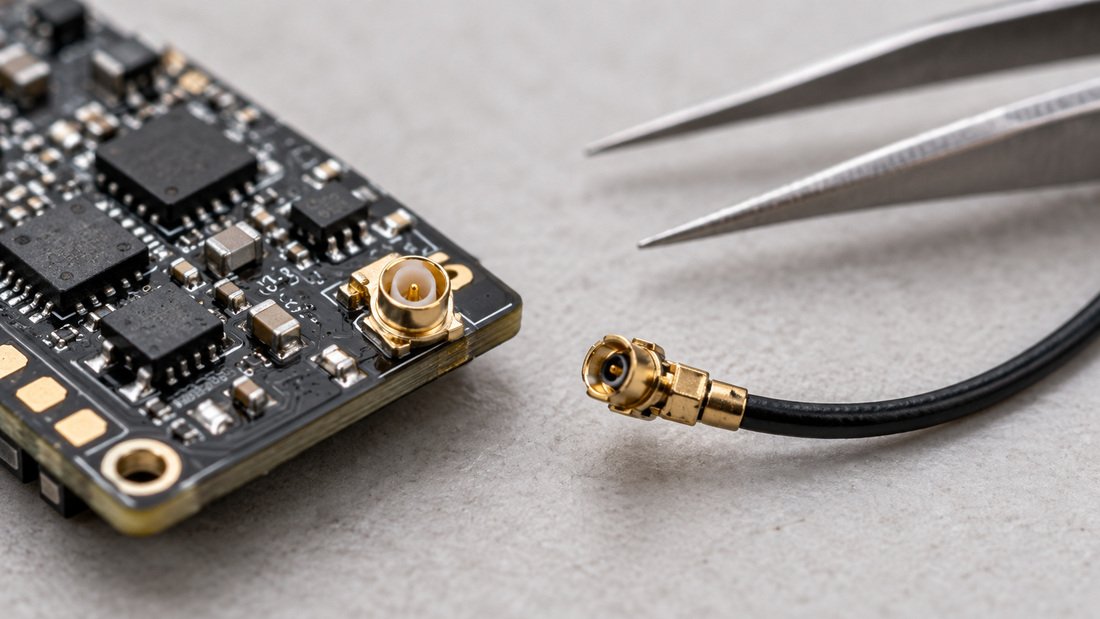
Need help equipping your team? Our team can help you match ELRS receivers, transmitter modules and antennas to your venue and budget. Request a Team Kit Quote to start the conversation.
Common mistakes in telemetry power selection
- Assuming 1 W is always best. Higher power can cause more interference and heat without solving antenna problems.
- Ignoring regulations. Some regions limit transmit power or duty cycle. Always verify local rules.
- Using the wrong antenna. A mismatched or damaged antenna can reduce range regardless of power.
- Poor receiver placement. Carbon fiber, batteries and metal can block RF signals. Mount antennas away from conductive materials.
- Forgetting firmware compatibility. ELRS versions and packet rates must match between transmitter and receiver.
- Overlooking battery health. High power settings can drain small batteries quickly and cause voltage sag.
Buyer checklist for ELRS receivers and modules
- Confirm the frequency band and protocol version (e.g., 2.4 GHz ELRS) matches your existing equipment.
- Check the receiver’s supported input voltage and whether it fits your drone’s power system.
- Review antenna connector type (e.g., U.FL, SMA) and whether you need a specific antenna for your venue.
- Ask about firmware update method and compatibility with your transmitter module.
- Verify the receiver’s dimensions and weight against your drone soccer airframe constraints.
- Request documentation on power output options and thermal recommendations.
- For team orders, ask about consistent firmware versions and batch testing.
- Confirm warranty, return policy and technical support channels in writing.
- Check whether the supplier can provide samples before a large order.
- Clarify lead times and shipping for your region.
FAQ
Is 100 mW enough for indoor drone soccer?
In most standard indoor arenas and school gyms, 100 mW is sufficient when paired with good antennas and proper receiver placement. If you experience dropouts, check antenna and interference before increasing power.
Can I use 1 W for indoor events?
You can, but it is usually unnecessary and may increase interference for other pilots. Check event rules and local regulations first. For indoor use, 100 mW or 500 mW is typically more appropriate.
Does higher telemetry power reduce latency?
No, telemetry power primarily affects link range and penetration. Latency is influenced by packet rate, processing and RF conditions. Higher power can indirectly improve latency if it prevents packet loss, but it is not a direct latency control.
What is the difference between telemetry power and transmitter power?
In ELRS, telemetry power often refers to the power used for the telemetry downlink, while transmitter power refers to the control uplink. Some systems allow separate settings. For simplicity, many users refer to the overall RF power level.
How do I know if my ELRS receiver is compatible with my transmitter?
Check the frequency band, protocol version and firmware. ELRS devices from different manufacturers can work together if they run compatible firmware. Use our ELRS receiver compatibility resource to verify.
Should I buy 100 mW, 500 mW or 1 W receivers for my club?
If you fly mostly indoors, start with 100 mW receivers and transmitter modules that support adjustable power. If you also fly outdoors or in large venues, choose modules that can switch to 500 mW. Reserve 1 W for specialized outdoor use.
What should I confirm with a supplier before ordering?
Confirm firmware version, antenna connector type, supported power levels, thermal guidance, warranty terms, sample availability and lead times. Ask for documentation in writing. You can Request a Team Kit Quote to discuss your specific needs.
Conclusion
ELRS receiver selection for drone soccer comes down to matching telemetry power to your venue and risk tolerance. 100 mW is the practical default for most indoor programs. 500 mW adds margin for larger or congested sites. 1 W is a specialized tool for long-range outdoor use, with real trade-offs in heat, power and regulation.
Before you buy, verify compatibility, antenna options and local rules. If you are equipping a club or school team, start by requesting samples and a written quote so you can test in your actual flying environment.