Quick summary
FPV flight controllers typically provide regulated 5V and 9V BEC outputs to power peripherals such as radio receivers, GPS modules, cameras, and video transmitters (VTXs). The 5V rail is the standard for most receivers, GPS units, and low-power accessories, while the 9V rail is often used for VTXs or cameras that require higher voltage. Always check each component’s voltage and current requirements, and confirm the flight controller’s BEC current ratings before connecting devices. For team purchases, verify these specifications with your supplier in writing to avoid mismatches.
Key Takeaways
- 5V BEC outputs power most receivers, GPS, and low-power sensors; 9V BEC outputs often power VTXs or cameras.
- Always match peripheral voltage and current draw to the flight controller’s BEC ratings.
- Check whether BEC outputs are shared or independent and their total current capacity.
- For team or club orders, request detailed BEC specifications and confirm them in writing.
- Consider using an external BEC or power distribution board if your peripherals exceed onboard BEC capacity.
What is a BEC and why does a flight controller need one?
A BEC (Battery Eliminator Circuit) is a voltage regulator that converts the drone’s battery voltage (e.g., 4S, 6S) down to a stable lower voltage for electronics. Flight controllers include BEC outputs so you can power accessories without adding separate regulators. This simplifies wiring and reduces weight, which is especially important for small FPV quads used in drone soccer.
According to Betaflight documentation, a flight controller is essentially a computer that reads sensors, computes actions, and sends commands to the ESC (Electronic Speed Controller) to control motors. It also manages peripherals like VTX control and radio link telemetry. The BEC outputs are part of this power management system.
Common BEC voltages: 5V and 9V
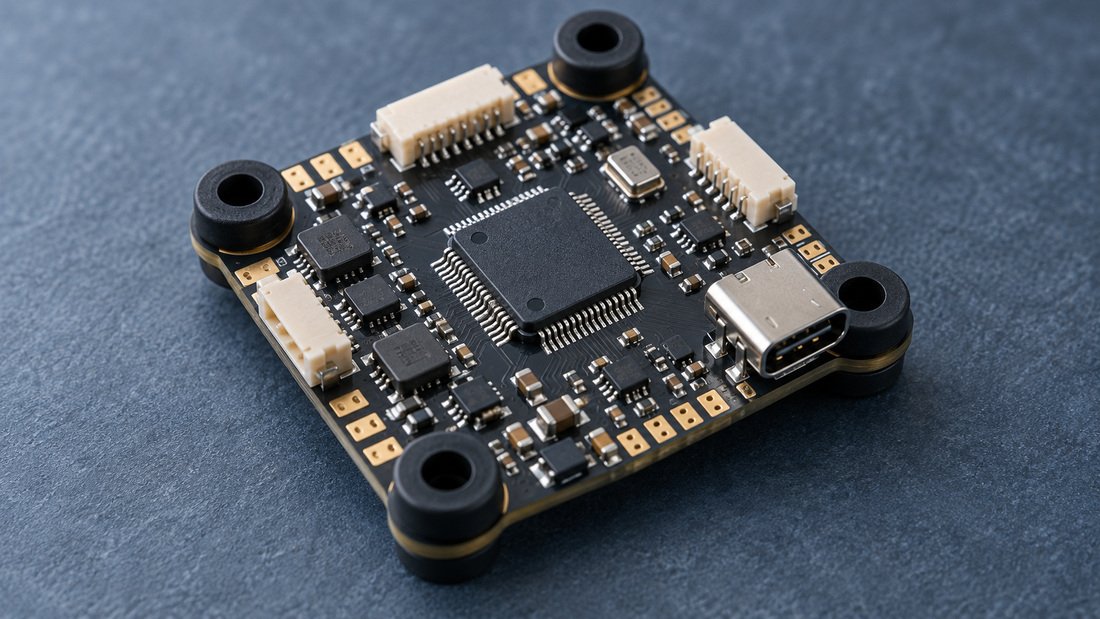
Most FPV flight controllers provide at least one 5V output, and many include a 9V output as well. The 5V rail is ubiquitous because most receivers (e.g., CRSF, SBUS), GPS modules, and low-power sensors operate at 5V. The 9V rail is less common but useful for VTXs or cameras that require higher voltage, such as some analog VTXs or higher-power digital systems.
Some flight controllers also offer 10V or 12V outputs, but 5V and 9V are the most typical for modern FPV builds. Always consult the flight controller’s manual for exact voltage and current specifications.
What do 5V and 9V BEC outputs typically power?
The table below summarizes common peripherals and their typical voltage requirements. Note that these are general guidelines; always verify with your specific component’s datasheet.
| Peripheral | Typical Voltage | Typical Current Draw | Notes |
|---|---|---|---|
| Radio receiver (CRSF, SBUS, etc.) | 5V | 50–150 mA | Some receivers support up to 8.4V; check specs. |
| GPS module | 5V | 50–100 mA | May include compass; check current. |
| Analog FPV camera | 5V or 9V | 100–200 mA | Many cameras accept 5–36V; verify. |
| VTX (analog) | 5V or 9V | 200–600 mA | Higher power VTXs may draw more; check. |
| Digital VTX (e.g., DJI, Walksnail) | 7.4–26V (often direct battery) | 700–1500 mA | Usually not powered from 5V/9V BEC; check. |
| LED strip (WS2811) | 5V | Up to 60 mA per LED | Betaflight supports WS2811 LEDs for status indication. |
Betaflight supports a wide variety of receiver protocols and ESC protocols, and it can control peripherals like VTX and LEDs. This flexibility means your flight controller’s BEC must supply adequate power for all connected devices.
For more details on FPV electronics, see our FPV electronics category.
Powering receivers and GPS
Radio receivers and GPS modules are typically powered from the 5V rail. Most receivers draw well under 150 mA, but some feature-rich receivers with telemetry may draw slightly more. GPS modules also draw modest current. Ensure the 5V BEC can supply the combined current of all 5V peripherals.
Powering cameras and VTXs
Cameras and VTXs are often the most power-hungry peripherals. Analog cameras and VTXs may accept 5V or 9V, but check their input voltage range. Some VTXs are designed for direct battery voltage (e.g., 2–6S) and should not be connected to a BEC. Digital VTXs often require 7.4V or higher and may draw significant current; they are usually powered directly from the battery or a dedicated regulator.
If you are unsure, consult the component’s manual or ask your supplier. For FPV video receivers and DVRs, see our FPV video receivers and FPV DVR pages.
How to choose the right BEC outputs for your team’s needs
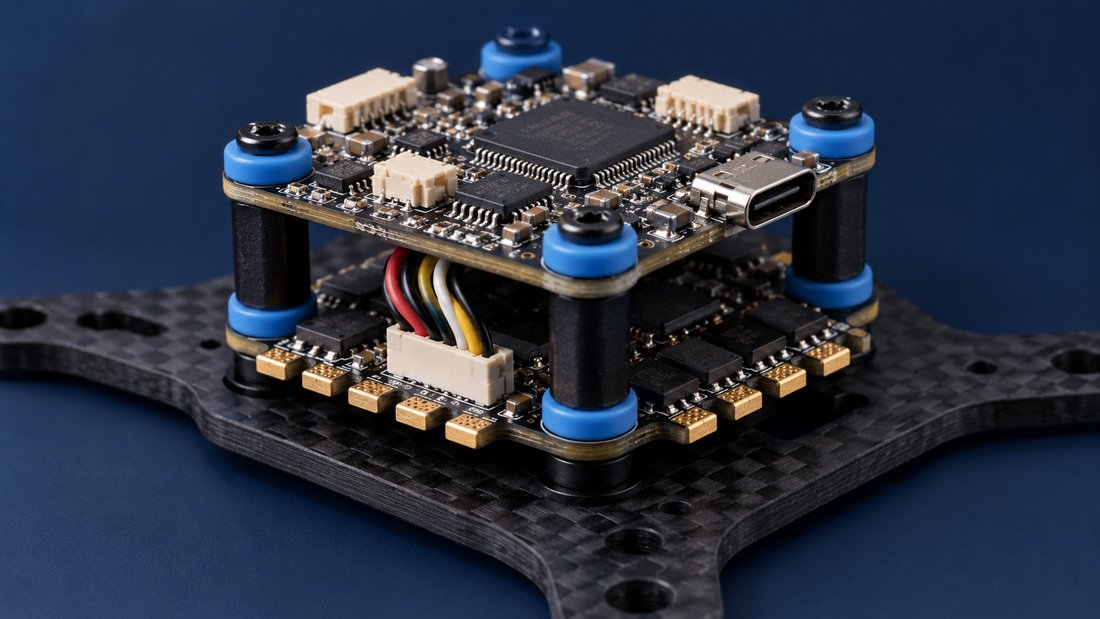
Selecting a flight controller for a drone soccer team or club involves matching BEC outputs to the peripherals you plan to use. Consider the following steps:
- List all peripherals and their voltage and current requirements. Include receivers, GPS, cameras, VTXs, LEDs, and any other accessories.
- Sum the current draw for each voltage rail (5V and 9V). Add a safety margin of at least 20–30%.
- Check the flight controller’s BEC specifications for continuous current per rail and total. Note whether multiple pads share a single regulator.
- Verify voltage ranges of each peripheral; some tolerate a range (e.g., 5–9V), while others are strict.
- Consider future expansion or different configurations (e.g., adding a GPS or upgrading VTX).
For team purchases, request a detailed specification sheet from your supplier and confirm the BEC ratings in writing. This is especially important when ordering multiple units for a club or event.
If you need assistance, contact us for a quote and discuss your team’s requirements.
Trade-offs: onboard BEC vs. external BEC
Onboard BECs save weight and wiring but may have limited current capacity. External BECs or power distribution boards can provide more power and isolation but add weight and complexity. For small drone soccer quads, onboard BECs are usually sufficient. For larger builds with high-power VTXs or multiple accessories, an external BEC may be necessary.
Betaflight’s flexibility means you can often customize power distribution, but always ensure the flight controller’s BEC is not overloaded. Overloading can cause voltage drops, resets, or damage.
Common mistakes when using 5V and 9V BEC outputs
- Connecting a 5V-only device to 9V – This can instantly damage the device. Always double-check voltage.
- Exceeding the BEC’s current rating – This can cause overheating or voltage sag, leading to flight controller brownouts.
- Assuming all 5V pads share the same regulator – Some flight controllers have separate regulators for different pads; check the manual.
- Powering a VTX from a BEC when it expects direct battery voltage – Some VTXs require higher voltage and may not function properly on 9V.
- Ignoring peak current draw – Some devices draw more current briefly at startup; ensure the BEC can handle peaks.
Procurement checklist for schools, clubs, and teams
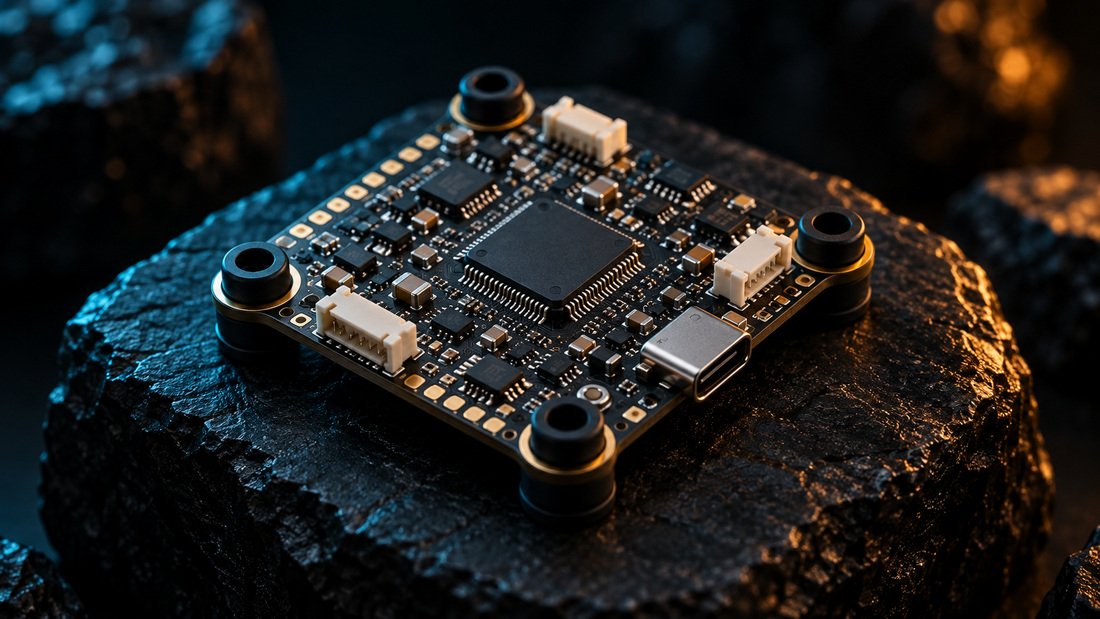
When ordering flight controllers for a team or educational program, use this checklist to ensure you get the right BEC outputs:
- ☐ List all peripherals and their voltage/current needs.
- ☐ Determine required current per voltage rail (5V, 9V).
- ☐ Request flight controller datasheet with BEC specifications.
- ☐ Confirm continuous and peak current ratings per rail.
- ☐ Check if BEC outputs are independent or shared.
- ☐ Verify input voltage range (e.g., 2–6S) matches your batteries.
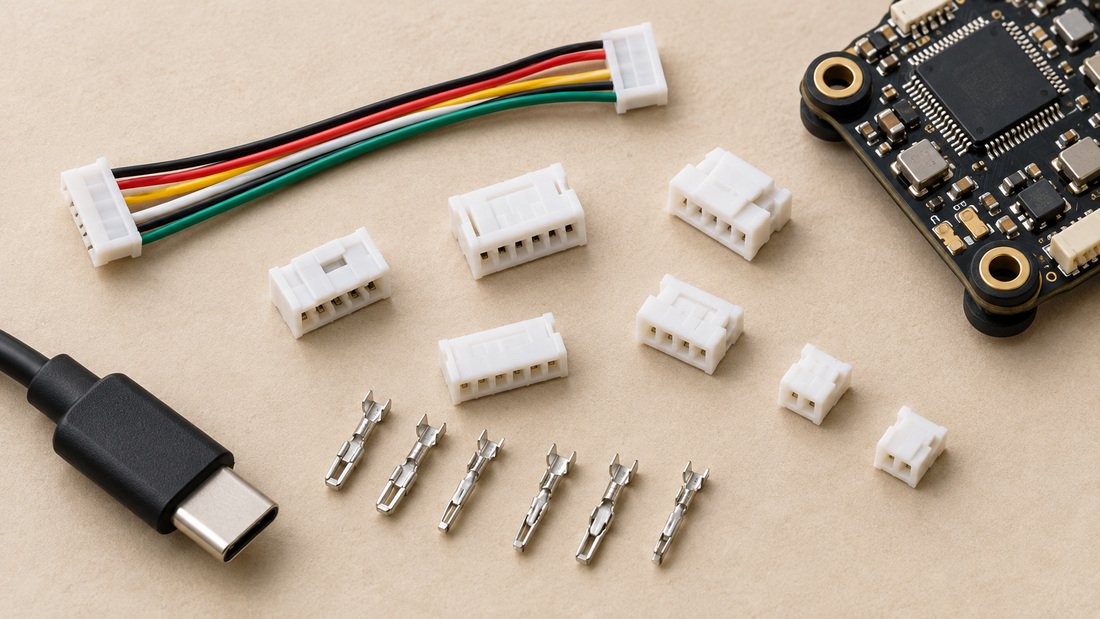
- ☐ Ask about connector types and pad layout for easy soldering.
- ☐ Confirm warranty and support terms in writing.
- ☐ Consider ordering spares for repairs and replacements.
- ☐ For bulk orders, request samples to test before full purchase.
For flight controllers suitable for drone soccer, see our flight controllers category. Also consider electronic speed controllers to complete your build.

Frequently asked questions
Can I connect a 5V device to a 9V BEC output?
No, unless the device explicitly supports 9V input. Connecting a 5V-only device to 9V can cause permanent damage. Always verify the device’s voltage range.
What if my flight controller only has a 5V BEC but I need 9V?
You can use an external BEC (step-up or step-down regulator) to provide 9V, or choose a different flight controller with a 9V output. Ensure the external BEC can supply the required current.
How much current can a typical flight controller BEC supply?
BEC current ratings vary widely by model. Common ratings for 5V rails are 1A to 3A, and for 9V rails 1A to 2A. Always check the specific flight controller’s datasheet. Do not assume a standard rating.
Are 5V and 9V BEC outputs isolated from each other?
Not necessarily. Some flight controllers use a single regulator with multiple taps, while others have separate regulators. Consult the manual or ask the manufacturer to confirm isolation and grounding.
Can I power a GPS and a receiver from the same 5V pad?
Yes, if the total current draw is within the BEC’s rating. However, for reliability, consider using separate pads if available, or ensure the combined current is well below the limit.
What is the difference between BEC and PDB?
A PDB (Power Distribution Board) distributes battery power to ESCs and may include BECs. A flight controller’s BEC is a built-in regulator. Some builds use a separate PDB with integrated BECs for higher power handling.
Do I need to worry about BEC noise affecting video?
Yes, noisy BECs can introduce interference in video signals. Using proper filtering (e.g., LC filters) or powering sensitive devices from a clean source can help. This is a consideration for FPV video quality.
Conclusion
Understanding 5V and 9V BEC outputs on FPV flight controllers is essential for building reliable drones for sports, education, and competition. Match your peripherals to the correct voltage and current ratings, and always verify specifications with your supplier. For team orders, request detailed datasheets and confirm terms in writing. Ready to equip your team? Request a Team Kit Quote to discuss your specific needs.