Quick summary
Altitude hold in a drone soccer ball is a firmware-assisted flight mode that maintains a target height by fusing barometric pressure and accelerometer data, then trimming motor commands on the flight controller. It does not measure height with a radar or laser; it estimates altitude from air pressure and inertial sensors. In practice, the pilot still steers, while the electronics reduce vertical drift so the ball stays in the scoring band. The quality of the barometer, vibration isolation and firmware tuning matters more than the marketing label “altitude hold” on a product page.
Key Takeaways
- Altitude hold is a flight-controller software function, not a separate sensor you bolt on.
- It mainly uses a barometer for height and an accelerometer for short-term motion, as described in the Betaflight sensor overview (betaflight.com/docs/wiki/getting-started).
- Small, light drone soccer balls are sensitive to vibration, prop wash and pressure changes; sensor mounting and firmware filtering decide real-world stability.
- For clubs, the practical question is not “does it hold altitude” but “how consistently does it hold under match conditions and how easily can we service it”.
- Confirm firmware version, replacement-part availability and support terms with your supplier before buying a team kit.
What Is Altitude Hold in Drone Soccer Ball Electronics?
Direct answer: Altitude hold is an automated flight mode that reads altitude-related sensors and adjusts throttle commands so the aircraft maintains a chosen height. In drone soccer ball electronics, the same principle is applied to a compact, protected airframe that must hover predictably inside a goal ring.
Drone soccer — often played with BKZ-class balls — puts unusual demands on the electronics. The ball is small, usually caged, frequently bumped and flown indoors. Pilots need stable vertical positioning because scoring depends on passing through a ring, not on free aerobatic movement. Altitude hold reduces the pilot’s workload so they can concentrate on horizontal positioning and timing.
It is important to separate three things that are often marketed together:
- Altitude hold — maintains a height target, usually via the flight controller firmware.
- Position hold — maintains horizontal position, which requires additional sensors such as optical flow or GPS.
- Self-leveling — keeps the aircraft level using the accelerometer, but does not by itself hold height.
A ball can have self-leveling without altitude hold, and altitude hold without any horizontal position hold. Buyers should check exactly which functions are enabled and testable on the firmware supplied.
Which Sensors Make Altitude Hold Possible?
Direct answer: Altitude hold normally relies on a barometer for absolute height and an accelerometer for fast vertical motion, both read by the flight controller. Some systems add other sensors, but the barometer is the primary altitude reference.
According to the Betaflight project’s own documentation, a flight controller is essentially a computer that reads sensors such as the gyroscope, accelerometer, barometer and GPS, then computes commands and sends them to the electronic speed controllers (ESCs) that drive the motors (betaflight.com/docs/wiki/getting-started). The same document notes that the accelerometer supports self-leveling and the barometer is used for altitude measurement. That is the technical basis for altitude hold in most small FPV-based aircraft.
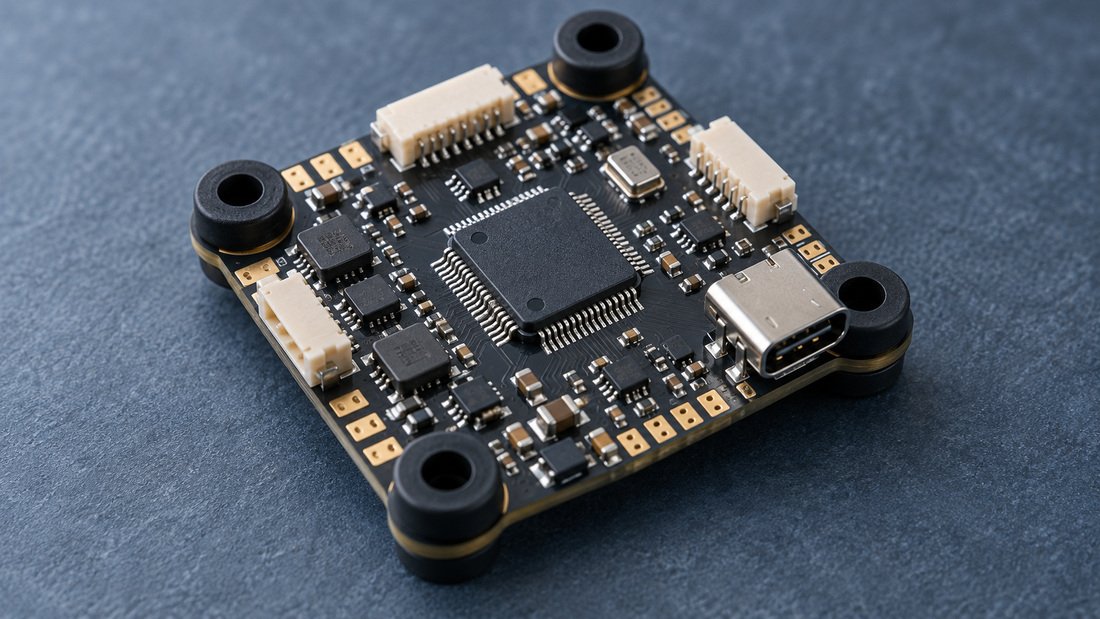
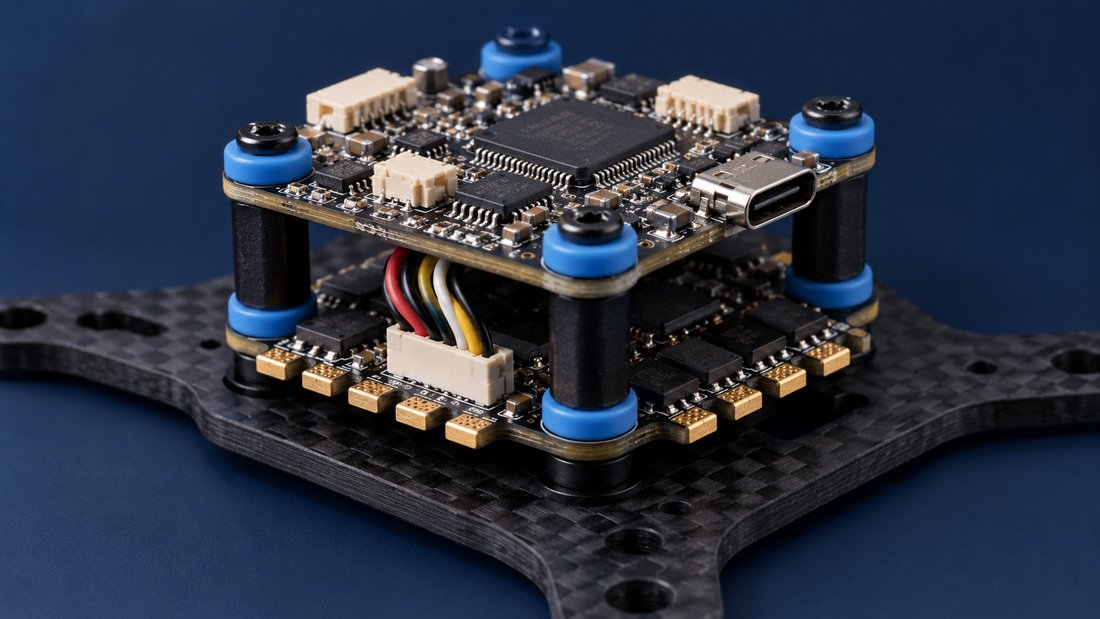
In a drone soccer ball, the flight controller, ESCs and receiver are usually integrated or stacked in a very tight space. That compactness is a strength for weight, but it also means heat, vibration and electromagnetic interference are close together. If your club is comparing designs, review the flight controllers and electronic speed controllers used in the ball, because those two boards determine how well altitude commands are executed.
Barometer: the altitude reference
A barometer measures small changes in atmospheric pressure and converts them into an altitude estimate. It is small, light and inexpensive, which is why it is common in FPV electronics. Its weakness is that pressure changes with weather, indoor air conditioning, door openings, and even the propeller airflow around the sensor.
In a drone soccer ball, the barometer is often mounted on the flight controller board or on a short piece of foam. Foam can reduce light and airflow disturbance, but it must not block the sensor opening completely. Clubs should ask how the barometer is protected and whether it can be cleaned or replaced without replacing the whole stack.
Accelerometer: short-term motion sensing
The accelerometer detects acceleration in three axes. Firmware can integrate that data to estimate vertical movement over short periods. Because integration drifts over time, the accelerometer is usually combined with the barometer rather than used alone for altitude hold.
The gyroscope, meanwhile, measures rotation and supports basic flight stabilization, including acro-style control. In a soccer ball, gyro data matters for keeping the ball from tumbling when it is bumped, while the accelerometer and barometer support height control.
Optional sensors: GPS and optical flow
GPS can provide altitude information outdoors, and optical flow can help with horizontal positioning. For indoor drone soccer, GPS is usually unreliable or unavailable, so barometer-based altitude hold remains the practical option. If a supplier claims GPS-based altitude hold for indoor play, ask for a demonstration in the actual venue.
How the Firmware Uses Sensor Data
Direct answer: The flight controller runs a control loop: it compares estimated altitude with the target, then adjusts motor commands through the ESCs. Filtering and tuning determine whether that loop feels smooth or twitchy.
Sensors are noisy. The barometer sees pressure ripples from propellers; the accelerometer sees vibration from motors and frame resonance. Firmware applies filters and fusion algorithms to produce a usable altitude estimate. It then calculates a throttle adjustment and sends commands to the ESCs, which drive the motors.
Betaflight’s documentation describes this general architecture: the flight controller reads sensors, computes desired actions, and sends commands to the ESC to control the motors and generate thrust. It also notes that the software supports multiple receiver protocols and ESC protocols, with DShot being the main protocol used on nearly everything (betaflight.com/docs/wiki/getting-started). For drone soccer, DShot and a modern serial receiver protocol such as CRSF or ELRS are common choices because they reduce latency and wiring complexity.
Firmware version and configuration matter. Two balls with identical hardware can behave differently if one has a newer firmware build, different filter settings, or a different altitude-hold tuning. This is why clubs should record firmware versions and settings when they receive a kit, and test each ball before a match.
Comparing Altitude Hold Approaches in Drone Soccer Balls
Direct answer: The main differences are the sensor set, the firmware, the mechanical integration and the serviceability. The table below summarises typical trade-offs; confirm specifics with each supplier.
| Approach | Typical sensors | Strengths | Limitations to verify |
|---|---|---|---|
| Barometer + accelerometer, no GPS | Barometer, accelerometer, gyro | Light, low cost, works indoors | Sensitive to airflow, vibration and indoor pressure changes; drift over time |
| Barometer + accelerometer + optical flow | Adds downward camera or flow sensor | Better horizontal and vertical stability indoors | More weight, cost and calibration; performance depends on floor texture and lighting |
| GPS-assisted | Adds GPS module | Useful outdoors, absolute altitude reference | Poor indoors, extra weight, longer acquisition time |
| No altitude hold, pilot-managed | Gyro and accelerometer only | Simplest, lightest, fewer failure points | Higher pilot workload; less consistent height for beginners |
For most indoor school and club programs, the first or second approach is the realistic choice. The third is rarely useful in a gym, and the fourth may suit advanced pilots who prefer direct control.
Why Altitude Hold Behaves Differently in a Soccer Ball
Direct answer: A drone soccer ball is small, caged, frequently bumped and flown close to people and surfaces. Those conditions change airflow and vibration, which affects altitude estimation.
Three factors matter more than they would on a larger freestyle quad:
- Prop wash and recirculation. Indoors, propellers push air against walls, floors and the cage. The barometer may read rapid pressure changes that are not real altitude changes.
- Vibration. Small frames transmit motor vibration into the flight controller. Without good soft-mounting and filtering, the altitude estimate becomes noisy.
- Impacts. Bumping the cage or ring can momentarily confuse the accelerometer. Firmware must recover quickly without a large throttle spike.
This is why “altitude hold” on a spec sheet is not enough. Clubs should evaluate how the ball behaves after a bump, during a fast climb, and while hovering near a goal ring. A short, structured test is more informative than a single demo flight.
If you are specifying electronics for a team, it also helps to understand the wider FPV electronics ecosystem, because receiver choice and video system can affect weight and layout. For example, the receiver and antenna placement can influence interference, and the FPV video receivers and FPV DVR you use for coaching review are separate from the flight controller but share the same tight space.
Common Mistakes When Evaluating Altitude Hold
Direct answer: Most problems come from testing in the wrong conditions, expecting altitude hold to replace pilot skill, or ignoring serviceability and firmware documentation.
- Testing only in a calm, open room. A gym with walls, spectators and other balls is the real environment. Test there.
- Assuming all balls in a batch behave the same. Verify each unit after delivery, because sensor calibration and assembly can vary.
- Confusing altitude hold with full autonomy. Altitude hold does not steer, avoid collisions or score for the pilot.
- Ignoring firmware version. Record the version and settings for every ball so you can reproduce a known-good configuration.
- Neglecting maintenance. Dirty barometer foam, loose connectors and damaged props can all degrade altitude stability.
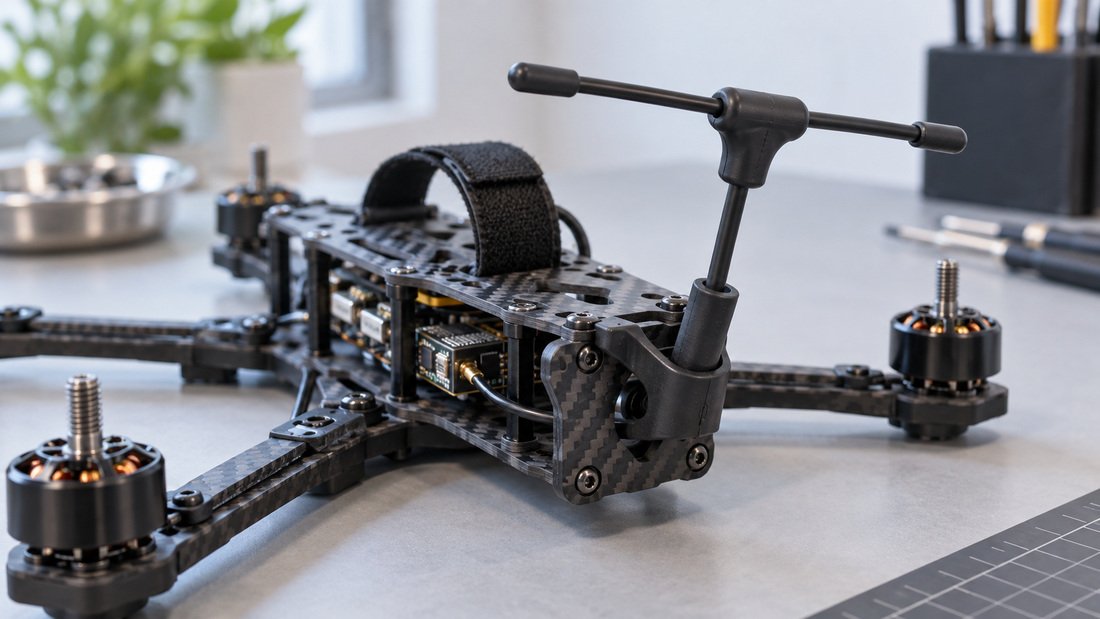
- Overlooking receiver and antenna integration. Poor antenna placement can cause dropouts that look like altitude-control failures.
When something goes wrong, the Betaflight documentation is clear that pilots, manufacturers and the project each have a role, and that board-specific support comes from the manufacturer (betaflight.com/docs/wiki/getting-started). That is a useful principle for clubs: know who supports the hardware you buy.
Buyer Checklist for Clubs and Programs
Direct answer: Use this checklist before ordering, and confirm unclear items in writing with the supplier. It separates general guidance from the specific terms you must verify.
- Sensor set: Ask which sensors are present (gyro, accelerometer, barometer, optional GPS or flow) and how altitude hold is implemented.
- Firmware: Confirm the firmware family and version, whether settings are locked, and how updates are applied.
- Test conditions: Request a demonstration or sample test in an indoor venue similar to your match space.
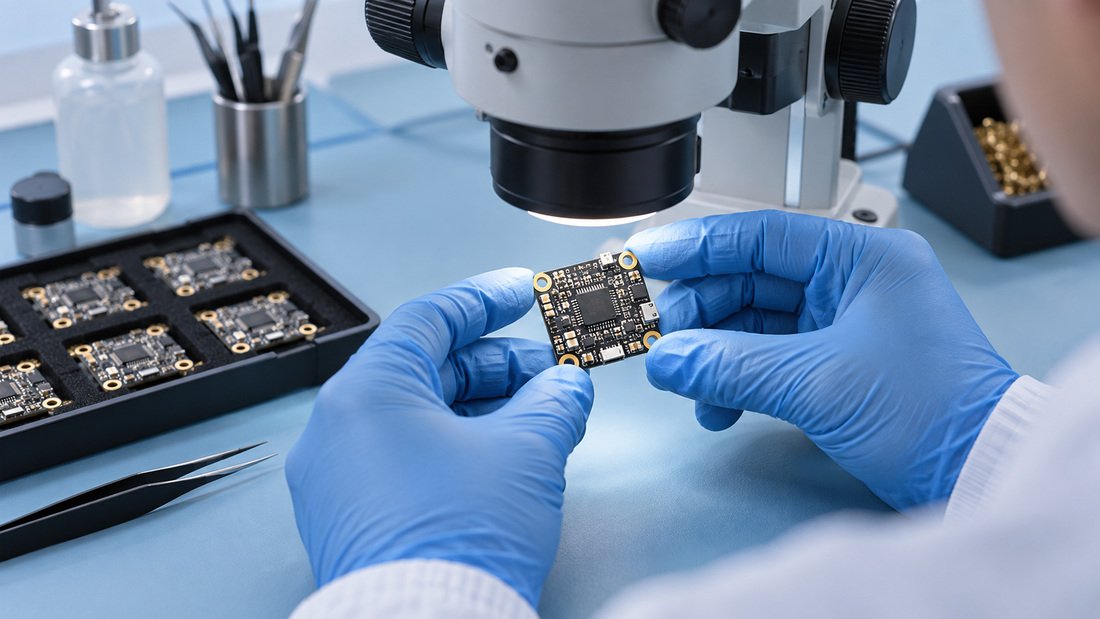
- Batch consistency: Ask how units are calibrated and whether you can test each ball on arrival.
- Serviceability: Confirm availability of replacement flight controllers, ESCs, props, cages and batteries.
- Documentation: Request wiring diagrams, firmware setup notes and a maintenance schedule.
- Support: Clarify who provides technical support, in what language, and through which channel.
- Commercial terms: Ask for unit price, minimum order quantity, lead time, warranty period and shipping terms in writing. Do not rely on verbal estimates.
- Compliance: Confirm the radio and battery regulations that apply in your country; requirements differ by jurisdiction.
- Training: Ask whether pilot and coach training materials or sessions are included.
This checklist is general guidance. DPF’s specific product options, lead times, minimum order quantities and warranty terms should be confirmed directly with the DPF team for your project.
Practical Setup and Maintenance Tips
Direct answer: Good mechanical setup and regular checks matter as much as firmware tuning. Treat altitude hold as a system property, not a single setting.
- Mount the flight controller with appropriate soft-mounting to reduce vibration transfer.
- Keep barometer foam clean and unobstructed; replace it if it becomes compressed or dirty.
- Check propeller balance and replace damaged props promptly.
- Secure antenna and receiver wiring so it cannot shift during play.
- Log firmware settings and re-check them after any update.
- Run a short pre-match test: hover, climb, bump the cage gently, and confirm height recovers smoothly.
- Store and charge batteries according to the manufacturer’s instructions; battery condition affects throttle authority and therefore altitude control.
These practices are general and apply across many small FPV-based platforms. They do not replace the specific procedures from your ball’s manufacturer.
Frequently Asked Questions
Does altitude hold need GPS?
No. Indoor altitude hold typically uses a barometer and accelerometer. GPS can provide altitude outdoors, but it is generally unreliable indoors, which is where most drone soccer is played.
Why does my ball drift up or down even with altitude hold on?
Airflow from propellers, indoor pressure changes, vibration and sensor drift can all cause small height changes. Firmware filters and tuning reduce this, but no low-cost sensor set is perfect. Check mounting, foam and prop condition first.
Is altitude hold the same as self-leveling?
No. Self-leveling keeps the aircraft level using the accelerometer. Altitude hold maintains height, primarily using the barometer. A ball can have one without the other.
Can altitude hold be updated or tuned later?
Often yes, if the flight controller runs open firmware and the manufacturer provides access. Confirm whether settings are locked and whether updates are supported before you buy.
Does altitude hold make drone soccer easier for beginners?
It can reduce pilot workload and help beginners maintain a consistent height, but it does not replace steering, timing or match practice. Programs should still include structured training.
What should I ask a supplier before buying a team kit?
Ask about the sensor set, firmware version, calibration process, batch consistency, replacement parts, documentation, support channels and all commercial terms. Request these in writing.
How do we compare two balls with different electronics?
Test both in the same venue with the same pilot and battery. Compare height stability, recovery after bumps, drift over a full battery, and ease of maintenance. Spec sheets alone rarely predict match performance.
Conclusion
Altitude hold in drone soccer ball electronics is a firmware-driven function built on barometric and inertial sensing, supported by the flight controller and ESCs. Its real-world performance depends on sensor integration, filtering, mechanical setup and how well the ball tolerates indoor airflow, vibration and impacts. For clubs and programs, the priority is not the label but the consistency, serviceability and support behind the electronics.
Before ordering, define your test conditions, ask for the firmware and sensor details, and confirm all commercial terms in writing. If you are equipping a team, association or school program, start by reviewing the electronics and then request a configuration that matches your venue and skill level.