Quick summary
Distributors handle RMA (return merchandise authorization) as a documented reverse-logistics process: the buyer requests approval, the distributor issues an authorization number and return instructions, the product is received and inspected, then it is repaired, replaced, credited or refused against an agreed warranty policy. Schools should treat RMA as a procurement requirement, not a repair favour. Confirm who receives the parcel, who pays freight, what evidence is needed and how replacements reach a classroom or competition schedule. That clarity protects budgets, equipment uptime and student participation.
Key Takeaways
- RMA is a control process; the authorization number prevents untracked returns and lost parcels.
- Warranty coverage depends on policy, cause of failure and local law, not on the word “warranty” alone.
- Schools should ask for the RMA workflow, replacement timing options and freight responsibility in writing before ordering.
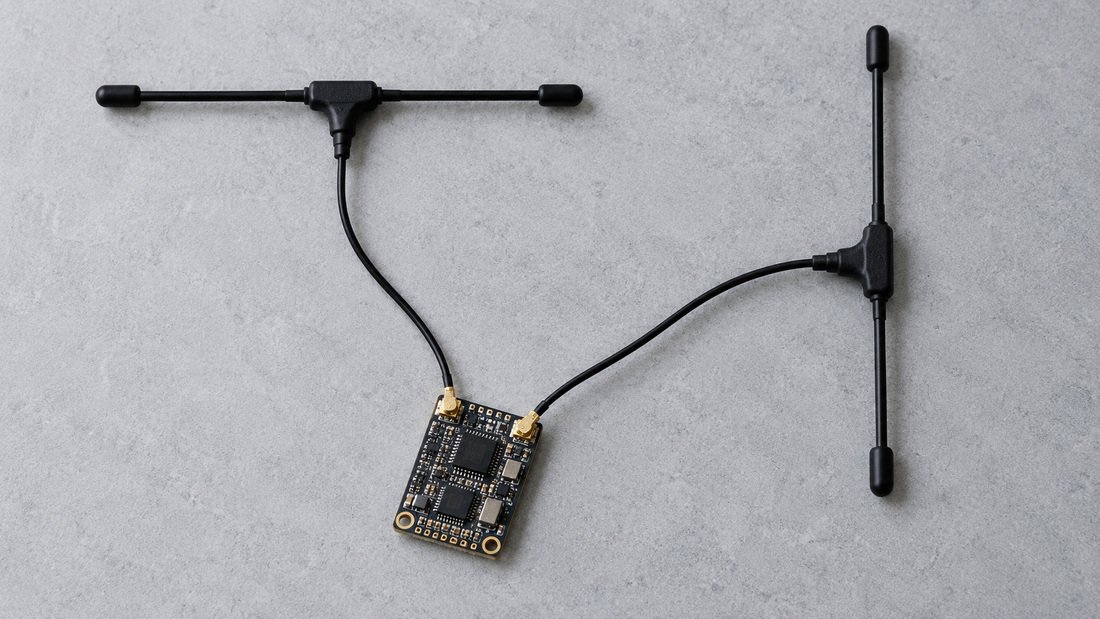
- Batch and serial records make claims faster for drone soccer (BKZ) sets and ELRS receivers (BKR).
- Confirm cover and terms with DPF directly because commercial terms are not published here.
What Does RMA Mean in a Distributor Context?
RMA stands for return merchandise authorization. It is the approval step that lets a customer return a product for inspection, repair, replacement or credit. In distribution, it also routes the item to the correct party: the distributor, the original manufacturer or an authorised service agent.
The distributor usually owns the first response. It checks whether the claim is in scope, whether the product is within any warranty period, and whether the failure looks like a defect or like damage, misuse or ordinary wear. Many policies exclude abuse, misuse, ordinary wear, failure to follow directions and improper maintenance from implied warranty cover, so inspection notes matter.
What Is the Typical Distributor RMA Workflow?
Most distributor RMA workflows follow the same sequence, even when labels and portals differ. The table below describes a common process and what a school or club should record at each stage. It is general guidance; DPF’s actual process, timings and terms must be confirmed directly.
| Stage | Who acts | What happens | What the school should keep |
|---|---|---|---|
| 1. Claim raised | Buyer | Report failure with order number, product, photos or video and symptoms | Order confirmation, batch or serial, fault description |
| 2. Screening | Distributor | Check policy scope, date of purchase, cause and exclusions | Written screening outcome and reason |
| 3. Authorisation | Distributor | Issue RMA number, return address, packing and shipping instructions | RMA number, address, deadline, freight terms |
| 4. Receipt | Distributor or service agent | Log the parcel and confirm condition on arrival | Delivery proof and receipt acknowledgement |
| 5. Inspection | Technical team | Test the item, record findings, classify failure | Inspection report or summary |
| 6. Resolution | Distributor and buyer | Repair, replace, credit or return as not covered | Resolution record and replacement dispatch note |
| 7. Closure | Distributor | Close the case and update records | Case reference for future claims or audits |
Why the Authorisation Step Matters
An RMA number links a physical parcel to a case record. Without it, returns can sit unidentified, be refused at the warehouse or be mixed with other stock. For schools, the number is also an audit trail: it shows when a fault was reported and when a replacement was promised. Ask whether the RMA number must appear on the outer carton or on a document inside.
What Happens If the Claim Is Not Covered?
A distributor may decline cover if the failure falls outside policy, for example impact damage, incorrect wiring polarity, reverse polarity, water ingress or unauthorised repair. A fair process explains the reason and offers options: paid repair, paid replacement, or return of the unrepaired item. Ask for the inspection basis in writing so a club can decide whether to repair, replace or retire the part.
How Do Distributors Decide Whether to Repair, Replace or Credit?
Three practical factors drive the decision: the nature of the fault, the value and availability of the item, and the cost of freight compared with replacement. Small, low-cost parts are often replaced rather than repaired because return freight and labour exceed the part value. Higher-value assemblies are more likely to be inspected and repaired.
Schools should ask for the decision logic before purchase. If a drone soccer frame is damaged, a replacement may be the only practical route. If an ELRS receiver has a manufacturing fault, testing and replacement may be appropriate. Ask what happens when a replacement is out of stock, and whether credit or backorder is offered.
A documented warranty and after-sales program should state the resolution types, evidence required and who pays freight in each direction. If that document does not exist, request it.
What Does Warranty Actually Cover and Exclude?
Warranty language describes promises about product condition and remedies. Under US federal law, the Magnuson-Moss Warranty Act governs warranties on consumer products and distinguishes implied from express warranties. The FTC’s business guidance explains that implied warranties are unspoken promises created by state law, including merchantability and fitness for a particular purpose, and that implied warranties do not cover problems caused by abuse, misuse, ordinary wear, failure to follow directions or improper maintenance (FTC, Businessperson’s Guide to Federal Warranty Law).
That guidance is a US consumer-law resource. It does not automatically define a B2B distribution contract, and it does not apply worldwide. Schools outside the US, and institutions buying under institutional or B2B terms, should check their local consumer or contract law and the signed purchase terms. Treat the FTC material as context for how warranty promises are described, not as a substitute for your own contract review.
For institutional buyers, the practical question is narrower: what does the supplier’s written policy cover, what evidence is required, and what remedy is offered? Get that in writing.
Why RMA Discipline Matters for Schools and Youth Programs
A school drone program has fixed term dates, limited storage and a defined number of flight controllers. A failed receiver or frame is not just a cost; it removes a student from a rotation. RMA handling therefore affects participation, not only procurement.
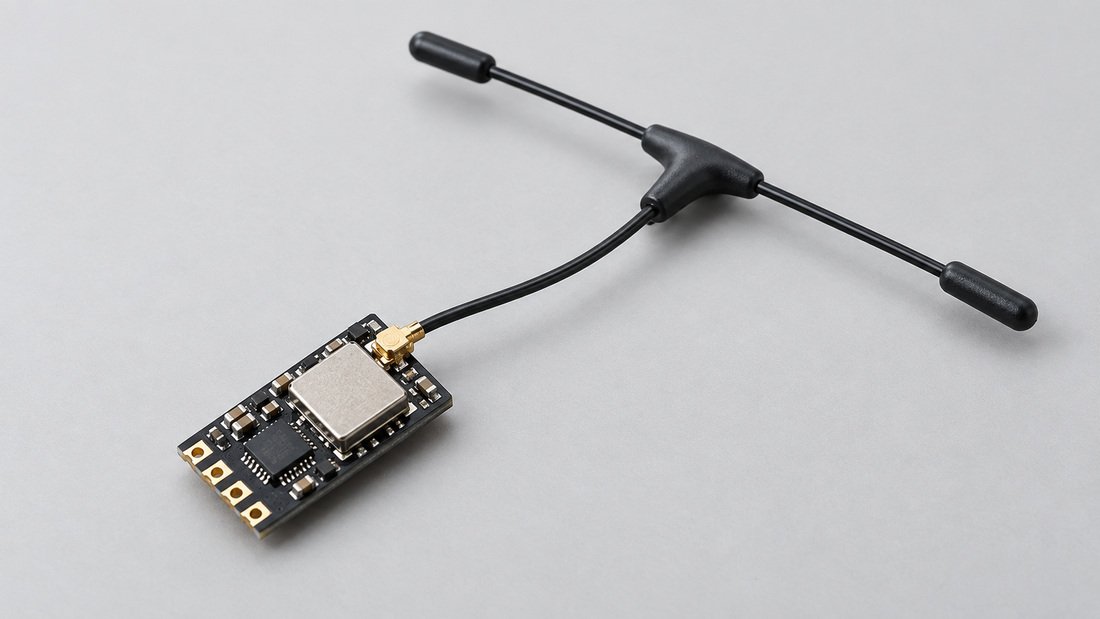
Clubs that run drone soccer (BKZ) sets and ELRS receiver programmes should plan spares and returns around competition calendars. Ask whether the distributor offers advance replacement, cross-ship or stock reservation for education accounts. These are commercial options, not guarantees, and must be confirmed in writing.
Preventive Steps That Reduce RMA Volume
- Record batch or serial numbers at goods-in and label storage bins.
- Run a pre-flight and post-flight check sheet so faults are found before competition day.
- Keep a small pool of known-good receivers and antennas for substitution testing.
- Store batteries and electronics in dry, temperature-stable conditions.
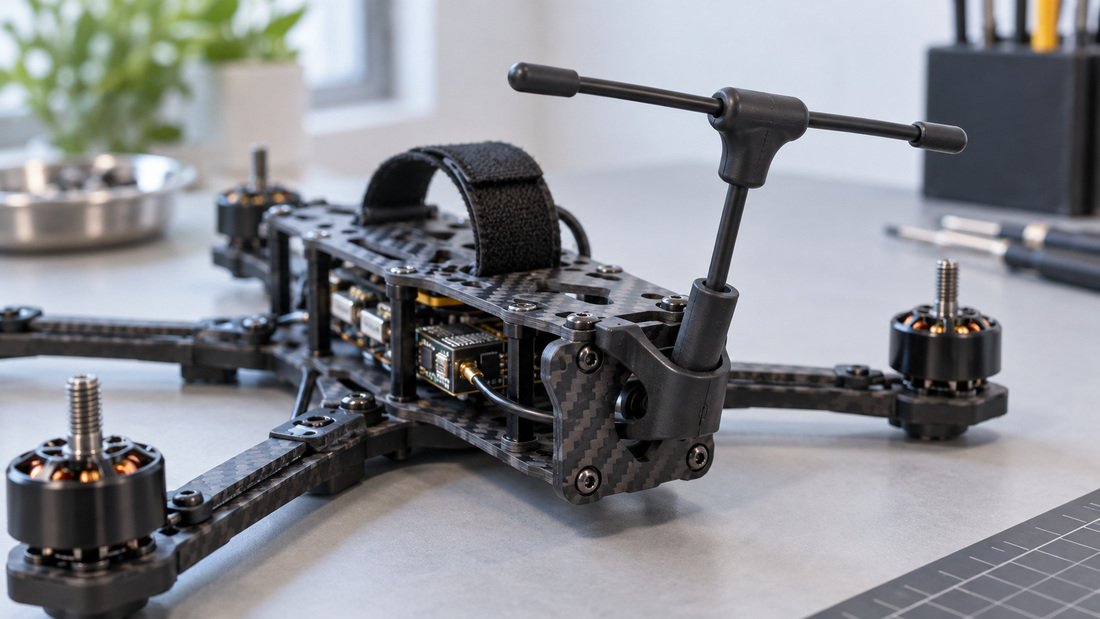
- Train students on antenna mounting and connector care to reduce avoidable damage.
Good incoming inspection and record-keeping reduce disputes later. See DPF’s quality control and testing and inspection pages for how production checks are structured.
Common Mistakes Schools Make With RMA Claims
Most rejected or delayed claims come from process gaps, not from bad products. The list below reflects typical institutional purchasing errors; it is general guidance rather than a description of any specific supplier.
- Sending a parcel without an RMA number, so the warehouse cannot match it to a case.
- Describing a fault as “not working” without symptoms, photos, video or test notes.
- Returning an item in a different configuration from how it was received, with no note.
- Missing the claim window because the fault was reported weeks after term ended.
- Assuming freight is always paid by the supplier without checking the terms.
- Expecting a consumer-style remedy under an institutional purchase contract.
- Failing to record the replacement’s batch or serial number for future traceability.
Each of these is preventable with a one-page internal procedure and a named staff contact.
Planning a school programme or distributor programme? DPF can discuss warranty, RMA and after-sales structures, education kit options and OEM/ODM requirements. Start with a program conversation and quote.
Comparison: Distributor-Mediated vs Direct-from-Factory RMA
The route a school uses changes the number of handoffs and the communication load. The table compares typical characteristics; actual terms depend on your contracts.
| Factor | Distributor-mediated RMA | Direct-from-factory RMA |
|---|---|---|
| First contact | Local distributor or reseller | Factory sales or support team |
| Local support | Often local language and time zone | May be remote and across time zones |
| Freight routing | May consolidate returns or replacements | Usually direct international shipment |
| Stock visibility | Depends on distributor stock | Depends on factory allocation |
| Technical depth | Varies by distributor capability | Typically closer to production engineering |
| Documentation | Distributor policy plus factory policy | Factory policy and contract terms |
| Best fit | Schools wanting local handling and billing | OEM/ODM buyers and large programmes |
Neither route is automatically faster. Ask both about authorisation turnaround, inspection capacity and replacement supply. For distributor and OEM/ODM programmes, pair those questions with safety and compliance support so documentation and product support are aligned.
Buyer Checklist: What to Confirm Before You Order
Use this checklist during tendering or supplier onboarding. Treat every item as a question to confirm in writing, not as a standard promise.
- Written warranty period, start date and what it covers.
- RMA request channel, required evidence and expected first response time.
- RMA number format and where it must appear on the return.
- Return address, receiving hours and packing requirements.
- Who pays outbound and return freight, and who insures the parcel.
- Resolution options: repair, replace, credit, cross-ship or advance replacement.
- What happens when the replacement item is out of stock.
- Exclusions such as impact damage, moisture, reverse polarity or unauthorised repair.
- Batch or serial traceability for sets, receivers and transmitters.
- Documentation available: policy, inspection summary, compliance documents.
- Named contact for escalations and term-time urgency.
- Return-to-service timeline expectations, stated without guaranteed lead times.
Frequently Asked Questions
1. How do distributors handle RMA requests from schools?
They usually require a written claim, screen it against policy, issue an RMA number, receive and inspect the item, then repair, replace, credit or refuse it. The exact steps, evidence and freight terms come from the distributor’s policy or your contract, so request them before purchase.
2. Is an RMA number the same as a warranty approval?
No. An RMA number authorises the return and creates a case record. Warranty approval is a separate decision made after inspection confirms the fault is in scope. An RMA can still result in a declined claim.
3. Who pays return shipping in a distributor RMA?
It depends on the policy and the reason for return. Some suppliers cover freight for confirmed defects and the buyer pays for no-fault or out-of-policy returns. Confirm the rule in writing for both directions before ordering.
4. Do consumer warranty rules apply to a school purchase?
Not automatically. The FTC’s Magnuson-Moss guidance addresses warranties on consumer products under US federal law and notes that state law creates implied warranties. Institutional or B2B purchases may be governed mainly by contract terms, and rules differ by country. Check the applicable law with your own adviser.
5. What evidence speeds up an RMA?
Order number, product name, batch or serial number, purchase date, a clear symptom description, photos of the item and setup, and a short video showing the fault. Keep the original packaging and accessories until the case closes.
6. What should be recorded for drone soccer and ELRS stock?
Record batch or serial numbers at goods-in, map them to storage bins and to the team or class using them, and log every substitution test. Traceability shortens inspection and helps identify whether a fault is isolated or batch-related.
7. Can a distributor refuse an RMA?
Yes, if the claim falls outside the written policy, for example damage from impact, moisture, reverse polarity or unauthorised repair. A good process states the reason and offers paid repair, paid replacement or return of the item.
Conclusion and Next Step
Distributors handle RMA through authorisation, inspection and a defined resolution, and the quality of that process depends on the paperwork agreed before the order. For schools, youth training institutions and clubs, the goal is predictable equipment uptime across a term or season. Ask for the warranty statement, RMA workflow, freight rules, replacement options and traceability method in writing, then test them with a small order before scaling.
For programmes using drone soccer (BKZ) sets, ELRS receivers (BKR) or OEM/ODM requirements, discuss your warranty, RMA and after-sales expectations with DPF and confirm the commercial terms directly. Request a School Program Quote.