Quick summary
A 500 mW ELRS 915 MHz receiver does not have a fixed range. Power alone is only the transmit side of a link budget. Real-world distance is set by antenna gain, receiver sensitivity, link budget margin, local RF noise, altitude, obstacles and how much control latency your flight task still tolerates. In open, low-noise conditions with good line of sight, many users report much longer links than in a crowded sports hall. For drone soccer, schoolyards and youth programs, treat range testing as an on-site measurement question rather than a specification you can read off a box. The practical approach is to plan a margin, test at your real venue, and treat ELRS receiver selection as a system decision, not a single number.
Key Takeaways
- mW ratings describe transmit power, not guaranteed distance; a usable link also needs receiver sensitivity and antenna performance.
- Link budget margin, not maximum range, is the number clubs should plan around for safe operation.
- 915 MHz behaves differently from 2.4 GHz in indoor arenas, so venue testing matters more than forum range claims.
- Antenna type, mounting, orientation and polarization usually change practical range more than a power step.
- For teams and schools, standardize a receiver and antenna configuration, then verify it per venue before events.
Why 500 mW Does Not Equal a Specific Distance
A 500 mW figure is the RF output power of the transmitter module, or the transmit stage of a receiver in telemetry-capable setups. Distance is the outcome of a link budget: transmit power, both antenna gains, cable and connector losses, receiver sensitivity, and the interference environment. Improving one term while ignoring the others rarely delivers the range users expect.
That is why two clubs using the same power setting can see very different results. One flies in an open field with clear line of sight; another flies inside a steel-framed gym with Wi-Fi access points and dozens of other radios nearby. The second environment can consume link margin that power alone cannot replace.
Link budget in plain terms
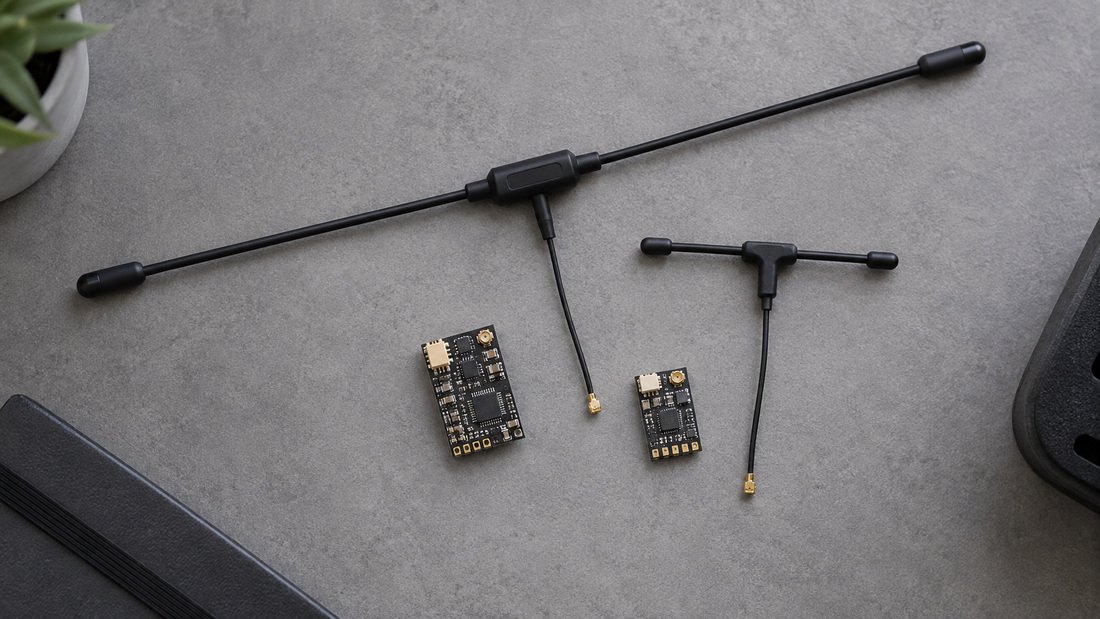
Think of the link budget as a spending account. Transmit power and antenna gain add to it; distance, walls, body blocking and RF noise spend from it. You want to land with margin remaining, not arrive at zero at the edge of your flying area. A link that only just works on the bench is not a link you want in a competition.
What actually limits range first
In most school and club settings, the first limits are receiver antenna placement, receiver sensitivity, and local noise. Antennas buried inside a carbon frame, taped flat against a battery, or mismatched to the receiver’s connector type all reduce effective performance before power becomes the deciding factor.
915 MHz Versus 2.4 GHz for Drone Sports Venues
915 MHz and 2.4 GHz are different tools. Lower frequencies generally penetrate obstacles better, while 2.4 GHz often offers smaller antennas and different noise conditions. Neither band is universally better; the venue decides.
| Factor | 915 MHz considerations | 2.4 GHz considerations |
|---|---|---|
| Obstacle penetration | Generally better through walls, bodies and obstacles | Generally more easily blocked by dense structures |
| Antenna size | Physically larger for the same gain | Smaller antennas, easier on micro frames |
| Typical indoor noise | Varies by region and venue; must be measured | Often crowded with Wi-Fi and consumer devices |
| Regulatory context | Band use and power limits differ by country | Widely used but also widely congested |
| Best fit | Longer outdoor or obstructed links where size allows | Compact builds and dense indoor fleets |
Regional rules matter. The 915 MHz band is not available or identically regulated everywhere, and permitted power levels vary. Confirm local requirements before standardizing a fleet on any band or power setting. If you need help mapping band choices to your builds, the ELRS and RF systems category is a useful starting point.
Antennas Usually Matter More Than Power
If you want more usable range, change the antenna system before chasing a power increase. Antenna gain, polarization match, mounting position and cable quality all affect how much of your link budget reaches the other end.
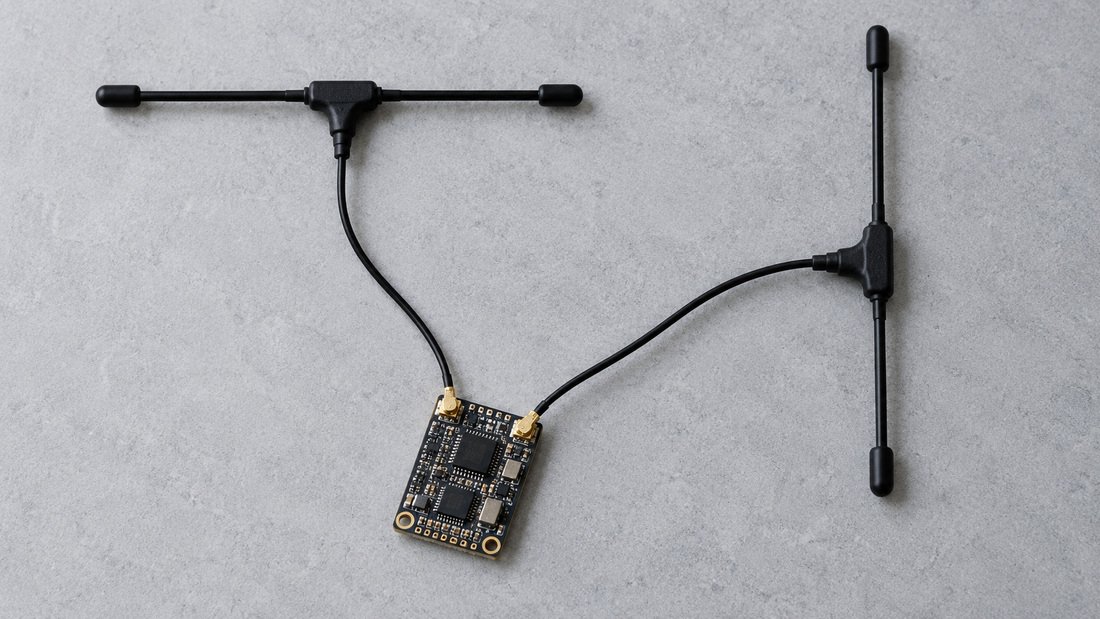
Single-antenna receivers can work well when the antenna is clear of the frame and correctly oriented. Diversity receivers, which use two antennas and select or combine signals, can help when the aircraft changes orientation or when one path is blocked. That benefit is real but depends on correct installation.
Antenna types teams actually use
- Dipole and T-style antennas: simple, lightweight, good general-purpose choice when kept clear of obstructions.
- Ceramic or chip antennas: compact and convenient, but generally a compromise on gain and tuning.
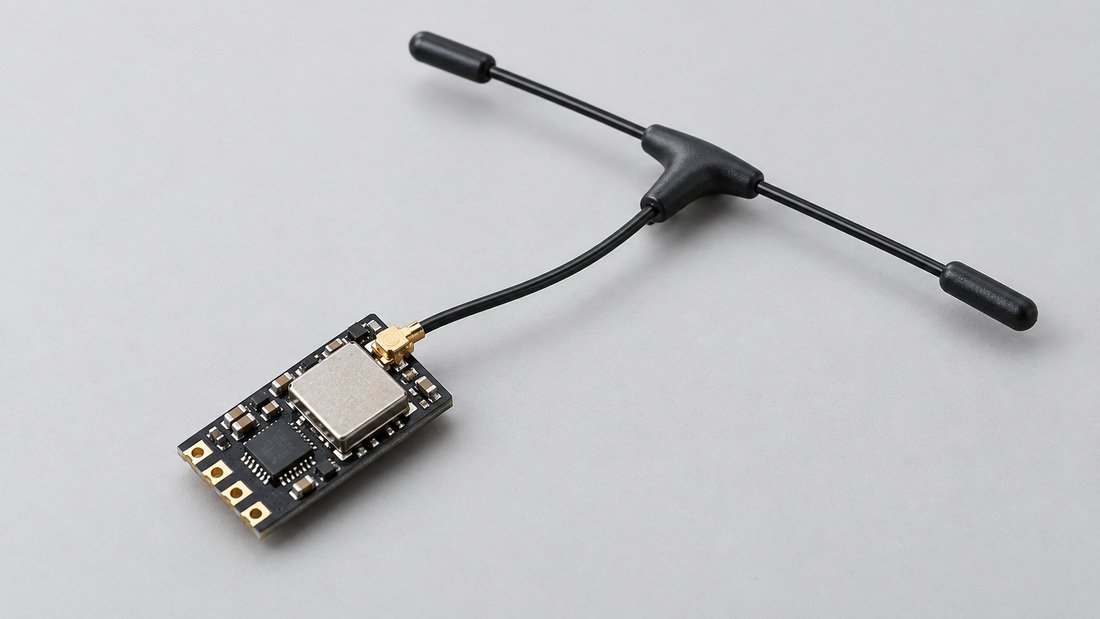
- External connector antennas: more freedom in placement and gain, at the cost of weight and connector risk.
Connector and cable losses
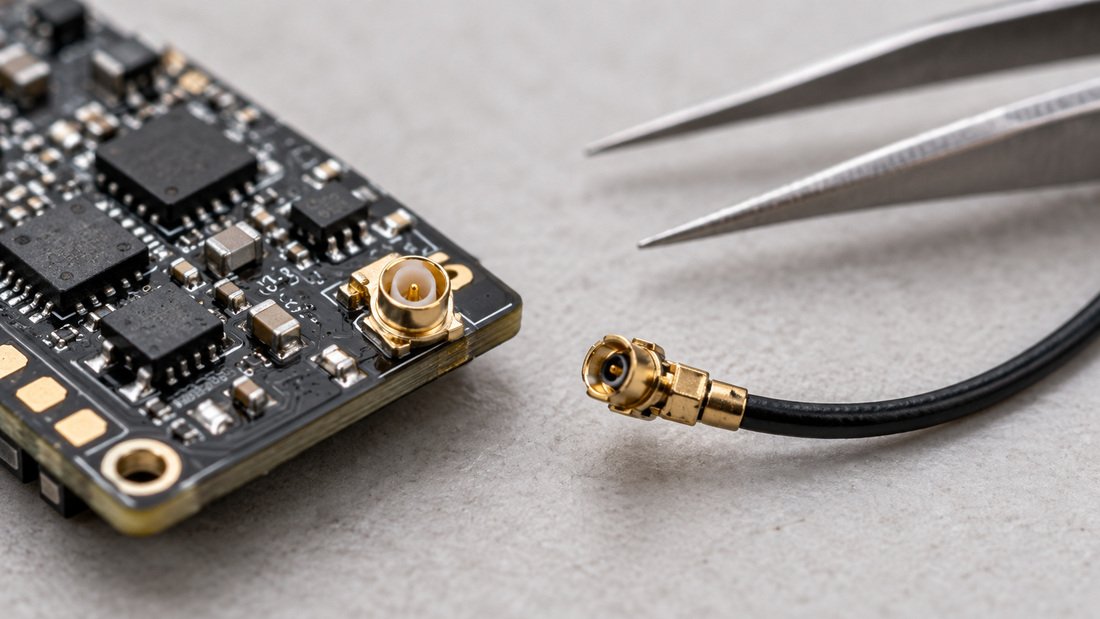
Every connector and adapter in the chain costs some signal. Mixed connector families, cheap adapters and long thin coax runs all reduce performance. Match connectors carefully and keep the RF path short. If your builds use several connector types, the ELRS receivers range shows the common options, and RF antennas covers the matching side.
How to Estimate Range for Your Own Venue
You cannot estimate range accurately from a power figure alone. You can, however, run a structured test that gives your club a defensible working distance for each venue. This is also the fastest way to compare ELRS receiver selection options fairly.
- Define the flight task: what distance and latency does your game or training format actually require?
- Set a baseline receiver and antenna configuration, then change one variable at a time.
- Test in the real venue at the real time of day, with the usual number of radios switched on.
- Record link quality indicators available in your radio firmware, plus observed control behavior.
- Set an operational boundary with margin, and document it for coaches and event staff.
Ask your supplier which link quality indicators their recommended firmware logs, and request written confirmation of supported telemetry and firmware compatibility for the hardware you buy. Terms like warranty, minimum order quantity and lead time should always be confirmed in writing for your specific order.
A Practical ELRS Receiver Selection Checklist
Use this checklist when comparing receivers for a team or school fleet. It keeps selection focused on the whole system rather than a single headline number.
| Check | Why it matters | Confirm with supplier |
|---|---|---|
| Band and regional legality | Ensures lawful operation at your venue | Which bands and power options are supplied for your region |
| Firmware and protocol compatibility | Affects binding, telemetry and updates | Supported firmware targets and update method |
| Receiver sensitivity and antenna | Drives usable link budget | Antenna type, connector and supplied variant |
| Size and weight | Must suit your airframe and battery plan | Dimensions, mounting pattern, connector type |
| Power supply tolerance | Protects against brownouts and damage | Accepted input voltage range |
| Spares and repairability | Keeps a fleet running through a season | Replacement antennas, cables, connectors |
| Documentation and support | Helps volunteers and coaches troubleshoot | Setup guides, pinouts, support channels |
For fleet-level compatibility questions, the ELRS receiver compatibility resource helps narrow options before you request samples.
Planning a fleet refresh or a new season kit? Request a Team Kit Quote and share your venue types, expected fleet size and airframe constraints so recommendations match your program.
Common Mistakes That Shorten Real-World Range
- Assuming a higher power setting guarantees proportionally more distance.
- Burying antennas inside carbon frames or against batteries.
- Mixing antenna connector types with adapters that add loss and mechanical risk.
- Standardizing a fleet on one configuration without testing the actual competition venue.
- Flying to zero link margin at the edge of the field instead of keeping a safety buffer.
- Ignoring firmware and ELRS transmitter modules pairing when troubleshooting link issues.
- Buying for maximum claimed range when the program only needs reliable coverage of a small arena.
Youth program and safety notes
For schools and youth programs, reliability and predictability matter more than maximum distance. Keep flying areas inside your tested boundary, brief coaches on radio checks before sessions, and maintain spares so a single hardware failure does not end a practice. Confirm any local rules that apply to radio use and event operations with the relevant authority.
Frequently Asked Questions
Can a 500 mW ELRS 915 MHz receiver fly 10 km?
Some users report very long links in ideal open conditions, but there is no guaranteed distance. Results depend on antennas, receiver sensitivity, noise and line of sight. Treat any figure as a reported outcome, not a specification, and test your own setup.
Does more power always mean more range?
No. Power is only one part of the link budget. Antenna gain, placement, receiver sensitivity and local interference often limit range before transmit power does.
Is 915 MHz better than 2.4 GHz for indoor drone soccer?
It depends on the venue. Lower frequencies generally penetrate obstacles better, but antenna size and local noise differ. Measure both options in your actual arena before deciding.
How do I choose between a single and diversity receiver?
Diversity can help when orientation changes or one signal path is blocked, provided both antennas are installed and oriented correctly. For small, predictable indoor areas, a well-installed single-antenna receiver may be sufficient.
What should I ask a supplier before buying a team kit?
Ask for written confirmation of band and power options for your region, supported firmware, antenna and connector types, input voltage range, replacement parts availability, and the documentation provided for coaches.
How should clubs document range limits?
Record venue, configuration, tested boundary and observed behavior, then set an operational distance with margin. Keep that record with your event paperwork so new coaches can follow it.
Do I need to change receivers to get more range?
Not always. Antenna choice, mounting and connector quality are often more effective changes. Review the full RF chain before replacing hardware.
Conclusion: Plan Margin, Not Maximum Range
How far a 500 mW ELRS 915 MHz receiver can fly is not a fixed number. It is a link budget outcome shaped by antennas, receiver sensitivity, venue noise and installation quality. For drone soccer clubs, associations and youth programs, the useful question is: what distance can we reliably cover with margin remaining, in our venue, with our fleet?
Answer that by standardizing a configuration, testing at the real venue, and documenting an operational boundary. Then choose receivers that fit your airframes and support your volunteers.
Ready to equip a team or program? Request a Team Kit Quote.