Quick summary
There is no single official speed for a drone soccer ball. In practice, a ball (the protective cage plus drone) moves at whatever speed the pilot commands within the venue and ruleset. Indoors, most balls travel at roughly walking-to-sprinting pace, a few metres per second, because the arena is small and collisions are frequent. Outdoors, in larger airspace and higher throttle, speeds rise significantly. Class, battery voltage, propeller choice, payload and pilot skill all shift the number. The honest answer: speed is a design and rules variable, not a fixed specification.
Key Takeaways
- Drone soccer ball speed is not a single published figure. It depends on drone class, battery, propellers, cage weight, throttle limits and pilot skill.
- Indoor play is generally slower than outdoor play because arenas are small and collisions are constant.
- Rulesets usually cap behaviour through venue size, match format and safety limits rather than a precise speed number.
- For clubs and schools, choosing the right drone soccer systems matters more than chasing top speed.
- Always confirm class limits, throttle settings and insurance requirements in writing with your supplier and governing body.
What Is a Drone Soccer Ball?
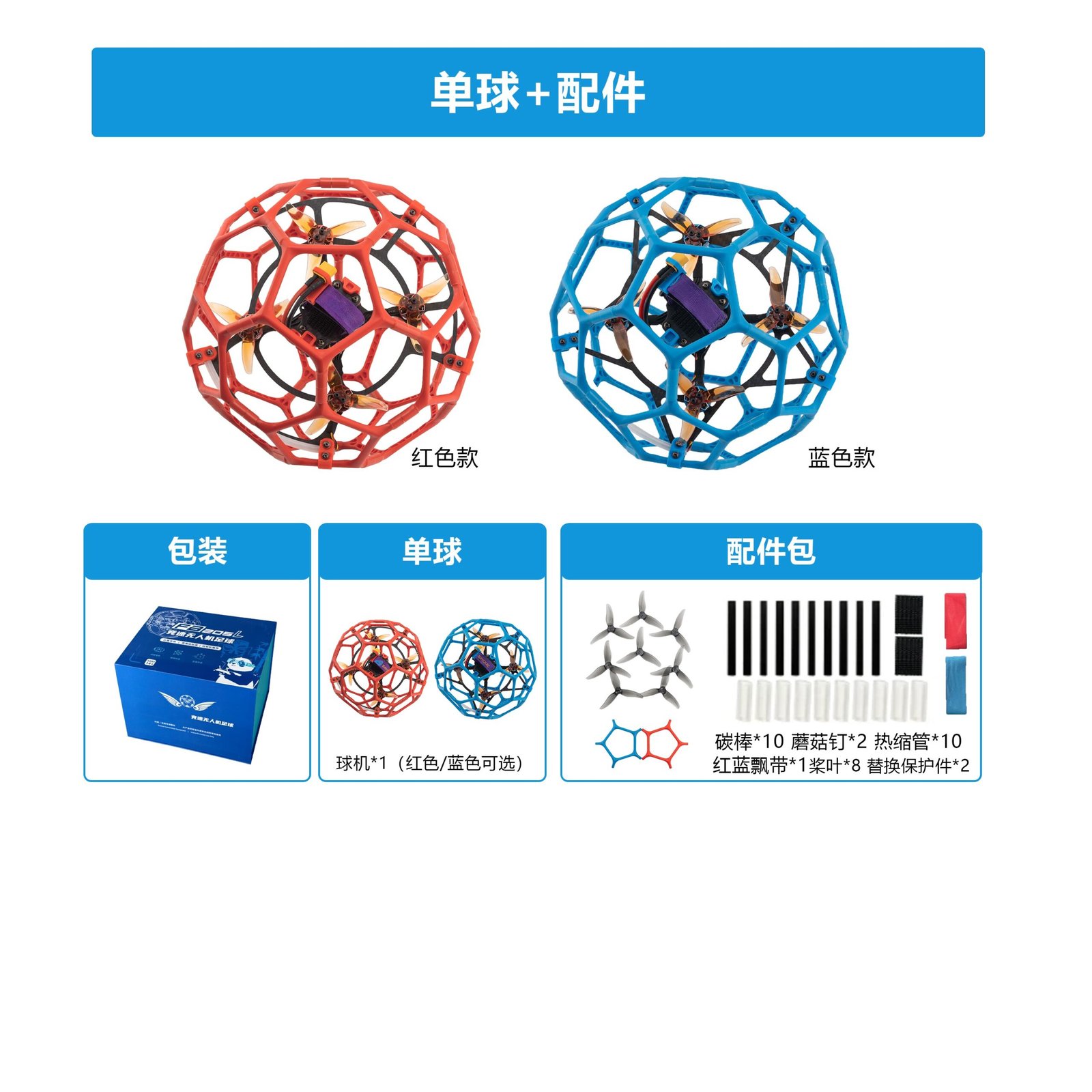
A drone soccer ball is a small quadcopter mounted inside a spherical protective cage. The cage lets the ball bounce off walls, floors and other balls without destroying the drone. Players call it a “ball” because it behaves like one in the air.
The cage adds weight and drag, so a drone soccer ball is not a racing quad. It is built for durability and control. That design choice is exactly why speed is moderate compared with freestyle FPV.

The Ball Is a System, Not Just a Drone
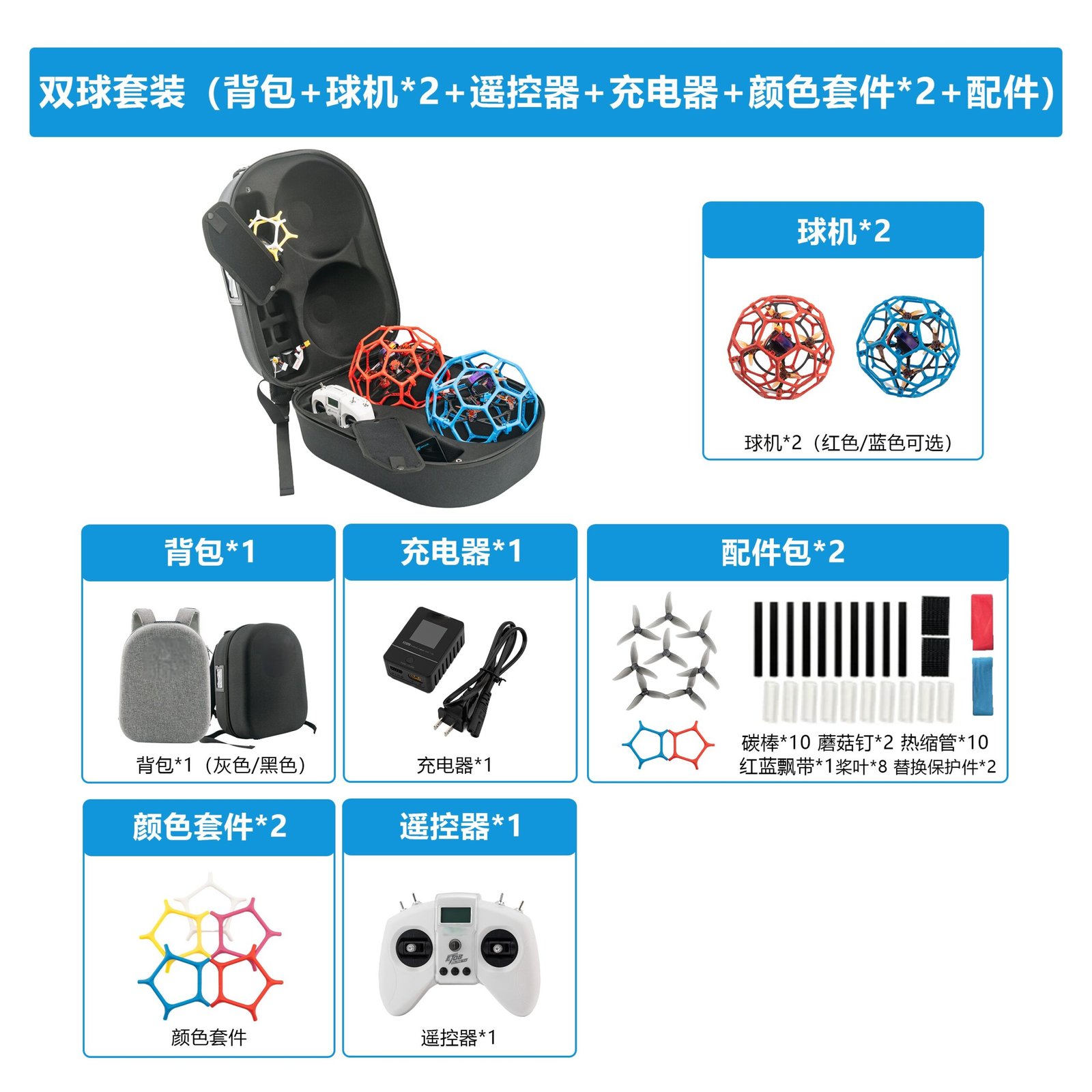
Each ball typically includes the drone frame, motors, propellers, flight controller, battery and the outer cage. Accessories such as spare cages and propellers are consumed quickly in training. Schools often buy spare parts alongside the ball.
How Fast Do Drone Soccer Balls Actually Fly?
Because no universal speed limit is published for every league, treat any “top speed” claim with caution. What you can rely on is the relationship between environment, class and setup. In small indoor arenas, balls rarely reach their hardware ceiling because pilots must slow down to aim and avoid collisions.
Outdoors, with more space and higher throttle, balls accelerate further. If a supplier or league quotes a speed, ask them to state the measurement conditions: indoor or outdoor, class, battery voltage, propeller size and throttle limit.
Why Nobody Publishes One Number
Drone soccer rules and basics vary by country and organizing body. Different leagues define class sizes, arena dimensions and match formats differently. A speed that is safe in one format may be reckless in another, so organizers regulate behaviour through format and safety rules rather than a single figure.
Indoor vs Outdoor Speed
Indoor play is the standard for youth programs because it is controllable and weather-independent. The confined space naturally limits speed. Outdoor play offers more room and therefore higher potential speed, but wind, visibility and safety distances become new variables.
What Changes the Speed of a Drone Soccer Ball?
Several practical factors decide how fast a ball moves in real play. Understanding them helps coaches set realistic expectations and helps procurement teams specify the right kit.
1. Drone Class and Frame Size
Larger classes generally carry more thrust but also more mass. Smaller classes are nimble but limited in top speed. Class rules define which is legal for a given competition, so check your league first.
2. Battery Voltage and Capacity
Higher voltage can deliver more thrust, but it also increases heat, current draw and crash energy. Battery choice is a trade-off between speed, flight time and safety. Confirm the recommended battery for your class before buying.
3. Propellers and Motor Kv
Propeller pitch and motor Kv affect acceleration more than steady-state speed in a small arena. Quick response often matters more than raw top speed for scoring.
4. Cage Weight and Aerodynamics
A heavier or less aerodynamic cage slows the ball and increases current draw. Cage design is a durability-versus-speed trade-off. Cheap cages may crack; heavy cages may dull performance.
5. Throttle Limits and Firmware Settings
Many clubs and schools cap throttle in firmware for safety and fairness. This is one of the most effective ways to control speed without changing hardware. Ask your supplier whether throttle limiting is supported.
6. Pilot Skill
A skilled pilot flies smoothly and rarely reaches the hardware limit. Beginners tend to over-correct, which wastes energy and reduces effective speed. Coaching improves average ball speed more than upgrades do.
Speed Comparison by Scenario
The table below is an illustrative guide, not a specification. Use it to frame conversations with your league and supplier, then confirm exact parameters in writing.
| Scenario | Typical Speed Character | Main Limiting Factor | What to Confirm |
|---|---|---|---|
| Small indoor arena, beginner class | Slow, controlled, frequent stops | Venue size, pilot skill | Class rules, throttle setting |
| Standard indoor arena, competitive | Moderate, bursty | Collision risk, cage weight | League speed/safety rules |
| Large indoor hall | Higher, longer runs | Battery sag, visibility | Battery spec, spares plan |
| Outdoor open area | Highest potential | Wind, safety distance | Insurance, local regulations |
Rules and Basics You Should Know Before Buying
Drone soccer rules and basics are set by your league or national body, not by the equipment supplier. Equipment must fit the rules, not the other way around. Before you buy, get the current ruleset in writing.
Match Format Basics
Most formats use teams of drones with roles such as striker, defender and goalkeeper. Scoring happens through a ring or goal. Exact team sizes and field dimensions differ by league, so verify locally.
Safety Rules
Typical safety rules cover netting, spectator distance, battery handling and pre-flight checks. These rules exist because balls can collide and fall. Follow your organizer’s guidance.
Regulatory Context for Schools
In the United States, educational drone use is regulated. According to the FAA, drones flown for educational purposes fall under either the Exception for Limited Recreational Operations of Unmanned Aircraft or the Small Unmanned Aircraft Systems Rule (Part 107). The FAA notes that drones flown for educational and research purposes may be operated under 49 U.S.C. § 44809 for qualifying educational organizations, which include institutions of higher education, JROTC programs, and programs chartered by an FAA-recognized Community Based Organization. Organizations that do not qualify must generally operate under Part 107. See the FAA educational users page: https://www.faa.gov/uas/educational_users. Rules differ outside the US, so check your national authority.
What Speed Means for Schools and Clubs
For schools, controllable speed is a feature, not a limitation. It keeps sessions safe, reduces breakage and lets more students fly in a small gym. For clubs, the same equipment can be tuned as skills improve.
Programs that combine structured training with competition see better retention. Explore STEM drone education and training and drone soccer competitions to plan a full season.
Radio and Video Links Affect Perceived Speed
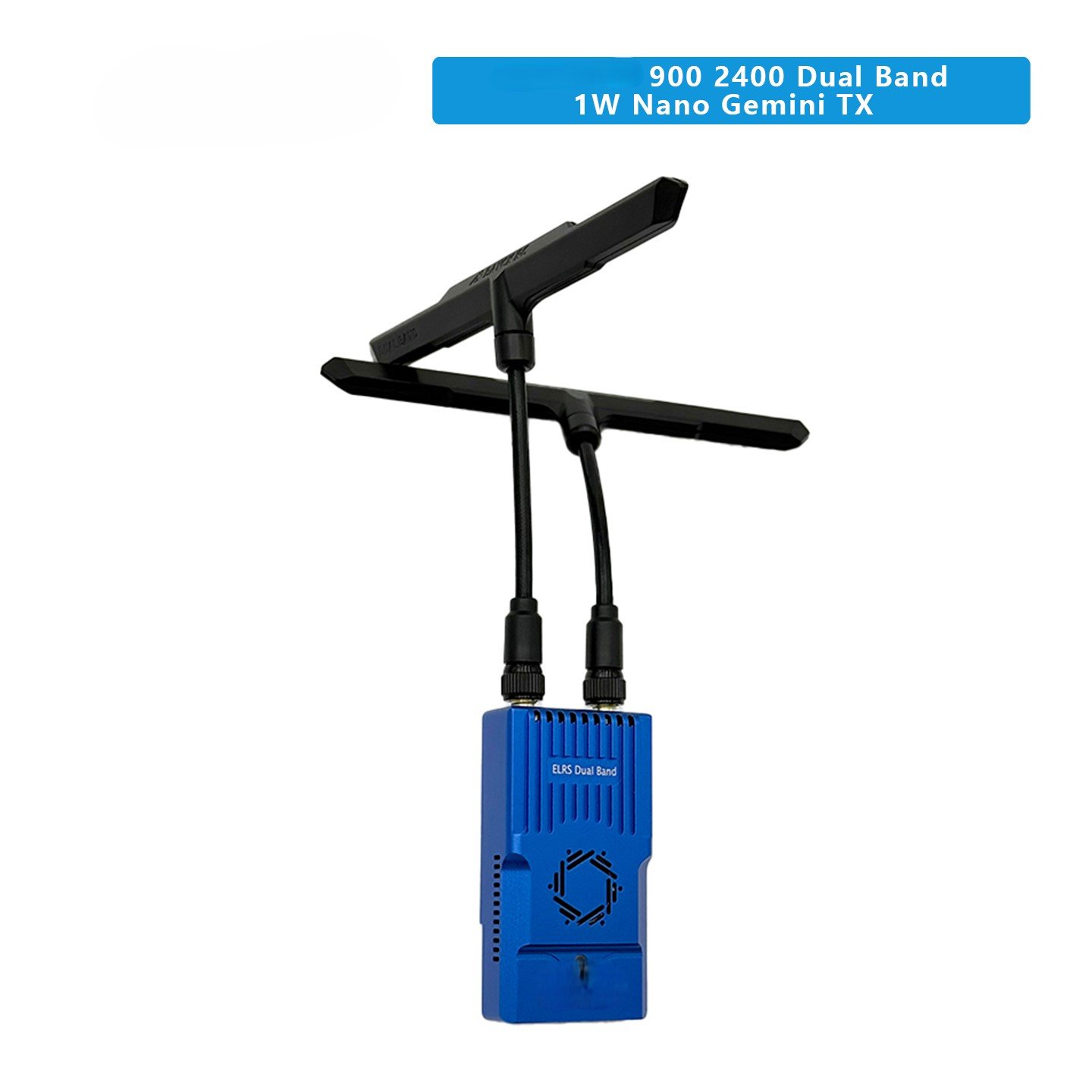
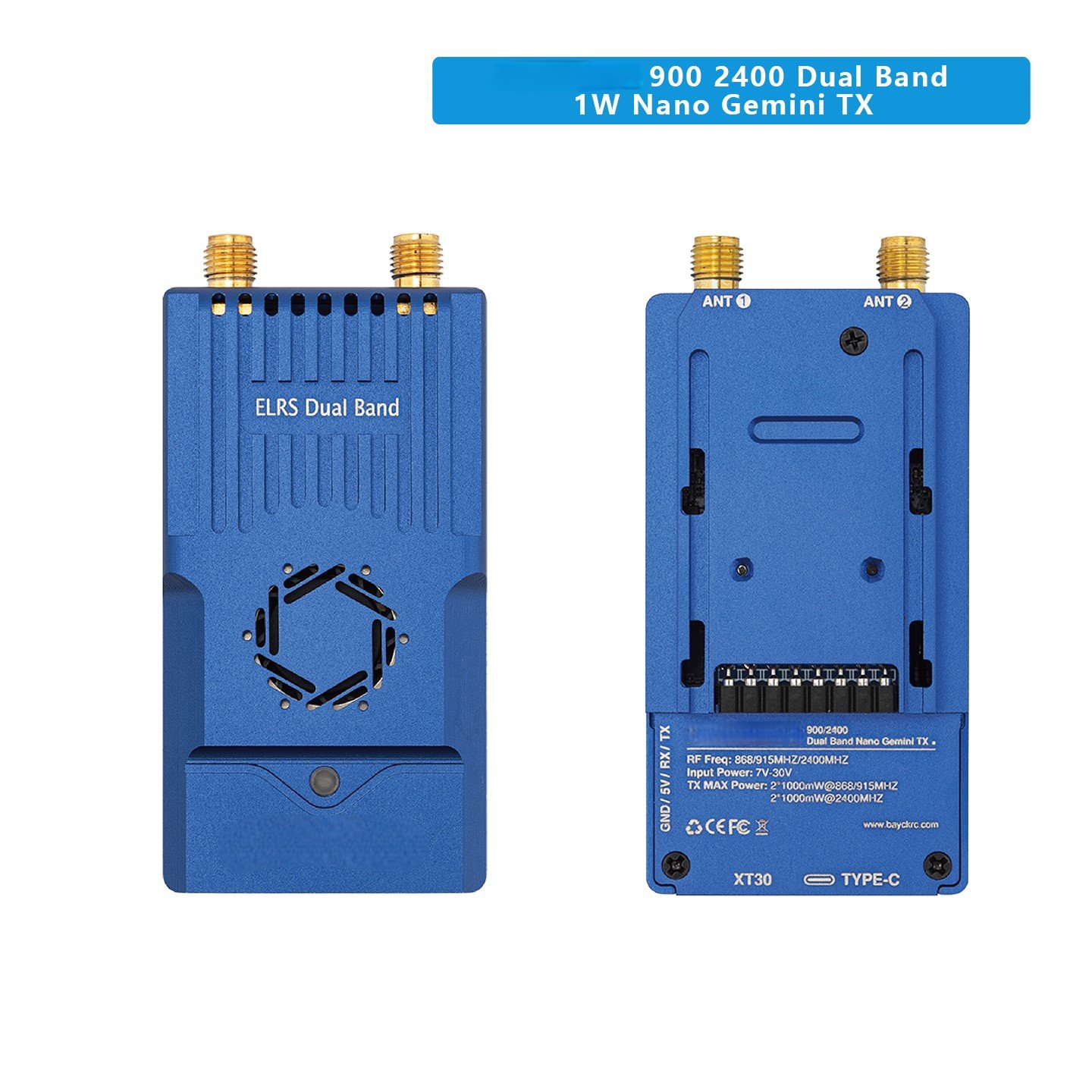
Pilots judge speed through the video feed and control link. A laggy or dropout-prone link makes a fast ball feel unpredictable. That is why many teams invest in reliable radio and video transmission hardware.
Dual-band transmitters can help manage interference in crowded gyms. If your club flies many balls at once, discuss link planning with your supplier. Buying from a single drone soccer clubs partner keeps parts and firmware consistent.
Common Mistakes When Choosing Drone Soccer Equipment
- Buying for top speed instead of durability and control.
- Ignoring the current league ruleset before purchase.
- Under-buying spare cages and propellers, then losing practice time.
- Assuming one battery fits all classes or venues.
- Skipping throttle limits, which raises crash risk for beginners.
- Mixing brands without checking compatibility of links and firmware.
- Not confirming insurance and regulatory requirements for your venue.
If you are equipping a program, talk to a supplier who understands both the sport and the classroom. Contact our team to scope a kit that matches your ruleset.
Buyer Checklist
- Copy of the current league ruleset, saved in writing.
- Class size and legal frame/ball dimensions.
- Recommended battery voltage, capacity and connector type.
- Throttle-limiting or beginner mode availability.
- Spare cages, propellers and motors per team.
- Radio and video link plan for your venue size.
- Charging and battery-safety equipment.
- Storage and transport cases.
- Training materials for coaches and students.
- Written confirmation of warranty, support and spare-part availability.
- Regulatory and insurance sign-off for your venue.
Frequently Asked Questions
Is there an official top speed for drone soccer balls?
No single global figure applies. Speed depends on class, ruleset, venue and setup. Ask your league and supplier for the parameters that apply to your competition.
Are drone soccer balls faster indoors or outdoors?
Outdoors generally allows higher speed because there is more space. Indoors, venue size and collision risk naturally keep speeds lower.
Can I increase the speed of my drone soccer ball?
You can change batteries, propellers and firmware settings, but this may breach class rules or void safety approvals. Check the ruleset first, and confirm any change in writing with your supplier.
Does speed affect safety in school programs?
Yes. Higher speed means more crash energy. Many schools use throttle limits and smaller classes to keep sessions safe and manageable.
What regulations apply to school drone soccer in the US?
The FAA states that educational drone flights operate under either the Exception for Limited Recreational Operations or Part 107, depending on the organization. Verify your category on the FAA educational users page before flying.
How many spare parts should a club buy?
There is no universal number. Estimate from practice hours, team size and crash frequency, then confirm availability and reorder timing with your supplier in writing.
Do I need special radio equipment for a crowded gym?
Crowded venues can cause interference. Discuss dual-band options and channel planning with your supplier, and confirm compatibility with your chosen drone system.
Conclusion
Drone soccer ball speed is not a fixed number, it is the result of class, battery, cage, firmware limits, venue and pilot skill. For schools and clubs, control and durability matter more than chasing a top-speed claim. Start with your league ruleset, then match equipment to it.
Ready to equip your team? Request a Team Kit Quote and confirm class, spares and support details in writing.