Quick summary
Government agencies choose drone equipment suppliers for low-altitude sports and government programs by following a structured public procurement process. This typically starts with a needs assessment and market research, moves through compliance and safety screening, and ends with a competitive solicitation evaluated on technical merit, price, and total cost of ownership. Suppliers must demonstrate regulatory awareness, transparent documentation, and the ability to support training and long-term operations. Understanding these steps helps vendors prepare responsive proposals and helps agencies design fair, defensible evaluations.
Key Takeaways
- Procurement usually follows a formal sequence: needs assessment, market research, specification drafting, solicitation, evaluation, and contract award.
- Regulatory compliance and safety planning are often pass/fail criteria, not scored points.
- Total cost of ownership (TCO) — including training, spare parts, and lifecycle support — matters more than unit price alone.
- Clear, vendor-neutral specifications attract broader competition and reduce protest risk.
- References and past performance in similar public or educational settings carry significant weight.
What is the typical procurement sequence for government drone programs?
Most public agencies follow a repeatable sequence: identify the need, research the market, define requirements, issue a solicitation, evaluate offers, and manage the contract. The exact steps and thresholds vary by jurisdiction, so always confirm local rules.
Step 1: Needs assessment and stakeholder alignment
Agencies begin by defining the program’s objectives — for example, introducing low-altitude sports and government programs in schools, supporting a drone soccer league, or building STEM pathways. Stakeholders may include parks and recreation, education departments, IT, legal, and risk management. Documenting shared goals early prevents specification drift later.
Step 2: Market research and request for information
Agencies often issue a Request for Information (RFI) or conduct informal outreach to understand available solutions, typical price ranges, and supplier capabilities. This is not a commitment to buy but helps shape realistic requirements. Suppliers should respond factually and avoid overpromising.
Step 3: Specification drafting
Requirements should be written around outcomes and minimum mandatory criteria rather than brand names. Technical specifications might cover drone dimensions, safety guards, battery chemistry, radio frequency, and compatibility with training curricula. Overly narrow specs can limit competition; overly vague specs invite non-responsive bids.
Step 4: Solicitation and evaluation
The agency issues an Invitation to Bid (ITB), Request for Proposal (RFP), or similar document. Evaluation committees score proposals against published criteria, often separating mandatory compliance from weighted technical and price factors. A common structure is 60–70% technical and 30–40% price, but this varies.
Step 5: Award and contract management
After award, the contract defines deliverables, payment terms, acceptance testing, and support obligations. Agencies should monitor performance and document any change orders. Suppliers should clarify warranty, lead time, and maintenance terms in writing before signing.

Which compliance and safety factors are non-negotiable?
Regulatory compliance and safety planning are typically pass/fail requirements. A supplier that cannot demonstrate awareness of applicable rules may be disqualified regardless of price.
In the United States, educational drone use is regulated under either the Exception for Limited Recreational Operations (49 U.S.C. § 44809) or the Small Unmanned Aircraft Systems Rule (Part 107), depending on the operation. The FAA clarifies that qualifying educational organizations — including institutions of higher education, JROTC programs, and programs chartered by an FAA-recognized Community Based Organization — may operate under § 44809 for educational purposes. Other organizations must operate under Part 107. Suppliers should understand these distinctions when supporting school programs. FAA educational users guidance.
Additionally, FAA-Recognized Identification Areas (FRIAs) allow drones to fly without Remote ID, and educational institutions are eligible to request a FRIA. Suppliers can help agencies navigate these options, but the responsibility for compliance remains with the operator. Always confirm local rules; the FAA guidance applies to US airspace.
For low-altitude sports and government programs involving indoor or enclosed venues, agencies should also consider facility safety, insurance, and participant supervision ratios. Suppliers should provide safety documentation and training materials.
How should agencies compare suppliers? A practical comparison table
Use this table to structure evaluation. Weightings are illustrative; adjust to local priorities.
| Criterion | What to examine | Illustrative weight |
|---|---|---|
| Regulatory awareness | Knowledge of Part 107, § 44809, FRIA; documented compliance approach | Pass/fail |
| Product safety | Prop guards, battery safety, RF compliance, age-appropriate design | 15–20% |
| Technical fit | Compatibility with curriculum, league rules, and existing equipment | 20–25% |
| Training and support | Teacher training, manuals, ongoing technical support | 15–20% |
| Total cost of ownership | Unit price, spare parts, maintenance, lifecycle | 20–30% |
| Past performance | References from similar public or educational programs | 10–15% |
| Supply chain reliability | Lead time, spare parts availability, warranty terms | 10% |
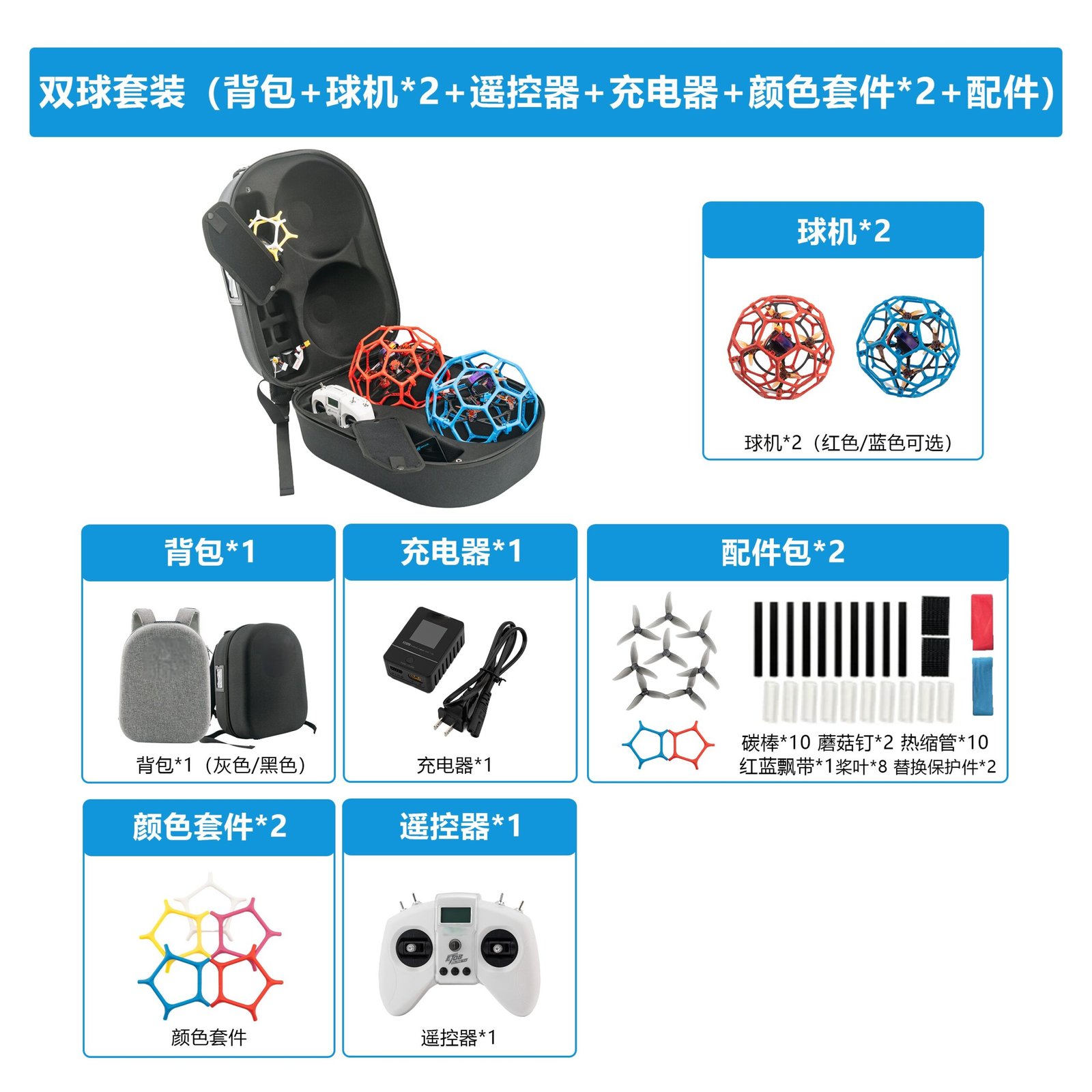
For agencies building a drone soccer program, suppliers like Drone Parts Factory offer drone soccer systems that may align with these criteria. Always request written confirmation of specifications.
What does total cost of ownership include for drone programs?
TCO extends beyond purchase price to include training, spare parts, maintenance, storage, insurance, and end-of-life disposal. A low unit price can be misleading if proprietary parts are expensive or unavailable.
Ask suppliers to provide a breakdown of consumables (propellers, batteries, guards), expected replacement intervals, and warranty terms. For multi-year programs, consider bulk purchasing of spares and standardized fleet components. Schools and training organizations should also factor in curriculum development and instructor time.

Common Mistakes in Government Drone Procurement
- Writing brand-specific specs that limit competition and may violate procurement rules.
- Ignoring total cost of ownership and focusing only on the lowest bid.
- Underestimating training needs — a supplier’s ability to train teachers and coaches is critical.
- Failing to verify regulatory compliance — especially for educational vs. commercial use.
- Not checking references from similar programs.
- Overlooking spare parts availability and long-term support.
Buyer Checklist: Evaluating Drone Equipment Suppliers
- ☐ Supplier provides written confirmation of regulatory awareness (e.g., Part 107, § 44809).
- ☐ Product specifications match program needs (size, safety features, frequency).
- ☐ Training and curriculum support included or priced separately.
- ☐ Spare parts list and pricing provided.
- ☐ Warranty terms and lead times confirmed in writing.
- ☐ References from similar public or educational programs available.
- ☐ Total cost of ownership calculated over 3–5 years.
- ☐ Supply chain reliability and after-sales support documented.
For agencies exploring STEM integration, Drone Parts Factory offers STEM drone education and training solutions. Request detailed documentation for your evaluation.
How can suppliers prepare responsive proposals?
Suppliers should read solicitations carefully, respond to every mandatory requirement, and provide evidence rather than assertions. Avoid marketing language; use factual descriptions and attach supporting documents.
Highlight relevant experience with drone soccer competitions or school programs. Provide sample training plans, spare parts lists, and clear pricing. If a requirement is unclear, submit questions during the Q&A period rather than guessing.
Frequently Asked Questions (FAQs)
1. Do government agencies always use competitive bidding?
Most public agencies are required to use competitive procurement above certain thresholds, but rules vary. Small purchases may allow simplified procedures. Always confirm with your procurement office.
2. Can agencies specify a particular brand?
Generally, public procurement rules favor vendor-neutral specifications to encourage competition. Brand-specific requirements may be allowed only with justification (e.g., compatibility with existing fleet). Consult legal counsel.
3. What is the difference between Part 107 and § 44809 for educational programs?
Part 107 governs most small UAS operations, including educational use, while § 44809 provides an exception for limited recreational operations. Qualifying educational organizations may operate under § 44809 for educational purposes. See FAA guidance for details.
4. How important are references?
References from similar programs are often a scored criterion. They help verify a supplier’s ability to deliver and support. Ask for contacts from schools or agencies with comparable deployments.
5. What should agencies ask about warranty and support?
Request written warranty terms, response times for support, availability of spare parts, and whether training is included. These details should be part of the contract, not just verbal assurances.
6. Can suppliers help with curriculum integration?
Many suppliers offer curriculum resources, but agencies should evaluate whether these align with educational standards and local needs. Request samples and review them before award. Drone Parts Factory provides resources for schools and training organizations.
7. What if the program involves international or non-US jurisdictions?
Regulations vary by country. The FAA guidance cited applies to US airspace. Agencies outside the US should consult their national aviation authority and adapt procurement criteria accordingly.
Conclusion
Choosing a drone equipment supplier for low-altitude sports and government programs requires a disciplined approach: define needs, research the market, specify mandatory compliance and safety criteria, evaluate total cost of ownership, and verify references. Suppliers that provide transparent documentation and support training are better positioned to win public contracts. For agencies ready to explore a pilot, Drone Parts Factory can discuss your requirements and provide the information you need for your evaluation.
Next step: Discuss a Pilot Program with our team to align on specifications and procurement documentation.