Quick summary
A drone soccer ball cage is the protective outer shell that surrounds a small quadcopter so it can bump, roll and spin through a match without damaging props or people. Designers balance four forces: structural stiffness so the cage holds shape during impacts, low weight so flight time and agility stay usable, shielding that keeps fingers and props apart, and serviceability so clubs can swap cracked shells or arms without scrapping the drone. The cage is not one part — it is a frame, an outer sphere, mounting points and wiring channels working together.
Key Takeaways
- A drone soccer ball cage is a protective outer structure, usually combined with an inner frame, that encloses the propellers and electronics.
- Its geometry must balance stiffness, weight, airflow and the ball’s rolling behaviour around the hoop.
- Impact energy is managed by elastic deformation and distributed mounting points, not by making the shell as thick as possible.
- Design decisions are only useful if they match how clubs actually repair and store equipment between sessions.
- Ask suppliers for fit, material and replacement-part information in writing rather than assuming compatibility across brands.
What is a drone soccer ball cage and structure?
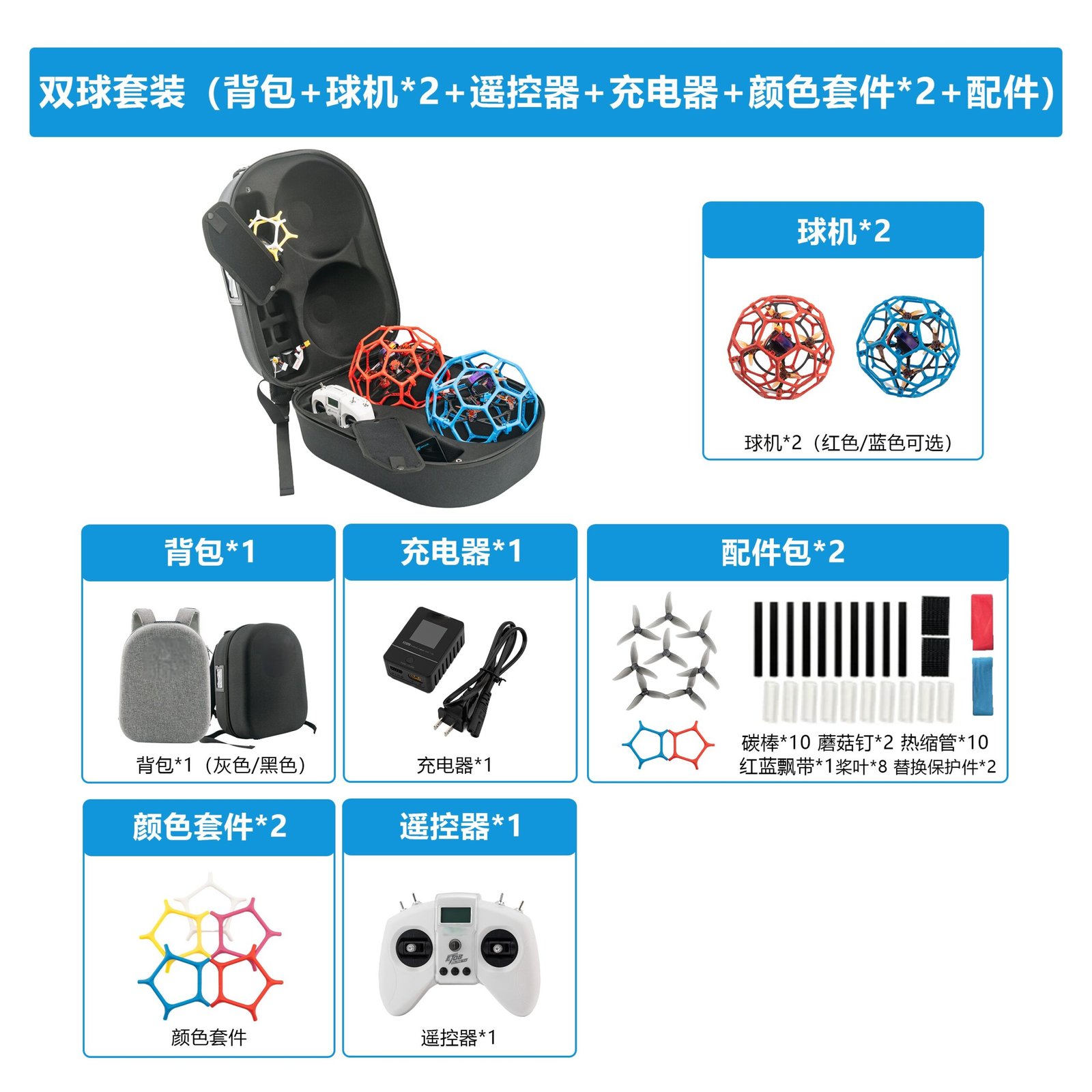
A drone soccer ball cage and structure is the enclosing assembly that turns a small quadcopter into a safe, rolling ball-shaped aircraft. In drone soccer (also written as drone soccer / drone football depending on the region), the craft flies inside a protective sphere and scores by passing through a vertical hoop. The cage is the sphere; the structure is what holds the sphere to the frame, motors, flight controller and battery.
The cage is not the flight controller. The flight controller is the small computer that reads sensors such as the gyroscope and accelerometer, computes corrections, and sends commands to the electronic speed controllers (ESCs) that drive the motors. Betaflight, a widely used flight controller firmware, describes this loop clearly: the controller reads sensors, computes desired actions, sends commands to the ESC, and generates thrust to keep the craft in the air (betaflight.com). The cage sits around that system, protecting it and shaping how the ball behaves in contact.
Why the ball matters in drone soccer
The ball is not decoration. It defines the sport. A drone soccer ball lets a fragile quadcopter survive repeated contact with the hoop, the ground and other drones, and it gives the craft a rounded contact surface so it rolls and deflects predictably rather than catching an edge.
For clubs and schools, the cage also defines the safety boundary. A well-designed drone soccer ball cage and structure keeps spinning propellers inside the shell, which matters when students, referees and spectators stand close to the play area. It also absorbs the kind of low-energy collisions that happen constantly in training.
Design goals a cage must balance
Every drone soccer ball cage is a set of trade-offs. Teams that understand the trade-offs can judge whether a replacement shell or frame will actually suit their play style.
Stiffness versus weight
A stiffer cage holds its shape and keeps the propeller disc clear. A lighter cage climbs faster and flies longer. Push stiffness with thicker walls or heavier material and you add rotational inertia, which makes the ball feel sluggish and can reduce flight time. Push lightness too far and the shell may flex into the props or crack early.
Impact absorption versus rebound
Some designs emphasise elastic flex so the ball springs back; others prefer a more damped response so the ball loses energy on contact. Neither is universally better — it depends on whether your team plays a direct, attacking style or relies on positioning and control.
Airflow versus shielding
Open cage geometry lets air reach the propellers, which supports thrust and cooling. Closed geometry protects better but can reduce efficiency and trap heat around the ESCs and motors. Most practical designs use a mix of openings, ribs and protected zones.
Serviceability versus one-piece simplicity
A one-piece shell may be simple to fit but hard to repair. A modular cage with replaceable panels, arms and latches usually costs more upfront but reduces downtime when a shell cracks mid-season.
Cage geometry and how it flies
The shape of the drone soccer ball cage and structure affects both handling and scoring. Key geometric variables include overall diameter, rib layout, the positions of the propeller openings, and where the ball contacts the hoop.
- Diameter: A larger ball gives more protection and a larger rolling radius but adds drag and weight. Competition rules often constrain diameter, so check your league specification before buying.
- Rib pattern: Meridian ribs and equatorial rings are common ways to build a stiff sphere with less material. The pattern should avoid placing stiff ribs directly over the prop tips.
- Opening size: Propeller openings need enough area for airflow without letting fingers or foreign objects reach the blades.
- Contact band: The zone that meets the hoop should roll smoothly. Sharp seams, protruding screws or latch tabs can catch on the hoop edge.
Because the ball is airborne, the cage also has to be centred on the frame. If the shell is offset, the drone will hover with a lean and the pilot will fight it constantly. Mounting symmetry is therefore a design requirement, not a cosmetic detail.
Materials and construction choices
Most drone soccer ball cages use moulded or printed polymer structures because polymers can flex and recover. Common families include impact-modified plastics, glass-fibre-reinforced grades and, for prototyping, 3D-printed materials. Each has different stiffness, toughness and repairability.
Material choice is not only about the shell. The frame beneath it — often described simply as drone frames — carries the motors and must transmit loads from the shell to the airframe without cracking at the mounting holes. Fasteners, inserts and latches should be chosen so they do not become the weakest link.
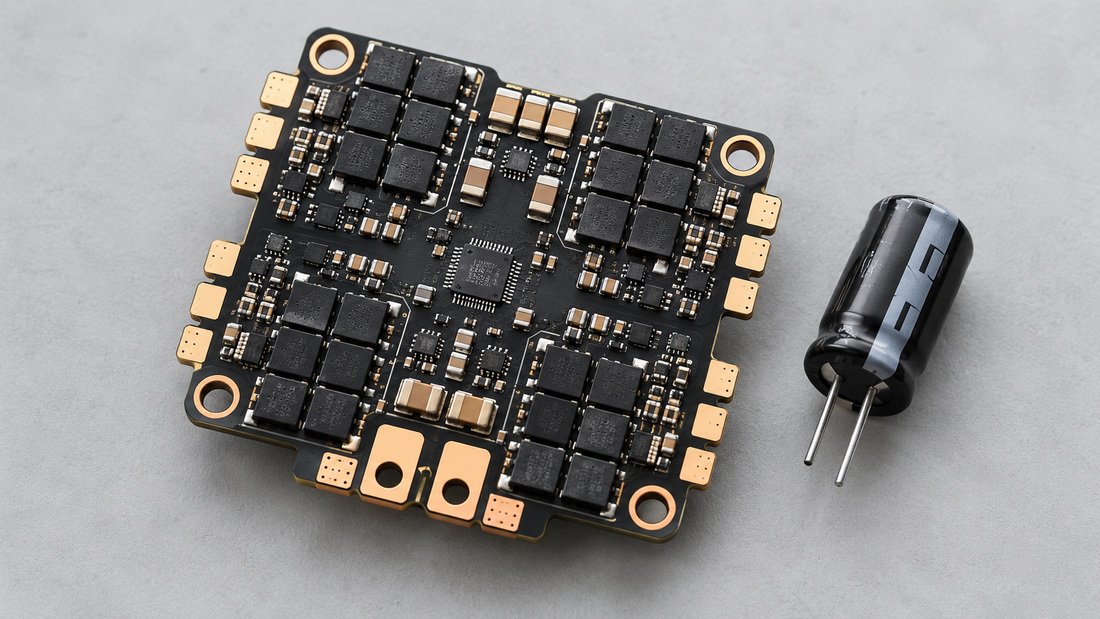
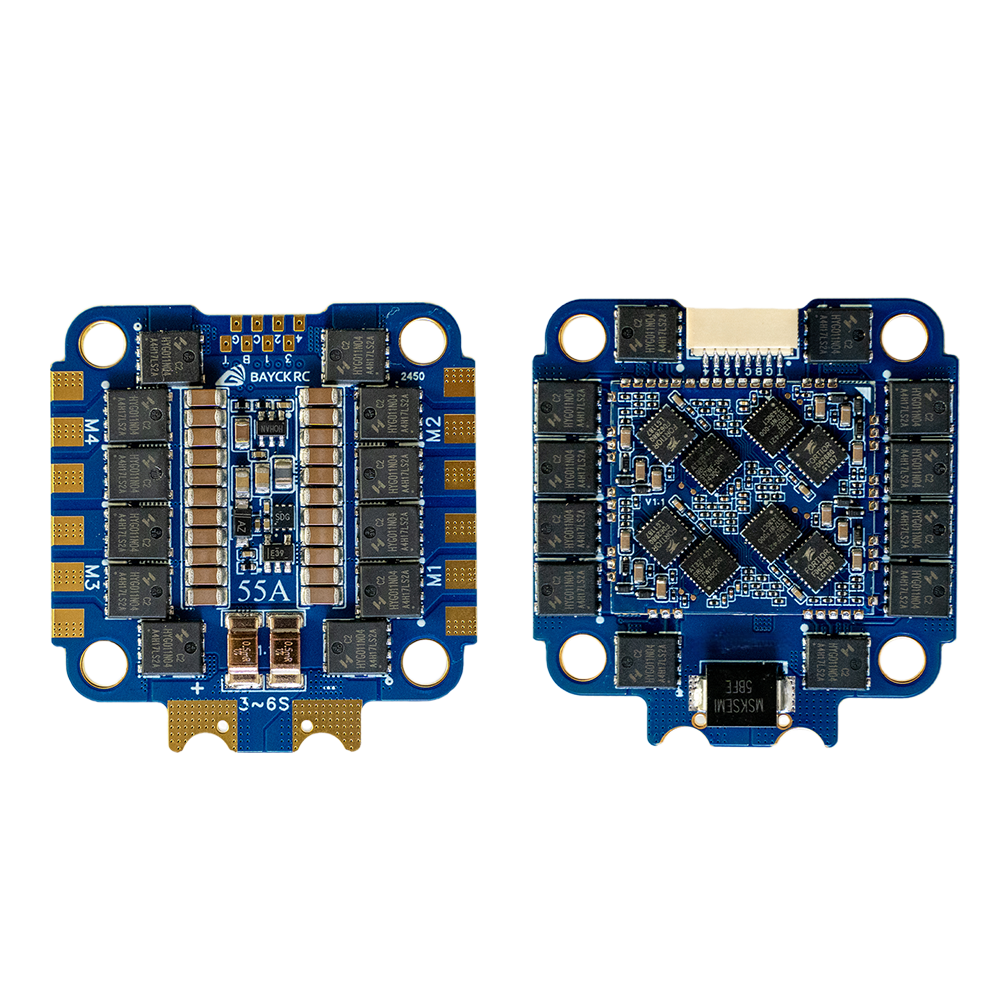
Electronics fit inside the same envelope. A four-in-one ESC, for example, combines four motor controllers on one board, which saves space and simplifies wiring inside a crowded ball. If you are evaluating how electronics and structure share space, it helps to understand how a four-in-one ESC is packaged and cooled.
From drawing to a flyable ball: the design process
Design usually proceeds from rules to geometry to structure to validation. The order matters because each stage constrains the next.
1. Define the envelope
Start with your league’s ball diameter, weight and safety requirements, plus the propeller size you intend to use. These define the available volume for the cage, frame, motors, battery and electronics.
2. Package the internals
Place the frame, motors, ESCs, flight controller, receiver and battery inside the envelope. Plan wire routes so cable bundles do not press on the shell or block airflow. A propulsion combo kit can simplify this step by matching motors, ESCs and props as a set, reducing the risk of mismatched components.
3. Build the sphere
Design the outer cage as a stiff but flexible shell. Use ribs, rings and local reinforcement near mounting points. Add openings for airflow within the safety limits you have set.
4. Design the interface
Define how the shell attaches to the frame: screws, clips, bayonet fittings or elastic mounts. The interface must resist vibration, allow quick replacement, and avoid sharp edges that could catch on the hoop or on players’ clothing.
5. Validate by testing
Testing should be documented by the manufacturer or by your own programme, not assumed. Typical checks include drop tests from representative heights, repeated hoop contact, vibration inspection after flights, and motor-temperature checks after a full session. Bench-test new firmware on a restrained craft before flying, following normal FPV safety practice; flight controller firmware such as Betaflight is configured and tuned through its own tools and documentation (betaflight.com).
Comparison: design priorities by use case
The same cage geometry rarely suits every programme. The table below frames the trade-offs to discuss with a supplier.
| Use case | Likely priority | Trade-off to watch |
|---|---|---|
| School introductory sessions | Toughness and easy repair | May be heavier than competition shells |
| Competitive club play | Low weight and consistent roll | Thinner shells need more careful handling |
| Mixed-age youth training | Safety and simple assembly | Fewer tuning options |
| Event rental fleets | Fast field replacement | Modular parts cost more upfront |
| Prototyping or research | Adjustable geometry | Printed parts may not match production durability |
Common mistakes when specifying a ball cage
Buyers often focus on the shell alone and discover compatibility problems later. Frequent mistakes include:
- Ignoring league rules. Diameter, weight and safety limits vary by competition. Confirm the current rulebook before committing to tooling.
- Mixing brands without checking fit. Mounting patterns, screw positions and ball diameters are not universal. Ask for drawings.
- Choosing the cheapest shell only. Downtime during a tournament can cost more than a stronger replacement part.
- Forgetting spares. Cages and mounting hardware are consumables in active programmes. Budget for replacements.
- Neglecting repairs. Cracks near mounting points usually require replacing the affected panel or shell, not glue.
- Assuming a shell includes electronics. Confirm what is in the box: shell only, or complete ball assembly.
For clubs that expect heavy use, it is worth understanding the range of available drone soccer replacement parts before a season starts, so repairs do not stall training.
Designing for repair, transport and classroom reality
A cage that is clever in CAD but awkward in a school corridor will not survive a term. Good designs account for how the equipment is actually used.
Replaceable panels and shells
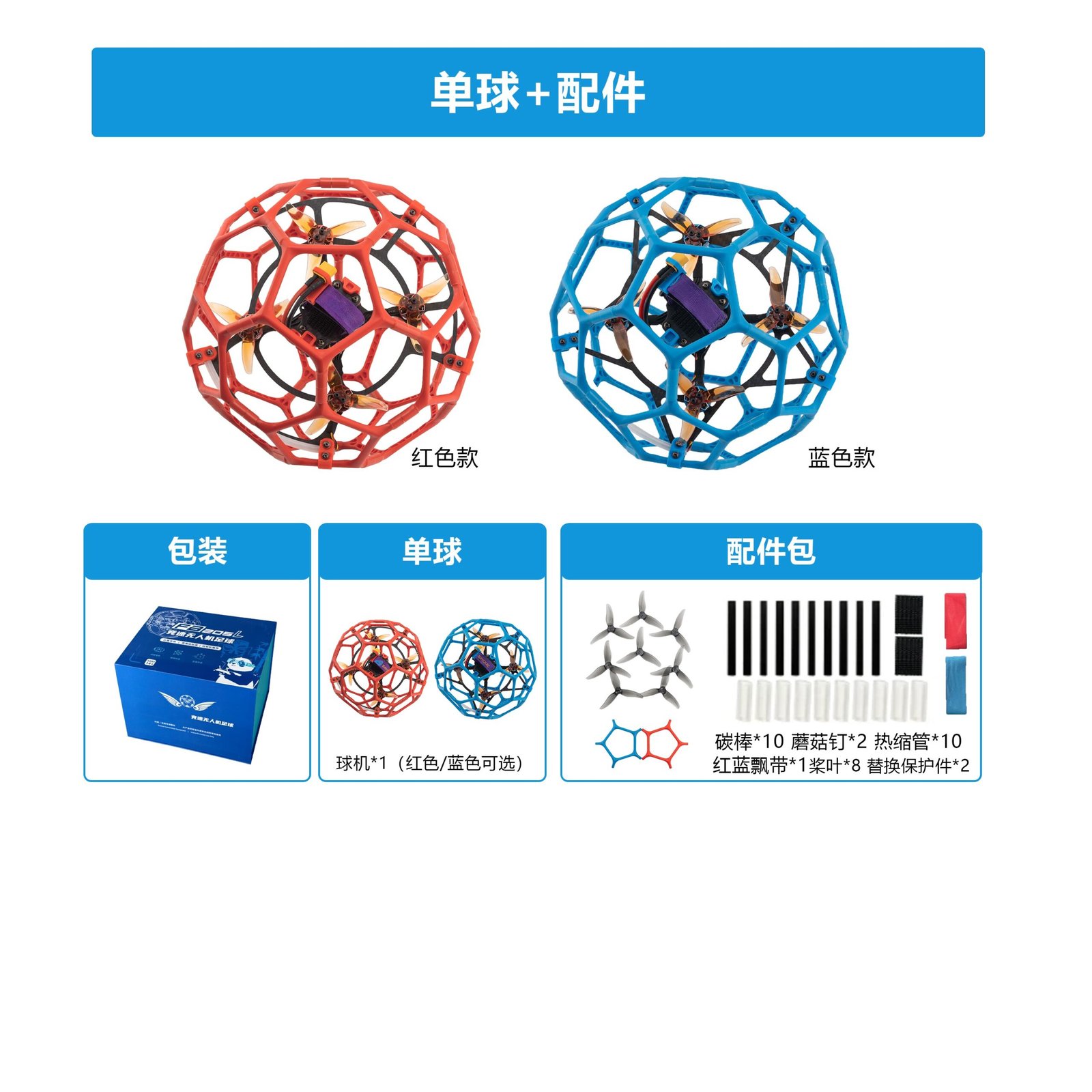
Modular protective shells let a coach replace only the cracked section. This reduces cost per incident and keeps more drones airworthy. Look for consistent latch or screw systems so students can perform basic swaps under supervision.
Storage and transport
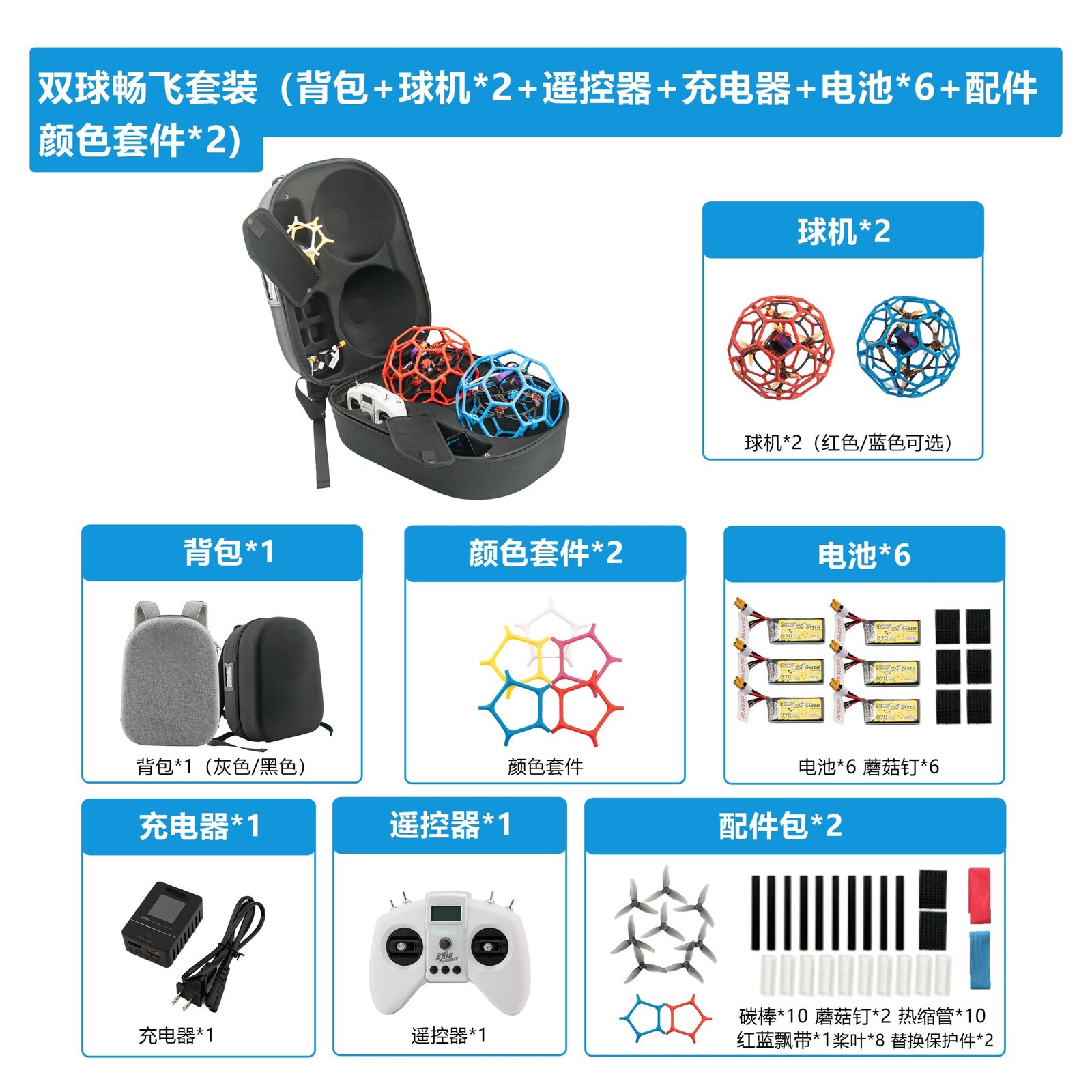
Ask how the ball should be stored. Stacking heavy cases on shells, or leaving them in a hot vehicle, may affect polymer parts over time. A supplier that understands school logistics will often recommend a transport solution alongside the cage.
Training and maintenance workflow
Simple checks after each session — inspecting mounting points, listening for unusual vibration, and checking motor temperatures — catch most cage-related problems early. Keep a small spares box with fasteners, latches and at least one spare shell per active team.
Planning a fleet for a school, club or event? Talk to our team about your requirements and we can help you map cage and structure options to your programme.
Buyer checklist for drone soccer ball cages and structures
Use this checklist when comparing suppliers for a club, school or distributor programme. Where information is not published, request it in writing.
- Ball diameter and weight, and whether they comply with your league’s current rules.
- Compatible frame, motor and propeller sizes.
- Material type and whether replacement shells are available separately.
- Mounting pattern and fastener type, with drawings if available.
- Assembly instructions and a parts list for spares.
- Recommended repair and replacement intervals for your usage level.
- Documentation for training, storage and transport.
- Commercial terms to confirm in writing: pricing, minimum order quantity, lead time, warranty, shipping and returns.
- Whether OEM/ODM branding or custom colour options are offered, and any related tooling or setup requirements.
- Sample availability for a trial before a fleet order.
Related equipment to discuss with your supplier
Ball cages rarely ship alone. Programmes usually need protective shells, spare frames and matched electronics. Buying propulsion, frame and shell as a coordinated package can reduce fit problems, especially for new teams. Propulsion combo kits are one way to start that conversation with a supplier.
Frequently asked questions
What is a drone soccer ball cage made of?
Most production cages use moulded polymers, sometimes reinforced with glass fibre for extra stiffness. Prototypes are often 3D printed. The exact material should be confirmed by the supplier because it affects impact behaviour and repairability.
Is the cage the same as the frame?
No. The frame carries the motors and core electronics. The cage is the outer protective sphere and its attachment points. They are usually separate parts that must fit together precisely.
Can I replace just the shell?
Often yes, if the design is modular and the supplier sells shells separately. Ask whether the shell comes with mounting hardware and whether it is compatible with your existing frame.
Does a bigger ball fly better?
Not automatically. A larger ball can protect more and roll more smoothly, but it adds weight and drag. Competition rules may also constrain diameter. Match the size to your rules and flying style.
How do I check if a cage fits my existing drone?
Compare mounting patterns, ball diameter, propeller clearance and total weight. Request drawings or a sample before ordering a fleet.
Are cages covered by warranty?
Warranty terms vary by supplier and are not universal. Ask for the specific warranty period, what it covers, and how claims are handled in your region.
Can schools get cages with custom colours or logos?
Some suppliers offer OEM/ODM options, but colour and branding may affect minimum order quantities and lead times. Confirm details in writing before planning a programme around them.
Conclusion: design decisions start with your programme
A drone soccer ball cage and structure is a safety system, a flight-performance component and a maintenance item all at once. The right design for a school introductory programme is not the same as the right design for a competitive club. Start with your league rules, your repair capacity and your budget for spares, then compare suppliers on geometry, materials, modularity and documented support.
To move from research to procurement, gather your requirements and request a team kit quote. A written quote helps you compare cages, shells and related parts on the same basis before you commit to a season.