Quick summary
Drone soccer and FPV drone racing are different sports with different goals, gear and skill demands. Drone soccer is a team game played inside a protective cage: players pilot drones that must pass through a suspended ring, and the drones usually survive contact. FPV racing is an individual time-trial sport where pilots fly small, fast drones through gates and flags on an open course. Soccer rewards coordination, positioning and teamwork; racing rewards line choice, throttle control and reaction speed. Both are flown first-person, but one is a match and the other is a race.

Key Takeaways
- Drone soccer is a team sport scored by goals through a ring; FPV racing is an individual time trial scored by lap time.
- Soccer drones are built to collide inside a netted arena; racing drones are built to be light and fast and are usually repaired after crashes.
- Racing is typically individual or heat-based; soccer needs squads, substitutions, a referee and a defined arena.
- Both use FPV video and similar radio links, so the underlying electronics overlap more than the rulebooks do.
- For schools and clubs, soccer offers an easier on-ramp for mixed-ability groups; racing suits smaller groups with strong individual practice time.
What Is Drone Soccer?
Drone soccer is a team-based drone sport in which each drone flies inside a spherical protective cage. Players pilot from an FPV (first-person view) feed, meaning they see what the drone camera sees through goggles or a screen. The object is to fly through a suspended ring to score while defending your own goal area.
Because the drones are caged, deliberate and accidental contact is part of play. Teams field multiple players, so squads, rotations and coaching matter as much as individual piloting. That structure is what makes drone soccer attractive to schools, youth programs and clubs that need an activity for a whole roster rather than one pilot at a time.
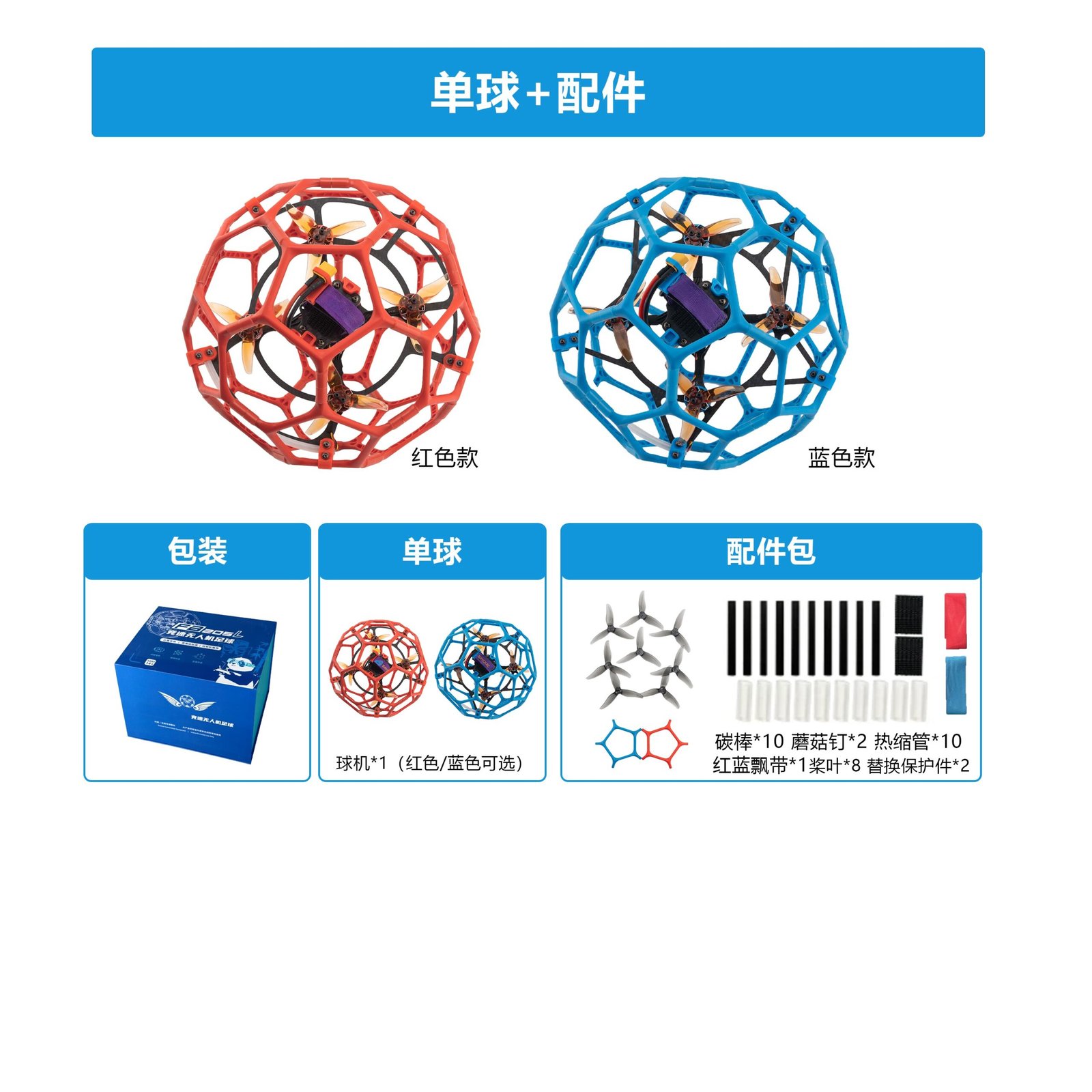
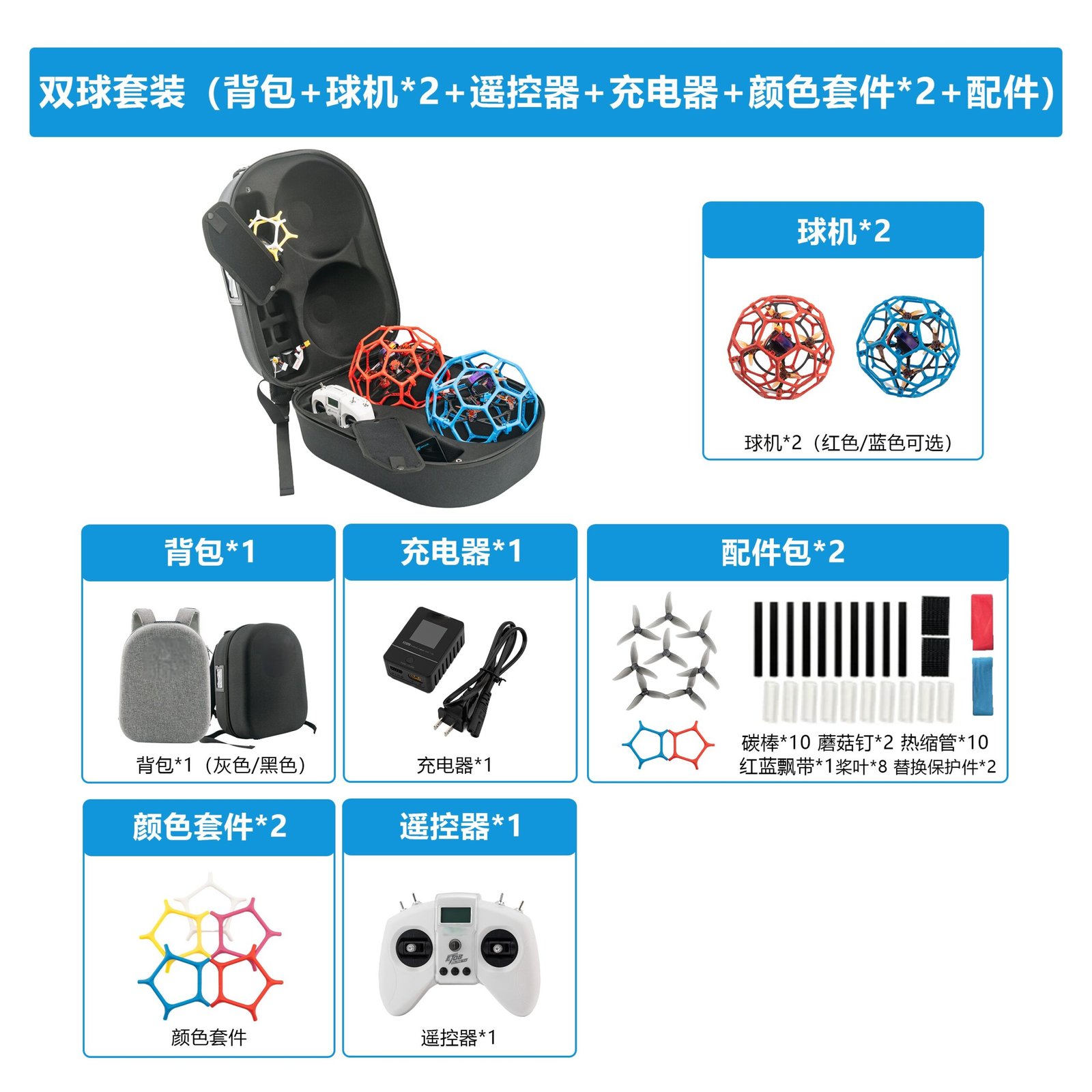
If your organization is setting up a first program, our overview of drone soccer systems explains the typical components: caged drones, controllers, goggles or ground stations, the goal ring and arena netting.
The core drone soccer rules and basics
Exact rules vary by league and age bracket, so treat the following as a functional overview rather than a rulebook. Before you buy equipment, request the current rulebook from the league or association you intend to play in and confirm age brackets, squad sizes, match duration and drone class in writing.
- Teams: squads field multiple players with defined roles and substitutions.
- Objective: pass the drone through the opponent’s ring or goal opening more times than the opponent.
- Arena: a netted, enclosed volume that contains the drones and protects spectators.
- Officiating: referees manage scoring, fouls, restart procedures and safety.
- Drone class: leagues typically specify a caged class so machines are comparable and contact-tolerant.
These basics matter commercially: they determine whether you are buying one drone or ten, one charger or a charging bench, and a single practice net or a full arena package.
What Is FPV Drone Racing?
FPV drone racing is an individual sport. Pilots fly small, powerful quadcopters through a course of gates, flags and obstacles while wearing goggles that show a live camera feed. The clock decides the result: fastest clean lap or fastest total time wins the heat.
Racing drones are optimized for speed, thrust and agility. They are light, and crashes are expected, so repair skills, spare arms, motors and propellers are part of normal participation. Courses can be set up in a gym, a hangar or outdoors, and many events run multiple pilots in the air at once on separate video channels.
The performance envelope is the point of the sport. That also means racing has a steeper entry curve for beginners and a heavier maintenance load per pilot than a caged team sport.
Drone Soccer vs FPV Racing: Direct Comparison
The table below summarizes the practical differences that affect program design and purchasing. Check the current rules of your chosen league before treating any row as fixed.
| Factor | Drone soccer | FPV drone racing |
|---|---|---|
| Format | Team match, multiple players per squad | Individual time trial or multi-pilot heat |
| Scoring | Goals through a ring or goal opening | Fastest lap or total time |
| Drone design | Caged, contact-tolerant, moderate speed | Open-prop, lightweight, high speed |
| Play area | Netted indoor arena | Gate-and-flag course, indoor or outdoor |
| Contact | Expected and managed by rules | Avoided; crashes usually cause damage |
| Skill emphasis | Teamwork, positioning, control | Line choice, throttle, reaction time |
| Maintenance load | Shared across a squad, cage absorbs impacts | High per pilot; frequent repairs |
| Program fit | Large mixed-ability groups, schools, clubs | Smaller groups with dedicated practice time |
| Entry cost shape | Higher upfront for arena and squad kit | Lower per pilot to start, higher ongoing parts use |
Neither column is “better.” They are different products with different budgets, coaching needs and scheduling realities.
Why the Two Sports Get Confused
Both sports are flown in first person, both use 2.4 GHz-class radio links and 5.8 GHz-class video in many setups, and both are governed by national aviation authorities. Shared vocabulary makes them sound like variants of one activity, but the rulebooks, drone classes and event formats diverge quickly.
The electronics overlap is real, which is why a factory that builds drone soccer platforms is also relevant to racing-adjacent programs. For education buyers, the bigger difference is pedagogical: a soccer program can engage a whole class at once, while a racing program concentrates airtime in a few pilots.
Regulatory Basics Both Sports Share
Drone soccer and FPV racing differ in rules, but they share aviation regulation. In the United States, educational drone flying is regulated either under the Exception for Limited Recreational Operations of Unmanned Aircraft (49 U.S.C. § 44809) or under the Small Unmanned Aircraft Systems Rule (14 CFR Part 107), depending on how the flight qualifies.
The FAA states that drones flown for educational and research purposes may be operated under § 44809 for qualifying educational organizations, which include institutions of higher education, Junior Reserve Officers’ Training Corps (JROTC) programs, and educational programs chartered by an FAA-recognized Community Based Organization. Educational organizations that do not qualify as institutions of higher education or are not part of a JROTC program must be chartered by a recognized CBO to operate under § 44809; otherwise, those organizations must operate under Part 107.
The FAA also notes that FAA-Recognized Identification Areas (FRIAs) are locations where drones can be flown without Remote ID, and that educational institutions — including primary and secondary schools, trade schools, colleges and universities — are eligible to request establishment of a FRIA. These points are drawn from the FAA’s educational users guidance at https://www.faa.gov/uas/educational_users. This is US-specific guidance; programs in other countries should consult their own regulator.
Because rules and eligibility depend on your organization’s status, confirm your operating pathway with your aviation authority or legal advisor before committing to a program design. Do not assume that a recreational exemption applies to a school-run league.
Equipment Differences That Affect Your Budget
The equipment gap explains most of the cost difference between the two sports.
Drone soccer kit
- Caged drones built to tolerate contact
- Goal ring and arena netting or enclosure
- Radio controllers and FPV goggles or viewing screens
- Batteries, chargers and a charging or storage bench
- Spare cages, propellers and motors shared across the squad
FPV racing kit
- Lightweight open-prop racing quads, often one per pilot
- Gates, flags and timing or lap-counting equipment
- Goggles, radios and video transmitters on separate channels
- Large propeller, motor and frame-arm spares inventory
- Soldering and bench-repair tools as standard equipment
For a school or club, the soccer model spreads cost across more participants per session. That is why STEM drone education and training programs often start with a caged team format before adding a racing elective.
Which Format Fits Your Program?
Start from your participant count, space and staffing, not from the drone.
Choose drone soccer when:
- You have a class, club or roster of 12 or more participants.
- You have access to an indoor space where netting can be installed or a league-standard arena is available.
- You want team roles so beginners and experienced pilots can both contribute.
- You want a format that runs as a season with fixtures and coaching.
Choose FPV racing when:
- You have a small group of highly motivated pilots.
- You have open space and permission for faster flight.
- You are prepared for ongoing repair work and parts inventory.
- You want an individual progression path with published times.
Many organizations run both: soccer as the inclusive core program and racing as an advanced track. Our drone soccer clubs page outlines how clubs typically structure that progression.
Common Mistakes When Choosing Between the Two
These are the errors we see most often in program planning conversations.
- Buying racing quads for a team program. One drone per pilot plus repairs can stall a session with 20 students.
- Assuming soccer drones fly like racing quads. Caged drones trade speed for durability; pilots must recalibrate.
- Ignoring the venue. Netting, ceiling height and spectator separation are real constraints for soccer.
- Skipping the rulebook. League class rules can invalidate equipment choices made before you read them.
- Underestimating consumables. Batteries, propellers and motors are recurring costs in both sports.
- Assuming one country’s exemption applies everywhere. Regulatory pathways are jurisdiction-specific.
Procurement Checklist for Clubs, Schools and Distributors
Use this list before you request pricing. It works for a single club and for a distributor building a product line.
- Confirm the league or association rulebook version you intend to comply with, and its age brackets.
- Confirm squad size and drone class so you order the right quantity.
- Confirm arena dimensions, netting specification and venue ceiling height.
- Confirm the radio and video frequency plan for your region.
- Confirm battery chemistry, voltage, capacity and charger compatibility as a set.
- Confirm which spare parts are user-replaceable and which require factory service.
- Request the compliance documentation needed for your country and organization type.
- Request a written quotation covering unit price, spare parts, packaging, shipping terms and payment terms.
- For OEM/ODM: confirm tooling ownership, labelling, firmware language options and packaging artwork approval steps.
- Ask for a sample or pilot unit before committing to a full squad order.
Anything not stated in writing — warranty length, lead time, minimum order quantity, customization limits — should be treated as unconfirmed. Ask for it in the quotation.
Planning a league or school program? Tell us your participant count, venue and rulebook, and we will help you scope a kit that matches. Request a Team Kit Quote.
Frequently Asked Questions
Can you play drone soccer with FPV racing drones?
Usually not competitively. Racing drones are open-prop and not designed for contact, and league rules typically specify a caged drone class. Some pilots practice with racing quads, but a match requires caged, comparable machines.
Is drone soccer harder than FPV racing?
They test different skills. Racing demands precise high-speed control and quick repair ability. Soccer demands control plus positioning, passing and team communication. Beginners often find caged soccer drones more forgiving because impacts are expected.
Do both sports use FPV goggles?
Both commonly use first-person view, but not identically. Racing pilots almost always fly goggles-only. Soccer programs may use goggles, screens or a hybrid setup depending on league rules and how they coach spectators and substitutes.
What is the biggest cost difference?
Drone soccer front-loads cost into the arena, netting and squad kit but spreads it across many participants. Racing starts cheaper per pilot but carries a heavier ongoing parts and repair load. Confirm actual figures in a written quotation.
Which sport is better for schools?
For most schools, drone soccer’s team format and contained arena make scheduling and supervision easier. Racing can work as an advanced elective for a smaller group with dedicated space and supervision.
Do the same regulations apply to both?
Broadly, both are subject to national aviation rules, but the pathway depends on the operator and purpose. In the US, the FAA’s educational users guidance describes when educational flights fall under § 44809 versus Part 107. Verify your own situation with your regulator.
Can a club run both programs?
Yes, and many do. A common structure is caged soccer for the main roster and a racing track for pilots who want an individual challenge. That requires separate equipment inventories and separate safety briefings.
Conclusion
Drone soccer and FPV drone racing share hardware DNA but almost nothing else. Soccer is a caged team sport decided by goals; racing is an open-course individual sport decided by the clock. Your choice should follow your roster size, venue, supervision capacity and league rules — not which drone looks faster.
For schools, youth programs and clubs building a season, the caged team format usually delivers more airtime per participant. For a small group chasing lap times, racing remains the sharper challenge. Distributors and OEM buyers should map both categories separately, because the accessory and spare-parts profiles differ.
Before you order, confirm your league rulebook, venue constraints and compliance pathway, then request a written quotation covering units, spares, shipping and customization. Request a Team Kit Quote and we will help you match equipment to your program.