Quick summary
LED lights help players see drone soccer balls by adding a controllable light source directly to the ball drone, so it stands out against dark backdrops, mixed gymnasium lighting and crowded airspace. In a typical five-a-side game the ball drone and the striker drones fly fast in three dimensions; a lit ball gives players, referees and spectators a clear visual anchor. LEDs also signal team or role: one colour for the ball, another for each team’s striker. The result is faster tracking, fewer collisions and better viewing for the audience. The exact LED hardware and power budget vary by model, so treat any specification as something to confirm with your supplier in writing.
Key Takeaways
- LEDs work by adding light to the ball drone, not by lighting the whole arena, so the ball stays visible even when venue lighting is uneven.
- Colour coding is the simplest way to separate the ball from striker drones and from each team.
- Visibility depends on three things together: LED brightness and colour, the contrast of the background, and the ambient light in the hall.
- Onboard lighting uses power and weight, so check the drone’s battery runtime and payload margin before adding or changing an LED module.
- Buyers should ask for a live demonstration or sample flight under their own venue lighting before committing to a fleet, rather than relying on photos.
- For school and club programmes, lighting is one part of a wider equipment set that must also meet local drone rules.
What is a drone soccer ball, and why is it hard to see?
Drone soccer is an indoor team sport in which players fly small, protected quadcopters. One drone acts as the ball. Strikers try to fly through a circular goal. Because the ball drone is small, fast and often partly enclosed in a protective cage, it can disappear against a dark wall, a bright window or a busy crowd. In a hall with mixed lighting, a matte ball shape blends into the background.
That is the visibility problem LEDs solve. Rather than making the ball bigger or slower, a light source makes it self-illuminating, so it remains readable to the eye even when the surrounding scene is not ideal.
How do LEDs make the ball visible during play?
The core mechanism is contrast. A human eye tracks a moving object faster when it differs sharply from its background in brightness or colour. An LED on the ball provides that difference on demand. If the hall is dim, the LED is brighter than the scene. If the hall is bright, a saturated colour can still stand out. Players can therefore locate the ball earlier in its flight path, which gives them more time to position their striker.
Coaches often describe the effect as giving the ball a “handle” in the air. It is not extra speed or thrust; it is a visual cue.
Colour as a role signal
In many drone soccer formats, the ball and each team’s drones use different colours. That lets players, officials and spectators tell at a glance which drone is the ball and which belongs to which side. The exact colour convention depends on the league or event organiser, so confirm it before you buy a fleet’s LED modules.
LEDs and FPV video
Drone soccer is usually flown in first-person view (FPV), where the pilot sees a camera feed rather than the drone directly. Camera sensors and the human eye do not respond identically to light. A ball that is easy to see with your own eyes may be less distinct on a low-light FPV feed, and vice versa. If your club relies heavily on FPV, test visibility through the goggles as well as by eye.
What components put light on a drone soccer ball?
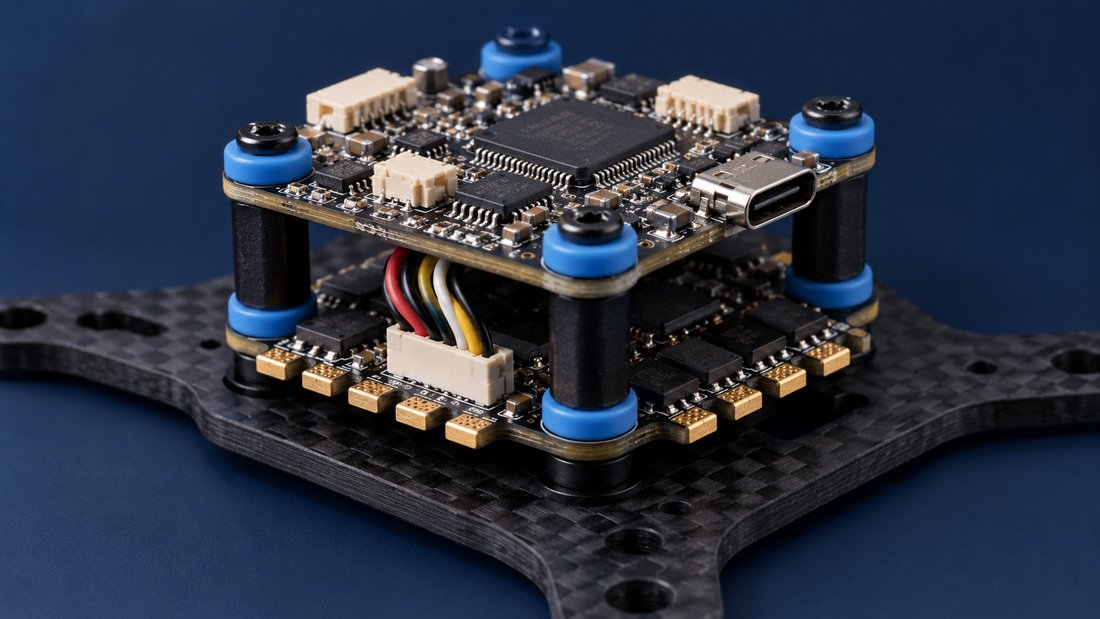
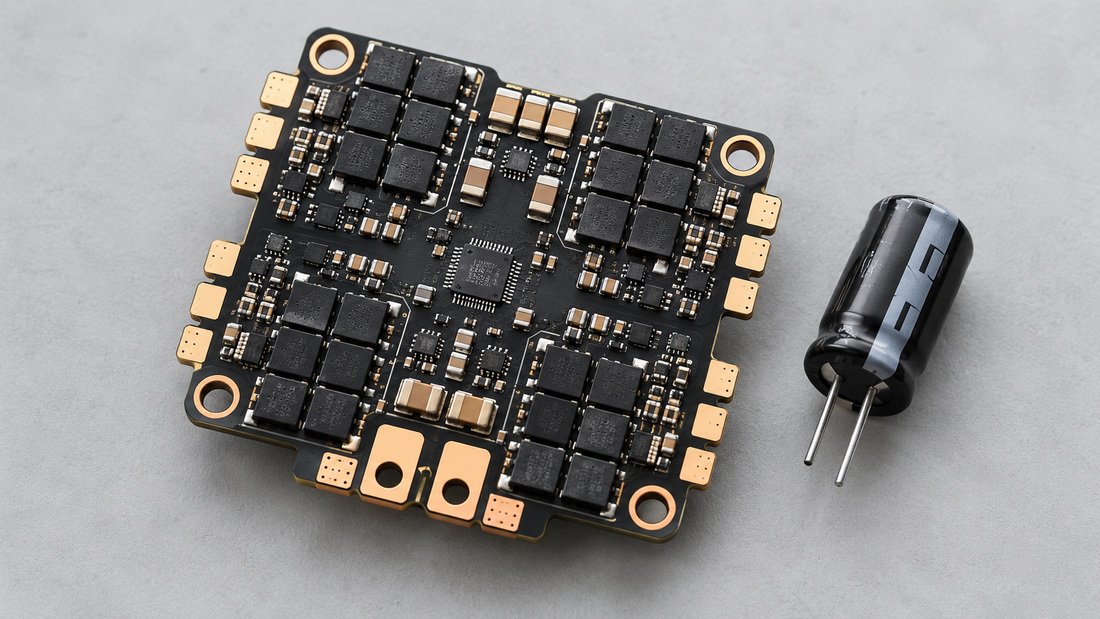
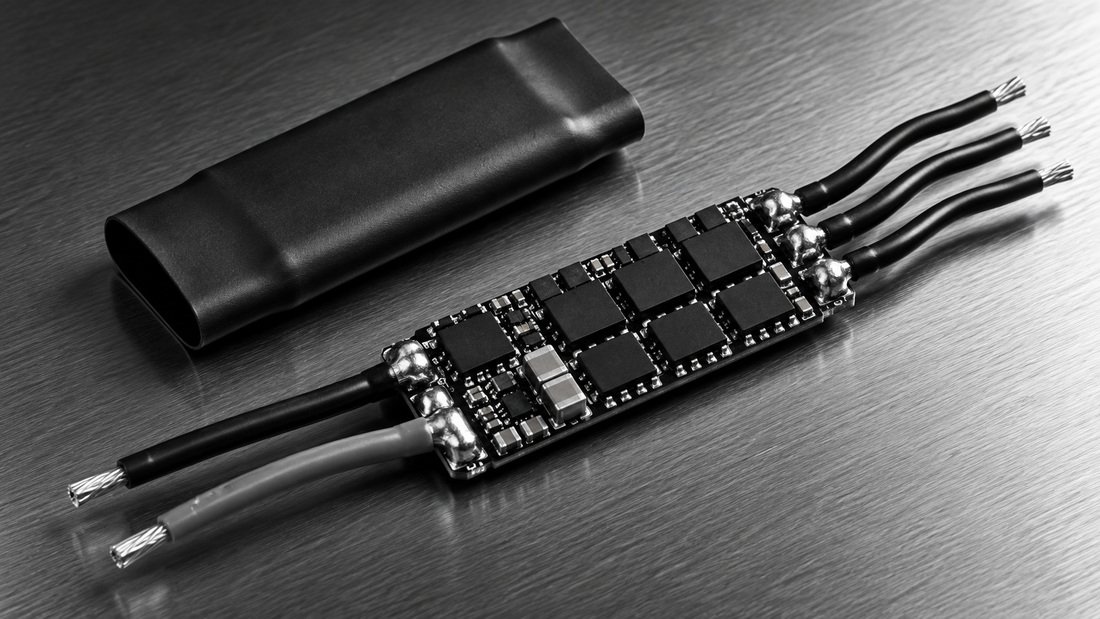
Lighting is not a standalone part. It sits inside the electrical system of the ball drone. The main pieces are the LED module itself, the flight controller that can switch it on or off, and the electronic speed controller that manages power to the motors. Many flight controllers and ESCs also expose a regulated output that can power low-current accessories.
In practice, this means LED visibility is partly an integration and power-budget question. A brighter LED draws more current, which comes from the same battery that feeds the motors. The trade-off is between visibility and flight time.
Where the power comes from
On many small quadcopters, accessories are powered from a regulated rail rather than directly from the battery. If an LED module is connected to an output that cannot supply enough current, the light may dim when the motors load up, or the flight controller may behave erratically. This is why a supplier’s recommended wiring and current limits matter.
Comparison: which visibility approach works best?
LEDs are one of several ways to make the ball easier to see. The table below compares the common approaches so clubs and schools can weigh them honestly.
| Approach | How it works | Typical strengths | Trade-offs to check |
|---|---|---|---|
| Onboard LED on the ball | Ball drone emits its own light | Works in dim halls; supports colour coding; visible to spectators | Draws battery power; adds a small amount of weight; needs a compatible electrical output |
| Colour-coded shells or cages | High-contrast physical material | No power cost; simple and robust | Depends on venue background; less effective in low light |
| Brighter arena lighting | Improve the whole venue | Helps players, officials and camera feeds at once | Requires venue cooperation; may be fixed or expensive; does not colour-code the ball |
| Contrasting background / netting | Dark or plain backdrop behind the play area | Low cost; no drone changes | Venue-dependent; may not suit shared halls |
| Reflective or retro-reflective markers | Marks catch venue light | No battery draw | Only works with enough ambient light; can be inconsistent |
Most clubs combine two or more of these. LEDs usually do the heavy lifting in dim or mixed lighting, while arena design and colour coding reduce the load on the player’s eyes.
Practical procurement checklist for clubs and schools
Before you buy lighting or a full drone soccer equipment set, work through this list with your supplier. Ask for answers in writing, because specifications and commercial terms vary between suppliers and are not universal.
- Ball-drone LED specification: What colour, brightness and power draw does the LED module have? Is it integrated or a separate part?
- Power and flight time: How much does the LED reduce flight time per battery? Which output powers it?
- Colour convention: Does the LED match your league or event rules for the ball and each team?
- Spare parts: Are LED modules and their connectors available as spares, so a damaged ball does not sideline a session?
- Venue test: Can the supplier provide a sample or a live demonstration under your hall’s lighting?
- FPV check: If you fly in goggles, how does the LED appear on camera in your venue?
- Regulatory fit: Does the equipment and your planned use suit the rules that apply to your organisation?
- Support and documentation: What wiring, charging and maintenance guidance is provided?
- Commercial terms: Confirm price, minimum order, lead time, payment terms and warranty in writing before ordering.
A note on drone rules for schools
If you are a school or educational programme, the rules that apply to your flights can depend on where you are and what kind of organisation you are. In the United States, the Federal Aviation Administration explains that drones flown for educational purposes are regulated either under the Exception for Limited Recreational Operations of Unmanned Aircraft or under the Small Unmanned Aircraft Systems Rule, and it describes which educational organisations qualify. It also notes that Primary and secondary educational institutions, trade schools, colleges and universities are eligible to request a FAA-Recognized Identification Area (FRIA), a location where drones can be flown without Remote ID. Read the FAA’s guidance for educational users at https://www.faa.gov/uas/educational_users. Rules differ by country, so confirm your local requirements before you buy or fly.
Common mistakes when choosing drone soccer lighting
- Buying on brightness alone. A very bright LED on a ball can glare in a dim hall or bloom on camera. Match the light to your venue and to FPV use.
- Ignoring the power budget. Extra current draw shortens flight time and may stress the regulated output. Test before rolling out a fleet.
- Forgetting colour rules. A lighting scheme that looks good in a catalogue may not match your league’s convention for the ball and teams.
- No spares. LEDs and connectors can be damaged in collisions. Without spares, a session can end early.
- No venue test. Photos do not predict how a light performs in your hall. Ask for a demonstration or sample.
- Treating lighting as the whole solution. Background contrast and arena layout still matter.
Where LEDs fit in a full drone soccer programme
Lighting on the ball is one part of a broader equipment and programme decision. Clubs need drones that survive collisions, batteries that last a training session, and spare parts that keep a squad flying. Schools also need a curriculum path so that equipment turns into learning.
If you are building a programme from scratch, review complete drone soccer systems with your supplier and compare them against your venue, squad size and competition calendar. For schools, explore STEM drone education and training resources, and for competitive play look at drone soccer competitions. Teams that mainly run weekly sessions can also review support for drone soccer clubs.
Need a lighting and equipment plan sized to your squad and venue? Request a Team Kit Quote and tell us how many ball drones and strikers you fly per session.
Frequently asked questions
Do drone soccer balls need LED lights to be played?
No. Drone soccer can be played without onboard LEDs in a well-lit hall with a contrasting background. LEDs become important when the venue is dim, when backgrounds are busy, or when spectators and camera feeds need a clear visual anchor.
What colour should the ball drone’s LED be?
There is no single universal colour. Many formats use different colours so that the ball and each team’s strikers are distinguishable. Your league or event organiser sets the convention, so confirm it before ordering.
Do LEDs reduce flight time?
Any powered accessory draws current from the battery, so some reduction is normal. The size of the effect depends on the LED’s power draw and the drone’s power budget. Ask your supplier for a figure based on your configuration rather than assuming.
Will an LED make the ball brighter on FPV video?
Not always in the way you expect. Camera sensors and the human eye handle light differently, and very bright lights can bloom or glare on camera. If you fly in goggles, test visibility through the FPV feed in your own venue.
Can we add LEDs to an existing ball drone?
Sometimes, if the flight controller or power distribution board has a suitable regulated output and the wiring is done correctly. Fitment varies between models, so check compatibility and current limits with your supplier before modifying equipment.
Are LEDs considered equipment for schools to purchase?
They are a component of the ball drone and the wider kit, not a separate regulatory category. If you are a school, confirm that the equipment and your planned flights fit the rules that apply to your organisation, such as the guidance the FAA publishes for educational users.
How should we test LED visibility before buying?
Ask for a sample ball drone or a live demonstration in your own hall, under your normal session lighting, and view it both by eye and through FPV goggles. That single test tells you more than any specification sheet.
Conclusion
LED lights help players see drone soccer balls by turning the ball into a self-illuminating target with clear colour contrast. That improves tracking in dim or mixed lighting, supports team and role coding, and gives spectators something easy to follow. The practical limits are power draw, weight, wiring compatibility and venue conditions, so lighting should be chosen as part of a complete kit rather than as an afterthought.
Next step: before your next season, ask your supplier to demonstrate a ball drone under your hall’s lighting, then confirm LED specifications, power budget impact, spares, and all commercial terms in writing. When you are ready, Request a Team Kit Quote with your squad size, venue type and competition plans.