Quick summary
Choosing 5.8 GHz antennas for FPV video starts with matching polarization (RHCP or LHCP) between transmitter and receiver, then selecting gain and beamwidth for your flying style, and finally confirming connector type (SMA vs. RP-SMA) and durability for your team’s environment. For clubs and schools, standardize one polarization and connector across the fleet to reduce mismatches and spare-part confusion. Verify all specifications and commercial terms in writing with your supplier before ordering.
Key Takeaways
- Polarization match is the first decision: all antennas in a video link should use the same circular polarization (RHCP or LHCP).
- Higher gain narrows beamwidth; choose gain based on whether you need wide coverage or longer range in a specific direction.
- Connector type and gender must match your VTX and VRX; SMA and RP-SMA are not interchangeable.
- For teams, standardize antenna SKUs and keep spares; diversity receivers benefit from matched antenna pairs.
- Ask suppliers for test data and confirm warranty, MOQ, and lead time in writing.
Why 5.8 GHz Antennas Matter for FPV Video
5.8 GHz is widely used for FPV video because it offers a good balance of antenna size and bandwidth. However, higher frequencies are more sensitive to obstructions and antenna misalignment. A well-chosen antenna set improves link reliability and video clarity, which is critical for drone soccer matches and training.
For team environments, antenna selection also affects logistics: fewer SKUs mean simpler inventory and faster repairs. This guide focuses on practical selection criteria for schools, clubs, and event organizers, with notes for distributors and OEM buyers.
Understand Antenna Basics: Polarization, Gain, and Beamwidth
Antenna performance depends on several interacting factors. Understanding these basics helps you ask suppliers the right questions.
Polarization: RHCP vs. LHCP
Circular polarization reduces multipath interference and is common in FPV. The transmitter and receiver antennas must have the same polarization (both RHCP or both LHCP). Mixing them causes significant signal loss. For teams, pick one polarization and standardize.
Gain and Beamwidth
Gain describes how much the antenna focuses energy in a direction. Higher gain can extend range but narrows beamwidth, requiring more accurate aiming. Low-gain antennas offer wider coverage, suitable for close-range or omnidirectional needs. Diversity receivers can use two antennas with different patterns to improve coverage.
Connector Types and Gender
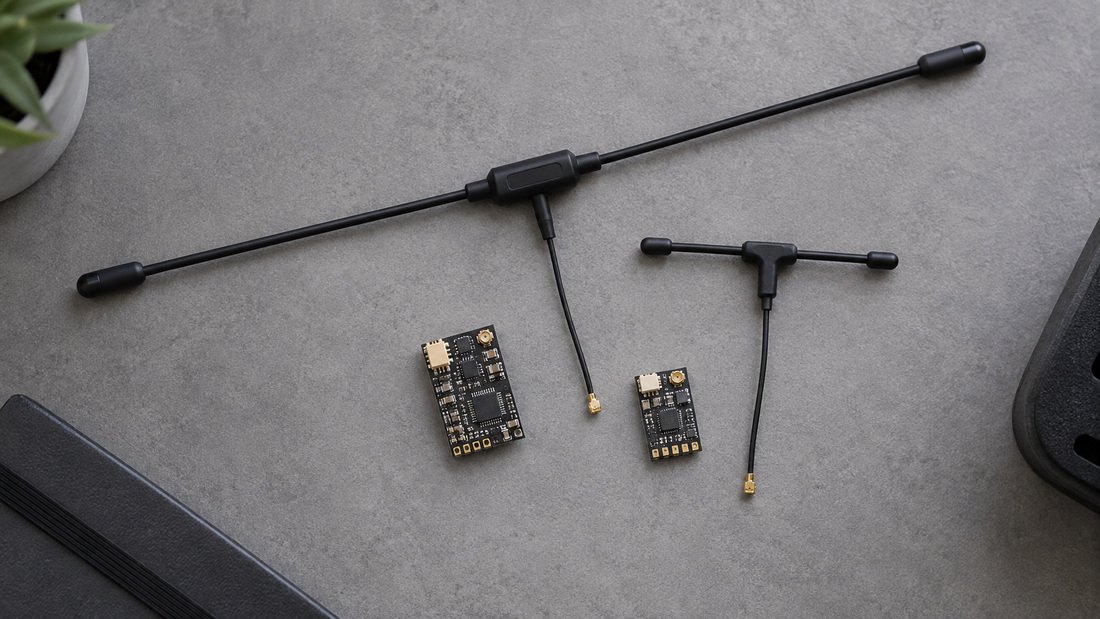
Common connectors for 5.8 GHz antennas include SMA and RP-SMA. They differ in gender and center pin configuration. Always check your device’s connector specification. Using an adapter adds loss and potential failure points; prefer direct match.
Compare Antenna Types for Different FPV Use Cases
The table below outlines typical antenna types and their characteristics. Use it as a starting point; actual performance varies by design and environment.
| Antenna Type | Typical Gain | Beamwidth | Best For | Considerations |
|---|---|---|---|---|
| Linear dipole (omni) | Low (~2 dBi) | Wide | Close-range, budget setups | Susceptible to multipath; polarization mismatch loss |
| Circular polarized omni | Low to medium (~2–5 dBi) | Wide | General FPV, drone soccer | Good multipath rejection; standardize RHCP or LHCP |
| Patch antenna | Medium to high (6–10 dBi) | Directional, moderate | Medium-range directional links | Needs aiming; often used on ground station |
| Helical antenna | Medium (6–8 dBi) | Directional, moderate | Longer range with some directionality | Circular polarized; size larger |
| Yagi antenna | High (10+ dBi) | Narrow | Long-range directional | Must be aimed carefully; linear polarization |
For most team and school applications, circular polarized omnidirectional antennas on both VTX and VRX provide a good balance of simplicity and performance. Diversity receivers can pair an omni with a directional antenna for flexibility.
Match Antennas to Your FPV System and Environment
Antenna choice should consider the VTX power, receiver capabilities, flying area, and team skill level. Here’s how to approach it.
VTX and VRX Compatibility
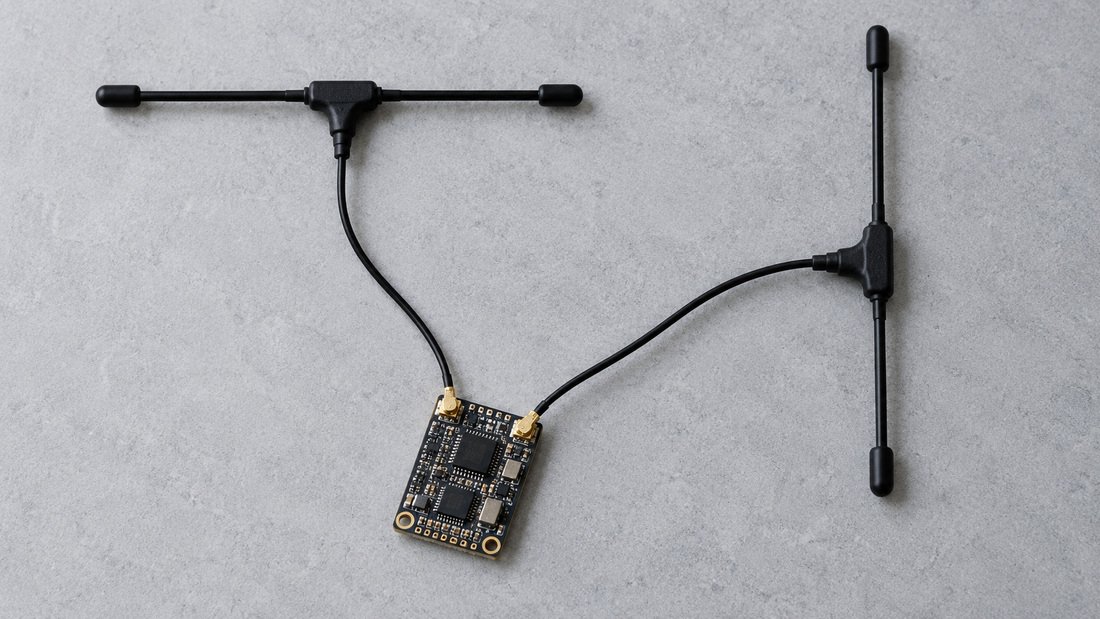
Check the connector and polarization of your video transmitter (VTX) and video receiver (VRX). If you use a diversity receiver, ensure both antennas are appropriate for the receiver’s design. Some receivers benefit from two identical antennas, while others are designed for mixed types.
For radio control links, which are separate from video, see our guide to ELRS and RF systems. While this article focuses on 5.8 GHz video, teams often use ELRS for control; ensure antennas for both systems are considered together for a clean installation.
Indoor vs. Outdoor Flying
Indoor arenas have more reflections and multipath. Circular polarization helps mitigate these effects. Outdoor flying may allow higher gain directional antennas for longer range, but requires aiming. For drone soccer, indoor courts are common; prioritize circular polarized omni antennas and diversity receivers.
Team Standardization
Standardizing on one polarization and connector type reduces errors and simplifies spare parts. Choose antennas that are durable and easy to replace. Consider bulk packaging for teams.
Procurement Checklist for Teams and Schools
Use this checklist when specifying antennas for a team kit or purchasing spares.
- ☐ Confirm polarization (RHCP or LHCP) for all video antennas.
- ☐ Verify connector type (SMA or RP-SMA) and gender on both VTX and VRX.
- ☐ Decide on gain and beamwidth based on typical flying area and range needs.
- ☐ Check antenna durability: flexible materials, protected connectors.
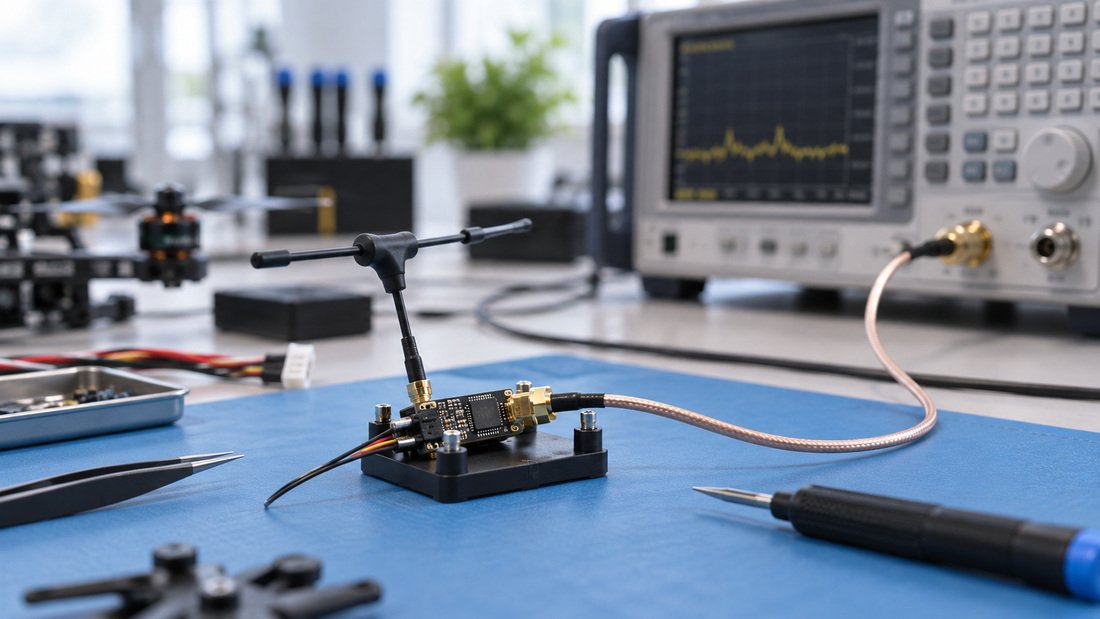
- ☐ Request test data or performance specifications from supplier.
- ☐ Clarify warranty, MOQ, lead time, and packaging in writing.
- ☐ Consider spare antennas (at least 20% extra) for team use.
- ☐ For OEM/ODM, discuss customization options and certification needs.
Common Mistakes to Avoid
- Mismatched polarization: Using RHCP on transmitter and LHCP on receiver causes severe signal loss.
- Wrong connector: Forcing SMA into RP-SMA can damage connectors.
- Overlooking diversity receiver needs: Some diversity receivers require specific antenna spacing or types.
- Ignoring durability: Cheap antennas may break easily, causing downtime during events.
- Assuming higher gain is always better: High gain narrows beamwidth and may reduce coverage in dynamic environments.
Contextual CTA
Need help specifying antennas for your team? Request a Team Kit Quote and tell us your requirements.
FAQ
What polarization should I choose for FPV video?
Circular polarization (RHCP or LHCP) is common for FPV because it reduces multipath interference. Choose one and use it on both transmitter and receiver. Most teams standardize on one type.
Can I use different gain antennas on a diversity receiver?
Yes, some diversity receivers benefit from combining an omnidirectional and a directional antenna. However, ensure both are the same polarization. Check your receiver’s manual for recommendations.
How do I know if my device uses SMA or RP-SMA?
Check the connector on your VTX or VRX. SMA has a center pin in the male connector; RP-SMA has a hole. You can also consult your device manual or ask the manufacturer.
Do I need special antennas for drone soccer?
Drone soccer is typically indoors with reflections. Circular polarized omni antennas and diversity receivers work well. Durability is important for frequent handling.
What should I ask a supplier before ordering?
Ask for polarization, connector type, gain, beamwidth, test data, warranty, MOQ, and lead time. Request samples to verify quality.
Can I mix antenna brands?
Mixing brands is possible if polarization and connector match, but performance may vary. For teams, standardizing on one brand simplifies logistics.
How many spare antennas should a team keep?
Plan for at least 20% spares, more for large events or beginner groups. Antennas are wear items and can be damaged in crashes.
Conclusion
Choosing 5.8 GHz antennas for FPV video involves matching polarization, gain, and connectors to your specific use case. For teams and schools, standardization and durability are key. Always verify specifications and commercial terms with your supplier. For antenna options, explore our RF antennas. If you also need control link equipment, consider ELRS receivers and check ELRS receiver compatibility.
Ready to equip your team? Request a Team Kit Quote to discuss your antenna and receiver needs.