Quick summary
Choosing an ESC for a 5-inch 6S build means matching a 4-in-1 or individual ESC to your motor’s current draw, battery voltage, and flight style. Start by calculating the motor’s maximum current at 6S, add a 20–30% safety margin, then select an ESC with the right firmware, protocol, and form factor. Confirm continuous and burst ratings with the supplier in writing before ordering for a team or program.
Key Takeaways
- Match ESC continuous current to your motor’s peak draw plus a 20–30% margin; 6S builds typically need higher voltage-rated ESCs.
- 4-in-1 ESCs simplify wiring and weight for 5-inch frames, but individual ESCs can be easier to replace in a school or club setting.
- Firmware and protocol (e.g., BLHeli_32, DShot600) affect tuning and telemetry; confirm compatibility with your flight controller.
- For teams, prioritize consistent batch quality, spare availability, and clear documentation over peak specs alone.
- Always request written confirmation of current ratings, voltage limits, and warranty terms—do not rely on marketing claims.
What does a 5-inch 6S build actually demand from an ESC?
A 5-inch 6S build runs on a 6-cell lithium-polymer battery, nominally 22.2V and up to 25.2V when fully charged. The ESC must handle that voltage plus the current spikes your motors pull during aggressive throttle. Most 5-inch freestyle and racing motors draw 30–45A peak each on 6S, but this varies widely by motor KV and propeller.
For drone soccer and youth programs, flight loads are often lower and more predictable than racing, but crashes and stalled motors still create current spikes. Choosing an ESC that is barely adequate saves grams but risks thermal shutdown or failure mid-session. A modest safety margin costs little and keeps a fleet flying.
How do you calculate the right ESC current rating?
Start with your motor’s published maximum current at 6S, then add a safety margin. If a motor pulls 35A peak, an ESC rated for 45A continuous gives you roughly a 28% margin. If you fly in hot environments or run heavy propellers, lean toward the higher end. Do not size to average current—size to the peak the ESC will see repeatedly.
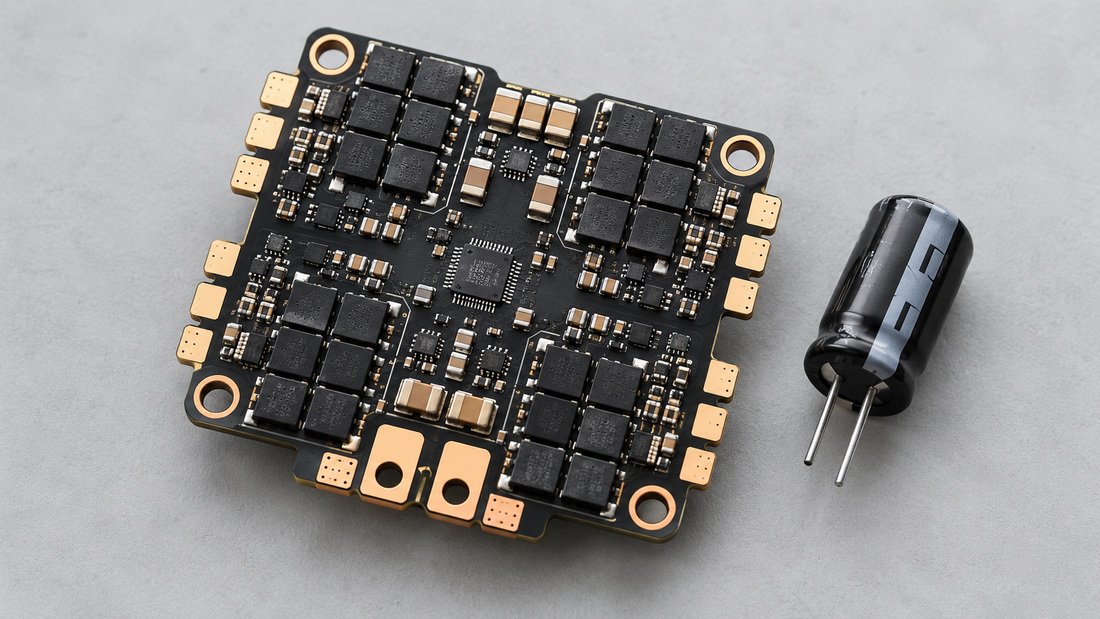
Remember that 4-in-1 ESCs share a thermal budget. Four 45A channels on one board can heat each other. Check whether the manufacturer rates the board for continuous current per channel or total. Ask for the test conditions: ambient temperature, airflow, and burst duration. Without that context, a current number is only a starting point.
Individual ESC vs. 4-in-1 ESC for teams
Individual ESCs sit on each arm and are easier to swap after a crash, which matters when students repair drones between matches. A 4-in-1 ESC centralizes wiring, reduces weight, and simplifies the stack, but a single failed channel can sideline the whole board. For high-use club fleets, carrying both spare types—or standardizing on one—reduces downtime.
| Factor | Individual ESC | 4-in-1 ESC |
|---|---|---|
| Repair after crash | Replace one arm’s ESC | Replace entire board |
| Weight | Higher (4 units + wiring) | Lower |
| Wiring complexity | More solder joints | Cleaner stack |
| Cost per failure | Lower | Higher |
| Best for | School/club repair stations | Weight-sensitive racing |
Which firmware and protocols should you look for?
Firmware controls how the ESC interprets throttle signals and whether it reports telemetry. BLHeli_32 and AM32 are common in modern drone ESCs; older BLHeli_S is still found in budget builds. The key is compatibility with your flight controller and your team’s tuning workflow. If your club standardizes on one firmware, buying ESCs that support it reduces training time.
Protocols like DShot600, DShot300, and Multishot determine signal speed and reliability. DShot is digital and generally preferred for 5-inch builds because it avoids calibration and supports telemetry. Confirm that both your flight controller and ESC support the same protocol before purchase. Bidirectional DShot, used for RPM filtering, requires support at both ends.
Voltage and BEC considerations
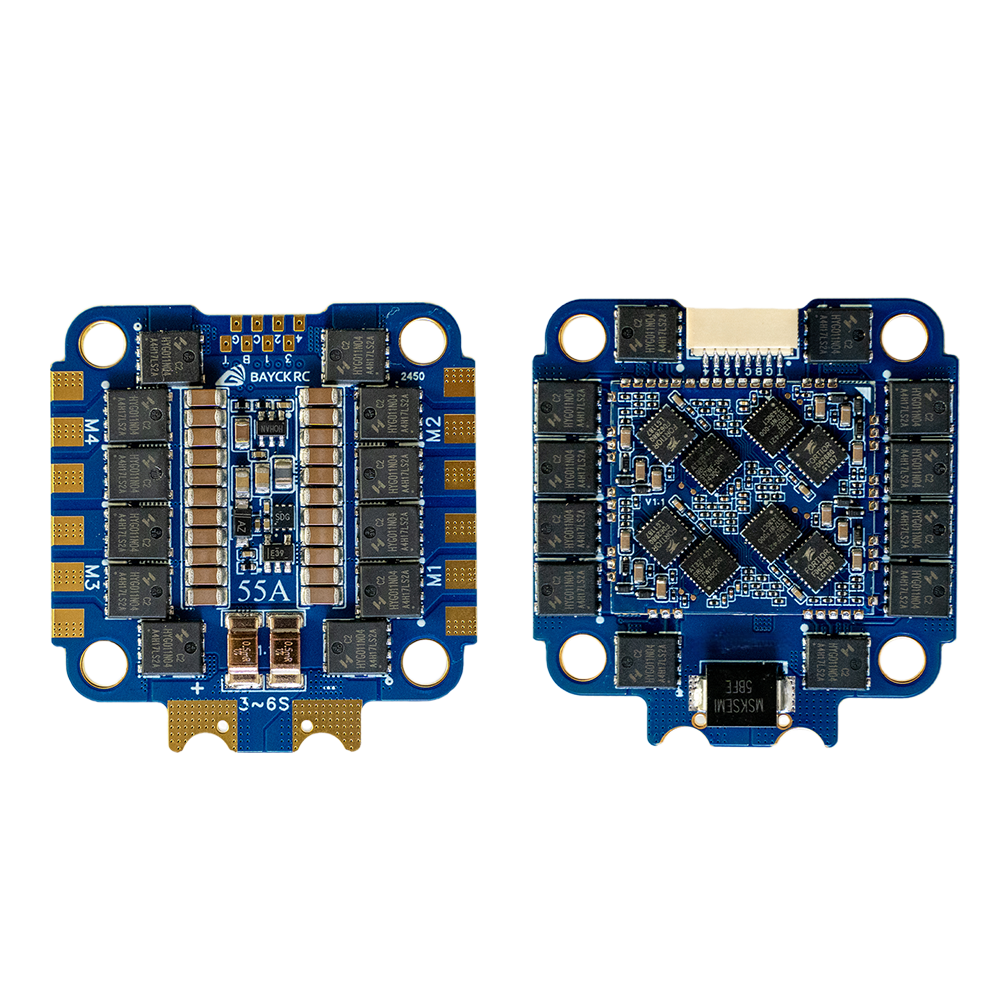
Ensure the ESC is rated for 6S (up to 25.2V). Some ESCs designed for 4S will fail on 6S even if the current rating looks sufficient. If your flight controller or receiver needs 5V or 9V, check whether the 4-in-1 ESC includes a BEC (battery eliminator circuit) and what current it supplies. Many modern 4-in-1 ESCs include a 5V BEC, but not all.
How do motor and propeller choices affect ESC selection?
Motor KV and propeller size determine current draw. A 6S 5-inch build typically uses motors in the 1700–2000 KV range, but higher KV or heavier props increase current. Before locking in an ESC, review your FPV motors specs and propeller recommendations. If you are still selecting components, our guide to motor, propeller and battery matching explains how these variables interact.
For OEM/ODM programs, motor and propulsion matching can help align ESC, motor, and prop choices for a consistent build. This is especially useful when a school district or league wants a repeatable drone soccer platform rather than one-off builds.
Common mistakes when buying drone ESCs for 6S builds
- Ignoring voltage rating: Buying a 4S-rated ESC for a 6S build. Check the voltage spec explicitly.
- Sizing to average current: ESCs fail at peaks, not averages. Use maximum motor current plus margin.
- Forgetting firmware compatibility: Not confirming BLHeli_32, AM32, or BLHeli_S support with your flight controller.
- Overlooking thermal design: 4-in-1 ESCs need airflow; enclosed frames or hot climates demand more margin.
- Buying without spares: For teams, one spare ESC per drone can prevent a lost competition day.
- Assuming batch consistency: Ask suppliers how they control firmware versions and component tolerances across batches.
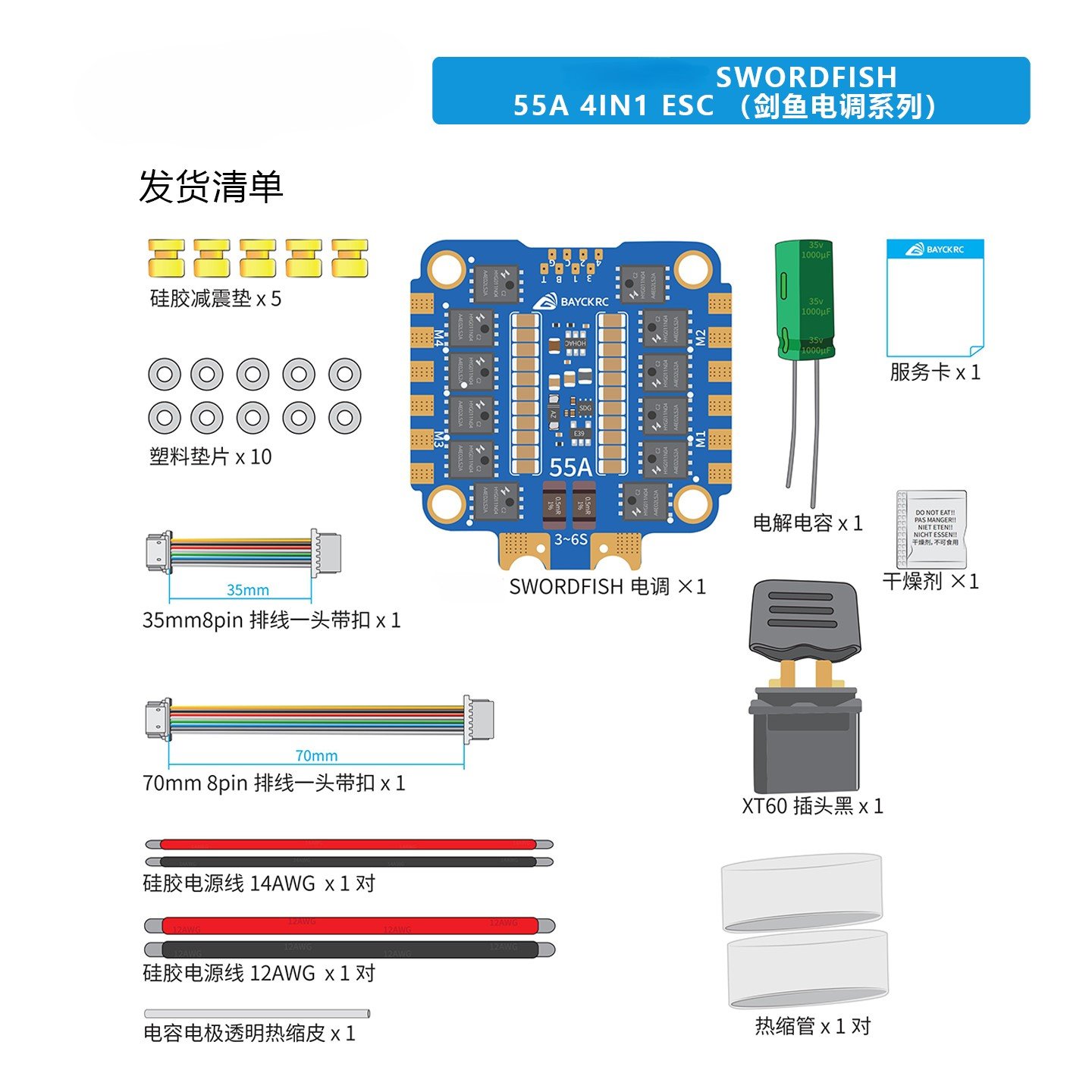
If you are sourcing for a club or school, consider propulsion combo kits that pair motors and ESCs tested together. Combos reduce compatibility guesswork, though you should still verify the ESC’s current and voltage ratings for your specific flying style.
Procurement checklist for schools, clubs, and teams
Use this checklist before placing an order. It is designed for program managers who need reliable, repeatable parts rather than one-off builds.
- Confirm ESC continuous and burst current ratings per channel, and the test conditions.
- Verify 6S voltage rating (up to 25.2V) and BEC output if needed.
- Confirm firmware version and protocol support (e.g., BLHeli_32, DShot600).
- Check form factor: 4-in-1 or individual, and mounting hole pattern.
- Request a sample unit for bench testing before a bulk order.
- Ask about batch consistency, firmware locking, and component tolerances.
- Clarify warranty terms, replacement policy, and spare availability in writing.
- Confirm connector types (e.g., XT60, XT30) and wire gauge.
- Obtain documentation for students: wiring diagrams, safety notes, and setup guides.
- Discuss shipping and lithium battery transport rules if batteries are included.
Lithium batteries require safety testing and can undergo thermal runaway if damaged, overheated, overcharged, or improperly packed, according to the FAA. While that source addresses air travel, it is a useful reminder for any program shipping or storing LiPo packs. Check with your carrier for specific rules.
Frequently asked questions
What ESC current rating do I need for a 5-inch 6S build?
It depends on your motor’s peak current. A common starting point is 45–55A continuous per channel for freestyle, but calculate from your motor specs and add 20–30% margin. Confirm with your supplier whether the rating is per channel or total for 4-in-1 boards.
Is a 4-in-1 ESC better than individual ESCs for drone soccer?
4-in-1 ESCs save weight and simplify wiring, but individual ESCs are easier to replace after a crash. For school and club fleets, repair speed often outweighs the weight savings, so many programs prefer individual ESCs or keep spare 4-in-1 boards on hand.
Can I use a 4S ESC on a 6S build?
No. A 4S-rated ESC may fail when exposed to 6S voltage (up to 25.2V). Always check the ESC’s voltage rating and use one explicitly rated for 6S.
What firmware should I choose for drone ESCs?
BLHeli_32 and AM32 are common for modern 5-inch builds and support telemetry and bidirectional DShot. Choose based on your flight controller, tuning tools, and team familiarity. Confirm firmware version and update policy with your supplier.
Do I need a BEC on my ESC?
If your flight controller, receiver, or other components need 5V or 9V, you need a BEC. Many 4-in-1 ESCs include a 5V BEC, but verify the output current and voltage before relying on it.
How many spare ESCs should a team keep?
There is no universal number. A reasonable approach is at least one spare per active drone, plus one or two shared spares for a small fleet. Base this on your crash rate and repair capacity.
What should I confirm in writing before ordering drone ESCs?
Ask for continuous and burst current ratings, voltage range, firmware version, protocol support, connector type, warranty terms, and batch consistency practices. Request a sample for bench testing if you are ordering for a program.
Conclusion: match the ESC to your mission, then verify
Choosing an ESC for a 5-inch 6S build comes down to matching current and voltage ratings to your motor’s real draw, picking firmware and protocols your team can support, and deciding between 4-in-1 and individual ESCs based on repair workflow. For schools and clubs, reliability and spare availability usually matter more than the lightest or highest-rated board.
Before you buy, request written confirmation of ratings and terms, and test a sample if possible. If you are equipping a team or program, Request a Team Kit Quote to discuss ESC options, spares, and documentation that fit your fleet.