Quick summary
Choosing a first FPV kit for a school means balancing three things at once: airframes and electronics that survive beginner crashes, a radio and video setup that keeps several students flying in the same room, and a spare-parts plan so a single damaged board does not stop a lesson. Start with one standardised quad size, a flight controller running well-documented open firmware, matched motors and electronic speed controllers (ESCs), and a repeatable repair process. Prioritise support, documentation and parts availability over headline performance claims, and confirm every commercial term in writing before ordering.
Key Takeaways
- Standardise on one airframe and electronics family first; variety multiplies spares, training and troubleshooting time.
- Prefer flight controllers supported by widely documented open firmware so staff and students can find help and tuning resources.
- Budget for spares from day one — props, motors, ESCs and flight controllers are consumables in a school program.
- Design the radio and video plan for multiple pilots in one space, not just one learner at a time.
- Treat safety, storage and charging rules as part of the kit specification, not an afterthought.
What should a school’s first FPV kit actually contain?
A first FPV kit should cover the full loop from building to flying: airframe, motors, ESCs, flight controller, radio transmitter and receiver, video transmission and viewing, batteries with a safe charger, tools, and a defined spare-parts allowance. Anything missing from that loop becomes a hidden cost later.
For school and club buyers, the practical unit is a “team kit” rather than a single drone. A kit sized to your group lets instructors rotate students through stations while others repair, charge or practise on a simulator.
Core components to specify
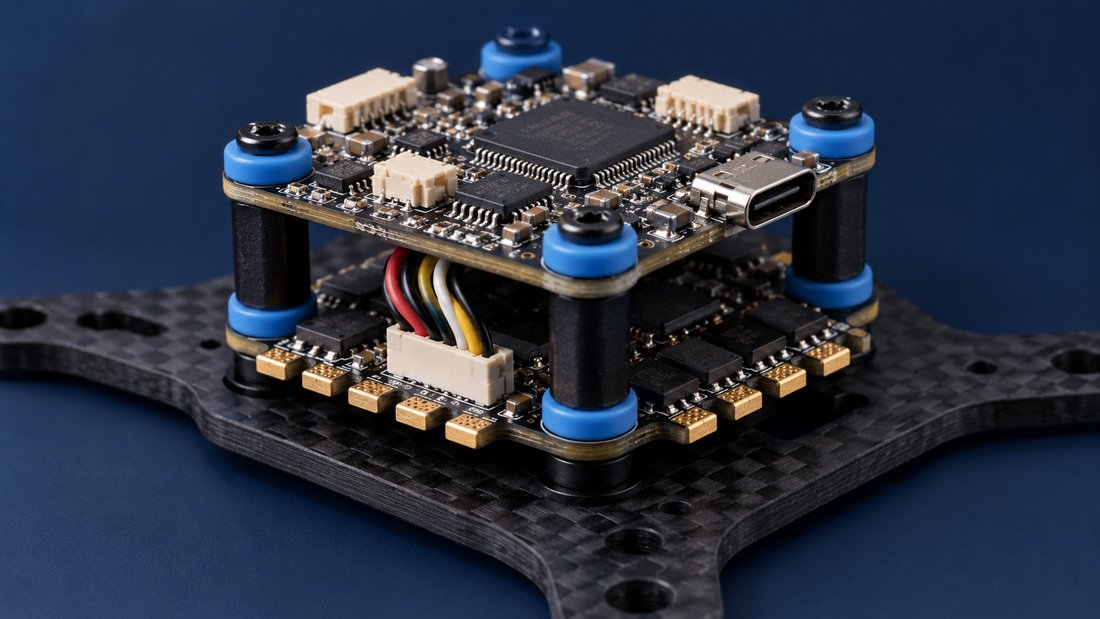
- Airframe and power combo — frame, mounting hardware and power distribution appropriate to the chosen prop size.
- Motors — matched sets with consistent specifications so replacements behave the same.
- ESCs — ideally a four-in-one board or clearly labelled individual units with documented firmware and protocols.
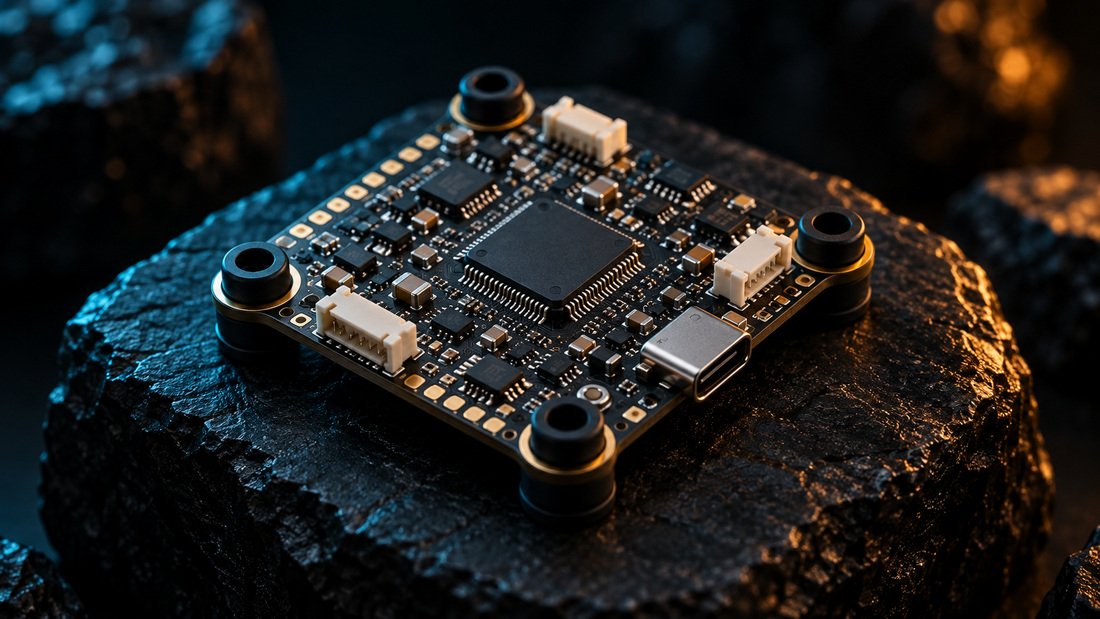
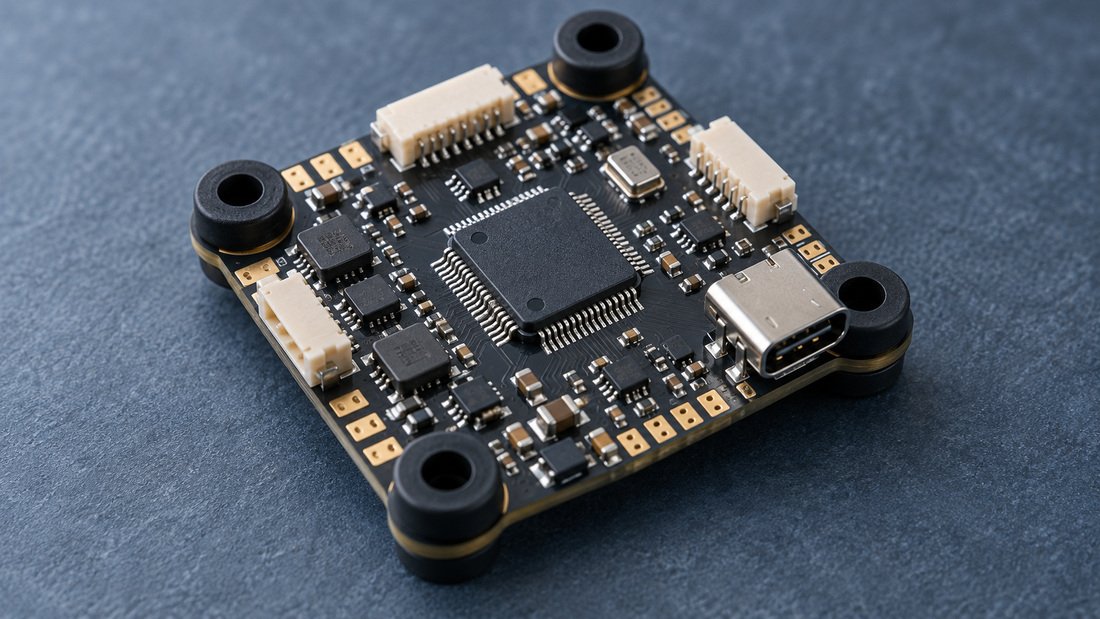
- Flight controller — the board running the flight firmware, with clear pad labelling and manufacturer support.
- Radio link — transmitter plus receivers for each aircraft, plus a plan for student transmitters or a buddy-box arrangement.
- Video system — camera, video transmitter, goggles or monitors, and a way to record for review.
- Power and charging — batteries of one connector type, a multi-port charger, and a fire-safe charging location.
- Tools and consumables — drivers, soldering equipment if students build, propellers, zip ties and tape.
DPF’s FPV electronics range is organised around these component groups, which helps when you need to reorder a single item rather than a whole kit.
Why does the flight controller choice shape the whole program?
The flight controller is the board that reads sensors and commands the ESCs, so its firmware ecosystem determines how much support material, tuning help and troubleshooting knowledge exists. A board running widely used open firmware is easier for teachers and students to learn on than a closed or obscure platform.
Betaflight is free, open-source flight control software used across racing, freestyle and other drone types, and its documentation explains that the flight controller is “basically a computer that reads the sensors (gyro, accelerometer, GPS, etc…), computes the desired actions to take, sends the commands to the ESC to control the motors” (Betaflight Getting Started). That is precisely the layer your staff will interact with most during setup and repairs.
The same documentation notes that Betaflight supports a wide variety of receiver protocols including CRSF, FPort, SBUS and others, and supports common ESC protocols with DShot as the main one used on nearly everything (Betaflight Getting Started). For a school, that breadth is useful because it gives you more freedom when replacing radios or ESCs later.
Questions to ask about any candidate flight controller
- Which firmware does it ship with, and which firmware versions are supported by the manufacturer?
- Are pad labels, wiring diagrams and target names documented and easy to find?
- Does it include an on-screen display (OSD) that works with the video system you plan to buy?
- Who provides hardware support if a board fails — the seller, the manufacturer, or neither?
Betaflight’s documentation is explicit on responsibility: “We fix Betaflight. Manufacturers support their hardware. Pilots own their builds.” (Betaflight Getting Started). Ask suppliers to confirm in writing what hardware support they actually provide, since firmware support and hardware support are different things.
Compare candidate flight controllers on documentation and support before comparing processor specs, because beginners rarely benefit from the fastest board in the catalogue.
FPV racing and training: which setup suits a school program?
There is no universal best kit — the right choice depends on whether the program is classroom-based skills training, indoor drone soccer style team play, or outdoor racing practice. Each pattern changes the airframe size, durability needs and video approach.
| Program type | Typical priorities | Trade-offs to accept |
|---|---|---|
| Indoor classroom training | Durability, low noise, prop guards, low-cost spares | Less speed and range; limited outdoor use |
| Drone soccer / team sport | Standardised builds, fast field repairs, consistent team spares | Less individual customisation; strict build conformity |
| Outdoor racing practice | Speed, range, video reliability, tuning options | Higher crash damage rate; more safety infrastructure needed |
| STEM build curriculum | Clear documentation, solder-friendly boards, visible components | Build time per student; more instructor supervision |
Many schools combine patterns: a small indoor trainer fleet for beginners plus a few outdoor-capable builds for advanced students. Both can use the same electronics family if you choose carefully, which keeps spares and training consistent.
Motors, ESCs and power combos
Motors and ESCs are the components students most often damage. A frame and power combo paired with matched motors reduces guesswork, and four-in-one ESC boards simplify wiring and repair compared with four separate units.
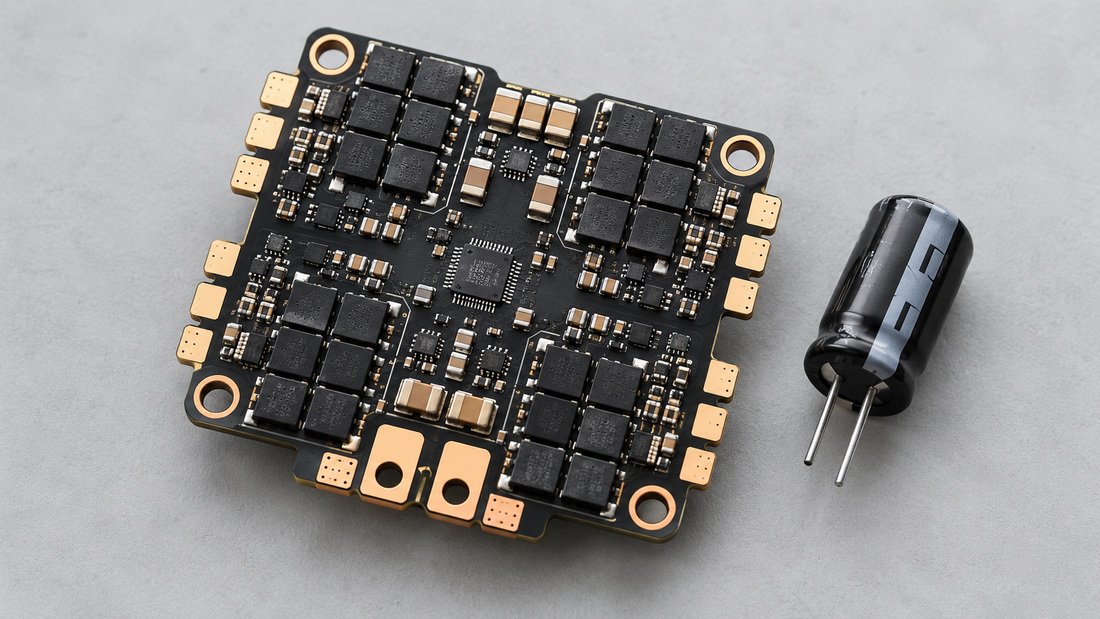
When comparing electronic speed controllers, confirm the supported protocols and current rating in writing, and ask whether the ESC and flight controller are known to work together rather than assuming compatibility.
DPF lists frames and power combos, motors, ESCs and flight controllers as separate product lines, which lets a school or club standardise on one family and then reorder individual parts. Specific model specifications, pricing and availability should be confirmed directly with DPF before you commit a budget.
How should you plan radio and video for multiple students?
The radio and video plan determines how many students can fly safely at once. Plan channel use, viewing equipment and instructor supervision before buying transmitters or goggles, because these choices are hard to retrofit mid-term.
Practical considerations
- Channel discipline — agree a fixed channel plan per flying session and label transmitters and receivers.
- Viewing — goggles are immersive but shared monitors let an instructor watch a student’s feed and coach in real time.
- Recording — an FPV DVR lets students review their own footage, which is one of the most useful training tools for beginners.
- Receivers — keep spare FPV video receivers or compatible modules so a failure does not end a session.
What spare-parts and repair plan should be in the budget?
Assume damage. A school program should budget spares as a percentage of the fleet, not as an emergency line item. Propellers, motors, ESCs and flight controllers are the most likely failures in beginner hands.
A reasonable starting structure is a fixed number of each critical part per active aircraft, with the exact ratio agreed with your supplier based on your group size and session frequency. Ask DPF to quote a team kit with a stated spares allowance so the numbers are transparent rather than guessed.
Repair workflow to design before purchase
- Label every aircraft, motor position and ESC so replacements are unambiguous.
- Keep a repair log per airframe recording what failed and what was replaced.
- Store common spares in a single labelled case per team.
- Assign one staff member as the repair lead for consistency.
- Test repaired aircraft in a controlled area before returning them to students.
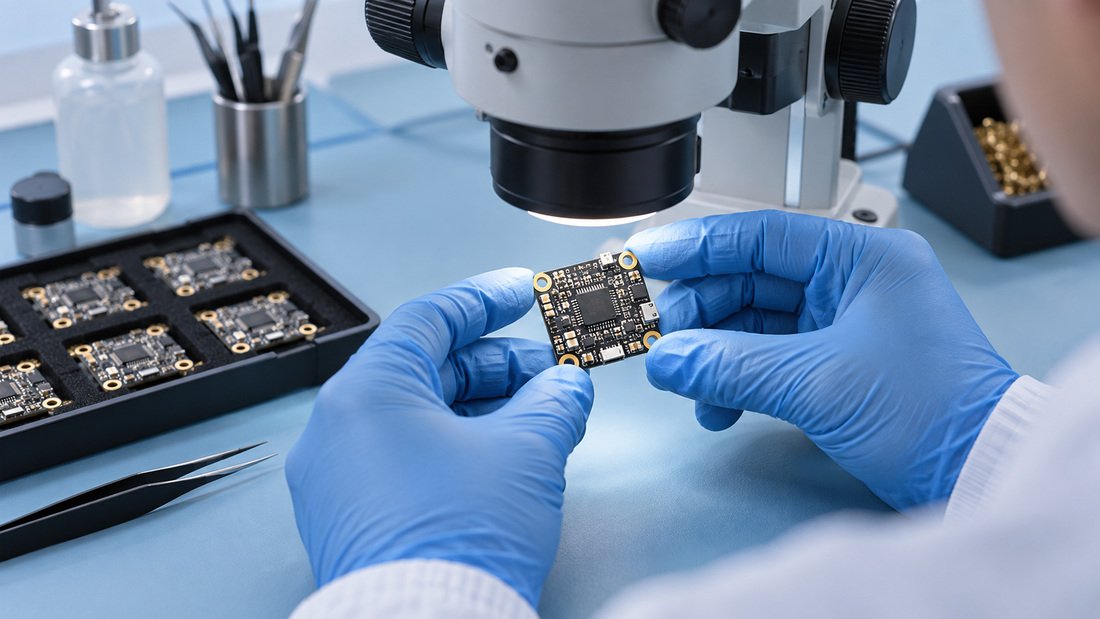
Board inspection practice matters here. A quick visual check of solder joints and connectors after each crash catches many faults early.
Middle-of-article CTA
If you are comparing options for a club or school fleet, you can request a team kit quote from DPF with your intended group size, program type and spares requirement, and ask for written confirmation of specifications and commercial terms.
What safety, storage and charging rules belong in the specification?
Safety infrastructure should be specified alongside the drones, because batteries, chargers and storage are part of the equipment decision. Schools usually need written procedures that satisfy their own risk assessment and insurance requirements.
- A fire-resistant charging container and a defined charging location away from combustibles.
- Battery inspection and retirement rules for damaged or puffed cells.
- Propellers removed during bench testing and firmware configuration.
- Designated flying area with defined boundaries and non-participant exclusion.
- Storage cases that protect electronics from dust and impact between sessions.
Ask your supplier and your institution’s safety lead to confirm which local rules apply to your program. Manufacturer documentation does not replace your own risk assessment.
Common mistakes schools make with a first FPV kit
- Buying one aircraft instead of a team kit. One failure then halts the whole session.
- Mixing incompatible electronics. Verify ESC and flight controller compatibility in writing.
- Ignoring documentation. Students and staff need wiring diagrams and firmware guidance they can actually read.
- Under-budgeting consumables. Props and motors wear out faster than buyers expect.
- Skipping the simulator stage. Simulator practice reduces real crash damage before students touch a real aircraft.
- Assuming firmware support equals hardware support. Confirm who handles failed boards.
Procurement checklist for schools and clubs
- Defined program type and number of active flying stations.
- Standardised airframe, motor and ESC family agreed with the supplier.
- Flight controller with documented firmware and clear pad labelling.
- Written confirmation of ESC and receiver protocol compatibility.
- Radio channel plan and viewing equipment for multiple students.
- DVR or recording option for training review.
- Spares allowance stated as a specific quantity per aircraft.
- Battery connector standard and multi-port charging plan.
- Safety, storage and charging procedures approved internally.
- Written terms covering price, quantity, lead time, warranty and support responsibilities — request these from DPF rather than assuming them.
Frequently asked questions
What size of FPV drone is best for a school first kit?
Smaller, lighter builds are usually easier to fly indoors and cause less damage, while outdoor racing practice typically suits larger frames. Choose based on your flying space first, then match motors and ESCs to that frame.
Do students need to build the drones themselves?
Building teaches electronics and problem-solving but needs supervision and time. Many programs use a mix: pre-built aircraft for flying sessions and build kits for structured lessons.
Which firmware should a school choose?
Prefer firmware that is widely documented and supported by the board manufacturer. Betaflight, for example, documents that manufacturers support their own hardware and pilots own their builds, so confirm support responsibilities in writing (Betaflight Getting Started).
How many spares should we buy?
There is no universal ratio. Base the number on group size and session frequency, and ask DPF to propose a spares allowance in a written quote so you can compare options.
Can we run several students flying at once?
Yes, with a disciplined channel plan, labelled equipment and instructor supervision. Confirm transmitter and receiver channel capabilities before ordering.
Is an FPV DVR useful for beginners?
Reviewing recorded footage helps students see their own errors, which is why a recording option is worth including in the kit specification.
What should we confirm with DPF before ordering?
Request written confirmation of specifications, compatibility, price, quantity, lead time, warranty and support responsibilities for your exact configuration. Do not rely on general catalogue descriptions for commercial terms.
Conclusion and next step
A good first FPV kit for a school is a system, not a single drone: one standard airframe and electronics family, a documented flight controller, a workable radio and video plan, and a funded spares and repair workflow. FPV racing and training programs succeed when equipment, safety rules and procurement terms are decided together.
To move from comparison to a written proposal, Request a Team Kit Quote from DPF with your program type, student numbers and spares requirement.