Quick summary
Choosing a VTX power level means matching three constraints: the usable video range your pilots actually need, the thermal and electrical budget of the aircraft, and the radio rules of the venue or country. Most club and school fleets do not need maximum milliwatts. A typical indoor or short-course setup performs well in the low-power range, while outdoor open-field flying may need more. The right answer is usually the lowest power that gives a stable picture for the receiver and DVR you already own.
Key Takeaways
- Power level is a system decision, not a spec-sheet number: transmitter (VTX), antenna, receiver diversity and DVR quality all set the practical result.
- Higher milliwatts (mW) increase heat, current draw and interference risk. They do not automatically improve image quality.
- Betaflight can control VTX settings and shows flight data through the on-screen display (OSD) on analog and digital video systems, which makes power changes easy to test and re-test. Betaflight documentation
- For team sports and youth programs, repeatability matters more than peak range. Standardize one or two power settings per venue.
- Confirm legal power limits and any required licensing with the relevant regulator or venue before you buy, and confirm commercial terms with your supplier in writing.
What is a VTX power level, in plain terms?
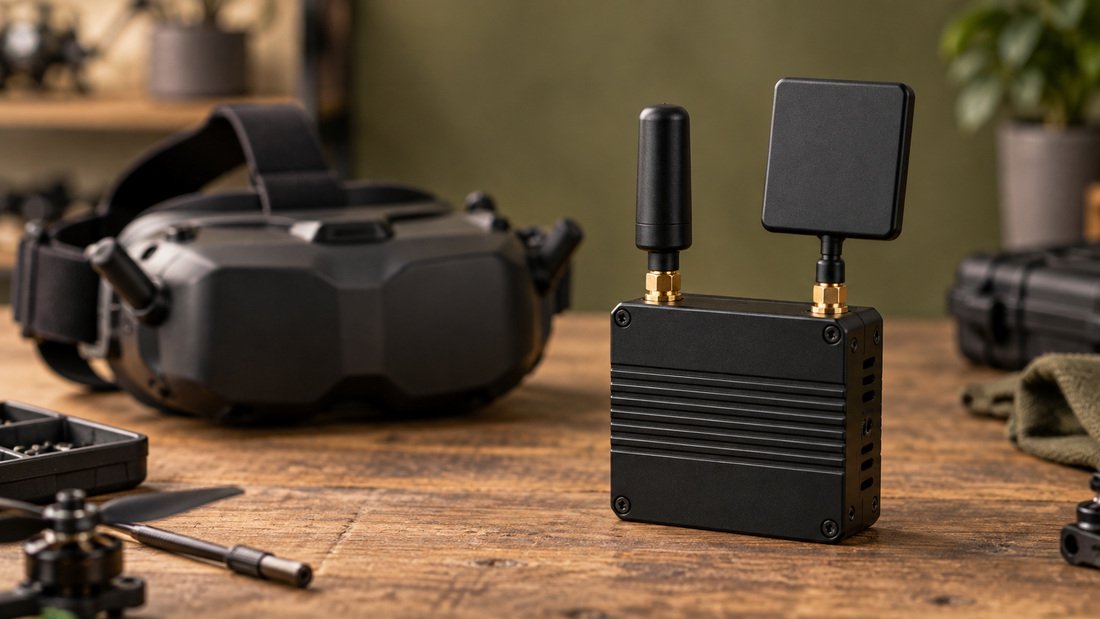
A video transmitter (VTX) sends the camera image over radio to a video receiver (VRx) on the ground. Power level is the radio frequency (RF) output, usually written in milliwatts (mW). Common steps are roughly 25 mW, 200 mW, 400 mW, 800 mW and higher, but exact steps vary by model.
More output power pushes the signal further and through more obstacles, at the cost of heat, battery current and the chance of interfering with other pilots nearby. It is not a picture-quality setting. A clean 25 mW link near the receiver often looks better than a noisy 800 mW link, because analog video degrades gradually and digital video fails more abruptly.
Why VTX power level matters for FPV video, OSD and DVR
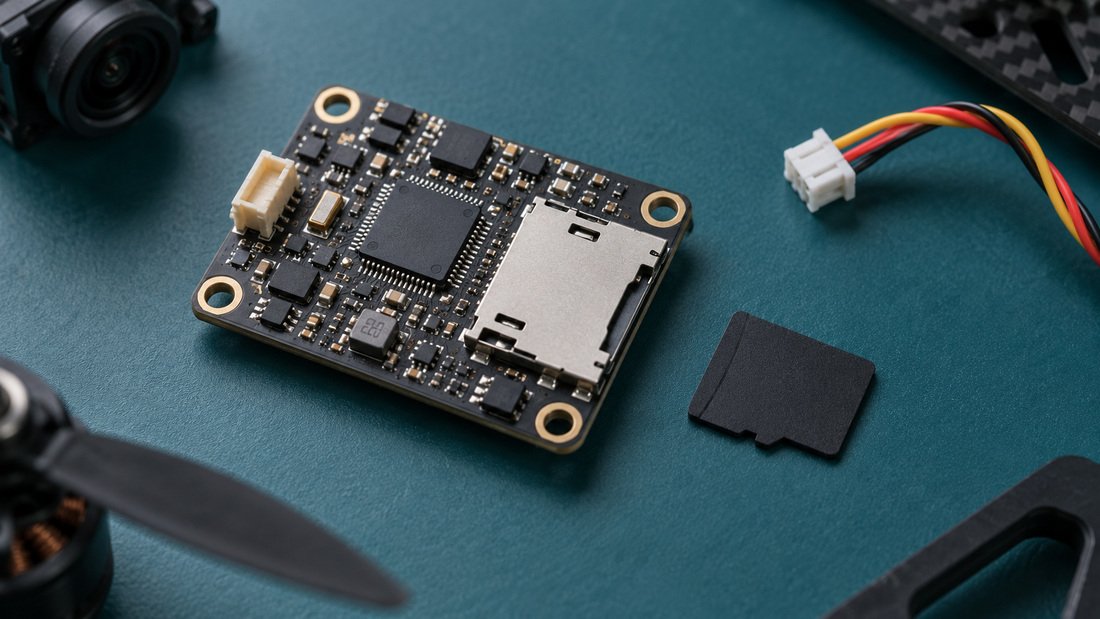
The practical goal is a stable link from takeoff to landing, plus a recording you can review or show to students. On-screen display (OSD) overlays flight data such as battery voltage, timers and GPS information onto the video feed. A digital video recorder (DVR) captures that same feed on the ground.
If the link is marginal, both the live view and the DVR recording suffer. If the link is overpowered, you add heat to the aircraft and noise to everyone else’s feed. That trade-off is why power level belongs in your standard operating procedure, not just in a build list.
How to choose a VTX power level: a six-step method
Step 1: Define the course and the worst-case distance
Measure the furthest point on your normal flight path, not the furthest you have ever flown. A school gym, a drone soccer pitch and an open field produce very different numbers. Write the distance down.
Step 2: Identify what has to block the signal
Walls, nets, metal bleachers and crowds absorb or reflect 5.8 GHz signals. Indoor venues with spectators are harder than the distance alone suggests. Ask whether pilots ever fly behind an obstacle from the receiver’s point of view.
Step 3: Check what the receiver and DVR can actually use
A diversity receiver with two well-placed antennas handles a weak signal better than a single-antenna receiver. The FPV video receivers and FPV DVR in your kit set the real ceiling. Upgrading the VTX while keeping a weak receiver gives limited benefit.
Step 4: Budget heat and current
Higher output means more waste heat and more current from the flight battery. Small airframes with little airflow are the worst case. If a VTX runs hot on the bench, it will run hotter in still air. Plan mounting and airflow before you plan power.
Step 5: Plan for multiple aircraft on site at once
In team practice, many VTXs are transmitting in the same room. Every extra milliwatt adds to the noise floor for everyone. Lower power per aircraft plus good antenna placement and a channel plan usually beats raw output.
Step 6: Test, log and standardize
Fly the lowest setting that holds a clean picture, then record it in a fleet sheet alongside channel, antenna type and receiver model. Betaflight lets you adjust VTX settings and read flight data through the OSD, which makes this kind of structured testing practical for a club. See the Betaflight getting-started documentation.
Power level comparison: what changes as mW rises
The table below is general guidance based on how RF behaves, not a set of measured guarantees. Actual results depend on antennas, receiver quality, venue and interference.
| Typical power setting | Likely best use | Heat and current | Interference risk in group flying | Main trade-off |
|---|---|---|---|---|
| Low (about 25 mW class) | Indoor gyms, drone soccer, bench and pit testing | Low | Low | Short usable range, more breakup through walls |
| Medium-low (about 100-200 mW class) | Small outdoor courses, short multi-heat sessions | Moderate | Moderate | Needs a sensible channel plan |
| Medium-high (about 400-800 mW class) | Larger outdoor fields, long-range or cinematic work | Higher | High | Heat management, battery draw, venue rules |
| High (above 800 mW class) | Specialist long-range use only | High | Very high | Often impractical or restricted for school and club use |
Treat the milliwatt classes above as illustrative groupings. Check the actual selectable steps on the specific VTX you are considering, because firmware and regional variants differ.
How power level interacts with OSD, DVR and the rest of the stack
OSD is your in-flight instrument panel
An on-screen display can show battery voltage, current draw, GPS coordinates, speed, timers and more, and it can be used to check post-flight statistics. That matters for power-level decisions: if you see voltage sag or rising current on the OSD, you have direct evidence that a higher power setting is costing you flight time. Betaflight supports OSD for analog and digital video systems. Betaflight documentation
DVR is your evidence
A ground DVR records what the receiver saw, including breakups. Reviewing recordings after practice is one of the fairest ways to compare two power settings, because you can compare the same corner of the same course. For clubs that coach young pilots, the DVR footage also becomes teaching material.
The flight controller ties it together
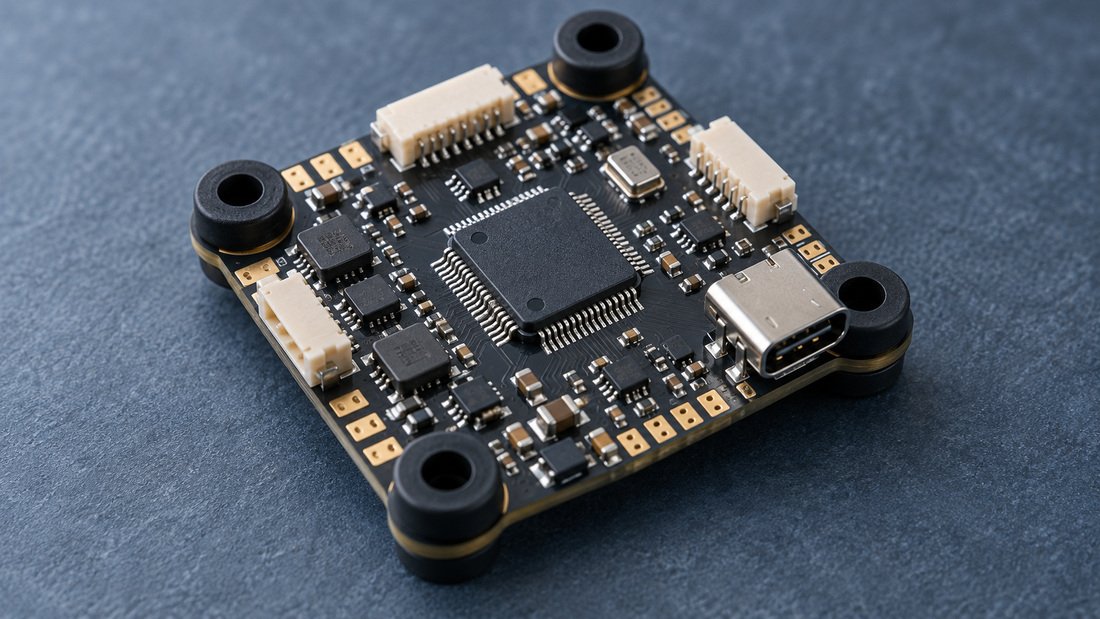
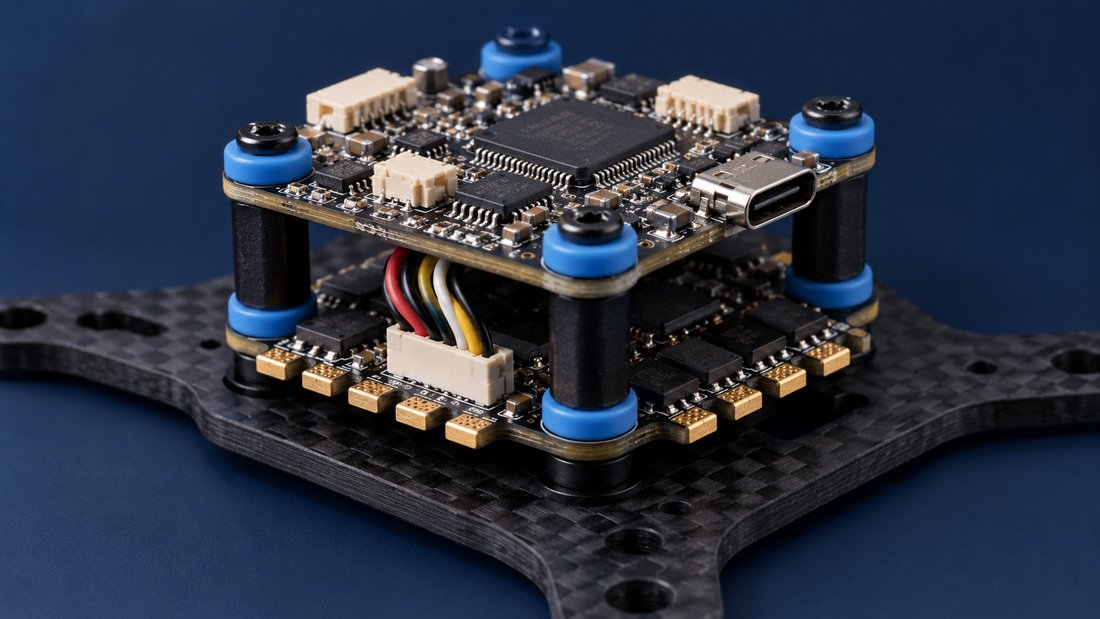
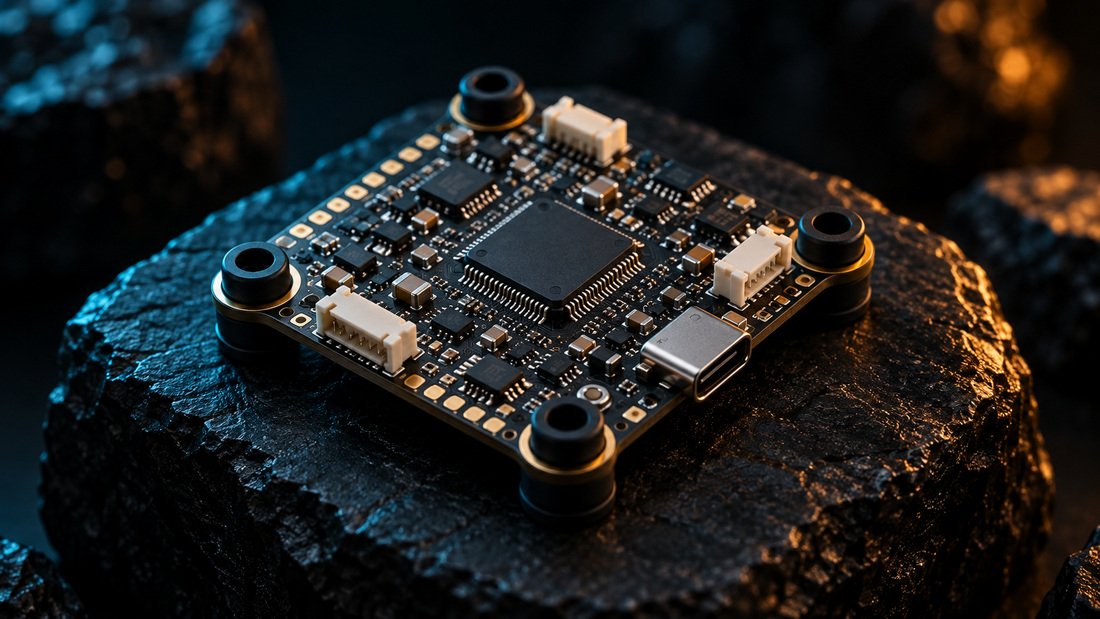
A flight controller reads sensors, computes commands and drives the electronic speed controllers (ESCs) that spin the motors, and it can also manage peripherals such as VTX control. Betaflight documentation If you are standardizing a fleet, the flight controllers and electronic speed controllers you choose determine how easily VTX power, channel and pit mode can be switched from the radio or OSD.
If you are equipping a school team or a multi-pilot club and want help matching video transmitters, receivers, DVRs and flight electronics into one consistent kit, Request a Team Kit Quote and describe your venue, pilot count and existing gear.
Common mistakes when setting VTX power
- Assuming maximum power equals the best picture. It often just adds heat and noise, and in a shared gym it degrades everyone’s feed.
- Ignoring the receiver and antennas. A better antenna and a diversity receiver can do more for link stability than a power increase.
- Leaving every aircraft on the same setting everywhere. A setting that works outdoors may be wrong for an indoor session.
- Forgetting heat in still air. Bench tests and hover tests are not the same thermal environment.
- Overlooking the rules. Power limits, licensing and venue restrictions vary by country and site. Verify locally before purchase and before first flight.
- No channel plan. Poor frequency separation between pilots causes the same symptoms as a weak VTX.
Buyer checklist for clubs, schools and programs
- Worst-case course distance and obstacle profile written down per venue.
- Pilot count per session and a documented channel and power plan.
- Receivers with diversity or at least two sensible antenna positions per ground station.
- DVR on every ground station, with a simple file-naming and review routine.
- Confirm which selectable power steps the VTX offers, and whether switching is possible from the radio or OSD.
- Confirm heat management: mounting, airflow and whether a heat sink or metal frame contact is expected.
- Confirm current draw impact on planned battery size and target flight time.
- Confirm connector type and voltage compatibility across the fleet.
- Confirm stock spare VTXs and antennas, because crash damage is normal in team sports.
- Request written confirmation of regulatory notes, documentation, MOQ, lead time, warranty and support terms from your supplier.
Frequently asked questions
Is a higher VTX power level always better?
No. Higher power can extend range and penetrate obstacles, but it also raises heat, current draw and interference. For indoor and short-course flying, lower power often produces a cleaner experience for the whole group.
What power level should a school or youth program start with?
Start with the lowest selectable setting that gives a stable picture in your actual venue, then test one step up if needed. Standardize that setting and record it, so every coach and pilot gets the same result.
Does VTX power affect the DVR recording?
Yes, indirectly. The DVR records what the receiver receives, so a weak or noisy link produces a noisy recording. Antenna choice, receiver quality and channel planning matter alongside power.
Can I change VTX power from Betaflight or the OSD?
Betaflight can control peripherals including VTX control and supports OSD configuration, but what is available depends on your specific VTX and flight controller. Betaflight documentation Confirm compatibility with your supplier before ordering a fleet.
How do I reduce interference when many pilots fly indoors?
Use the lowest workable power, separate channels carefully, keep antennas clear of carbon and metal, and consider pit mode or low power for aircraft that are on the ground. A written channel plan prevents most conflicts.
How do I check what power is legal where we fly?
Power limits, licensing and equipment rules differ by country and sometimes by venue. Check with the relevant national regulator and the venue operator. Do not assume a setting that is permitted in one country applies in another.
What should I ask a supplier before buying a VTX fleet?
Ask for the selectable power steps, voltage and connector details, heat-management recommendations, switching method, documentation, spare-part availability and the commercial terms in writing. For a program-sized order, also ask how the supplier supports mixed fleets and replacement parts.
Conclusion and next step
Choosing a VTX power level is a system decision. Match it to your venue, your receiver and DVR, your heat and battery budget, and your local rules. Then standardize the setting across your fleet so every pilot, coach and event organizer gets predictable FPV video, OSD and DVR results.
If you are building or refreshing a team kit, browse the wider FPV electronics range or go straight to a configuration discussion. Request a Team Kit Quote with your pilot count, venues and current equipment list, and we will help you align power settings, receivers, DVRs and flight electronics.