Quick summary
Starting an FPV racing team means combining a structured training program with reliable, repairable equipment. Begin by defining your audience and venue, choose a standard quad class for your league, budget for spare parts and a simulator, then recruit volunteer coaches and build a progression path from line-of-sight basics to timed race practice. This guide walks through planning, gear categories, budgeting, safety and procurement questions for schools, clubs and youth programs.
Key Takeaways
- Define your team format, age group and venue before buying any hardware; rules and space often decide the frame class you need.
- Standardize on one or two quad configurations so spares, batteries and training all match.
- Budget for repairs, not just initial kits; FPV racing and training consumes props, motors and ESCs.
- Use a simulator plus a structured progression plan to reduce crash costs for new pilots.
- Confirm commercial terms such as MOQ, lead time, warranty scope and spare-part availability in writing before ordering.
- FPV electronics choices should follow the firmware your team can maintain, not just peak specs.
What does it actually take to start an FPV racing team?
An FPV racing team needs four things running at the same time: a venue or practice agreement, a small group of committed pilots and coaches, a repeatable equipment standard, and a training schedule. Hardware is important, but teams that fail usually lack organization or a place to fly, not gear.
Start with a simple one-page plan: who the team is for, how often you meet, where you practice, and what a typical session looks like. This becomes the document you show to a school administrator, a sponsor or a parent committee. It also clarifies what you need to buy first.
Step 1: Define team format and age group
Decide whether you are an after-school club, a competitive travel team or a community league team. Age group affects airframe size, radio power rules and supervision ratios. Younger pilots often benefit from smaller indoor-friendly quads and slower sessions, while older or advanced pilots may move toward larger outdoor racing classes.
Step 2: Secure a venue and practice time
Ask about indoor spaces such as gyms, and outdoor spaces with permission and clear boundaries. Confirm insurance, supervision and noise expectations. Locking in a recurring time slot does more for skill development than occasional weekend sessions.
Step 3: Choose a class and standardize
If you plan to race under an existing league or school association, get their current technical rules first. If you are unaffiliated, pick a simple, widely supported quad class and buy identical or near-identical setups. Standardization makes spares interchangeable and lets coaches troubleshoot faster.
Step 4: Plan pilot progression
Build a progression ladder: simulator orientation, line-of-sight hovering, first-person view (FPV) orientation, gate practice, then timed laps. FPV racing and training improve fastest when each session has one measurable objective, such as completing ten clean laps or reducing crashes per battery.
What equipment categories does an FPV racing team need?
A team needs airframes, motors, ESCs, flight controllers, radios, video systems, batteries, chargers, tools and safety gear. You do not need every category at once, but you do need a plan for how each category will be maintained and replaced.
Quad airframes, motors and power combos
Frames protect electronics and determine repair cost. Choose a frame with easily replaceable arms and available spare parts. Motors should match the frame class and the props your team standardizes on. Many programs prefer buying frames and power combos together so the components are designed to work as a set.
Flight controllers and firmware
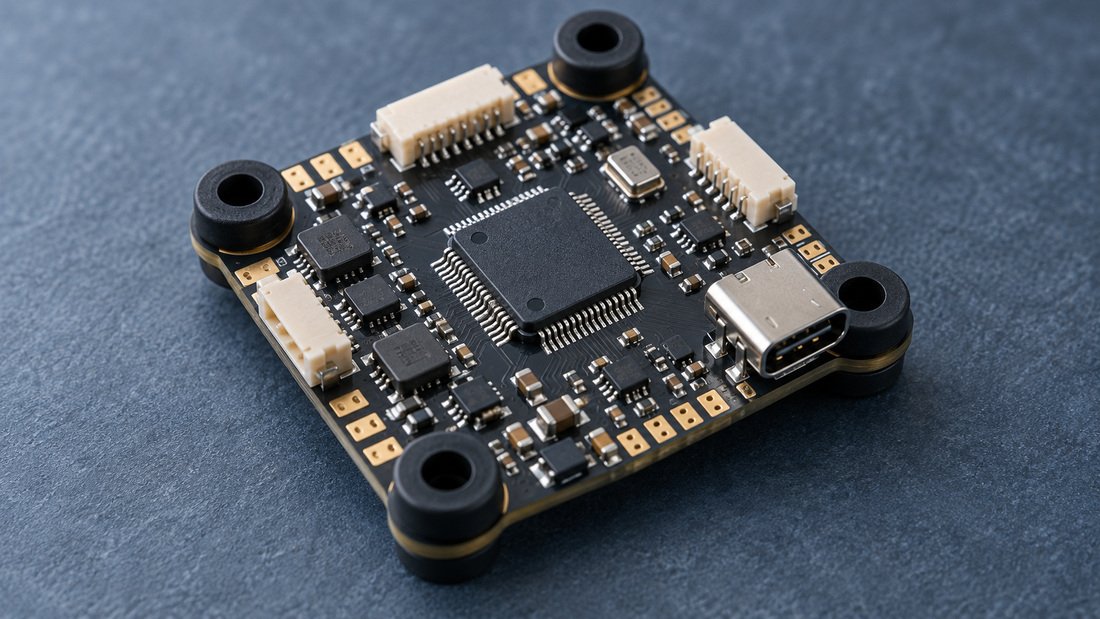
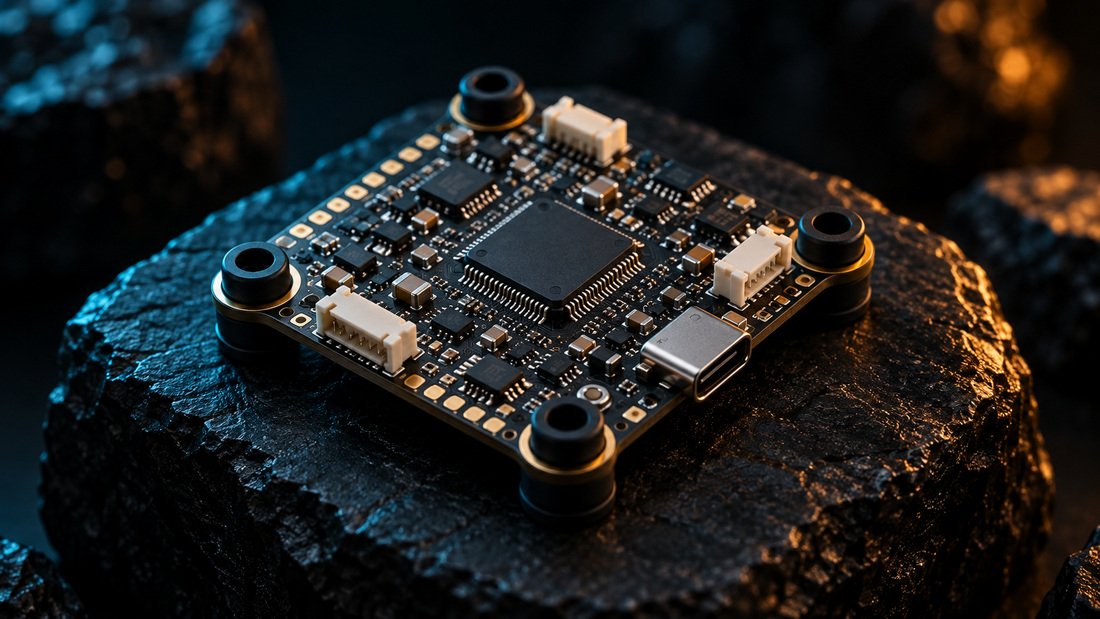
The flight controller is the board that reads sensors such as the gyro and accelerometer, computes what the quad should do, and sends commands to the electronic speed controllers (ESCs) to drive the motors. It runs firmware, and Betaflight is one widely used open-source option for racing and other drone types. Betaflight notes that it runs on flight controllers from many manufacturers, and that support for each board comes from its manufacturer (Betaflight Getting Started). That is a practical warning for teams: before standardizing on a board, confirm firmware support and documentation exist.
For a team, choose flight controllers that your coaches can configure and that have community documentation. A slightly less exotic board with good support beats a bleeding-edge board nobody can troubleshoot.
ESCs
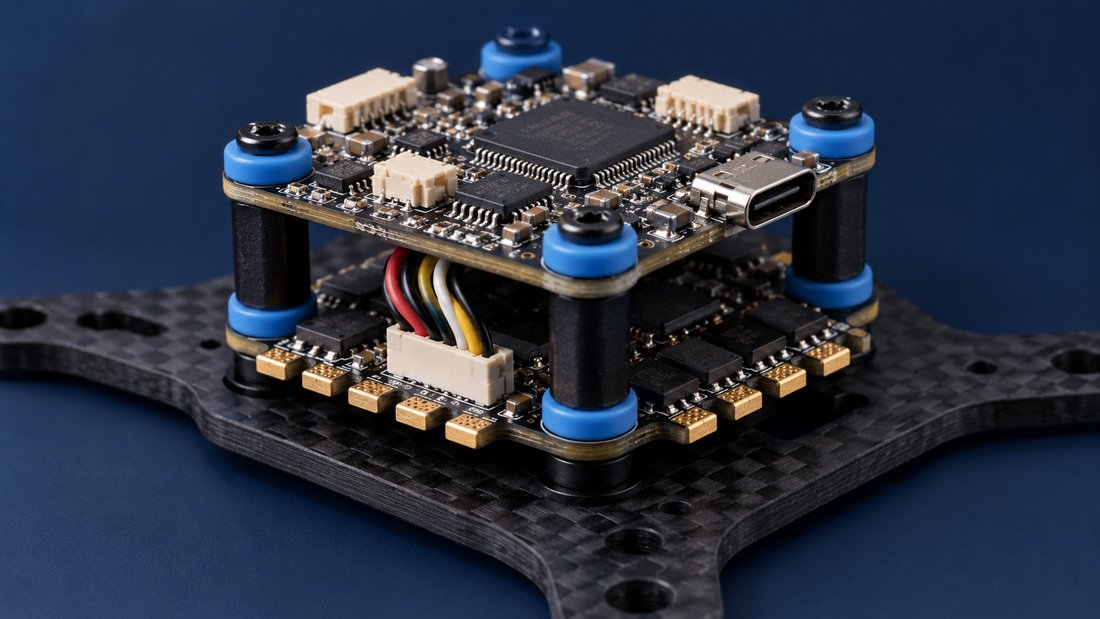
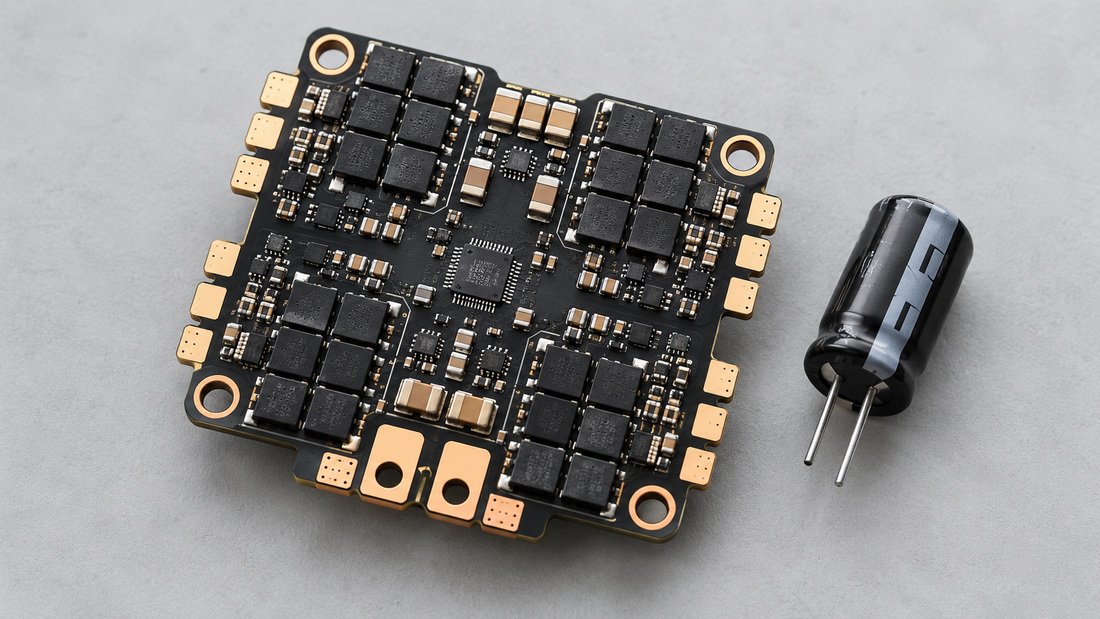
ESCs control motor speed based on commands from the flight controller. Betaflight supports several ESC protocols, with DShot being the main one used on nearly everything, alongside options like Oneshot, Multishot and PWM (Betaflight Getting Started). For a school team, standardizing on a common protocol simplifies spare replacement. See the electronic speed controllers category for the general product family.
Video systems and recording
FPV video links let pilots see the course live. Teams should decide early whether they run analog or digital video, because receivers, goggles and antennas differ. An on-screen display (OSD) can show battery voltage, timers and other information; Betaflight notes OSD support for most analog and digital video systems (Betaflight Getting Started). Recording flights, whether through goggles or a dedicated FPV DVR, helps coaches review mistakes.
Radios, goggles and batteries
Radios and goggles are personal items many pilots prefer to own, but a team should keep a few loaner sets. Batteries are consumables; set a simple charging and storage policy from day one. Budget for enough batteries that pilots are not idle waiting to charge.
How should a school or club budget for an FPV racing team?
Budget in three layers: startup equipment, recurring consumables and safety/compliance costs. A common mistake is spending the entire budget on quads and leaving nothing for repairs within the first season.
| Budget layer | Typical items | How to plan |
|---|---|---|
| Startup equipment | Quads or kits, radio(s), goggles, charger, tools, practice gates | Buy a small number first; standardize before scaling |
| Recurring consumables | Props, motors, ESCs, flight controllers, batteries, antennas | Track breakage per session; order spares in batches |
| Safety and compliance | First aid, eye protection, storage, insurance, signs | Confirm local rules and school policy in writing |
| Training and tools | Simulator licenses or software, soldering station, spares organizer | Treat as teaching infrastructure, not extras |
| Logistics | Cases, labels, battery bags, transport | Improves accountability and reduces losses |
Illustrative example (not a DPF quote)
An illustrative starting point for a small club might be a handful of identical practice quads, two loaner radio and goggle sets, one charger per several pilots, and a spares bin covering props, one or two motor sets, an ESC or two and at least one spare flight controller. Treat this as a planning example only. Actual prices, minimum order quantities and lead times depend on your supplier and region, so request a written quotation.
Common mistakes when starting an FPV racing team
- Buying too many different models. Mixed hardware multiplies the number of spares you must stock and slows repairs.
- Skipping the simulator. New pilots who start on a simulator reach real-flight competence with fewer broken parts.
- Ignoring firmware support. A board without good documentation can stall a whole program.
- No safety policy. Establish battery handling, arming discipline and spectator rules before the first session.
- No maintenance routine. Schedule a repair and inspection block; do not let broken quads accumulate.
- Assuming consumer warranty terms apply to institutional purchases. Warranty scope, who is covered and how claims are handled can differ between regions and buyer types. Ask your supplier to put their warranty policy in writing for your purchase.
Buyer checklist before you order equipment
- Rules and class confirmed, including any league or school technical requirements.
- One or two standard quad configurations chosen, with compatible motors, ESCs and props.
- Firmware choice documented, with confirmation that your flight controller is supported.
- Spare-part list drafted and priced, including props, motors, ESCs and at least one spare flight controller per group.
- Battery count, charging capacity and storage plan defined.
- Video system decision made, considering whether you need an FPV video receiver or a recording device such as an FPV DVR.
- Written confirmation requested for MOQ, lead time, shipping, payment terms, spare-part availability and warranty scope.
- Safety gear, insurance and supervision plan approved by the relevant authority.
- Pilot progression plan and session schedule in place.
- Someone assigned to manage inventory and repairs.
If you are equipping multiple pilots or a full team, it helps to discuss the whole FPV electronics set with your supplier so the frame, power system and control electronics are matched before you commit.
Ready to plan a standardized team setup? Request a Team Kit Quote and share your class, pilot count and spare-part needs.
FAQ: starting an FPV racing team
How many pilots do you need to start a team?
There is no universal number. A small group can begin with a few committed pilots and at least one adult or experienced coach. Larger groups may need additional supervision and more practice time slots. Check any league or school requirements that may apply to you.
Should beginners start on a simulator or a real quad?
A common approach is to start on a simulator to learn orientation and control, then transition to a small, durable quad. This reduces crash costs and builds confidence. The exact balance depends on your budget and venue.
What is the difference between a flight controller and an ESC?
The flight controller reads sensors and decides how the quad should move, then sends commands to the ESCs, which control motor speed. Betaflight describes the flight controller as a computer that reads sensors, computes desired actions and sends commands to the ESC to control the motors (Betaflight Getting Started).
Do we need identical quads for every pilot?
Identical or nearly identical quads make coaching, spares and fair practice easier. Some teams allow personal builds for advanced pilots while keeping a standard loaner fleet for training. Decide based on your goals and budget.
What spare parts should a new team stock first?
Props, motors, ESCs, batteries and at least one spare flight controller per training group are common priorities. Confirm availability and lead times with your supplier so you are not grounded for weeks.
Can a school program use the same equipment as a competitive team?
Often yes, but competitive rules may restrict frame size, video system or other specifications. Always check the current rules of the league or association you intend to compete in before purchasing.
How do we handle safety and liability?
Set clear arming, battery handling and spectator rules, use appropriate protective equipment, and follow your school, venue and local requirements. Insurance and supervision policies vary, so confirm them in writing with the relevant authority.
Conclusion: start small, standardize early, train consistently
An FPV racing team is built on a repeatable system, not a one-time purchase. Define your format and venue, choose one standard quad class with firmware you can support, budget for consumables, and run structured FPV racing and training sessions. Standardizing early keeps spares simple and lets coaches focus on pilot development.
Before you buy, request written confirmation of MOQ, lead time, warranty scope and spare-part availability. When you are ready to plan a team order, Request a Team Kit Quote with your pilot count, class and spare-part list.