Quick summary
Most 1 W ELRS transmitter modules are designed to accept a nominal input voltage range of 5 V to 12 V DC, with many supporting up to 13 V or slightly higher. However, the exact range depends on the specific module design and its internal voltage regulation. Always check the manufacturer’s datasheet or product page for the confirmed range before connecting power. For schools, teams and distributors, matching the module to a stable, correctly rated power source is critical for reliable RF performance and long-term hardware life. This guide explains what to verify, how to avoid common mistakes, and what to include in your procurement checklist.
Key Takeaways
- 1 W ELRS transmitter modules typically accept 5–12 V DC, but always confirm the exact range for your chosen module.
- Powering a module above its rated voltage can cause permanent damage; under-voltage may lead to reduced output power or unstable link.
- The power source must supply enough current—often 1 A or more at 5 V—especially at 1 W output.
- Voltage spikes from unregulated batteries or poorly filtered BECs can degrade or destroy the module.
- For club and education procurement, request written confirmation of voltage range, current draw, and connector type from the supplier.
Understanding ELRS Transmitter Modules and Their Power Needs
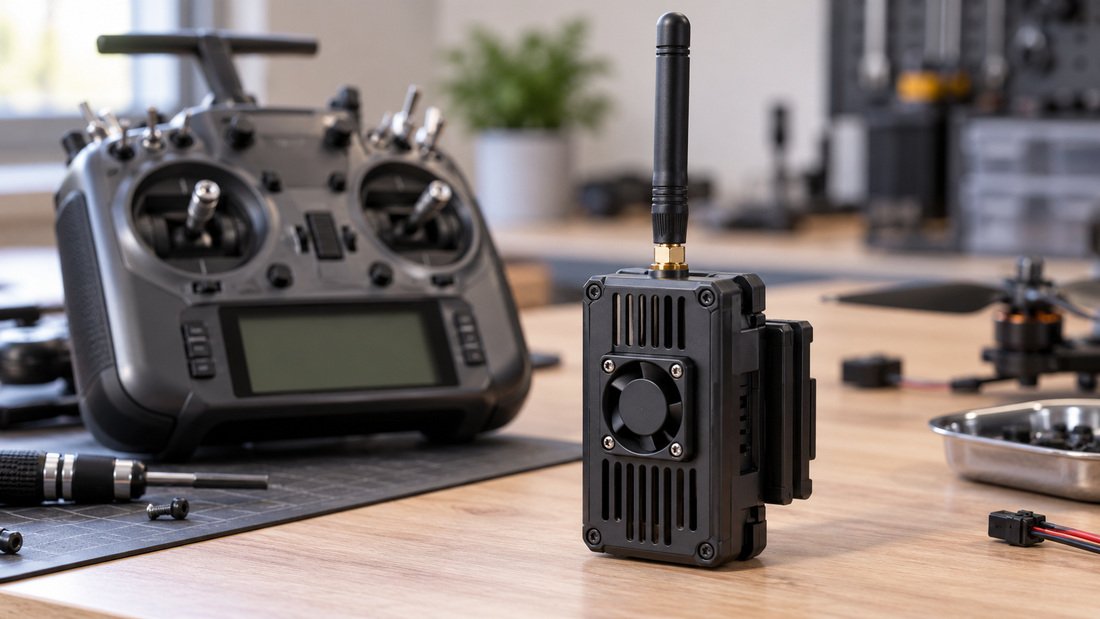
ELRS (ExpressLRS) is an open-source radio control protocol known for low latency and long range. A transmitter module, often called a TX module, plugs into a radio’s external bay or connects internally. 1 W refers to the maximum RF output power. To produce that output, the module’s internal power amplifier requires a stable input voltage and sufficient current. The module’s input voltage range is determined by its onboard voltage regulator, which steps the input down to the low voltages needed by the RF chip and amplifier.
If the input voltage is too low, the regulator may not maintain the required internal voltage, causing reduced RF power, dropouts or failure to boot. If the input voltage is too high, the regulator may overheat or the amplifier may be damaged. Therefore, the safe operating window is specific to each module design.
Typical Voltage Ranges You Will See
Many 1 W ELRS modules on the market specify an input range of 5–12 V, and some accept up to 13 V or 16 V. A few modules are designed for 5 V only, often powered from a radio’s internal 5 V rail or a USB connection. Others are wide-input to work directly from 2S–4S LiPo batteries (approximately 7.4–16.8 V). Because there is no single universal standard, treat any general figure as a starting point and verify the exact specification for the module you intend to buy or deploy.
Why Input Voltage Matters for Drone Soccer and Youth Programs
Drone soccer teams and school programs often run multiple transmitters in shared spaces, with students handling batteries and power connections. A correctly matched power supply reduces the risk of damaged modules, inconsistent performance during competitions, and safety incidents. It also helps coaches and technicians standardise equipment across a fleet, simplifying maintenance and troubleshooting.
For distributors and OEM/ODM buyers, specifying the right input voltage is part of ensuring that the product meets the end user’s expectations. A module that browns out during a match or fails after a few charge cycles creates support burden and reputational risk.
How to Determine the Correct Input Voltage for Your Module
Follow these steps to confirm the voltage requirement for any 1 W ELRS transmitter module you plan to use or resell.
1. Check the Manufacturer’s Documentation
Look for the datasheet, user manual, or product page. The input voltage range is usually listed under “Specifications” or “Electrical Characteristics”. If the information is not published, ask the supplier directly. Do not rely on forum posts or retailer listings that may be outdated or incorrect.
2. Identify the Power Source
Will the module be powered from the radio’s internal battery, an external BEC (battery eliminator circuit), a USB port, or a dedicated battery? Each source has its own voltage and current limits. For example, a radio’s internal 5 V rail may not provide enough current for 1 W output, while a 2S LiPo directly connected may exceed the module’s maximum input.
3. Verify Current Draw
At 1 W RF output, the module can draw significant current. A module that requires 5 V input might need 1 A or more. If your power source cannot supply this, the voltage may sag, leading to reduced performance or shutdown. Always check the module’s current consumption at maximum power and ensure your supply has headroom.
4. Account for Voltage Spikes
Batteries fresh off the charger can exceed their nominal voltage. For instance, a fully charged 2S LiPo can reach 8.4 V, and a 4S can reach 16.8 V. If your module’s maximum input is 12 V, connecting it directly to a 4S battery will damage it. Use a regulated BEC or choose a module with a wide enough input range.
Comparing Common Power Configurations
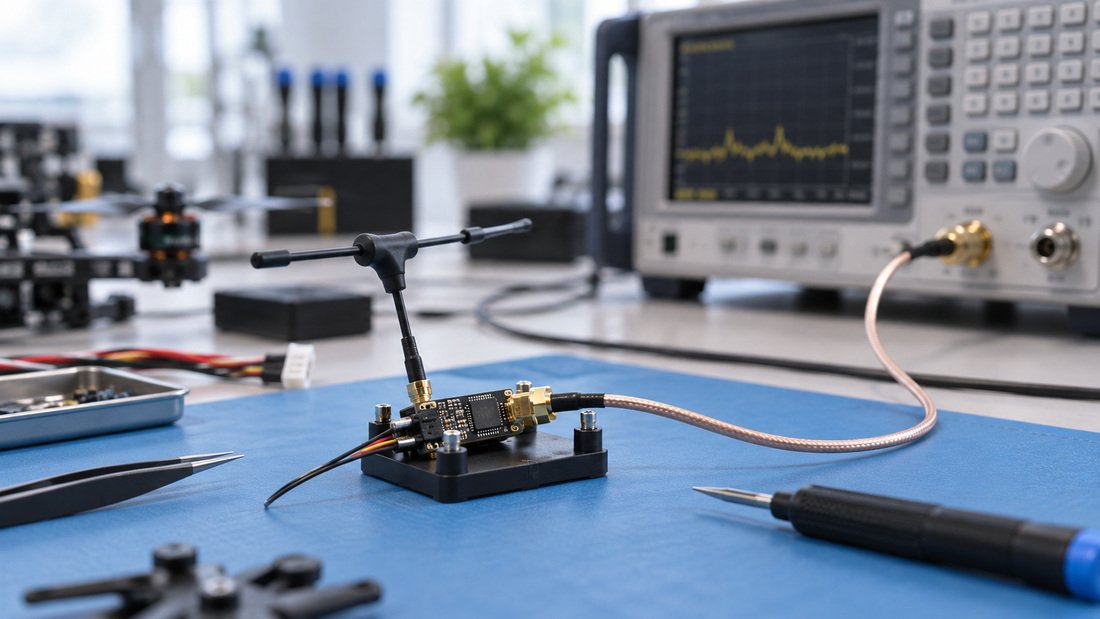
The table below outlines typical scenarios and considerations. It is for general guidance only; always confirm exact specifications for your module.
| Power Source | Nominal Voltage | Considerations for 1 W ELRS TX Modules |
|---|---|---|
| Radio internal 5 V rail | 5 V | May lack sufficient current for 1 W output; check radio’s BEC rating. |
| External 5 V BEC | 5 V | Ensure BEC can supply required current (e.g., 1–2 A) continuously. |
| 2S LiPo direct | 6.0–8.4 V | Within range of many modules; check maximum input and spike tolerance. |
| 3S LiPo direct | 9.0–12.6 V | May exceed some modules’ 12 V limit when fully charged; use regulator if unsure. |
| 4S LiPo direct | 12.0–16.8 V | Likely too high for modules rated 12 V max; requires step-down regulator. |
| Regulated 9 V or 12 V | 9 V or 12 V | Stable if regulator is well-filtered and can handle current peaks. |
When selecting a power source, consider not only the voltage but also the quality of regulation. A noisy or sagging supply can affect RF performance and may cause interference. For critical applications like drone soccer competitions, a dedicated, well-regulated BEC is often preferred.
Common Mistakes to Avoid
- Assuming all 1 W modules are 5 V only. Some are wide-input; others are not. Always check.
- Connecting directly to a battery without checking peak voltage. A fully charged pack can exceed the module’s limit.
- Using an underpowered BEC. Insufficient current causes voltage drops and unreliable operation.
- Ignoring polarity. Reversing positive and negative can instantly destroy the module.
- Overlooking heat. At 1 W, modules generate heat; ensure adequate airflow and avoid enclosing them in insulated spaces.
Practical Procurement Checklist for Clubs and Distributors
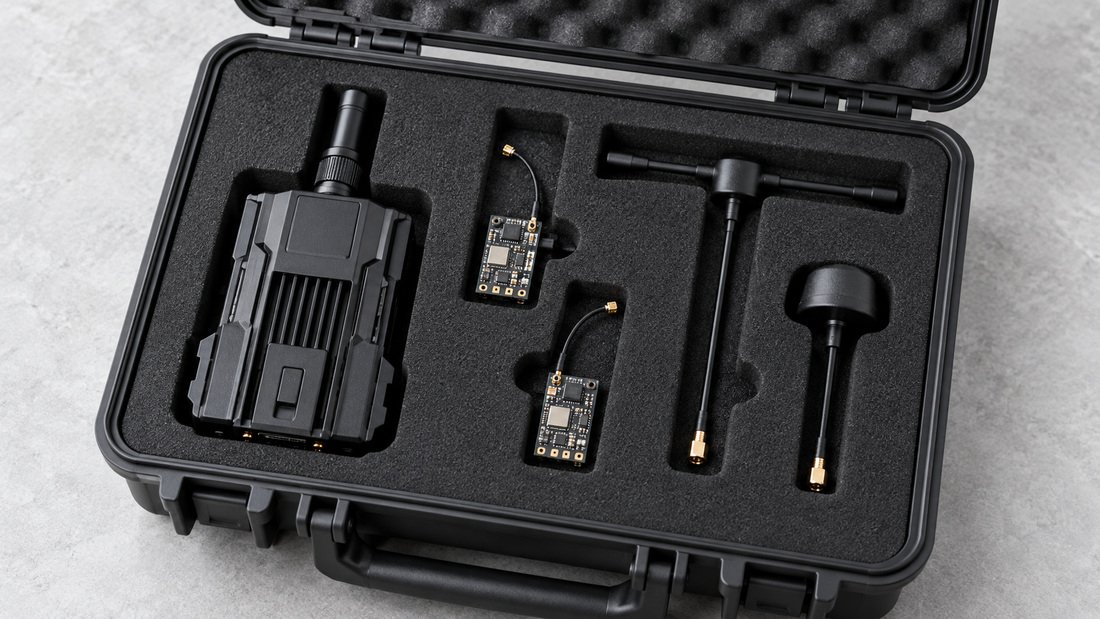
Use this checklist when sourcing 1 W ELRS transmitter modules for a team, school, or resale.
- Confirm the module’s input voltage range in writing from the supplier.
- Confirm the maximum current draw at 1 W output.
- Identify the connector type and pinout; ensure it matches your radio or power source.
- Ask about protection features: reverse polarity, over-voltage, over-current, thermal shutdown.
- Request the operating temperature range and any recommended airflow requirements.
- Verify compatibility with your chosen ELRS receivers and radio firmware.
- For bulk orders, request a sample unit to test with your intended power setup before full deployment.
- Clarify warranty terms, return policy, and technical support channels.
If you are evaluating modules for a club or educational program, consider standardising on a power solution that is safe and simple for students to use. A regulated 5 V or 9 V supply with a locking connector can reduce errors. For more details on compatible hardware, see our ELRS transmitter modules category.
Need help selecting modules for your team? Our team can assist with specifications and compatibility. Request a Team Kit Quote to discuss your requirements.
Frequently Asked Questions
Can I power a 1 W ELRS module directly from a 2S LiPo battery?
Many modules accept 2S LiPo voltage (6.0–8.4 V), but you must confirm the module’s maximum input voltage. Some modules are rated for 5 V only, while others accept up to 13 V or more. Always check the datasheet and consider the fully charged voltage of the battery.
What happens if I use a voltage that is too high?
Exceeding the maximum input voltage can damage the module’s voltage regulator or power amplifier, leading to permanent failure. In some cases, it may also pose a safety risk. Never exceed the manufacturer’s stated maximum.
Will a lower voltage reduce the RF output power?
If the input voltage falls below the module’s minimum, the internal regulator may not provide enough voltage to the RF amplifier, resulting in reduced output power, shorter range, or intermittent operation. The module may also reset or fail to transmit.
How much current does a 1 W ELRS module draw?
Current draw varies by design, but at 1 W output it is often around 1 A or more at 5 V. Some modules are more efficient. Always check the specified current consumption and ensure your power source can supply it continuously.
Do I need a BEC to power my ELRS transmitter module?
It depends on your power source. If you are using a battery whose voltage range falls within the module’s input range, you may connect directly. If the battery voltage can exceed the module’s maximum, or if you need a stable voltage, a BEC is recommended. Choose a BEC with adequate current rating and low noise.
Can I use the same power source for multiple ELRS modules?
Only if the power source can supply the total current required by all modules simultaneously. Sharing a single BEC across multiple 1 W modules may cause voltage drops. For team setups, consider separate regulators or a higher-capacity supply.
Where can I find the input voltage specification for a specific module?
Check the manufacturer’s official product page, datasheet, or user manual. If you are buying from a distributor, ask them to provide the specification in writing. For DPF products, you can contact us directly via our ELRS and RF systems page or request details through the quote form.
Conclusion
Input voltage is a critical specification for 1 W ELRS transmitter modules. While many accept 5–12 V DC, there is no universal standard, so always verify the exact range for your chosen module. Consider current draw, peak battery voltage, and the quality of your power supply. For clubs, schools, and distributors, standardising on a safe, well-regulated power solution reduces failures and simplifies training.
Before you purchase, request written confirmation of voltage range, current requirements, and protection features from your supplier. If you are equipping a team or planning a bulk order, we can help you select the right modules and accessories. Request a Team Kit Quote to get started.