Quick summary
For most drone soccer clubs and youth programs, the practical answer is: choose an internal ELRS module when your radios already support it, weight and packing simplicity matter, and every pilot uses the same radio model. Choose an external ELRS module when you need flexibility across mixed radio brands, easy swaps, higher output options, or faster field replacement. Internal modules reduce loose parts and setup time; external modules make repairs, upgrades and multi-team sharing easier. The decision should follow your fleet plan, not a fixed brand rule.
Key Takeaways
- Internal ELRS modules suit standardized team radios where simplicity and low parts count matter.
- External ELRS modules suit mixed radio fleets, frequent upgrades and shared club equipment.
- Range and link quality depend on power, antennas and RF environment more than on internal or external mounting alone.
- Budget for antennas, receivers and spares as one system, not as separate line items.
- Confirm firmware targets, connector type, voltage range and warranty terms in writing before ordering.
What the internal vs external ELRS choice actually changes
The transmitter module is the radio-frequency (RF) section that sends control commands to the drone. ELRS, or ExpressLRS, is an open-source radio link protocol used widely in FPV (first-person view) and drone soccer. A module can be built into the radio case, called internal, or mounted in the external module bay, called external.
Internal and external modules both send the same protocol. The real differences are mechanical and logistical: how the module connects, how easily it is replaced, how much output power the host radio supports, and how the antenna is mounted. Those factors matter more to a school or club than the label on the module.
Internal ELRS module: strengths and trade-offs
An internal module is installed inside the transmitter. It is often powered and controlled directly by the radio, so pilots may only need to select the correct model and bind. For a club that issues identical radios to a squad, this reduces setup time and the chance of a missing part before a match.
Where internal modules work well
- Standardized team radios that are not expected to change for several seasons.
- Younger pilots who benefit from fewer external plugs and antennas to manage.
- Travel and storage where loose modules can be lost or damaged.
- Programs that value a clean, compact transmitter for training sessions.
Trade-offs to plan for
- Upgrading often means opening the radio or replacing the whole transmitter.
- Output power and antenna options may be limited by the radio design.
- If one internal module fails, the whole radio may be out of service.
- Mixing radios across a club can complicate configuration management.
Asking the supplier whether the internal module is serviceable, and how, is more useful than assuming it is permanent. Get that answer in writing before you standardize a fleet.
External ELRS module: strengths and trade-offs
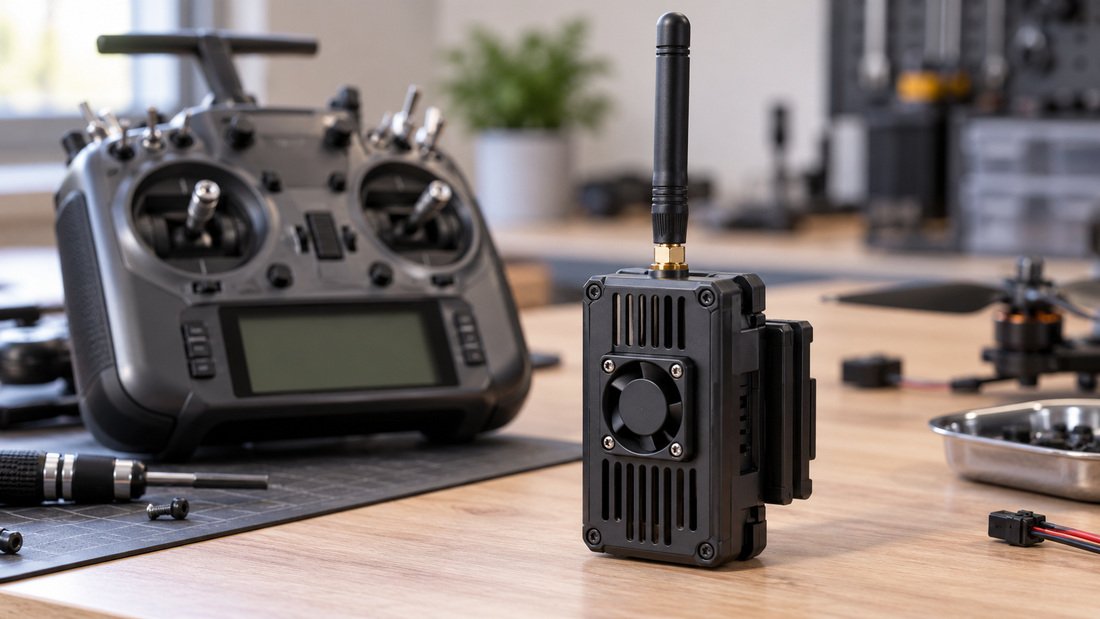
An external module sits in the module bay on the back of compatible radios. It is usually a separate unit with its own antenna connector and power path. For clubs that own a mix of radio brands, or that want to move one module between radios, this flexibility is the main attraction.
Where external modules work well
- Mixed radio fleets where pilots bring their own transmitters.
- Clubs that share modules between several radios or loaner setups.
- Teams that want to experiment with different antennas or power levels.
- Fast field replacement: a failed module can be swapped without retiring the radio.
Trade-offs to plan for
- More loose parts to track, charge and pack.
- Module bay compatibility, pinout and voltage range must match the radio.
- Antenna placement and cable routing affect real-world link quality.
- Additional cost per radio if every pilot needs their own module.
Comparison table: internal vs external ELRS transmitter modules
| Factor | Internal module | External module |
|---|---|---|
| Setup complexity | Lower once configured | Higher; bay and antenna must be checked |
| Flexibility across radios | Low; tied to the radio | High; can move between compatible radios |
| Field repair | Often requires opening the radio | Usually a quick module swap |
| Loose parts risk | Low | Higher; modules and antennas |
| Upgrade path | Limited by radio design | Easier to change modules |
| Cost pattern | Often included with radio | Per-module cost, plus antennas |
| Best for | Standardized school or club fleets | Mixed fleets, clubs and shared gear |
How to think about range and link quality
Drone soccer is typically flown in a confined indoor or short-range outdoor area, so maximum range is rarely the limiting factor. Link reliability under crowded RF conditions matters more. That reliability comes from output power, antenna choice, receiver placement and firmware settings, not from internal versus external mounting alone.
Antennas are a common weak point. A damaged or mismatched antenna can degrade a link even if the module itself is fine. Keep a small stock of replacement antennas and check connectors regularly. You can review options in the RF antennas range and pair them with matched receivers.
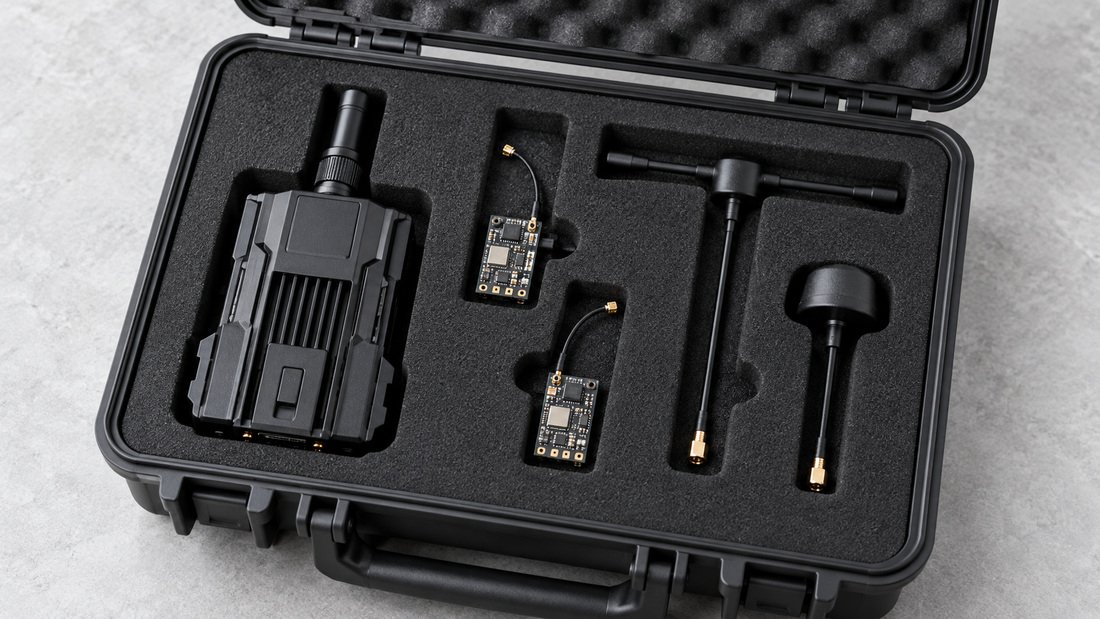
If you are building a complete team kit, treat the transmitter module, receivers and antennas as one system. Start from the ELRS and RF systems overview, then narrow down module and receiver combinations that your radios can support.
Firmware, binding and team configuration
ELRS modules and receivers must run compatible firmware versions and matching binding settings, including the binding phrase or traditional bind mode. A club that standardizes on one firmware target and one binding phrase across all radios will spend far less time troubleshooting on match day.
Before buying, confirm which firmware target your radios and candidate modules use, and whether the supplier documents the update process. Ask for the exact target name in writing. This one step prevents most new-pilot setup problems.
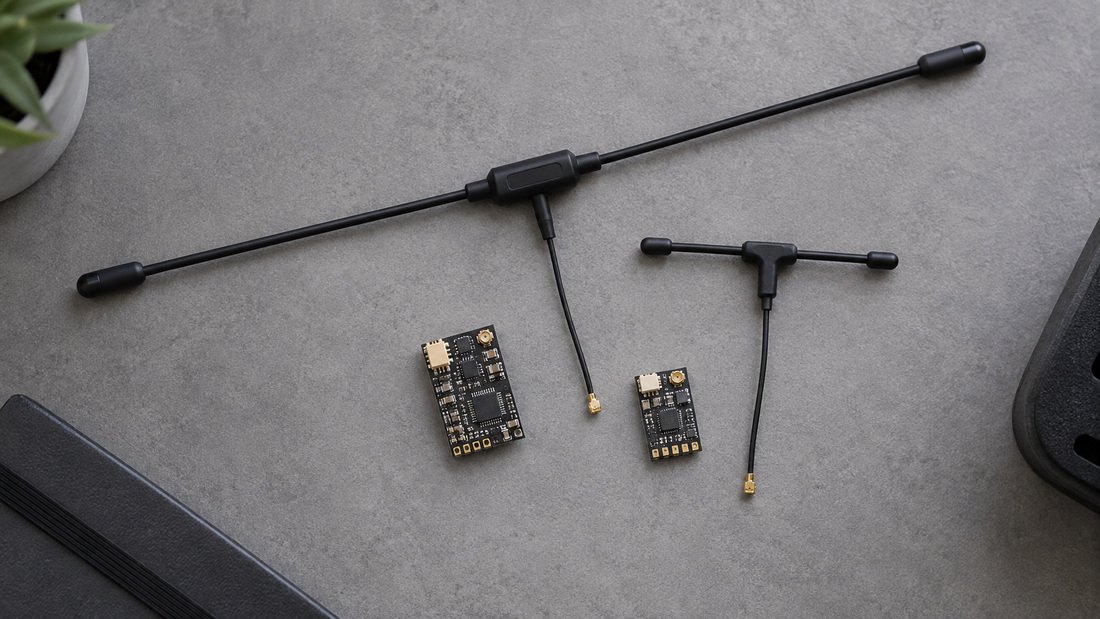
Receiver choice also affects configuration. Review ELRS receiver compatibility guidance and the ELRS receivers range so that your modules and receivers are planned together.
Common mistakes clubs make
- Buying modules before confirming radio bay compatibility, pinout and voltage range.
- Mixing firmware versions across a squad and then blaming hardware.
- Skipping spare antennas, which are inexpensive compared with a lost match day.
- Standardizing on external modules without a labeled storage plan for loose parts.
- Assuming a higher power setting always improves the link; antenna and receiver placement often matter more.
- Ordering without written confirmation of warranty, support and replacement terms.
If your club is comparing options for a shared fleet, our team can help you map radios to modules. Talk through your team setup with us before you commit to a configuration.
Procurement checklist for schools, clubs and distributors
- Radio models in use, including module bay type and supported voltage range.
- Number of pilots, spare radios and loaner units needed.
- Internal or external preference per radio group.
- Required firmware target and binding method.
- Antenna type, connector and quantity of spares.
- Receiver count and compatibility notes.
- Requested documentation: setup guide, pinout, update notes.
- Warranty, replacement and support terms in writing.
- Shipping, duties and delivery expectations confirmed by the supplier.
- Budget per pilot, including spares and antennas.
For distributors and OEM/ODM buyers, add packaging requirements, labeling language and any regional compliance questions to the list. Ask the supplier to confirm which items they can document and which remain the buyer’s responsibility.
FAQ
1. Is an internal ELRS module better than an external one?
Neither is universally better. Internal modules suit standardized radios and simpler packing. External modules suit mixed fleets, sharing and faster replacement. Match the choice to how your club operates.
2. Can I use an external ELRS module with any radio?
No. The radio needs a compatible module bay, correct pinout and supported voltage range. Confirm these details with the radio and module supplier before ordering.
3. Do I need high output power for drone soccer?
Drone soccer is usually flown at short range, so the highest available power is rarely necessary. Reliable antennas, correct receiver placement and clean firmware settings often matter more.
4. How many spare modules should a club keep?
There is no universal number. Many clubs keep at least one spare per radio type or per group of radios. Ask your supplier about replacement and support options to plan realistically.
5. What should I confirm before buying ELRS transmitter modules?
Confirm firmware target, bay compatibility, voltage range, connector type, antenna options, warranty terms and support channels. Ask for these in writing, since terms vary by supplier and order.
6. Can we mix internal and external modules in one club?
Yes, but standardize firmware and binding settings where possible. Mixed hardware is manageable; mixed firmware versions are a common source of avoidable setup problems.
7. Do internal modules limit antenna upgrades?
Sometimes. The radio design may constrain antenna placement or connector type. Check the radio documentation and ask the supplier whether alternative antennas are supported.
Conclusion
Pick an internal ELRS module when your club runs standardized radios and values simple packing and fewer loose parts. Pick an external module when you need flexibility across radio brands, shared club gear or fast field replacement. In both cases, plan antennas, receivers, firmware targets and spares as one system, and confirm compatibility and commercial terms in writing.
For drone soccer teams and programs sourcing ELRS transmitter modules, DPF can help you review radio compatibility and build a team-ready kit. Share your radio list, pilot count and spare-parts needs, and Request a Team Kit Quote to move from comparison to a confirmed configuration.