Quick summary
ExpressLRS (ELRS) is an open-source radio control link, which means its firmware source code and hardware reference designs are published for community use and modification. For buyers, that generally means lower-cost hardware from many vendors, faster feature development, and more configuration choices. It does not mean every ELRS product is identical or that the manufacturer must provide warranty, support or compatibility guarantees. Confirm licensing, firmware version, target, and commercial terms before ordering.
Key Takeaways
- ExpressLRS is developed as an open-source project, so its core firmware is publicly available for use, study and modification.
- Many companies build ELRS-compatible transmitters and receivers; open source does not automatically make every product interchangeable or equal in quality.
- Open source can reduce lock-in and encourage competition, but schools and teams still need to verify firmware version, regulatory band, receiver compatibility and support.
- Ask vendors for written confirmation of license terms, warranty, spare parts availability and firmware update policy.
- For drone soccer and youth programs, standardizing on a documented receiver and transmitter module combination reduces field troubleshooting.
What Does Open Source Mean for an RC Link?
Open source in radio control usually refers to firmware whose source code is published under a license that allows reuse and modification. ExpressLRS is commonly described as open source, meaning the protocol implementation and much of the transmitter and receiver firmware can be inspected, built and adapted by the community.
That is different from a closed, proprietary protocol where one manufacturer controls the code and compatible hardware. With an open-source link, multiple hardware vendors can produce equipment that runs the same protocol. The result is competition on price, form factor and quality rather than on protocol exclusivity.
Does Open Source Mean Every ELRS Product Works Together?
Not automatically. Two products can both be called ELRS and still differ in firmware major version, supported frequency band, receiver target, antenna connector, telemetry configuration and update method. Compatibility depends on those details, not only on the protocol name.
This is why a compatibility check matters more than a brand comparison. A receiver that matches your transmitter’s firmware branch and target is more likely to bind and behave predictably. If you are building a school fleet or a drone soccer team kit, define the exact firmware version and receiver model in your purchase specification.
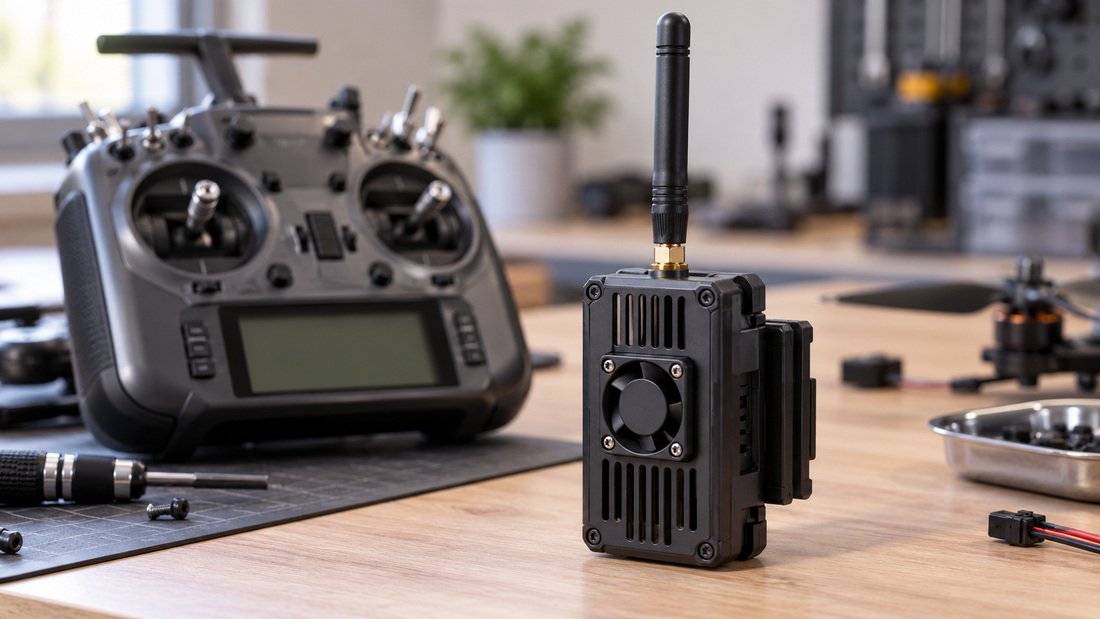
Buyer Benefits of an Open-Source RF Link
More vendor choice and price competition
When a protocol is open, several manufacturers can offer compatible modules and receivers. Buyers can compare price, build quality, connector type and support instead of being tied to a single supplier. This is helpful for clubs that buy in batches.
Community-driven feature development
Open projects often receive improvements from a broad contributor base. New features, bug fixes and configuration tools may appear across releases. However, release timing and stability can vary, so teams should decide whether to standardize on a known-good version or track the latest.
Transparency and repairability
Published source and hardware information can make troubleshooting and repair more approachable for technically confident coaches, makerspace leaders and repair volunteers. It also makes it easier to document a fleet setup for multiple instructors.
Fewer proprietary lock-ins
An open protocol reduces the risk that a single vendor’s discontinuation strands your program. You may be able to migrate to another compatible transmitter module or receiver while keeping the same general workflow.
Trade-offs and Risks to Weigh
Open source is not automatically easier for every buyer. The same flexibility that helps advanced users can create complexity for schools and volunteer-run clubs.
- Fragmented documentation: information may be spread across community resources rather than one official manual.
- Firmware compatibility: mismatched firmware versions or targets are a common cause of binding and telemetry problems.
- Variable hardware quality: two ELRS-compatible receivers from different factories can differ in RF layout, antenna quality and soldering.
- Support expectations: open source does not obligate a vendor to provide training, replacement units or configuration help.
- Regulatory responsibility: the operator normally must ensure the equipment and power settings comply with local radio rules.
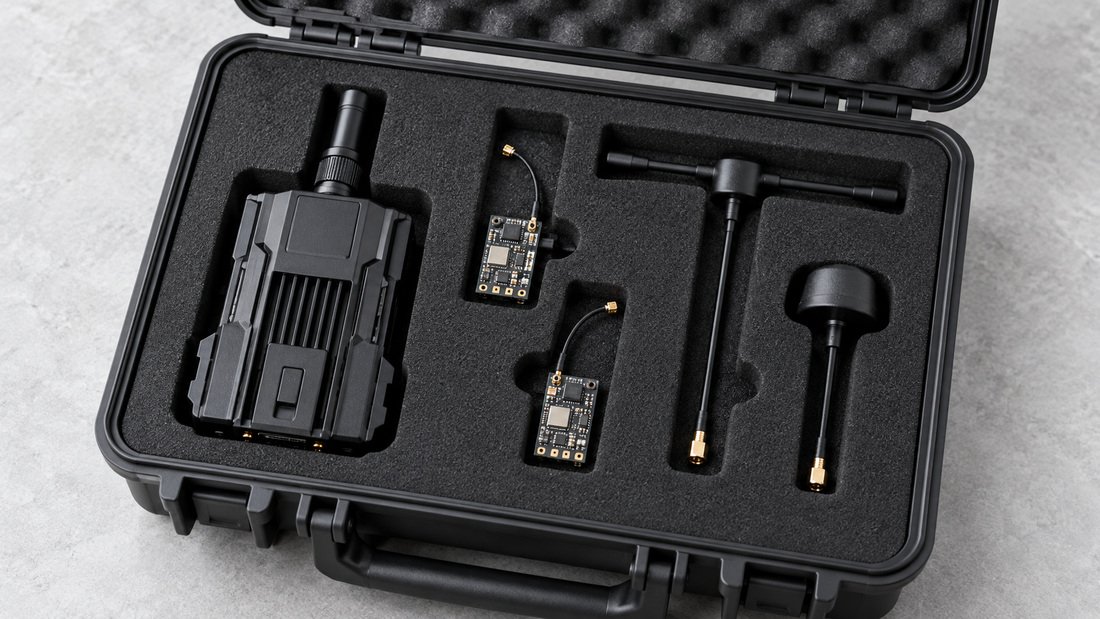
ELRS vs Proprietary Links: A Practical Comparison for Teams
The table below compares general characteristics that matter to schools, clubs and drone soccer organizers. It is a decision aid, not a statement about any specific brand.
| Factor | Open-source ELRS-style link | Proprietary RC link |
|---|---|---|
| Source availability | Firmware source generally published | Usually closed |
| Hardware vendor choice | Multiple compatible manufacturers | Typically one ecosystem |
| Price competition | Often stronger | Limited by vendor policy |
| Setup complexity | Can require firmware and target matching | Often more plug-and-play within ecosystem |
| Support model | Depends on each vendor and community | Typically vendor-led |
| Fleet standardization | Possible with a strict specification | Easier if single-brand |
| Documentation style | Community plus vendor | Vendor-controlled |
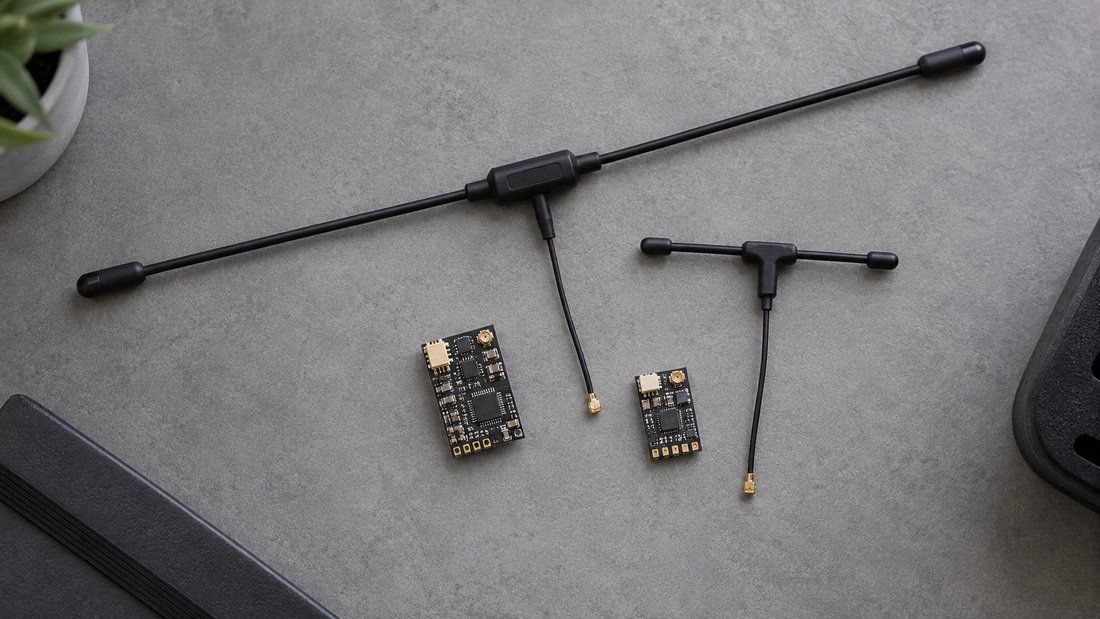
What Schools and Drone Soccer Teams Must Confirm Before Buying
Open source lowers some barriers but does not remove procurement due diligence. Use the checklist below and ask for written answers. Where a vendor cannot confirm a technical point, treat it as a risk to test before large orders.
- Exact receiver model, firmware branch or version, and target supported.
- Frequency band and the power settings appropriate for your country or region.
- Transmitter module compatibility with the radios your coaches and students already use.
- Antenna connector type and whether antennas are included.
- Firmware update method and whether a documented procedure is supplied.
- Warranty terms, spare parts availability and repair or replacement policy.
- Sample or small-batch evaluation option before a full fleet purchase.
- Written license or usage terms if your organization requires open-source compliance review.
If your program is standardizing across many drones, the ELRS receiver compatibility reference is a sensible starting point for mapping transmitters to receivers.
How to Verify Open-Source Claims and Firmware Details
Ask suppliers for specific, checkable information rather than general marketing claims. A reliable answer identifies the source repository, the license type, the firmware version and the hardware revision.
- Request the repository or project name where the firmware is published.
- Ask which license the project uses and whether redistribution is permitted.
- Confirm the firmware version shipped and whether it is a release or custom build.
- Ask for a written update procedure and whether updates are user-accessible.
- Request a sample unit to test binding, range behavior in your venue and failsafe operation.
Where a source cannot be verified, frame it as an open question in your evaluation instead of assuming open-source status.
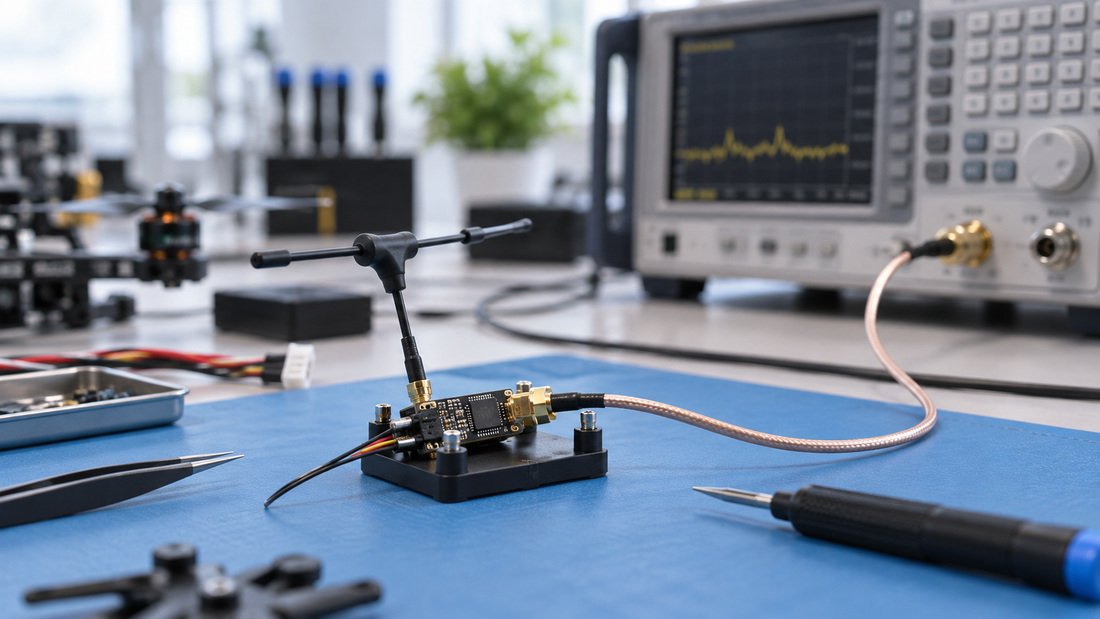
Common Mistakes When Buying ELRS for a Team
Most problems reported by clubs come from configuration and specification mismatches rather than the protocol itself. Watch for these recurring errors.
- Buying on protocol name alone: two ELRS-labeled products may not share the same firmware target or band.
- Skipping version control: updating some units and not others creates a mixed fleet that behaves inconsistently.
- Ignoring antenna hardware: connector type and antenna quality affect link performance and durability.
- No spares plan: receiver failures during an event can sideline a team if no matched spare is on hand.
- Assuming vendor support: open source does not guarantee free training, replacement or configuration service.
- Overlooking local radio rules: power and band settings must fit the operator’s jurisdiction.
For broader RF planning across transmitters, receivers and antennas, review the ELRS and RF systems category and note the exact connector and band of each item.
Procurement Checklist for Club and Education Buyers
Use this checklist as a written specification for quotes and tenders. It keeps comparisons fair across suppliers.
- State the firmware version or branch you require and whether it may be updated.
- List acceptable receiver models and confirm ELRS receivers compatibility with your radios.
- Confirm ELRS transmitter modules fit the handset bay and protocol requirements.
- Define required antennas and RF antennas by band and connector.
- Request sample units, a test protocol and an acceptance checklist.
- Ask for warranty, spare parts and documentation terms in writing.
- Confirm licensing or open-source details if your organization requires it.
- Plan a fleet naming and labeling scheme for firmware and binding records.
Planning a school fleet or drone soccer season? Discuss your drill and procurement requirements with our team.
Frequently Asked Questions
Is ELRS fully open source?
ExpressLRS is commonly described as an open-source project, with firmware source code published for community use and modification. Because specific products can include custom builds, ask each supplier to identify the repository, license and shipped firmware version so you can verify it against your own requirements.
Can I use ELRS hardware from different manufacturers together?
Often yes, but compatibility depends on firmware version, target, frequency band and hardware details rather than the ELRS name. Test a sample combination before buying a fleet, and keep a written record of the exact models and versions that work together.
Does open source mean there is no warranty or support?
No. Open source refers to the firmware licensing, not the commercial warranty of the hardware you buy. A vendor can still offer a warranty, replacement or support. Request those terms in writing, because they are commercial commitments rather than consequences of the license.
Is ELRS suitable for school drone soccer programs?
It can be suitable when the program specifies a single receiver model, firmware version and transmitter module, and keeps spare parts. The open ecosystem offers choice and potentially lower cost, but it also puts more responsibility on the buyer to standardize and document the setup.
What should I ask a supplier before ordering in bulk?
Ask for exact model numbers, firmware version, frequency band, antenna connector, update procedure, warranty, spare parts availability and whether samples are available. Also confirm any license or compliance information your organization needs for approval. These points are usually more valuable than a general claim of being open source.
Do I need to update ELRS firmware regularly?
Not necessarily. For a school or club fleet, consistency often matters more than being on the newest version. Choose a known-good version, test it, and update deliberately across all units rather than mixing versions. Confirm with the vendor that your chosen version remains available or can be rebuilt later.
How does open source affect long-term spare parts planning?
An open protocol can reduce dependence on a single vendor, but parts still come from specific factories. Buy a small stock of matched receivers and antennas, record their version and supplier, and ask how long the vendor expects to support that hardware. Verify availability in writing before committing to a full season or program rollout.
Conclusion: Open Source Is a Starting Point, Not a Guarantee
ExpressLRS being open source gives buyers more vendor choice, community-driven development and potential cost advantages. It does not guarantee that every product is compatible, well supported or covered by a warranty. For schools, drone soccer teams and clubs, the practical path is to define a strict specification, verify firmware and licensing details, test samples, and confirm commercial terms in writing.
To move from research to a documented team kit, gather your required receiver, transmitter module and antenna details, then Request a Team Kit Quote.