Quick summary
A JR bay adapter for Nano TX modules is a small mechanical and electrical adapter that lets a compact Nano-size transmitter module, such as many ELRS transmitter modules, be fitted into a radio transmitter that has a standard JR-style module bay. It typically provides the correct bay dimensions, pin alignment and RF connector access so the module can be used without modifying the radio. The adapter does not add RF power or change the module’s firmware; it only bridges physical and pin compatibility. Buyers should confirm pinout, voltage and antenna clearance before relying on one for team radios.
Key Takeaways
- A JR bay adapter is a compatibility bridge, not a performance upgrade: it adapts a Nano module to a JR bay.
- Most ELRS transmitter modules come in Nano or other compact form factors, so the adapter is common in school and club radio fleets.
- Check three things before purchase: bay dimensions, pinout and voltage, and antenna clearance.
- Adapters vary in build quality and retention; for team use, prefer designs that lock securely and protect the pins.
- Always verify commercial terms, compatibility and documentation in writing with the supplier.
What Is a JR Bay Adapter for Nano TX Modules?
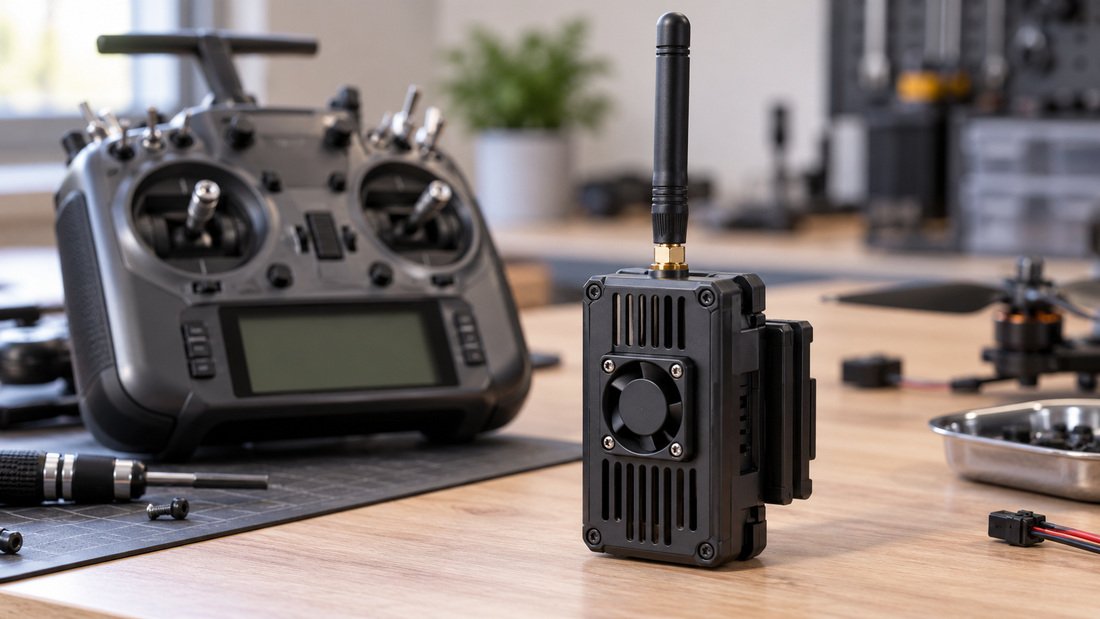
A JR bay adapter for Nano TX modules is a small hardware piece that allows a Nano-format transmitter module to sit in a JR module bay. The JR bay is a widely used module bay standard on many hobby-grade transmitters. Nano modules are much smaller, so without an adapter they may not align with the bay’s pins or antenna connector. The adapter usually includes a cradle or housing for the module and may include a short cable or pass-through connector for the pins.
In practice, the adapter solves a mechanical mismatch. It does not convert protocols, boost output power or make a non-ELRS radio into an ELRS radio. The radio still needs to support the external module protocol and provide the correct power and signal pins. For teams standardizing on ELRS transmitter modules, the adapter is often the cheapest way to use existing JR-bay radios with compact modules.
Why the JR Bay Still Matters
The JR bay remains common because many clubs and schools already own transmitters with that bay. Rather than replacing whole radios, a team can add compact ELRS transmitter modules through adapters. This can reduce cost per student and keep familiar radios in service. However, the bay itself is only one part of compatibility; the radio’s firmware and external-module settings must also support the module’s protocol.
Nano Module Form Factor Basics
Nano modules are designed to be small and lightweight. They often use a compact pin header and a small antenna connector. Because there is no single universal Nano standard enforced across all brands, dimensions and pin positions can vary. That is why an adapter that works with one Nano module may not fit another. Buyers should compare drawings or physical samples rather than relying on the word “Nano” alone.
How a JR Bay Adapter Works
A JR bay adapter works by holding the Nano module in the correct position and routing the module’s pins to the JR bay’s electrical contacts. It may also provide strain relief for the antenna connection. The adapter is passive: it does not regulate voltage unless it explicitly includes a regulator, and it does not change the RF signal. Any voltage regulation or protection must be confirmed with the adapter and radio documentation.
Installation is usually straightforward: the adapter is seated in the JR bay, the Nano module is inserted, and the antenna is connected. The radio’s external module settings are then configured for the module’s protocol. If the radio does not have an external module menu or does not support the protocol, the adapter alone will not make the module work.
Mechanical Fit and Retention
Mechanical fit is the most common failure point. A loose adapter can cause intermittent pin contact, especially in youth programs where radios are handled frequently. Look for adapters with a secure latch, screw mounting or a housing that prevents the module from twisting. For drone soccer, where radios may be passed between players, retention matters as much as initial fit.
Electrical Pinout and Voltage
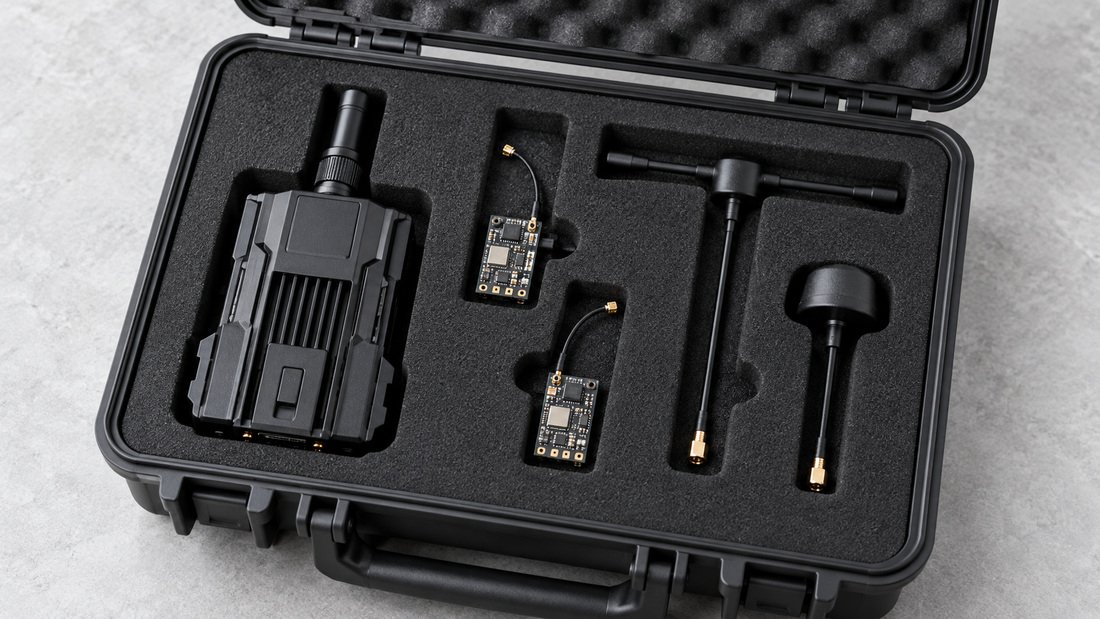
The adapter must route the correct pins for power, ground and signal. Pin order is not guaranteed to be identical across radios or modules, so a wrong adapter can at best fail to work and at worst damage the module. Confirm the pinout with the radio manual and the module documentation. Also confirm the radio’s bay voltage and whether the module expects regulated or unregulated power. If the adapter includes any electronics, ask for a wiring diagram.
Antenna Clearance and RF Path
Nano modules often use a small antenna connector. The adapter must allow the antenna to connect without stressing the connector, and it should not block the antenna’s clearance. A metal adapter close to the antenna can affect the RF path, though the extent depends on design. For team use, test the assembled radio on the bench and in a safe range check before relying on it at an event.
JR Bay Adapter vs Other Mounting Options
There are several ways to mount a compact module on a radio. The table below compares common options at a general level. It is not a product specification sheet; confirm details with each supplier.
| Option | What it does | Typical use case | Trade-offs to check |
|---|---|---|---|
| JR bay adapter for Nano module | Adapts a Nano module to a JR bay | Existing JR-bay radios in school or club fleets | Mechanical fit, pinout, antenna clearance |
| Native Nano bay radio | Radio designed for Nano modules | New fleet purchases | Higher radio cost, but fewer adapters |
| External module with cable | Module connected by a cable | Bench testing or custom setups | Cable strain, handling, not field-friendly |
| Radio with integrated ELRS | ELRS built into the radio | Teams wanting simplicity | Less modular, but no adapter needed |
For many drone soccer clubs, the JR bay adapter is the lowest-cost path because it reuses existing radios. The trade-off is that adapters add a mechanical interface that must be checked and maintained. Teams buying new radios may prefer native Nano bays or integrated ELRS to reduce adapter inventory.
Procurement Checklist for Clubs and Schools
Before buying JR bay adapters for a team, use this checklist to avoid mismatches. It separates general guidance from what you must confirm with your supplier.
- List every radio model in your fleet and confirm it has a JR-style module bay.
- Confirm the radio’s external module protocol support and menu.
- List the exact Nano module models you intend to use, including pin count and antenna connector type.
- Ask the adapter supplier for dimensions, pinout drawing and any voltage handling details.
- Request a sample to test fit with your radio and module before a bulk order.
- Check retention: latch, screws or housing that prevents movement during use.
- Confirm antenna clearance and whether the adapter interferes with the antenna connector.
- Ask about documentation for school or club safety reviews.
- For distributor or OEM/ODM orders, request written confirmation of packaging, labeling and any custom requirements.
For ELRS-specific compatibility, DPF’s ELRS receiver compatibility resources can help teams understand link-side considerations, though adapter fit is a separate mechanical question.
Common Mistakes When Using JR Bay Adapters
Most problems with JR bay adapters come from assuming “Nano” and “JR” are universal. They are not. The following mistakes are common in club and school settings.
Mistake 1: Buying by Name Only
Ordering an adapter labeled “Nano to JR” without checking dimensions can lead to a loose or forced fit. Always compare drawings or test a sample. If a supplier cannot provide dimensions, treat that as a risk.
Mistake 2: Ignoring Pinout Differences
Pin order can differ between radio brands and module brands. Inserting a module with the wrong pinout can damage it. Confirm pin functions with the radio and module manuals, and ask the adapter supplier for a wiring diagram.
Mistake 3: Forgetting Antenna Clearance
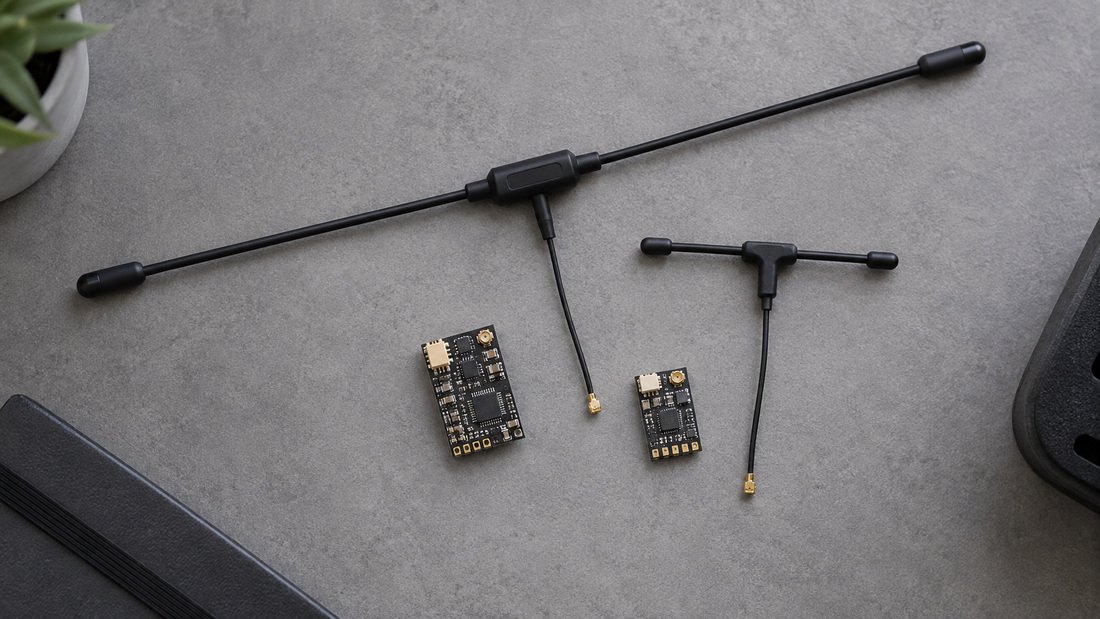
A module may fit mechanically but leave no room for the antenna connector or antenna body. This can stress the connector or degrade RF performance. Check the assembled unit before field use.
Mistake 4: Assuming the Adapter Adds Power or Range
An adapter is passive. It does not increase output power or range. Teams should not expect link performance changes from the adapter itself. RF performance depends on the module, antenna and radio settings. For antenna options, see RF antennas.
Mistake 5: Skipping a Bench Test
Always test the assembled radio on the bench before an event. Check that the module powers on, the radio recognizes it, and controls respond. A short range check in a safe area can reveal connector or antenna issues early.

Middle CTA: Need Help Specifying Adapters for Your Team?
If you are standardizing radios and modules across a club or school program, DPF can help you review your setup and identify the right ELRS transmitter modules and accessories. Contact us for a team kit quote and include your radio models and module shortlist so we can discuss compatibility questions.
ELRS Transmitter Modules and Adapter Planning
ELRS transmitter modules are popular for drone soccer and FPV because they offer a configurable link for team use. When planning a fleet, treat the adapter as one part of the radio chain: radio, adapter, module, antenna and receiver. A weak link anywhere affects the team. DPF’s ELRS transmitter modules page lists module options, but always confirm the form factor and pinout before ordering adapters.
Teams should also consider how modules are stored and charged. Adapters that stay attached to modules can strain connectors in a bag. A labeled storage plan and spare adapters for critical events can reduce downtime. For a broader view of RF components, see ELRS and RF systems.

Frequently Asked Questions
1. Does a JR bay adapter work with all Nano TX modules?
No. “Nano” is not a single enforced standard. Dimensions, pin count and antenna connectors can vary. Check the adapter’s dimensions and pinout against your specific module and radio before buying.
2. Will a JR bay adapter increase my ELRS range?
No. The adapter is a passive mechanical and electrical bridge. Range depends on the module, antenna, power settings and environment, not on the adapter.
3. Can I use a JR bay adapter with any radio?
Only if the radio has a compatible JR-style bay and supports the module’s protocol through its external module settings. Confirm both in the radio manual.
4. How do I check pinout before plugging in a module?
Compare the radio’s bay pin functions with the module’s pin functions using their manuals. Ask the adapter supplier for a wiring diagram. If any pin function is unclear, do not power the module until confirmed.
5. Are adapters allowed in drone soccer competitions?
Competition rules vary by organizer and event. Check the event’s technical regulations and ask the organizer whether adapters and specific module types are permitted. Do not assume acceptance.
6. What should I request from a supplier before a bulk order?
Request dimensions, pinout diagram, sample units for fit testing, and written confirmation of commercial terms such as lead time, MOQ and warranty if those matter to your program. DPF-specific terms should be confirmed in writing with our team.
7. Do I need a separate adapter for each module?
If modules and radios are swapped frequently, having an adapter per module can simplify handling. But this depends on your team’s workflow and budget. Test one configuration before scaling.
Conclusion
A JR bay adapter for Nano TX modules is a simple but important accessory for teams that want to use compact ELRS transmitter modules with existing JR-bay radios. It solves a physical and pin compatibility problem, not a performance problem. The keys to success are checking dimensions, pinout and antenna clearance, testing a sample, and confirming all commercial and compatibility details in writing. For school and club fleets, a small amount of verification upfront can prevent radio downtime at events.
Ready to plan your team kit? Request a Team Kit Quote and share your radio models and module shortlist so we can help you evaluate adapter and module options.