Quick summary
There is no fixed number of charge cycles a LiPo battery will last in training use. In school and club settings, a well-maintained LiPo pack may deliver anywhere from roughly 50 to 300 usable cycles before capacity or internal resistance degrades enough to retire it. The actual figure depends on discharge depth, charging current, storage voltage, temperature, physical protection, and how consistently staff follow a charging routine. For budgeting, plan for replacement cycles based on observed performance rather than a single advertised cycle rating. LiPo battery safety and charging discipline matter more than the label on the pack.
Key Takeaways
- No universal cycle count applies; training batteries typically last 50–300 cycles depending on use and care.
- Shallow discharges and moderate charge rates extend cycle life more than any single accessory.
- Storage voltage and temperature control are the most common failure points in school programs.
- Track internal resistance and capacity fade to decide when to retire a pack, not just cycle count.
- Safety procedures and charging supervision are non-negotiable in youth training environments.
What Does a “Charge Cycle” Actually Mean?
A charge cycle is one full discharge and recharge of a battery’s rated capacity. If a student flies a drone soccer match and uses 50% of the pack, then recharges it, that is half a cycle. Two such flights equal one full cycle. This matters because training use often involves partial discharges, which can be gentler on the battery than deep discharges.
LiPo packs do not have a precise cycle counter built in. Manufacturers may publish a cycle-life estimate under specific laboratory conditions, but those figures rarely match classroom reality. Treat any advertised cycle number as a laboratory reference, not a guarantee for your program.
How Many Cycles Should Schools Expect?
Most education programs see usable life somewhere between 50 and 300 cycles. The lower end reflects deep discharges, high charge rates, poor storage, and physical damage. The higher end reflects shallow discharges, moderate charging, correct storage voltage, and careful handling.
Instead of budgeting by cycle count alone, budget by observed performance. When a pack consistently delivers noticeably shorter flight time or charges unusually fast, it is nearing retirement.
Factors That Shorten Cycle Life
- Discharging below the manufacturer’s recommended minimum voltage.
- Charging at currents above the pack’s recommended rate.
- Storing packs fully charged or fully discharged for days or weeks.
- Charging or storing in high temperatures.
- Physical impact, puffing, or damaged connectors.
- Using mismatched chargers or parallel charging without balancing.
Factors That Extend Cycle Life
- Landing before the pack is deeply discharged.
- Charging at or below the manufacturer’s recommended current.
- Storing at the recommended storage voltage.
- Keeping packs cool and protected during transport.
- Balancing cells regularly and checking internal resistance.
- Retiring damaged packs promptly instead of pushing them further.
LiPo Battery Safety and Charging in Youth Programs
Safety is the first operational requirement in any school or club program. Lithium batteries can overheat and enter thermal runaway, a condition that can occur without warning if a battery is damaged, overheated, exposed to water, overcharged, or improperly packed. The FAA notes that thermal runaway can also occur due to manufacturing defects. See the FAA’s lithium battery guidance: https://www.faa.gov/hazmat/packsafe/lithium-batteries.
That source addresses air travel, not classroom charging, but the underlying hazards apply broadly. Schools should define charging areas, supervision rules, and inspection routines before the first flight session.
Charging Area Setup
- Charge on a non-flammable surface away from paper, curtains, and solvents.
- Keep a fire-resistant container or LiPo safety bag available.
- Never charge unattended; assign a responsible adult or trained student supervisor.
- Use chargers with cell balancing and clear voltage readouts.
- Label each pack with an ID and track its history.
Storage and Transport
Store packs at the manufacturer’s recommended storage voltage, typically around 3.8 V per cell for many LiPo packs. Confirm the exact figure with your battery supplier. For transport, protect terminals from short circuit by using the original packaging, terminal covers, or individual pouches. The FAA specifically recommends protecting battery terminals from short circuit during travel, a practice worth adopting for club transport as well.
Comparison: Charging Practices and Their Effect on Lifespan
| Practice | Typical Effect on Cycle Life | Notes for Schools |
|---|---|---|
| Shallow discharge (land at ~3.7–3.8 V/cell) | Longer | Requires flight-time discipline and voltage checks. |
| Deep discharge (below recommended minimum) | Shorter | Common in rushed training sessions. |
| 1C charge rate or lower | Longer | Slower sessions; plan charger count accordingly. |
| High charge rate (above recommendation) | Shorter | Convenient but costly over a season. |
| Storage at recommended voltage | Longer | Needs a routine at the end of each session. |
| Storage fully charged or empty | Shorter | Frequent cause of early failure. |
| Regular cell balancing | Longer | Reduces cell drift and imbalance. |
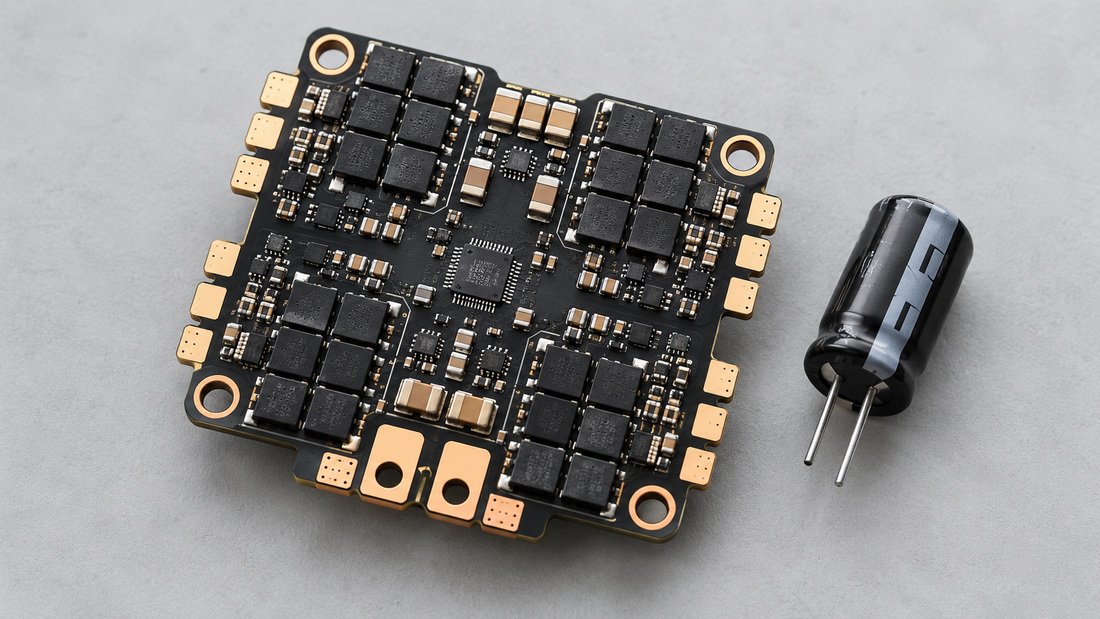
Power delivery components also affect how hard batteries work. Matching the powertrain to the pack reduces unnecessary current spikes. See our guide to motor, propeller and battery matching for a structured approach.
How to Estimate Replacement Needs for a Program
Start with the number of flight slots per session, the average discharge per flight, and the number of sessions per term. Then apply a conservative cycle estimate based on your own first-term observations. Do not rely on a single vendor cycle rating.
Example: a club with 20 students flying twice weekly for 12 weeks might log 480 flight slots. If each flight uses half a cycle, that is 240 full-cycle equivalents spread across a fleet of packs. With a 150-cycle planning figure, the club would need roughly two full rotations of packs per term, plus spares. Adjust after your first term based on measured capacity fade.
Common Mistakes in School LiPo Programs
- Charging everything to full after every session: packs then sit at full voltage for days, accelerating wear.
- No pack identification: without IDs, staff cannot track which packs are failing.
- Mixing packs of different ages or capacities in parallel charging: risks imbalance and uneven wear.
- Ignoring puffing or physical damage: damaged packs should be retired and disposed of according to local rules.
- Letting students charge unsupervised: safety supervision should be explicit in program policy.
- Using chargers without balancing: cell drift shortens life and increases risk.

Procurement Checklist for Training Batteries
- Confirm the pack’s recommended charge rate, storage voltage, and discharge limits in writing.
- Ask for the cycle-life test conditions behind any advertised figure.
- Verify connector type and polarity match your existing fleet and chargers.
- Confirm whether a balancing lead or integrated balance circuit is included.
- Request documentation on cell grading and any safety testing the supplier can share.
- Check physical dimensions and weight against your airframe and battery bay.
- Ask about spare-part availability and replacement policy in writing.
- Confirm shipping and handling instructions for lithium batteries in your region.
- Plan a pack-ID and log system before the first order arrives.
If your program uses drone soccer airframes, battery bay dimensions and connector choices should be confirmed together with the airframe supplier. Our propulsion combo kits page shows how packs are typically matched with motors and propellers in a complete set.
When Should a Pack Be Retired?
Retire a pack when it shows any of the following: visible puffing, damaged insulation, a cell that will not balance, internal resistance noticeably higher than sister packs, or flight time that no longer supports the training format. Cycle count is a planning tool, not a retirement trigger by itself.
Simple Tracking Method
Give each pack a number. Record date, flight count, charge rate, and any anomaly. A simple spreadsheet is enough for most school programs. Review the log at the end of each term and flag packs for retirement or reassignment to low-demand roles.
FAQ
Do LiPo batteries have a fixed cycle life?
No. Cycle life depends on discharge depth, charge rate, temperature, storage voltage, and handling. Treat published cycle figures as laboratory references and track your own packs.
Is it safe to charge LiPo batteries in a school classroom?
Only with a defined charging area, non-flammable surface, supervision, and appropriate safety equipment. Follow your institution’s risk assessment and local regulations.
Should packs be stored fully charged?
Generally no. Most LiPo packs should be stored at a recommended storage voltage, often around 3.8 V per cell. Confirm the exact value with your supplier.
How often should cells be balanced?
Regular balancing during charging is good practice. If a pack will not balance, retire it rather than continuing to use it.
Can students charge their own packs?
That depends on your program’s supervision policy and local rules. Many schools require an adult supervisor for all charging.
What should we do with a puffed LiPo pack?
Stop using it immediately, isolate it in a safe location, and dispose of it according to local hazardous-waste rules. Do not attempt to recharge it.
Does a higher-capacity pack last more cycles?
Not automatically. Capacity affects flight time, but cycle life still depends on how the pack is charged, discharged, stored, and handled.
Conclusion
There is no single answer to how many charge cycles a LiPo battery lasts in training use. Plan for 50–300 usable cycles, then replace that estimate with your own tracking data. The practices that matter most are shallow discharges, moderate charge rates, correct storage voltage, temperature control, and supervised charging. For schools and clubs, safety procedures and pack tracking are as important as the battery specification itself.
For a program-level battery and airframe plan, Request a School Program Quote and confirm charge rates, storage voltage, connectors, and replacement terms in writing.