Quick summary
LiPo battery safety and charging at school means controlling three things: the charging environment, the condition of each pack, and who is allowed to touch it. Charge only on a non-flammable surface, away from paper and curtains, using a charger matched to the pack’s cell count and voltage, and never leave charging unattended. Inspect packs before and after every session, dispose of any pack that is swollen, punctured, or heat-damaged, and store packs at storage voltage in a fire-resistant container. Write these rules into a one-page protocol that staff and students both sign before the first flight.
Key Takeaways
- Lithium batteries can overheat and enter thermal runaway without warning, including from damage, overheating, water exposure, overcharging, or improper packing, and sometimes from manufacturing defects (FAA, lithium batteries).
- For air travel, spare lithium ion batteries such as those in drone kits must go in carry-on baggage only, with terminals protected from short circuit (FAA).
- Charge only on a non-combustible surface with nothing flammable nearby, and never leave a charging pack unattended.
- Every pack needs a visible ID number and an inspection log, so a damaged pack is caught before it reaches a student.
- Confirm charger specifications, documentation, and support terms with your supplier in writing before you buy for a school program.
What Is LiPo Battery Safety and Charging, in Plain Terms?
Direct answer: it is a set of physical controls and habits that keep lithium polymer (LiPo) packs inside their safe operating window during charging, storage, and use. A LiPo pack stores energy in a chemistry that reacts badly to overcharge, physical damage, and heat. Your job is to prevent those three conditions and to have a response ready if something goes wrong.
For a school, this is an operational policy question as much as an electrical one. A drone soccer team may run ten or more packs through a single practice. That means repeated charging cycles by students, in a shared room, often with a deadline. The risk is not the chemistry alone; it is the combination of repetition, time pressure, and untrained hands.
Related equipment matters here too. Chargers, power distribution boards, and the propulsion electronics on the aircraft all interact with the battery. If you are still planning your fleet, it helps to understand motor, propeller and battery matching before you buy packs, because a mismatched setup pushes packs harder than intended.

Setting Up a Safe Charging Station at School
Direct answer: a safe charging station is a dedicated, non-combustible, well-ventilated surface with no flammable materials within reach, a fire-resistant container for packs, and a clear line of sight for the supervising adult.
Location and surface
Choose a hard surface such as a metal bench, ceramic tile, or concrete floor area. Avoid wooden benches, carpet, paper trays, and shelving where a pack could fall onto something combustible. Keep the station away from curtains, bins, solvents, and 3D printers. Ventilation matters because a failing pack releases gas, and you want that gas to leave the room rather than collect in a closed cabinet.
Containers and charging bags
Fire-resistant charging bags and LiPo-safe containers reduce the spread of a fire; they do not make a pack safe to leave alone. Treat them as containment, not prevention. A bag with a damaged zip or a container that has already absorbed heat should be replaced. Note that a closed container can hide swelling, so inspect packs before they go in and after they come out.
Charger and power setup
Use a charger that lets you set the cell count, charge current, and end voltage explicitly. Avoid any charger that only has a single button and no readable settings. Label each charging cable and balance lead so students cannot mix channels. Keep a fire blanket, a suitable extinguisher for lithium battery fires, and a phone within arm’s reach of the station, and check the extinguisher service date each term.
Charging Rules Students Can Actually Follow
Direct answer: six rules cover most school incidents, and they should be printed at the station at eye level.
- One pack, one channel, one supervisor. No parallel charging in a beginner session.
- Never leave charging unattended. If the supervising adult leaves the room, charging stops.
- Set the correct cell count and current. Confirm the pack label against the charger screen out loud.
- Check the pack first. No swelling, no punctures, no crushed corners, no smell, no heat, no exposed wires.
- Charge after the pack has cooled. A pack that came off a flight is warm; let it reach room temperature.
- Disconnect when the charger reports complete. Do not leave packs plugged in overnight for convenience.
A simple verbal checklist before each charge takes under a minute and gives the supervising adult a documented habit. For younger groups, assigning a student “battery marshal” per session can improve attention without shifting responsibility away from staff.

Storage Voltage, Temperature, and Transport
Direct answer: store packs at their recommended storage voltage, in a cool, dry place, in a fire-resistant container, with terminals protected, and never store a fully charged pack for long periods.
Fully charged packs held for weeks age faster and are more energetic if something goes wrong. Storage voltage is a middle state that most modern chargers can reach automatically via a storage program. Confirm the exact storage voltage range your charger and pack manufacturer recommend rather than assuming a number.
Temperature stability matters more than any single daily reading. A cupboard beside an external door that swings between hot and cold is a poor choice; a stable indoor cupboard is better. Keep packs out of direct sun, out of parked cars, and out of unheated outdoor storage units.
Transport between buildings and events
For local transport between school buildings, the same principles apply as for air travel: prevent terminal contact with metal. The FAA states that battery terminals must be protected from short circuit and lists methods including leaving batteries in retail packaging, covering terminals with tape, using a battery case, using a battery sleeve, or placing them snugly in a plastic bag or protective pouch (FAA).
These packaging habits are sensible on the ground too. A loose pack in a toolbox with screws and hex drivers is a short-circuit waiting to happen. If your team travels to competitions, plan for the fact that spare lithium ion batteries such as those in drone kits must be carried in carry-on baggage only when flying, and that airline limits may be stricter than the published baseline. Ask your carrier directly before travel.
What the air-travel rules actually say
The FAA baseline limits lithium ion (rechargeable) batteries to a rating of 100 watt hours (Wh) per battery, with up to two larger spare batteries exceeding 101–160 Wh permitted with airline approval. It also notes that many airlines may apply stricter quantity and Wh limits, and that passengers should check with their carrier. Note the scope: this is US aviation guidance for passengers. It is not a school safety regulation, and it is not a worldwide rule. Where you are, other rules may apply. Teacher-led science or technology clubs in the EU, UK, Australia, or Asia should check their own national aviation and workplace safety guidance rather than relying on a single overseas source.
Remember that batteries carried for further sale or distribution, such as vendor samples, are prohibited under the FAA passenger framework. If a supplier ships packs to your school, that is a commercial freight question, not a passenger baggage question, and the paperwork will be different.
Common Mistakes in School Drone Programs
Direct answer: most incidents trace back to a shortcut taken once and then repeated.
| Mistake | Why it happens | Practical countermeasure |
|---|---|---|
| Charging unattended to save time | Practice slot is short | Stagger charging across the session; never leave the room |
| Charging a warm pack straight off the aircraft | Students queue at the charger | Cooling rack with numbered slots before charging |
| Packs stored fully charged for weeks | “Ready to fly” convenience | Storage program on charger; end-of-term storage routine |
| Mixed packs in one bin | No ownership or ID | Number every pack; log flights and charges |
| Bent, swollen or taped-over packs kept in service | Budget pressure | Retire-on-sight rule with a named decision-maker |
| Charger settings changed by students | Curiosity, speed | Locked presets; supervisor sets the channel |
| Only one staff member trained | Busy timetable | Two trained staff plus a written handover |
How to Respond When a LiPo Pack Fails
Direct answer: move people away, isolate the pack if you can do so without touching it, alert the trained adult, and follow your school’s emergency procedure. Do not try to smother a lithium battery fire with an ordinary cloth.
The FAA notes that lithium ion batteries are capable of overheating and undergoing a process called thermal runaway, and that this can occur without warning as a result of factors including damage, overheating, exposure to water, overcharging, or improper packing, and can also occur on its own due to manufacturing defects (FAA). That is the reason supervision is non-negotiable: early signs such as swelling, hissing, or a sharp smell need an immediate response.
Rehearse the response once a term, the same way you would rehearse a fire drill. Confirm with your local fire authority and school safety officer which extinguishing media they recommend for your setting, where the nearest exit is, and who calls emergency services. Do not rely on an article, including this one, as a substitute for local emergency guidance.
After any incident, quarantine the pack outdoors on a non-combustible surface away from buildings, and do not return it to the kit. Document what happened, and check whether the pack or device is subject to a recall; the FAA directs readers to the Consumer Product Safety Commission, the manufacturer, or the vendor for recall information (FAA).
Buyer Checklist for School LiPo Programs
Direct answer: use this list when specifying packs and chargers, and ask the supplier to confirm each item in writing.
- Wh rating visible on the pack label. Watt hours equals voltage multiplied by amp hours, which makes capacity comparisons easier than milliamp hours alone.
- Connector consistency. One connector standard per fleet reduces adapter errors and loose joints.
- Documentation. Ask for safety and handling documentation you can hand to staff, and confirm what is actually supplied.
- Charger capability. Confirm it supports your cell counts, balance charging, and a storage program.
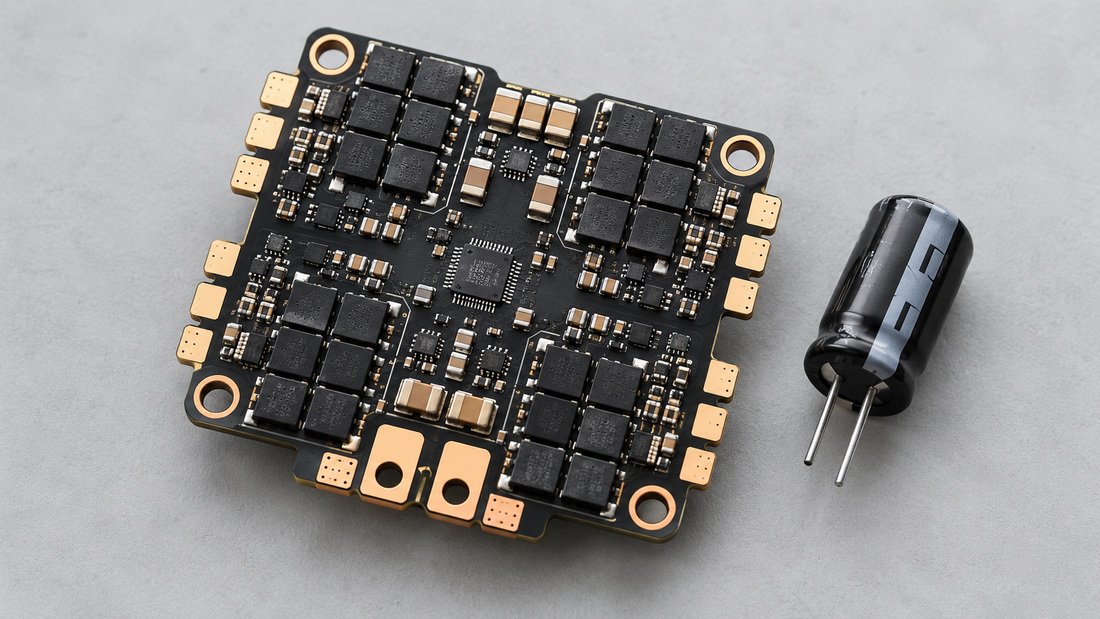
- Spare parts for the aircraft, not just the pack. Power boards and electronic speed controllers (ESCs, the circuits that drive the motors) take stress when packs sag; keep a small spares pool. See DPF’s FPV motors and propulsion combo kits if you are specifying a fleet.
- Lead time, minimum order quantity, and warranty. These are program-specific. Request them in writing rather than assuming.
- Support path for replacements. Confirm who you contact when a batch needs review.
If you are matching packs to an existing fleet, DPF’s motor and propulsion matching service can help you check that the pack, ESC, motor and propeller are working in the same range before you commit to a bulk order.
Planning a school drone soccer program and need packs, chargers and spares specified together? Talk to Drone Parts Factory about your school program requirements and we can walk through configuration options with you.
Comparison: Charging Environments
Direct answer: the table below contrasts a typical improvised setup with a purpose-built school station. It is illustrative guidance, not a description of any specific school.
| Factor | Improvised classroom setup | Purpose-built school station |
|---|---|---|
| Surface | Desk, often with paper and books | Non-combustible bench or tile, cleared |
| Supervision | Intermittent | Continuous, named adult |
| Containment | None | Fire-resistant bags or LiPo-safe container |
| Pack identification | None | Numbered packs with inspection log |
| Charger settings | Shared, frequently changed | Locked presets, per-channel confirmation |
| Emergency equipment | Whatever is in the corridor | Fire blanket, suitable extinguisher, checked termly |
| Storage | Wherever there is shelf space | Stable, cool cupboard at storage voltage |
Frequently Asked Questions
Can students charge LiPo batteries themselves?
Direct answer: only under direct supervision, and only after training. Students can connect packs, read the display, and fill in the log if an adult confirms the settings and stays in the room. Charging should never be a student-only activity, regardless of age.
How long should a LiPo pack be left charging?
Direct answer: only until the charger reports the cycle complete. Duration is not the control variable; end voltage and current are. If a pack takes noticeably longer than usual or does not terminate, stop the charge, isolate the pack, and inspect it.
Is a charging bag enough to make charging safe?
Direct answer: no. A fire-resistant bag reduces the spread of a fire but does not prevent a pack from failing, and it cannot replace supervision, correct settings, or pack inspection.
What should we do with a swollen or punctured pack?
Direct answer: remove it from service immediately. Do not charge it, do not fly it, and do not press it back into shape. Quarantine it on a non-combustible surface away from buildings, and dispose of it through a service that handles lithium batteries in your area.
Do the FAA battery rules apply to our school club?
Direct answer: the FAA guidance cited here is US aviation guidance for passengers, so it applies when your team flies commercially and carries packs. It is not a school safety standard and is not a worldwide rule. Check your own national aviation authority and local workplace safety requirements.
How should packs be stored between terms?
Direct answer: at storage voltage, in a cool stable location, in a fire-resistant container, with terminals protected. Run a storage program on the charger before the break, log it, and inspect every pack at the start of the next term before it enters the kit.
What should we ask a supplier before ordering packs for a school program?
Direct answer: ask for pack label specifications including Wh, connector type, the documentation supplied with the order, charger compatibility, and the written terms for lead time, minimum order quantity, warranty, and returns. Get answers in writing, since these terms vary by order and by destination.
Conclusion
LiPo battery safety and charging at school comes down to an environment you control, packs you inspect every session, and a written protocol that a supply teacher can follow without prior briefing. The FAA source above confirms why the strictness is warranted: thermal runaway can occur without warning from damage, overheating, water, overcharging, improper packing, or manufacturing defects. None of those causes is exotic, and all of them are easier to prevent in a school than to manage in a corridor full of students.
Start with the one-page protocol and the station layout. Then spec the hardware: packs with readable labels, a charger with lockable presets, containment, spares, and a documented support path. If you need help matching packs to your existing drone soccer fleet or confirming what documentation and terms apply to a school order, Request a School Program Quote and we will work through the configuration with you.