Quick summary
There is no single industry-wide MOQ or lead time for brushless motors. Suppliers set minimum order quantities (MOQ) and lead times based on motor size, customisation (windings, connectors, shafts, labels) and the order’s position relative to their production schedule. For component sourcing (RFQ), treat MOQ and lead time as commercial terms you confirm in a written quotation and purchase order—not as universal specifications. This guide explains what drives both numbers, how to compare suppliers, and what to ask before you commit.
Key Takeaways
- MOQ and lead time are supplier- and configuration-specific; never assume them from a product page or a general catalogue.
- Customisation—winding, Kv, shaft, connector, cable length, label and packaging—usually increases MOQ or extends lead time.
- Always request a written quotation that states MOQ per SKU, tooling or setup charges, deposit terms, Incoterms, and a lead-time definition.
- Ask what “lead time” counts from: PO date, deposit receipt, sample approval, or component arrival.
- For first orders, separate sample approval from bulk production so you can verify quality before scaling.
What MOQ means for brushless motors
MOQ is the smallest quantity a supplier will accept for a given motor configuration. It is a commercial and production decision, not a fixed law. Suppliers consider setup time, component reel minimums, testing time, and whether the order interrupts scheduled runs.
Motors used in drones, FPV builds and drone soccer are often available in standard configurations with lower MOQs than fully custom units. If you need a custom Kv, different shaft length, or a private-label housing, expect the MOQ to be higher or negotiable only with a longer commitment.
What typically pushes MOQ up
- Custom windings or Kv values — change the motor’s performance and require new production setup.
- Non-standard shafts, mounts or connectors — may need new tooling or fixture adjustments.
- Private-label branding — laser marking, labels, and retail packaging add setup steps.
- Custom cable lengths or connectors — affect assembly and testing time.
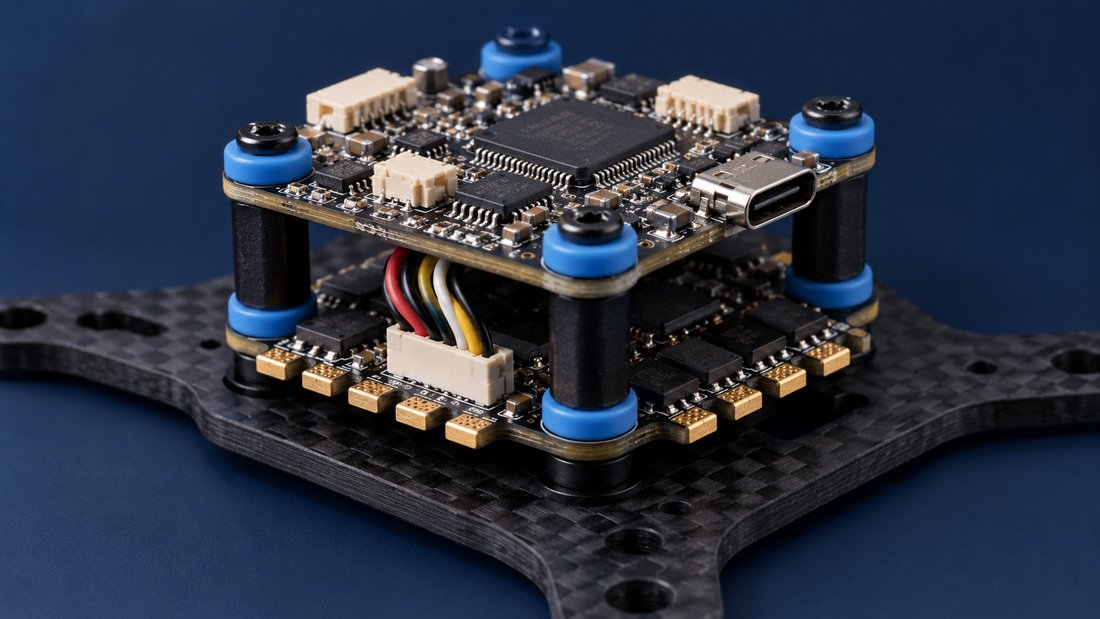
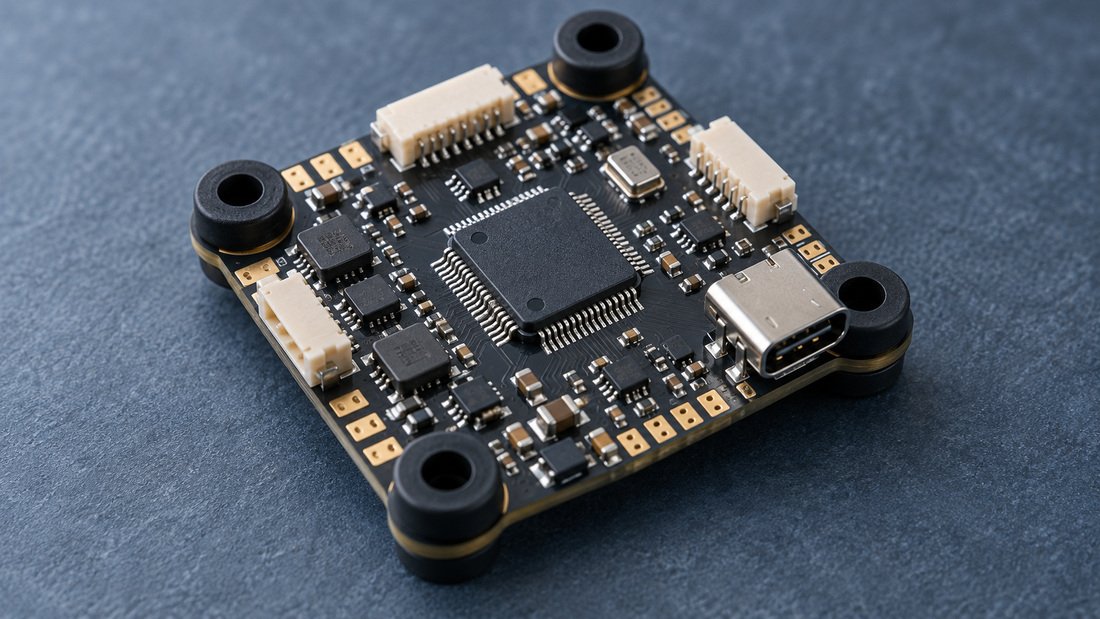
- Matched sets — motors paired with a specific ESC or flight controller may need batch-level validation.
What can keep MOQ lower
- Choosing a catalogue or standard configuration.
- Accepting neutral packaging and generic labelling for the first order.
- Combining several motor SKUs into one purchase order to meet a total-order threshold.
- Starting with a sample order, then converting to bulk after approval.
What drives lead time for brushless motors
Lead time is the elapsed time from a defined starting point to delivery. For brushless motors, the main drivers are component availability, production scheduling, testing, and shipping method. Because these vary by supplier and season, confirm each stage in writing.
Typical lead-time stages to confirm
- Quotation and engineering review — time to confirm specifications, drawings, and commercial terms.
- Sample production and approval — if samples are required, this stage can dominate the schedule.
- Component procurement — magnets, bearings, wire, laminations, and connectors may have their own lead times.
- Production and assembly — winding, balancing, and assembly for the confirmed quantity.
- Testing and QC — functional checks, and any agreed inspection steps.
- Packaging and shipping — retail or bulk packaging, then freight or express.
Lead time is not one number
Ask the supplier to break the lead time into stages and state the exact trigger for each. “Lead time: 30 days” is ambiguous. “Production begins after deposit receipt and approved sample; production time is 30 days; shipping is additional” is usable for planning.
For a structured view of how orders move from RFQ to delivery, see the how to place an order overview. If your programme needs branding or retail-ready packaging, review logo and packaging customization.
MOQ and lead time comparison table
The table below shows typical patterns buyers encounter. It is not a quotation; use it to frame questions, then confirm actual figures with your supplier.
| Order type | Typical MOQ pattern | Typical lead-time pattern | What to confirm in writing |
|---|---|---|---|
| Standard catalogue motor | Lowest MOQ tier; may accept small trial orders | Shortest production stage; stocked components may speed it up | Exact SKU, MOQ, unit price, lead-time start point |
| Custom Kv / winding | Higher MOQ than standard | Longer due to setup and validation | Winding spec, test method, sample approval step |
| Custom shaft / connector / cable | Higher MOQ; tooling may apply | Longer; depends on component availability | Drawing, tolerances, tooling ownership |
| Private-label motor | Higher MOQ; packaging adds setup | Longer; artwork and packaging production add stages | Artwork approval, packaging spec, label placement |
| Matched motor + ESC + FC set | Set-level MOQ may apply | Longest; coordination and batch validation | Compatibility criteria, set testing, firmware assumptions |
How to compare suppliers fairly
Comparing MOQ alone is misleading. A lower MOQ with a long lead time may cost more in lost sales than a slightly higher MOQ with predictable delivery. Compare total landed cost and schedule risk.
Compare on these dimensions
- MOQ per SKU and whether mixed SKUs can share a total-order threshold.
- Unit price at your target volume, not only at MOQ.
- Lead-time definition and each stage’s duration.
- Tooling, setup, or engineering charges, and who owns the tooling.
- Payment terms, deposit percentage, and balance trigger.
- Incoterms, shipping method, and who handles customs.
- Sample policy and whether sample cost is credited against bulk.
- Packaging and labelling included, and at what cost.
Separate guidance from quoted terms
The points above are general procurement guidance. Actual MOQ, lead time, payment terms, tooling ownership, and shipping terms depend on the supplier and your configuration. Request them in a formal quotation and confirm them on the purchase order.
If you are evaluating a manufacturing partner rather than a single component, start with the OEM/ODM service overview.
Need firm numbers for your motor RFQ? Send your specifications and target volumes, and ask for MOQ, lead-time stages, and tooling terms in writing.
Common mistakes when sourcing brushless motors
- Treating MOQ as fixed. It is often negotiable when you combine SKUs or commit to repeat orders.
- Accepting a single lead-time number. Without a start point, it cannot be planned against.
- Forgetting tooling and setup costs. A low unit price can hide one-time charges.
- Skipping sample approval. Moving straight to bulk risks rejecting a full batch.
- Ignoring component availability. Motor lead time often depends on magnets, bearings, or connectors.
- Not documenting the specification. Winding, Kv, shaft, connector, and cable details should be in writing.
- Assuming packaging is included. Retail packaging can change both MOQ and lead time.
Procurement checklist before you confirm an order
- Written specification for each motor: dimensions, Kv, winding, shaft, connector, cable length, weight class.
- MOQ per SKU and whether mixed SKUs qualify for a lower tier.
- Unit price at MOQ and at your target annual volume.
- Lead-time stages with explicit start and end points.
- Sample policy, sample cost, and approval criteria.
- Tooling, setup, and engineering charges; tooling ownership and storage.
- Payment terms, deposit, and balance trigger.
- Incoterms, shipping method, and customs responsibility.
- Packaging and labelling specification.
- Inspection and acceptance criteria, including any agreed test reports.
- Warranty or remedy terms as stated by the supplier.
- Change-control process for future revisions.
For repeat or scaled orders, review how bulk production is planned so your schedule and inventory align.
Frequently asked questions
What is a typical MOQ for brushless motors?
There is no universal figure. Standard catalogue motors may have the lowest MOQs, while custom windings, private-label branding, or matched motor-plus-ESC sets typically require higher quantities. Ask each supplier for MOQ per SKU and whether mixed SKUs can combine.
How long does brushless motor production take?
It depends on configuration, component availability, and the supplier’s schedule. Ask for a stage-by-stage breakdown: quotation, sample approval, component procurement, production, testing, and shipping. Each stage should have a clear start point.
Can I order samples before committing to MOQ?
Many suppliers accept sample orders, but policies vary. Confirm sample cost, whether it is credited against bulk, and what “sample approval” means for the production schedule. Get the sample policy in writing.
Does customisation increase MOQ or lead time?
Often yes. Custom Kv, windings, shafts, connectors, cable lengths, labels, and packaging add setup steps. The effect on MOQ and lead time depends on the supplier and how close your request is to a standard configuration.
Is a lower MOQ always better?
Not necessarily. A lower MOQ may come with a higher unit price, longer lead time, or less predictable quality. Compare total landed cost, schedule risk, and repeat-order terms rather than MOQ alone.
What should be in a brushless motor RFQ?
Include the motor specification, target volumes, required lead time, packaging needs, destination, and any branding requirements. Ask the supplier to state MOQ, unit price, tooling charges, payment terms, Incoterms, and lead-time stages in the quotation.
How do I verify lead time claims?
Ask for the lead-time definition, the trigger for each stage, and whether it is based on current component availability. For critical projects, request a written schedule and agree on milestone updates. Treat any verbal estimate as provisional until it is in the quotation.
Conclusion and next step
MOQ and lead time for brushless motors are negotiated terms, not fixed specifications. The practical approach is to define your configuration, request a written quotation with stage-based lead times, and separate sample approval from bulk production. That reduces the risk of surprises when you scale.
When you are ready to formalise your motor RFQ, Request an OEM / Wholesale Quote and ask for MOQ, lead-time stages, tooling terms, and payment conditions in writing. If you also need branding, review private label drone parts before finalising packaging requirements.