Quick summary
Nano and dual-core ELRS receivers differ mainly in physical size, weight, and antenna configuration. Nano receivers are typically smaller and lighter, often using a single antenna, while dual-core (diversity) receivers are larger and heavier because they house two RF chains and two antennas. For drone soccer teams, the choice affects frame fit, crash durability, and maintenance logistics. This article explains the trade-offs and what to confirm before purchasing.
Key Takeaways
- Nano receivers prioritize low weight and small footprint; dual-core receivers prioritize signal diversity at the cost of size and weight.
- Always verify the actual weight and dimensions from the supplier’s datasheet, not from category names.
- Antenna type and connector (e.g., soldered wire, U.FL/IPEX) influence both size and repairability.
- For school and club fleets, standardizing on one receiver format simplifies spares and training.
- Request samples and written confirmation of weight, dimensions, and connector type before bulk orders.
What is an ELRS receiver and why does size matter?
ELRS (ExpressLRS) is an open-source radio link protocol used in FPV and drone soccer. The receiver is the component on the drone that receives control commands from the transmitter module. Its size and weight matter because small drones, especially those used in drone soccer, have limited mounting space and are sensitive to weight distribution. A heavier receiver can shift the center of gravity and affect flight performance.
Size also affects durability: a larger receiver may be more exposed in a crash, while a very small receiver may have fragile solder pads. For teams, the practical question is not only “which is smaller?” but “which fits our airframe and maintenance workflow?”
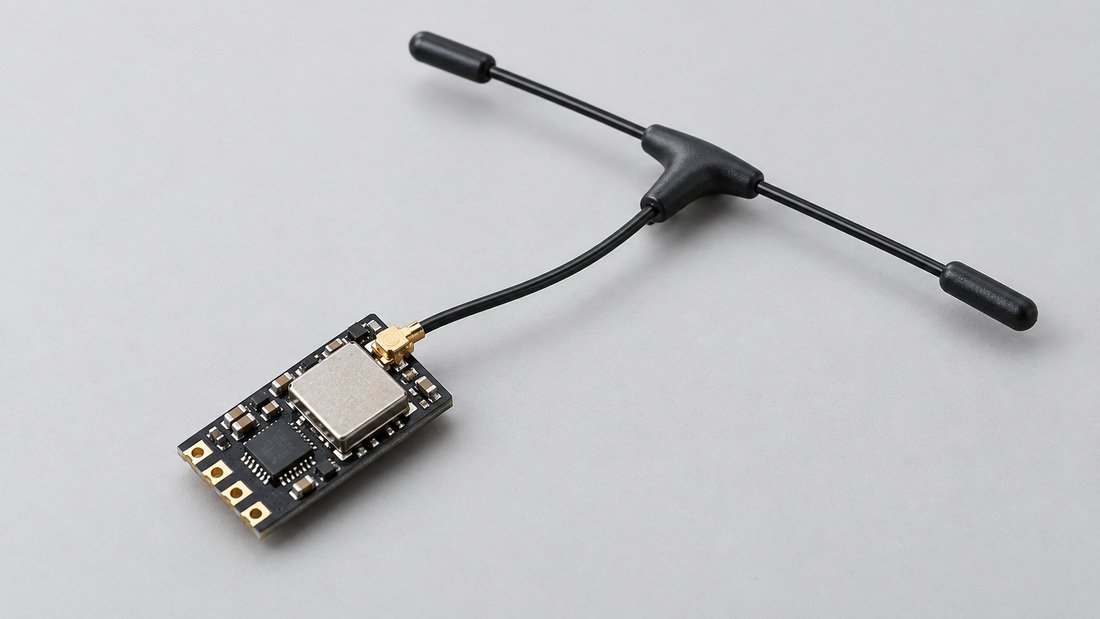
Nano receivers: small size, light weight
Nano receivers are designed to be as small and light as possible. They often use a single antenna, which may be a soldered wire or a small connectorized antenna. Because they lack a second RF chain, they are simpler and typically lighter.
Trade-offs: a single antenna can suffer from polarization mismatch or shadowing when the drone banks or when obstacles are present. In drone soccer, where drones move in a bounded field, signal reliability is critical; however, many teams successfully use nano receivers with careful antenna placement.
Dual-core receivers: diversity for reliability
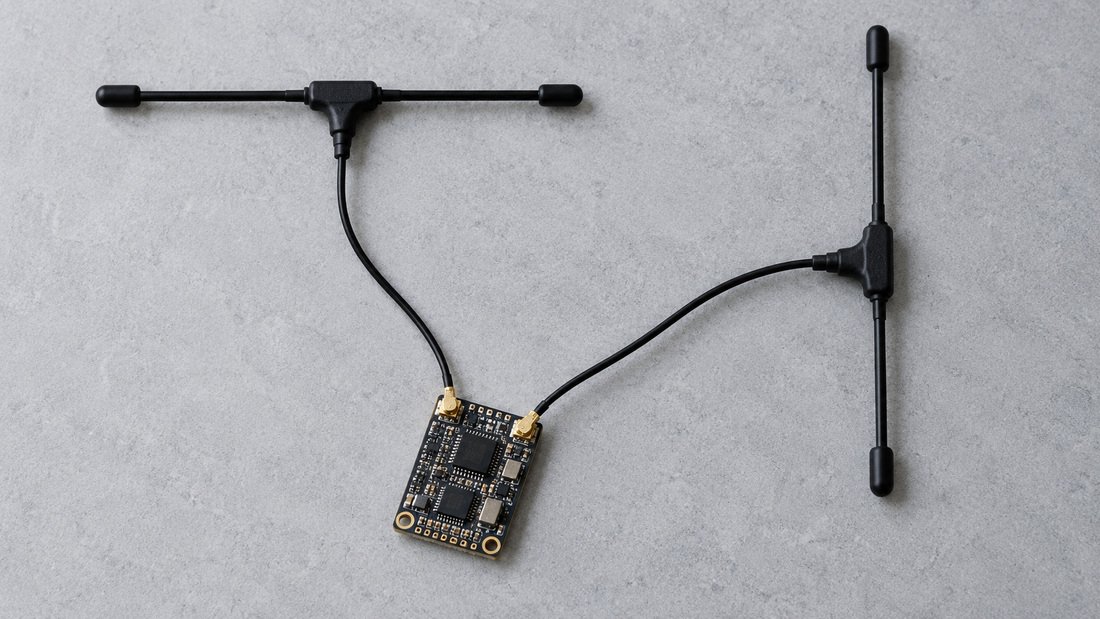
Dual-core receivers (often called diversity receivers) contain two separate RF front-ends and typically two antennas. They can switch or combine signals to maintain link quality when one antenna is obstructed or misaligned. This can improve reliability in environments with reflections or when the drone orientation changes rapidly.
The cost is size and weight: two RF chains and two antennas add bulk. Dual-core receivers are usually larger and heavier than nano receivers, and they may require more mounting space and careful antenna routing.
Weight and size comparison: what to expect
Exact weights and dimensions vary by manufacturer and model. The table below summarizes typical differences you should confirm with your supplier. Do not rely on generic category names; always check the datasheet or ask for measured samples.
| Feature | Nano receiver (typical) | Dual-core receiver (typical) |
|---|---|---|
| Footprint | Very small; often under 20 mm in one dimension | Larger; often 20–30 mm or more |
| Weight | Often 1–2 g without antenna | Often 2–5 g without antennas |
| Antenna count | 1 | 2 |
| Antenna type | Soldered wire or small connector | Often two connectors or diversity antennas |
| Mounting | Minimal space; may need double-sided tape | Requires more space and planning |
| Repairability | Small pads; delicate | More components; may be easier to handle |
Note: The figures above are illustrative ranges, not confirmed specifications. Request exact measurements from DPF or your supplier.
How antenna choices affect size and weight
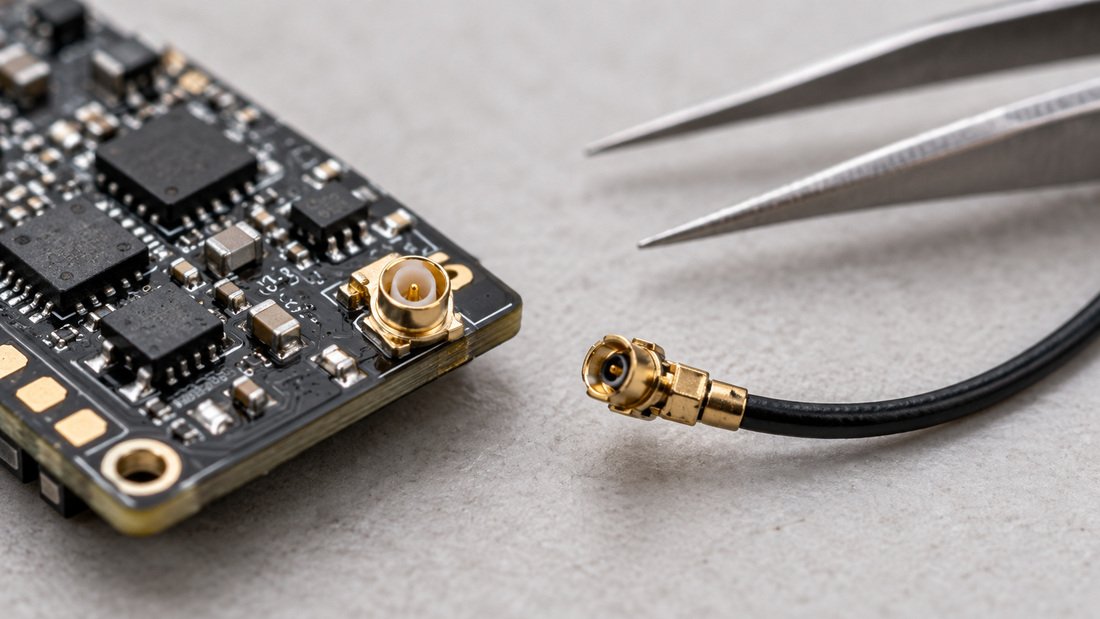
The antenna is often the largest physical part of a receiver installation. A nano receiver with a soldered wire antenna may be lighter than one with a connector and an external antenna. Dual-core receivers require two antennas, which add weight and require routing.
Connector types such as U.FL (also called IPEX) add a small connector but allow antenna replacement. Soldered antennas save weight but are harder to repair. For school teams, repairability may outweigh the smallest weight savings.
When to choose nano vs dual-core for drone soccer
There is no single best choice. Consider these scenarios:
- Choose nano when every gram counts, the airframe is very small, or you have a stable RF environment and can manage antenna placement.
- Choose dual-core when reliability is the top priority, when the drone’s orientation changes rapidly, or when the field has reflective surfaces that cause multipath.
- For club fleets, standardize on one type if possible to simplify spares, training, and repairs. If you need both, keep separate labeled bins.
Procurement checklist for teams and distributors
Before ordering, confirm the following in writing with your supplier:
- Exact weight (with and without antenna) and dimensions.
- Antenna type, connector type, and whether antennas are included.
- Operating voltage range and compatibility with your transmitter module.
- Firmware version and update method.
- Mounting hole pattern or recommended mounting method.
- Packaging and labeling for team kits.
- Sample availability for testing.
- Lead times, MOQs, and warranty terms (if applicable).
For compatibility questions, see the ELRS receiver compatibility page.
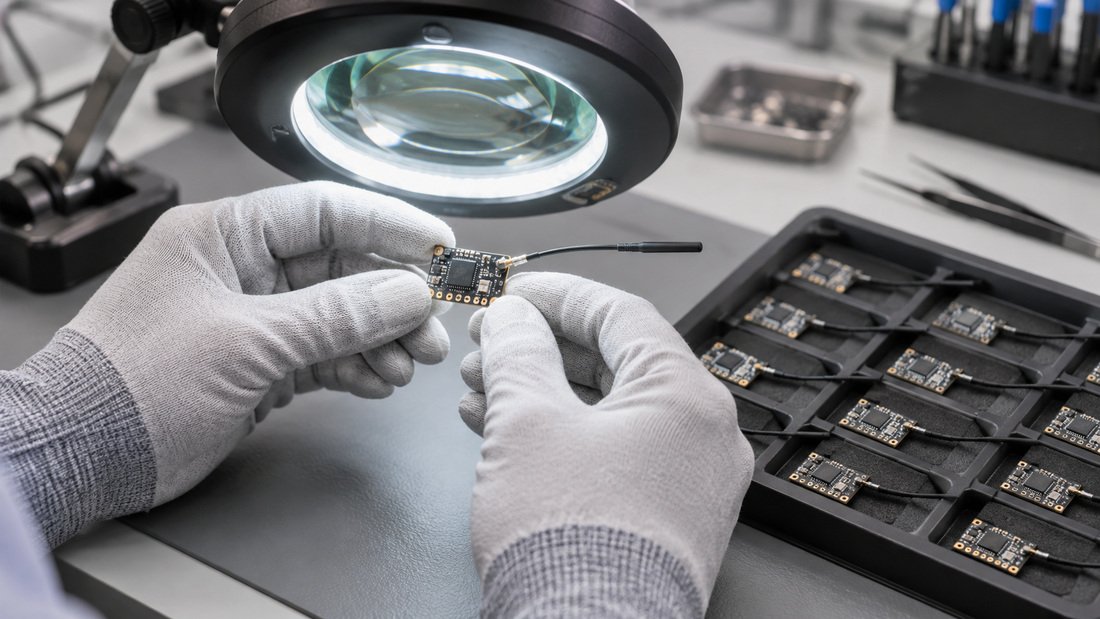
Need help selecting receivers for your team? Request a Team Kit Quote and tell us your airframe and quantity.
Common mistakes
- Assuming all nano receivers are equal: weight and size vary; always check the datasheet.
- Ignoring antenna weight: a connectorized antenna can double the installed weight compared to a wire antenna.
- Overlooking repairability: the lightest option may be the hardest to fix after a crash.
- Mixing receiver types in a fleet without labeling: this complicates troubleshooting and spares.
- Not testing before bulk purchase: order samples to verify fit and performance.
Frequently asked questions
1. Are nano receivers always lighter than dual-core receivers?
Generally yes, because they have one RF chain and one antenna. However, some nano receivers with heavy connectors or shielding can approach the weight of a light dual-core receiver. Always check the actual weight.
2. Can I use a dual-core receiver on a small drone soccer frame?
It depends on the frame’s internal volume and weight limits. Measure the available space and compare with the receiver’s dimensions. Some frames are too tight for two antennas.
3. Does a dual-core receiver improve range?
Diversity can improve link reliability in challenging environments by mitigating signal nulls, but it does not necessarily increase maximum range. Range depends on many factors including antenna quality and power output.
4. What antenna connector is best for school teams?
Connectorized antennas (e.g., U.FL) are easier to replace if damaged, but they add a small weight. Soldered wire antennas are lighter but require soldering skills for repair. Consider the team’s maintenance capabilities.
5. How can I compare receiver weights accurately?
Ask the supplier for a datasheet with measured weight and dimensions. Request a sample and weigh it yourself with a precision scale. Ensure you compare like-for-like (with or without antenna).
6. Are there regulations about receiver weight for drone soccer?
Drone soccer rules may specify maximum weight or size for the drone. Check with your league or competition organizer for the latest technical regulations. This article does not provide regulatory advice.
7. Can I mix nano and dual-core receivers in one team?
Yes, but it complicates spares and training. If you do, label each receiver and keep a clear inventory. Ensure all receivers are compatible with your transmitter modules.
Conclusion
Nano and dual-core ELRS receivers serve different priorities: nano for minimal weight and size, dual-core for signal diversity and reliability. For drone soccer teams, the right choice depends on your airframe, field conditions, and maintenance resources. Always verify actual specifications and test samples before committing to a bulk order.
To discuss your team’s needs and request a quote, Request a Team Kit Quote. You can also explore our ELRS receivers and RF antennas to plan your kit.