Quick summary
No single test proves a training motor is reliable. A credible product safety testing program combines incoming material checks, motor bench tests (no-load current, RPM, vibration, temperature), thrust and endurance runs, and repeated flight cycles inside the drone soccer ball cage. For schools, the practical goal is simpler: motors survive a full term of student handling, crashes and recharge cycles without overheating, failing mid-match or creating a burn risk.
Key Takeaways
- Motor reliability comes from layered testing, not one lab result or marketing claim.
- Ask suppliers for bench data (current draw, RPM, temperature) plus flight-cycle and drop-test records on the drone soccer (BKZ) platform you intend to buy.
- For classroom use, safety review covers heat, sharp edges, wiring strain relief and battery handling — not motor performance alone.
- Written warranty terms vary by market and supplier; in the US, consumer warranty rules are governed by the Magnuson-Moss Warranty Act, and those rules are not automatically the same as B2B or non-US terms.
- Procurement success depends on a documented test plan, sample approval before mass production, and a written after-sales process.
Why training motors need a different test mindset
Racing motors are often judged by peak thrust in short bursts. Training motors face different stress: hundreds of beginner take-offs, prop strikes, wall impacts, and repeated plugging and unplugging by students of different ages. Reliability therefore means consistent behaviour across many cycles, not a single impressive number.
Schools and youth programs also inherit duty-of-care expectations. A motor that runs hot enough to soften a mount or scorch wiring is a safety concern in a room of students, even if it never fails electrically. That is why product safety testing should cover thermal behaviour, mechanical retention and electrical isolation as well as performance.
The core motor tests that matter
Below are the test categories buyers can reasonably ask a factory to describe, and the evidence that makes each one meaningful. Exact procedures and pass/fail thresholds belong to the supplier’s test plan; treat any figure as something to verify in writing.
1. Incoming material and component inspection
Before any motor is assembled, the magnets, stator laminations, bearings, windings, magnets-to-stator adhesive and connectors should be checked against the approved specification. This is a quality control step: it catches the wrong bearing grade, inconsistent wire gauge or damaged magnet before cost is added at assembly.
Ask what is inspected, by what sampling method, and what happens when a batch fails. Bench tests on a finished motor cannot compensate for a wrong internal part.
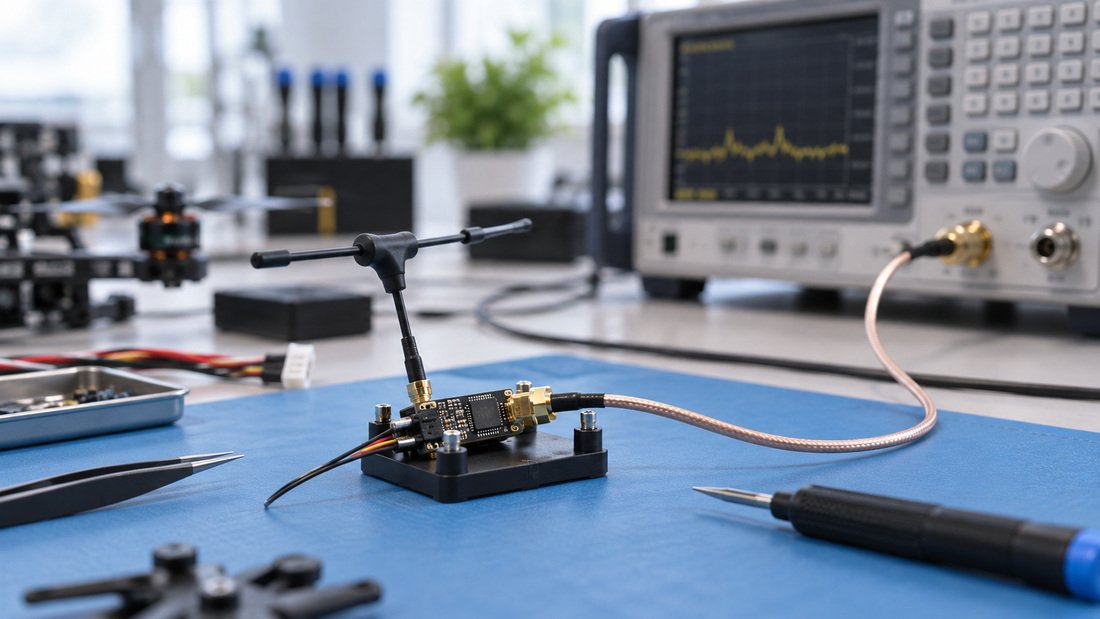
2. Bench testing: no-load current, RPM and vibration
A standard bench run spins the motor without a propeller and records no-load current, RPM at a defined input voltage, and vibration signature. These numbers are fast to capture and useful as a baseline: a motor drawing noticeably more current than its approved sample, or vibrating outside the accepted band, suggests bearing damage, imbalance or a winding problem.
Bench data is only useful when it is compared against an approved reference motor from the same batch. Ask for the reference values, not just a pass stamp.
3. Thrust and thermal testing under load
Loaded testing adds the propeller and measures thrust, current and motor temperature over time. For training use, the informative part is not the peak thrust line but the temperature curve after several minutes at the throttle levels beginners actually use. Sustained heat is what degrades insulation, bearings and plastic mounts.
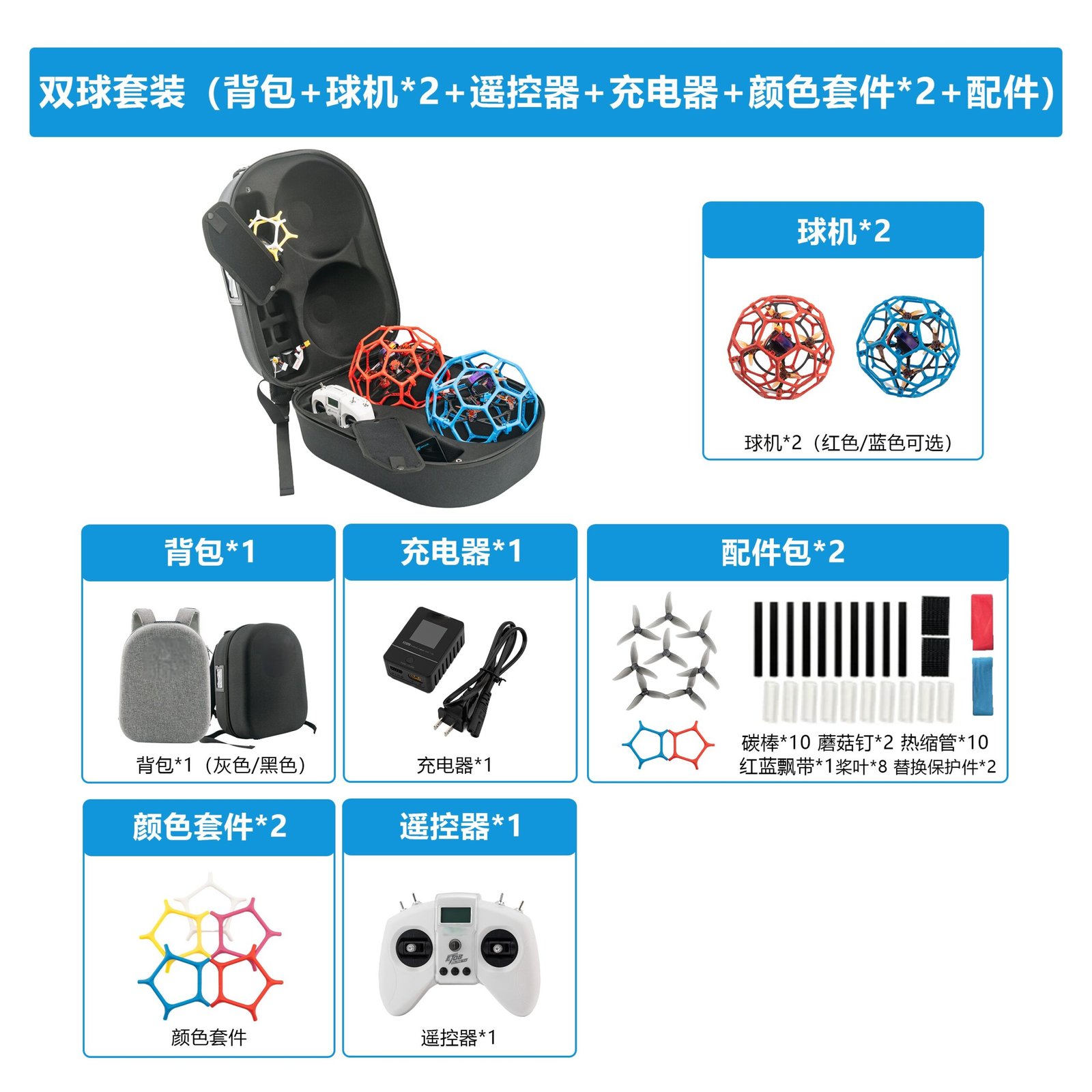
Representative BKZ drone soccer components show what students handle during these cycles. A caged ball and its replaceable propeller assembly take repeated contact, so motor mounts and wiring must tolerate impact without loosening.

4. Endurance and accelerated life cycling
Endurance testing repeats start-stop and throttle cycles to simulate a training session. A practical version alternates take-off, hover-like throttle, brief full throttle and landing until a defined cycle count is reached, then re-checks no-load current and vibration against the baseline.
Accelerated life testing cannot predict a specific lifespan in a school. It can reveal whether a design degrades gracefully or drifts out of specification quickly, which is the information a program manager actually needs.
5. Rotor-lock, impact and drop simulation
Drone soccer cages collide with walls, goals, furniture and each other. Rotor-lock testing briefly stalls the motor while monitoring current and temperature to confirm the ESC and wiring do not overheat dangerously. Drop and impact testing checks that the motor stays mounted, connectors stay seated, and no solder joint or wire strands are exposed.
For classroom safety, pay attention to what happens after impact: sharp edges, loose screws or a hot motor casing are the outcomes that matter to a teacher.
How the test layers compare
| Test layer | What it catches | What it cannot prove | Evidence to request |
|---|---|---|---|
| Incoming material inspection | Wrong bearings, wire or magnets | Assembly quality | Inspection criteria, sampling method, non-conformance process |
| No-load bench test | Imbalance, winding faults, bearing roughness | Behaviour under load or heat | Reference values from approved sample |
| Thrust and thermal test | Overheating at realistic throttle levels | Long-term wear or crash tolerance | Temperature curves at defined throttle points |
| Endurance cycling | Early drift out of specification | Actual lifespan in a school | Cycle count, re-test results after cycling |
| Rotor-lock and impact test | Over-current risk, loosening, exposed wiring | Every real crash scenario | Test setup description and inspection photos |
As part of a wider testing and inspection program, these layers should be linked to batch records so a school or distributor can trace a delivered unit back to its test data.
What schools should confirm before ordering
Purchasing teams rarely see a factory’s internal test plan. What they can do is ask structured questions and require written answers before committing to a pilot or a term supply.
A buyer checklist for motor reliability:
- Which bench measurements are recorded per batch, and what are the reference values?
- Is there a documented pre-shipment function test on every unit, or only sampling?
- How is the motor secured, and how are wires strain-relieved against cage impacts?
- What temperature is the motor casing allowed to reach during normal training use?
- What is the process if a motor fails within the agreed period — replacement, credit or repair?
- Are spare motors, propellers and mounts available as a service kit for school maintenance?
- Can the supplier describe their quality control process in writing, including how non-conforming batches are handled?
Planning a school drone soccer program? Share your class size, age group and session frequency, and the DPF team can point you to suitable BKZ platform options and spare-part kits. Request a School Program Quote.
Common mistakes in motor specifications for school programs
Mistake 1: Buying on peak thrust alone
Peak thrust figures are usually captured in optimal conditions with a fresh battery and short run times. A beginner program needs stable mid-throttle behaviour and cool running far more than a headline number.
Mistake 2: Assuming a consumer warranty applies to a school purchase
Warranty rules differ by market and by transaction type. In the United States, written warranties on consumer products are governed by the Magnuson-Moss Warranty Act, which sets requirements for how warranties are labelled and disclosed; it does not set a required warranty length, and it does not automatically apply to B2B or non-US purchases. See the FTC’s business guidance on the Magnuson-Moss Warranty Act for the scope of that framework.
Schools and institutions should therefore request the supplier’s written warranty and warranty and after-sales program terms, and where relevant take local advice on how those terms interact with their own jurisdiction and procurement rules.
Mistake 3: Skipping the pilot batch
A pilot order flown by real students for several weeks reveals handling problems that a factory bench cannot: dropped drones, forced connections and mixed-age usage. Approve the pilot before committing to a full program rollout.
Mistake 4: Overlooking compliance documentation
Motor reliability testing and regulatory compliance are related but separate. Schools should ask which compliance documents apply to their region and how safety and compliance support is handled for the specific configuration ordered.
Frequently asked questions
Does a passed bench test guarantee the motor will last a school term?
No. Bench tests check the motor against a reference at a point in time. Durability depends on design, materials, how students use the equipment, and how often motors are inspected and replaced.
How many flight cycles should a training motor be tested for?
There is no single universal figure. Ask the supplier what cycle count their test plan uses, what throttle profile it follows, and how results are judged. Treat the number as a design target to discuss, not a guarantee.
Is product safety testing the same as certification?
No. Testing verifies performance and safety characteristics of a sample or batch. Certification involves an accredited body and specific standards for a market. Ask which applies to your order and region.
Should schools test sample motors themselves?
A small in-house pilot is valuable. Fly the units across several sessions, record motor temperature and any failures, and compare the results with the supplier’s stated test data before scaling up.
What spare parts should accompany a motor order?
At minimum, spare motors, propellers, mounts and connectors matched to the platform. Discuss quantities with your supplier based on class size and session frequency; DPF can advise on typical BKZ service kits.
Can distributors request batch-level test records?
Distributors and OEM/ODM buyers can ask for batch traceability as part of their supply agreement. Confirm in writing what records will be provided, in what format, and how long they are retained.
How do I compare two suppliers’ testing claims?
Ask both for the same artefacts: test plan summary, reference values, sample inspection method and after-sales process. Suppliers who answer consistently are easier to compare than suppliers who only quote performance numbers.
Conclusion and procurement next step
Reliable training motors are the result of layered product safety testing — material inspection, bench measurement, thermal and endurance runs, and impact checks — backed by batch records and a clear after-sales process. For schools and youth programs, the practical work is to demand that evidence in writing, run a small pilot, and define your spare-parts plan before the first session.
To move from specification to supply, share your program size and the BKZ configuration you are considering, and ask for the test data and warranty terms that apply to your order. Request a School Program Quote to start the conversation.