Quick summary
The protective cage of a drone soccer ball is the spherical outer shell that surrounds the rotor assembly. In the equipment used for organised play, the ball — often described as a BKZ-style drone ball — is built from a moulded polymer cage, most commonly glass-fibre or carbon-fibre reinforced nylon, polycarbonate (PC), or a PC/ABS blend, with the outer ring frequently using a softer, energy-absorbing material such as EPP or EVA foam.
The cage is not a cosmetic cover. It defines the ball’s outer diameter, protects the propellers and the people around them, absorbs collision energy, and determines how the ball behaves when it is hit or pushed. The exact specification varies by manufacturer and model, so buyers should always confirm material grades in writing rather than assume.
Key Takeaways
- The protective cage is typically a moulded polymer: glass-fibre or carbon-fibre reinforced nylon, polycarbonate, PC/ABS, or a comparable engineering plastic, sometimes with an EPP or EVA foam outer ring.
- Material choice is a trade-off between stiffness, impact absorption, weight, repairability and cost per unit — not a single “best” answer.
- The cage sets the ball’s legal playing diameter and protects the propeller assembly, which is why cage geometry matters as much as material.
- For schools and clubs, spare cage sets, fasteners and propeller guards should be part of the initial order, not an afterthought.
- Confirm material grade, impact behaviour, spare-part availability and replacement pricing with your supplier in writing before committing to a team kit.
What Is the Protective Cage on a Drone Soccer Ball?
The protective cage is the outer, roughly spherical structure that encloses the drone’s four rotors and connects to the central body. It is the part that contacts other drones, the goal frame and, occasionally, players.
In a typical drone soccer ball, you will find a central frame or “spine” holding the flight controller, battery, ESC (electronic speed controller) and motors, plus a cage assembly that bolts or clips around it. The cage performs four jobs at once:
- Containment: it stops propellers from contacting external objects.
- Structure: it holds the ball’s outer diameter to the size required by the competition format.
- Energy management: it deforms or flexes to dissipate impact energy during collisions.
- Handling: its ribs, spokes and surface texture affect how the ball rolls, bounces and is gripped during a match.
Because the cage is the most frequently damaged part in competitive play, its material and repair design have a direct effect on a club’s total cost of ownership.
Which Materials Are Used for Drone Soccer Cage Construction?
Most cages are made from one or a combination of the following materials. The list is general industry guidance — always ask your supplier which grade and which process they actually use.
Glass-fibre reinforced nylon (PA + GF)
A common engineering choice. Glass-fibre reinforcement raises stiffness and heat resistance compared with unfilled nylon, while keeping weight moderate. It takes impact well and can be moulded into complex rib geometries. It is generally less expensive than carbon-fibre grades.
Carbon-fibre reinforced polymer (CFRP / PA + CF)
Carbon-fibre reinforcement gives high stiffness-to-weight, which helps when a light ball must still hold a precise shape. It is usually the most expensive option and can be more brittle under repeated high-energy impacts, so it is often used selectively — for example in the central frame rather than the whole outer cage.
Polycarbonate (PC) and PC/ABS blends
Polycarbonate is chosen for toughness and impact resistance rather than maximum stiffness. PC/ABS blends balance impact performance with easier moulding and better surface finish. These materials tend to flex rather than shatter, which is attractive for beginner and school programmes.
Foam outer rings: EPP and EVA
The outermost ring or bumper is frequently expanded polypropylene (EPP) or ethylene-vinyl acetate (EVA) foam. Foam adds little structural stiffness but absorbs energy and softens contact with other balls, goal frames and people. It is also the cheapest part to replace.
Fasteners, clips and inserts
Cages are held together with screws, clips or snap-fit features. Threaded metal inserts, where used, are usually brass or steel. This small hardware often decides whether a cage can be repaired in the pit lane or has to be scrapped.
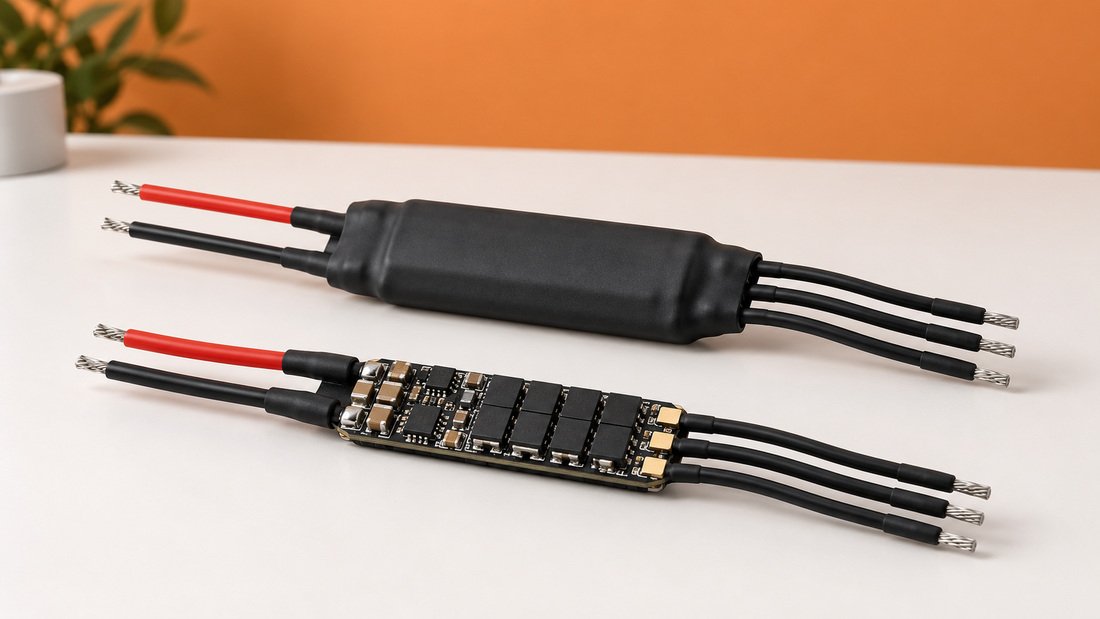
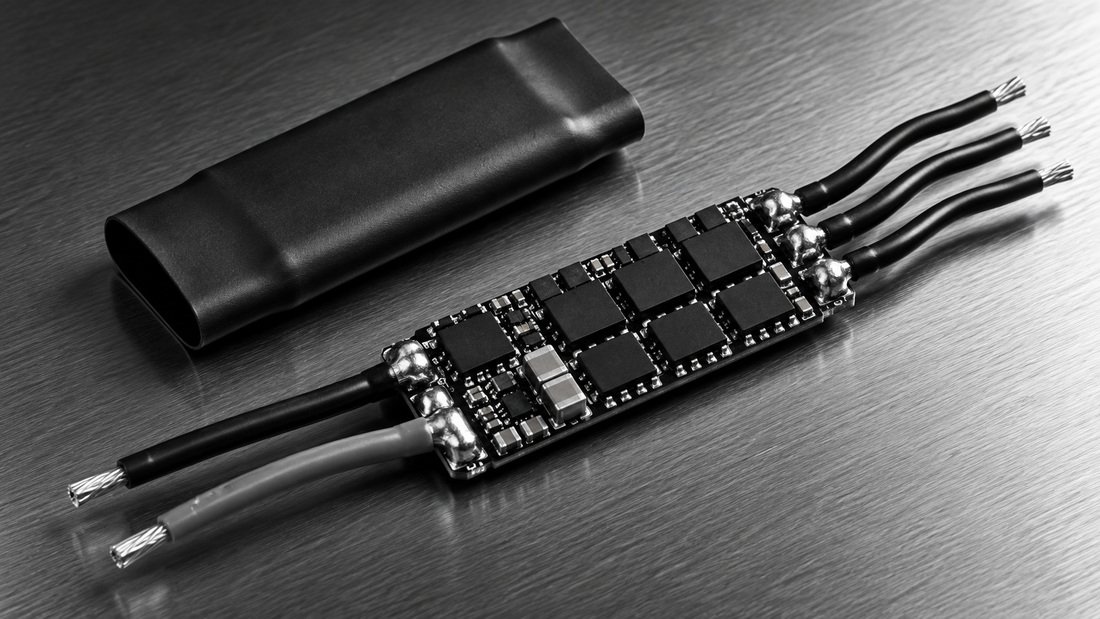
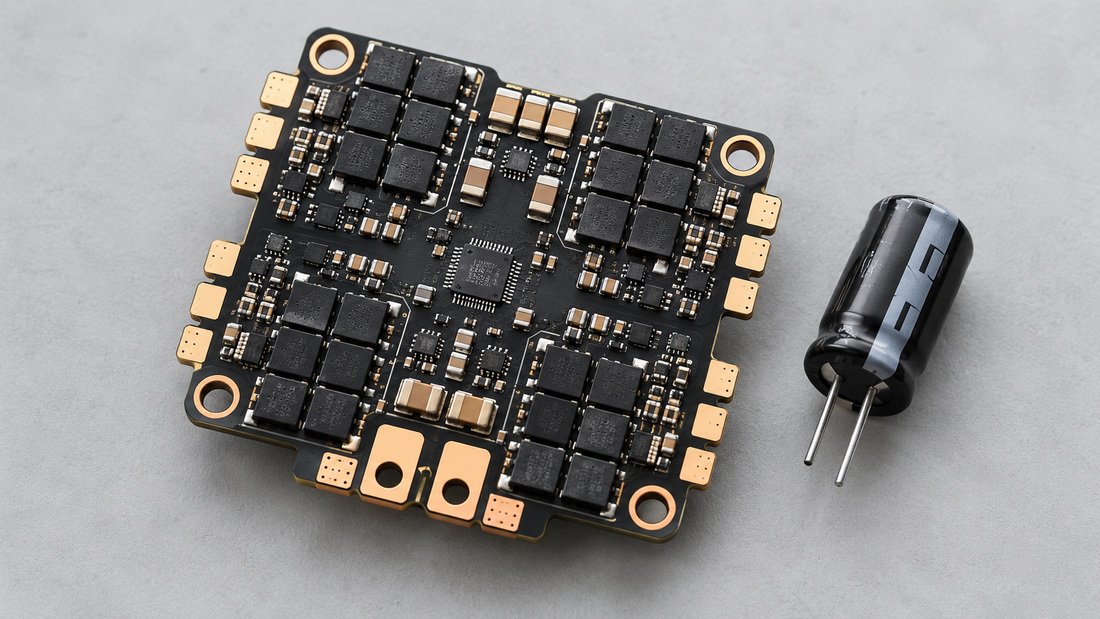
Inside the cage, the propulsion electronics are just as important as the shell. The ESC (electronic speed controller) regulates motor speed, and its packaging has to survive the same collisions the cage absorbs. See our range of drone soccer systems for how complete ball assemblies are configured.
How Does Cage Material Affect Safety and Player Protection?
Material choice changes how a ball behaves on impact, and that has practical safety consequences for schools, clubs and event organisers running matches indoors or near spectators.
A stiffer cage holds its shape and protects rotors well, but transfers more energy to whatever it hits. A more flexible cage or a foam outer ring deforms and absorbs energy, which generally feels safer in close-quarters play but may need more frequent replacement.
Whatever material is used, the cage only does its job if it stays intact. Cracked ribs, stretched clips or missing fasteners can expose propellers, so pre-flight checks matter more than the datasheet. Drone flying in educational settings is also subject to local aviation rules; in the United States, for example, the FAA explains which educational organisations may operate under the Exception for Limited Recreational Operations and which must operate under Part 107 (14 CFR Part 107) — see FAA guidance for educational users. Rules differ by country, so confirm your own jurisdiction’s requirements.
Material Comparison for Drone Soccer Cages
The table below is general guidance for comparing options. It is not a specification for any particular product — treat it as a framework for questions to put to suppliers.
| Material | Stiffness | Impact behaviour | Weight | Repairability | Typical role in the ball |
|---|---|---|---|---|---|
| Glass-fibre reinforced nylon (PA+GF) | Medium-high | Tough, holds shape | Medium | Good — screw or clip assembly | Full outer cage, ribs |
| Carbon-fibre reinforced polymer | High | Can be more brittle | Low | Depends on joint design | Frame, reinforcing ribs |
| Polycarbonate / PC-ABS | Medium | Flexes rather than shatters | Medium | Good | Cage, bumper sections |
| EPP / EVA foam ring | Very low | High energy absorption | Very low | Excellent — cheap to swap | Outer bumper, contact ring |
| Metal inserts / hardware | High | Not a sacrificial part | Low | Replaceable | Threaded joints |
If your programme is still choosing a platform, our overview of STEM drone education and training covers how cage design fits into curriculum planning and classroom safety routines.
Why Material Choice Matters for Clubs and Competition Play
For a competition team, the cage is a consumable. Material and joint design decide how many collisions a ball survives and how quickly it can be returned to play between rounds.
Three practical effects stand out:
- Match legality: the ball’s outer diameter and shape must meet the competition’s technical rules. A cage that deforms permanently after impacts can take a ball out of specification.
- Pit-lane time: cages that assemble with a few accessible fasteners can be repaired courtside. Bonded or snap-fit designs may not be.
- Budget per season: a cheaper cage that fails often can cost more than a more expensive, repairable one.
Teams preparing for league fixtures can review how drone soccer competitions structure technical checks and equipment rules before finalising kit lists.
Common Mistakes When Specifying Drone Soccer Equipment
Buyers new to the sport often focus on the drone’s electronics and treat the cage as an accessory. In practice the opposite is often true.
- Not asking for the material grade. “Nylon” can mean many things. Ask for the exact polymer and reinforcement percentage.
- Ordering no spares. Clubs that buy full kits without spare cages, rings or fasteners lose practice time.
- Mixing incompatible versions. Cage parts from different revisions may not fit, even if they look similar.
- Assuming impact performance from material name alone. Geometry, wall thickness and rib design matter as much as the polymer.
- Ignoring the fastening system. A cage is only as good as the joints that hold it together.
- Skipping local regulatory checks. Verify what rules apply to your venue and organisation before you buy.
Procurement Checklist for Schools, Clubs and Distributors
Use this list to structure a written request for quotation. It separates what you should specify from what you should simply confirm.
- Cage material: ask for the polymer family, reinforcement type and any filler content.
- Outer ring material: confirm whether it is foam, solid polymer or a hybrid.
- Ball diameter and mass: request the nominal values and the tolerance.
- Joint design: screws, clips, snap-fit or bonded — and which tools are needed for repair.
- Spare availability: cages, rings, fasteners and propeller guards as separate line items.
- Unit pricing at volume: per ball and per spare set, for the quantities you actually plan.
- Consistency between batches: ask how the supplier controls material and dimensional variation.
- Documentation: ask what technical data, drawings or material declarations are available.
- Shipping and replacement parts: confirm how replacement cages will be supplied over a season.
- Compatibility statement: confirm in writing which ball revision each spare fits.
For multi-site programmes, it also helps to ask how schools and training organizations typically phase purchases across terms rather than buying everything at once.
Buying Cages and Spares: What to Confirm in Writing
Commercial terms vary widely across the drone soccer equipment market. Material specifications, impact requirements, MOQs, lead times and warranty terms are supplier-specific and cannot be assumed.
Before you sign, ask your supplier to confirm in writing:
- The exact material specification for each cage component.
- Whether spare cages and rings can be ordered separately, and at what price.
- Minimum order quantities for kits and for spare parts.
- Lead time for first orders and for repeat spare orders.
- What is covered if a cage fails in normal play, and under what conditions.
- Whether technical drawings or inspection criteria are provided.
Where a claim cannot be supported by documentation, treat it as something to verify rather than a reason to buy. Requesting a small sample set before a full team rollout is a low-cost way to test cage durability under your own conditions.
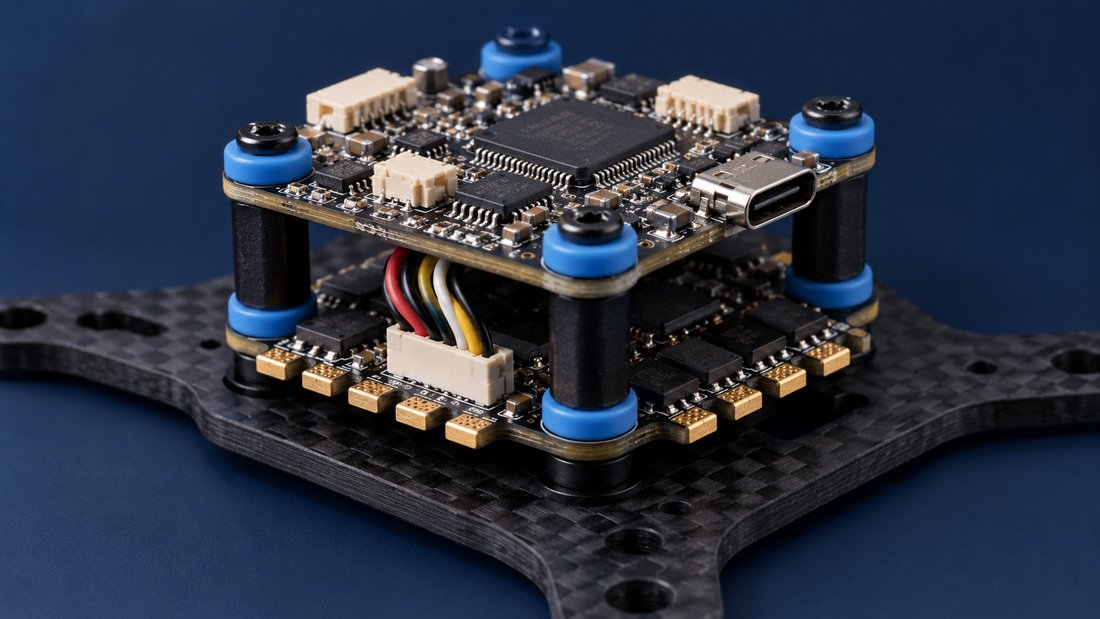
Many clubs start by evaluating a single drone soccer club starter kit, then scale once they know their real cage consumption rate per term.
Frequently Asked Questions
Is the drone soccer ball cage made of plastic or carbon fibre?
Both are used. Many cages are moulded engineering polymers such as glass-fibre reinforced nylon or polycarbonate. Carbon-fibre reinforced grades appear where stiffness and low weight matter most, often in frames rather than the whole outer shell. Ask your supplier for the exact grade.
Why is the outer ring sometimes foam instead of hard plastic?
Foam rings absorb impact energy and soften contact with other balls, goals and people. They add little stiffness but are inexpensive and quick to replace, which suits high-contact play.
How often do drone soccer cages need replacing?
That depends on your level of play, arena surfaces and cage design. There is no universal figure. Track how many cages your team replaces per term to build your own replacement budget.
Can I replace just the cage instead of the whole ball?
Often yes, but only if the manufacturer supplies the cage as a separate part and the revision matches. Confirm spare-part availability and compatibility before purchase.
Does cage material affect whether a ball is competition-legal?
Competition rules generally govern the ball’s dimensions, mass and behaviour rather than the polymer itself. What matters practically is that the cage holds the required shape after impacts. Check your competition’s technical regulations.
What should schools ask for when buying drone soccer equipment?
Ask for material specifications, spare-part availability, per-unit pricing at your planned volume, and confirmation of which spare fits which ball revision. Also confirm the local aviation rules that apply to your organisation and venue.
Are drone soccer cages 3D-printed or moulded?
Both approaches exist. Moulded production is typical for series-manufactured balls; 3D-printed cages appear in prototyping or small-batch contexts. The process affects consistency, cost and repairability, so ask which is used.
Conclusion
The protective cage of a drone soccer ball is normally a moulded engineering polymer — glass-fibre or carbon-fibre reinforced nylon, polycarbonate or a PC/ABS blend — often paired with a softer EPP or EVA foam outer ring, held together by screws, clips or snap-fit joints. The material is chosen to balance stiffness, impact absorption, weight and repairability rather than to be the cheapest or strongest option in isolation.
For schools, clubs and distributors, the practical next step is not to memorise material names but to ask precise questions: which grade, which geometry, which spares, which price at volume, and which documentation. Get those answers in writing, test a sample set under your own conditions, and build a replacement budget based on real consumption.
Ready to equip a team or a multi-school programme? Request a Team Kit Quote and specify your cage material preferences, spare-part requirements and expected season volume so the configuration can be matched to your programme.