Quick summary
Racing and freestyle use different brushless motors because they solve different problems. Racing motors prioritise minimum weight and instant acceleration for short, repeated sprints around a course. Freestyle motors prioritise torque, durability and smooth mid-range control for freestyle tricks, crash recovery and heavier camera payloads. In practice, racing motors tend to be lighter with a smaller stator and higher KV (the RPM produced per volt of battery input). Freestyle motors tend to be heavier with a larger stator and lower KV, trading top-end speed for low-end torque and a wider, more predictable throttle band.
Key Takeaways
- Motor type is a system choice, not a single specification. Stator size, KV and weight only make sense when matched to propeller size, cell count and frame.
- Racing favours light, high-KV motors. Low rotating mass helps the quad change direction quickly and accelerate out of corners.
- Freestyle favours larger stators and lower KV. More torque supports heavier props, camera loads and rapid throttle recovery.
- Club reality matters. Schools, youth programs and drone soccer teams often need the opposite of a race build: durability, repairability and consistent spares.
- Verify commercial terms in writing. Confirm KV variants, connector type, shaft and mounting dimensions, packaging and labelling before ordering.
What is the difference between racing and freestyle motors?
The short answer: they differ in how they trade torque against weight and top-end speed. A racing motor is built to spin a modest propeller very fast for a short time. A freestyle motor is built to spin a larger propeller with more authority through the whole throttle range, including the low and middle positions used during tricks and recovery.
Because the difference is a trade-off rather than a fixed rule, you will find overlap. Some motors sit between the two. The practical question is not “which is best” but “which behaviour does our flying need, and what will our pilots and maintenance volunteers actually live with?”
For clubs buying in quantity, the honest answer is that any motor choice is a system decision: it depends on how the motor behaves with a specific propeller and battery. That is why a structured approach to motor, propeller and battery matching usually saves more money than hunting for a single “best” motor.
Core specifications that separate the two types
A few numbers carry most of the difference. You do not need to memorise every figure, but you should know what each one changes.
Stator size
The stator is the fixed internal part of the motor around which the rotor turns. It is commonly written as two numbers, such as 2207 or 2306, where the first two digits are the stator diameter in millimetres and the last two are the stator height, also in millimetres. A larger stator volume generally means more torque and more ability to hold speed under load, at the cost of weight.
KV rating
KV describes the RPM a motor produces per volt in an ideal no-load condition. A 2400KV motor on a 4S battery would theoretically spin at about 2400 × 14.8 volts, though real RPM is always lower under propeller load. Lower KV with a bigger propeller and higher voltage, and higher KV with a smaller propeller and lower voltage, are the two common directions.
Weight and rotating mass
Racing builds care about grams because lower total mass means faster direction changes. Freestyle builds accept extra grams for stiffness, thicker bells and better heat handling. For club fleets, weight also affects crash damage, because a heavier quad carries more energy into an impact.
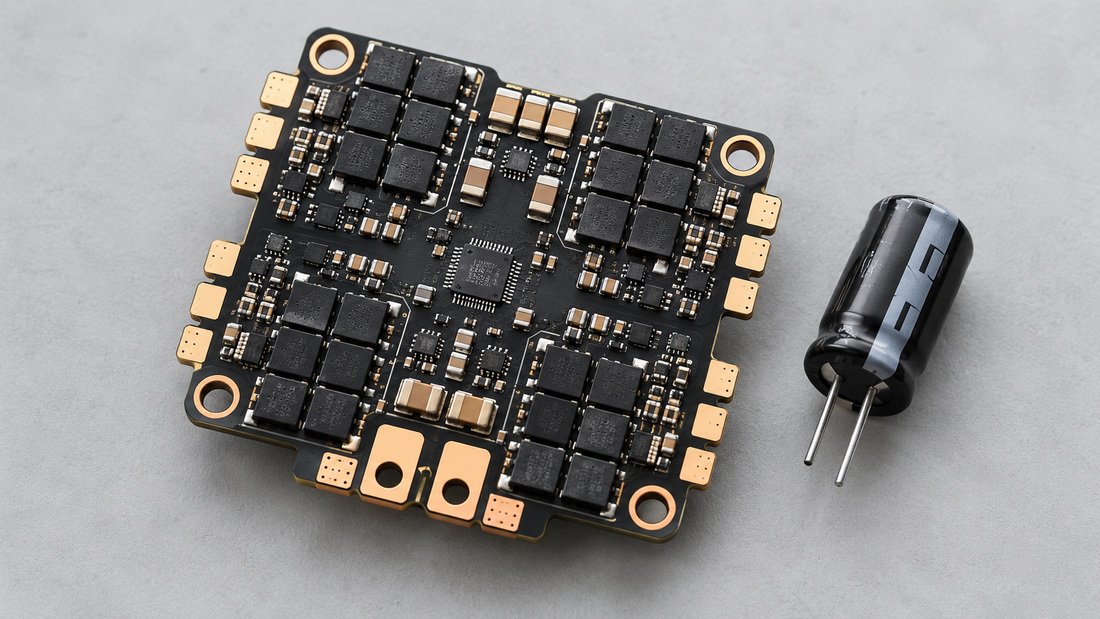
Comparison table: racing vs freestyle brushless motors
| Characteristic | Typical racing direction | Typical freestyle direction |
|---|---|---|
| Stator size | Smaller and lighter | Larger, more torque |
| KV rating | Higher KV | Lower KV |
| Throttle feel | Sharp, high-end focused | Linear, strong low and mid range |
| Weigh | Lower priority on grams | Oriented toward low weight |
| Propeller pairing | Smaller, lighter props | Larger, heavier props |
| Durability focus | Replaceable, race-day parts | Crash tolerance, bearings, bell stiffness |
| Typical flight profile | Short laps, repeated sprints | Continuous manoeuvres, recovery |
| Maintenance pattern | Frequent swaps, tight spares box | Longer intervals, inspect bearings |
Treat the table as a direction of travel, not a rulebook. Real motor lines overlap, and a well-matched setup can outperform a theoretically “correct” one.
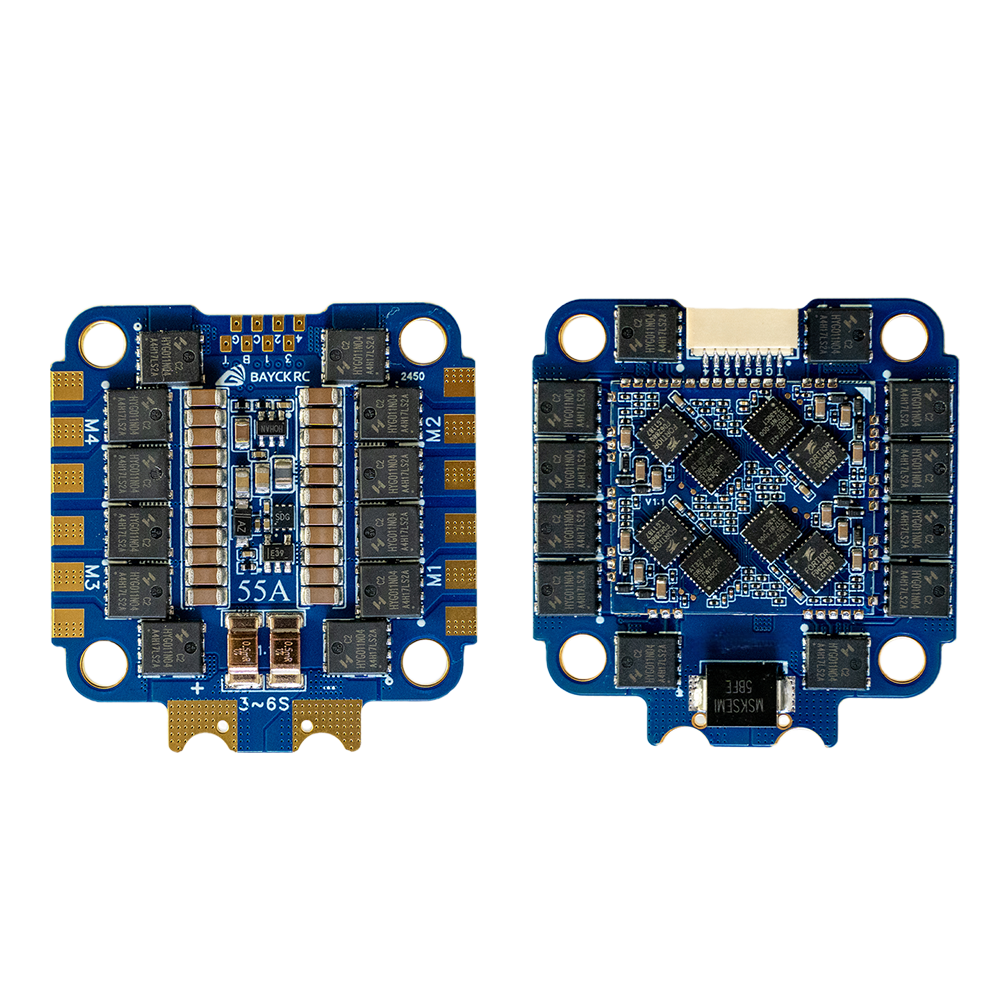
How flying style changes what you should buy
Motor choice follows flying style more than it follows marketing categories.
Racing style
Racing rewards acceleration out of corners and quick changes of direction. Lighter motors reduce rotating mass, which helps the flight controller change the quad’s attitude quickly. The trade-off is that a light, high-KV motor is often less tolerant of heavy props and repeated full-throttle abuse.
Freestyle style
Freestyle rewards control. Pilots need smooth mid-throttle response for hovering, slow rotation and recovery after a trick. A larger stator with lower KV gives more torque, so the quad holds its attitude when the pilot punches the throttle or when the propeller bites into disturbed air.
Cinewhoop and payload builds
When a build carries a camera or a protective duct, effective load rises and efficiency falls. These builds usually need more torque and often lower KV than a pure racing setup, because the motors must move more air with less clean airflow.
Drone soccer and youth programs
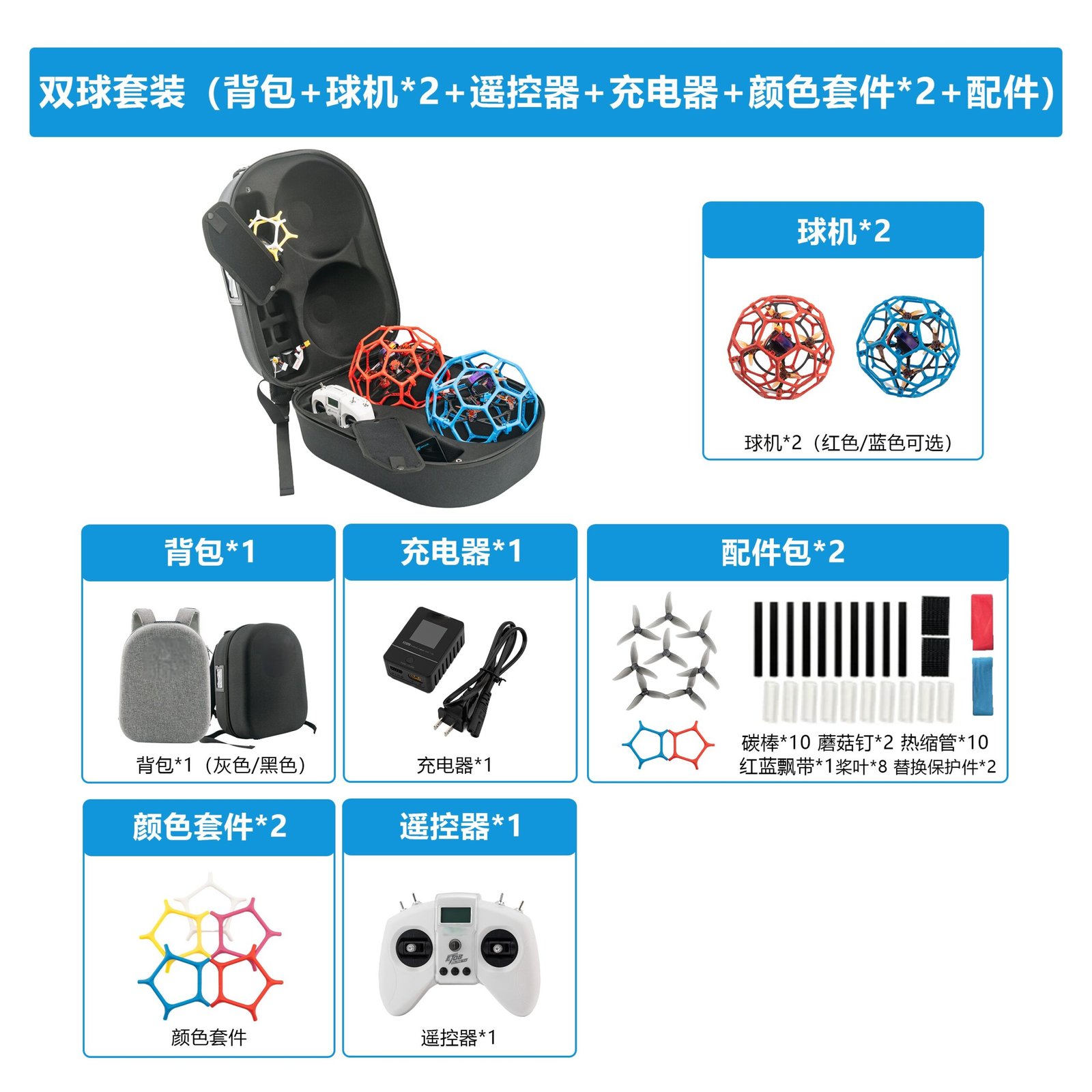
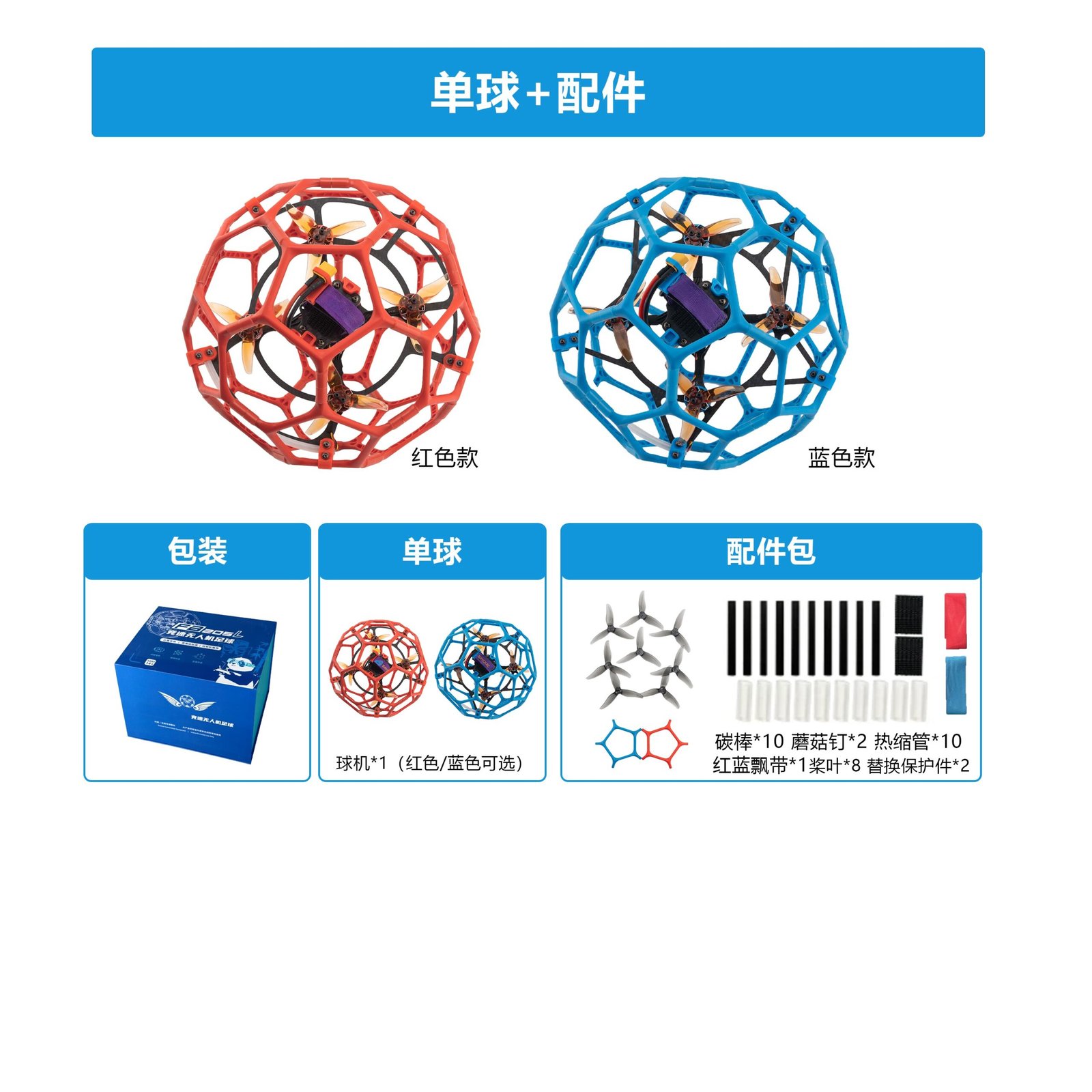
Drone soccer and school programs have a different priority set: predictable behaviour, resistance to repeated low-speed impacts, simple repairs and a consistent spare pool. A softer, torquier motor with a protective ball cage often serves a youth team better than a peak-performance racing motor. That is the thinking behind our FPV motors and drone soccer line, where repeatability across a fleet matters as much as peak output.
Common mistakes when choosing between racing and freestyle motors
- Buying by KV alone. KV without stator size and propeller size tells you very little about how a motor will feel.
- Ignoring cell count. The same motor behaves differently on different battery voltages. Always evaluate KV together with cell count.
- Mixing motor types across a club fleet. Mixed KV and stator sizes make spare management, tuning and pilot training harder.
- Overlooking repair access. For schools, a motor that cannot be swapped quickly and safely by a student is a liability, regardless of its performance.
- Forgetting the propeller. Propeller choice changes current draw and motor temperature more than most buyers expect.
- Assuming a race motor is “better”. It is only better for a short, light, sprint-focused use case.
Practical procurement checklist for clubs and schools
Use this list before you commit a club budget. It works for both racing and freestyle programs.
- Define the flying goal in one sentence: laps, freestyle, training or competition.
- Fix the propeller size and battery cell count first, then choose KV to suit both.
- Confirm stator dimensions and motor weight per unit for the intended frame.
- Confirm shaft diameter, mounting hole pattern and screw length for your frame arms.
- Confirm motor wire length and connector type against your ESC choice.
- Ask for the motor’s recommended propeller and cell-count range in writing.
- Ask whether the KV value is a nominal rating and how it is measured.
- Request a sample unit and measure weight, dimensions and connector compatibility yourself.
- Ask how motors are labelled and packed, so spare parts are identifiable in a club store room.
- Ask about replacement parts such as bells, shafts and bearings, and whether they can be ordered separately.
- Confirm minimum order quantity, lead time, price validity and payment terms in writing before you rely on them.
- Confirm the warranty period, what it covers and how a claim is processed.
DPF publishes clear product information for the propulsion combo kits, and our team can help match a motor to a specific club use case through motor and propulsion matching support. Commercial terms such as MOQ, pricing and lead time should be confirmed directly with our team, because they vary by configuration.
Team kit planning? If you are equipping a club, school or league, Request a Team Kit Quote and tell us your flying format, fleet size and maintenance capacity.
Battery safety, shipping and events: a note for organisers
Motor choice is only one part of running a safe event. Lithium batteries used to power these quads carry their own rules. The US Federal Aviation Administration states that lithium ion batteries are capable of overheating and undergoing thermal runaway, which can occur without warning if a battery is damaged, overheated, exposed to water, overcharged or improperly packed, or due to manufacturing defects (FAA, PackSafe: Lithium Batteries).
The same source notes that spare lithium batteries must be carried in carry-on baggage only, that terminals must be protected from short circuit, and that the standard size limit is 100 watt hours per lithium ion battery, with larger batteries allowed only under specific conditions and airline approval. Airlines may apply stricter limits. For any event involving travel, check with the airline and confirm current rules before shipping or flying with batteries.
If your club ships batteries for a competition, protect terminals by leaving batteries in retail packaging, covering terminals with tape, using a battery case or placing them in a protective pouch (FAA, PackSafe: Lithium Batteries). These are US aviation rules; your own country or carrier may differ, so verify locally.
Frequently asked questions
Can I use racing motors for freestyle flying?
Yes, but expect a different feel. A light, high-KV motor may feel sharp and fast, while offering less low-end torque and less tolerance for heavy props. It can work well for light freestyle builds, but check motor temperature and current draw.
Is higher KV always faster?
Not necessarily. KV describes RPM per volt at no load, not real speed under a propeller. Propeller size, battery voltage and motor torque all affect actual performance. A lower-KV motor with a bigger prop can feel faster in some situations.
What KV should a drone soccer team choose?
There is no single correct KV. It depends on the ball cage, propeller, battery and the competition format you play. Start from the format’s weight and durability needs, then test samples before committing a fleet.
Do racing and freestyle motors use different propellers?
Often, yes. Racing setups frequently use smaller, lighter props, while freestyle setups often use larger props that need more torque. The motor, propeller and battery should always be evaluated as one system.
How many spare motors should a club keep?
That is a budget and risk decision, not a fixed rule. Consider fleet size, crash frequency, session length and how quickly replacements can be sourced. Ask DPF about spare-parts availability for the motor you choose.
Should schools buy racing or freestyle motors?
Most school programs benefit from durability and predictability more than peak speed. A torquier, well-protected setup usually reduces downtime and repair complexity. Confirm what replacement parts are available before ordering.
Can DPF supply matched motor and propulsion sets?
DPF supports OEM and ODM motor and propulsion matching. Share your frame, propeller, cell count and target flying style, and the team can advise on suitable options. MOQ, lead time and pricing must be confirmed in writing.
Conclusion
Racing and freestyle brushless motors are not better or worse than each other. They are tuned for different jobs. Racing motors save weight and spin fast for short bursts. Freestyle motors add stator volume and torque for control, recovery and heavier loads. For clubs, schools and drone soccer programs, the winning approach is to define the flying goal, match the motor to the propeller and battery, and buy a consistent, repairable fleet rather than a collection of peak-spec motors.
Before ordering, request samples, confirm the exact KV variants and mounting dimensions, and get MOQ, lead time, warranty and pricing in writing. Request a Team Kit Quote to start.