Quick summary
For most organizers, the answer depends on frequency, not budget alone. If you run one or two drone soccer tournaments or events per year, renting complete sets normally costs less and removes storage, maintenance and firmware-management work. If you run a recurring league, a school program or a multi-event calendar, buying drone soccer systems usually pays back within a season because rental fees repeat while purchased hardware does not. Hybrid models — buy the fragile airframes and rent the expensive charging and field infrastructure — often fit best.
Key Takeaways
- Frequency is the deciding factor. One or two events a year generally favors rental; a recurring league or school program generally favors ownership.
- Ownership cost is not just the purchase price. Add spare parts, batteries, storage, inspection time, firmware updates and staff training.
- Rental transfers risk, not just hardware. The provider normally carries repair, replacement and calibration responsibility — confirm this in writing.
- Get every commercial term in writing. Damage policy, battery state-of-health, spare ratio, delivery and return windows are the terms that decide profitability.
- Regulatory planning belongs in the quote stage. In the United States, educational and recreational flight rules differ from Part 107, so confirm which framework your event operates under before you commit.
How to choose between renting and buying drone soccer equipment
Write down four numbers before comparing quotes: events per year, teams per event, average airframe loss per event, and staff hours available for maintenance. Those four numbers predict the answer more reliably than any price list.
Rental suits organizers whose event is a one-off showcase, a district final, a conference demo or a first-time pilot where attendance is uncertain. Ownership suits organizations that already run a drone soccer club, a school elective or a multi-round tournament series, because the hardware is in use continuously.
Direct answer: which is cheaper?
Rental is usually cheaper for a single event. Ownership is usually cheaper from roughly the third or fourth event onward, once you account for repeated rental fees. The crossover point moves earlier if you can share equipment across schools or age groups.
Rent vs buy at a glance
| Factor | Renting | Buying |
|---|---|---|
| Upfront cost | Low; paid per event | High; one capital purchase |
| Best for | One-off events, pilots, uncertain attendance | Leagues, clubs, recurring school programs |
| Storage and transport | Provider’s responsibility | Organizer’s responsibility |
| Maintenance and repairs | Usually provider; confirm scope | Organizer; budget for spares |
| Battery management | Provider supplies charged packs | Organizer buys, cycles and replaces packs |
| Firmware and configuration | Provider pre-configures for the event | Organizer maintains versions across units |
| Branding and sponsor space | Limited by provider’s shells | Full control over livery and signage |
| Scaling across venues | Easy; rent more units per site | Requires buying per site |
| Residual value | None | Asset remains usable next season |
Treat this table as general guidance. Actual prices, bundles and service terms vary by supplier and region.
The hidden costs of owning event equipment
Consumables and wear parts
Propellers, propeller guards, motors and batteries degrade fastest in youth competition, where collisions are normal. Budget for a spare ratio rather than an exact failure prediction, and ask suppliers what they typically ship alongside an event fleet.
Batteries are the real recurring cost
LiPo packs lose capacity over cycles and can become unsafe if stored incorrectly. An owned fleet needs a charging schedule, a storage-voltage routine and a replacement plan. Rental shifts that work to the provider — but only if the contract states who supplies charged packs and who replaces failed ones mid-event.
Radio links and configuration drift
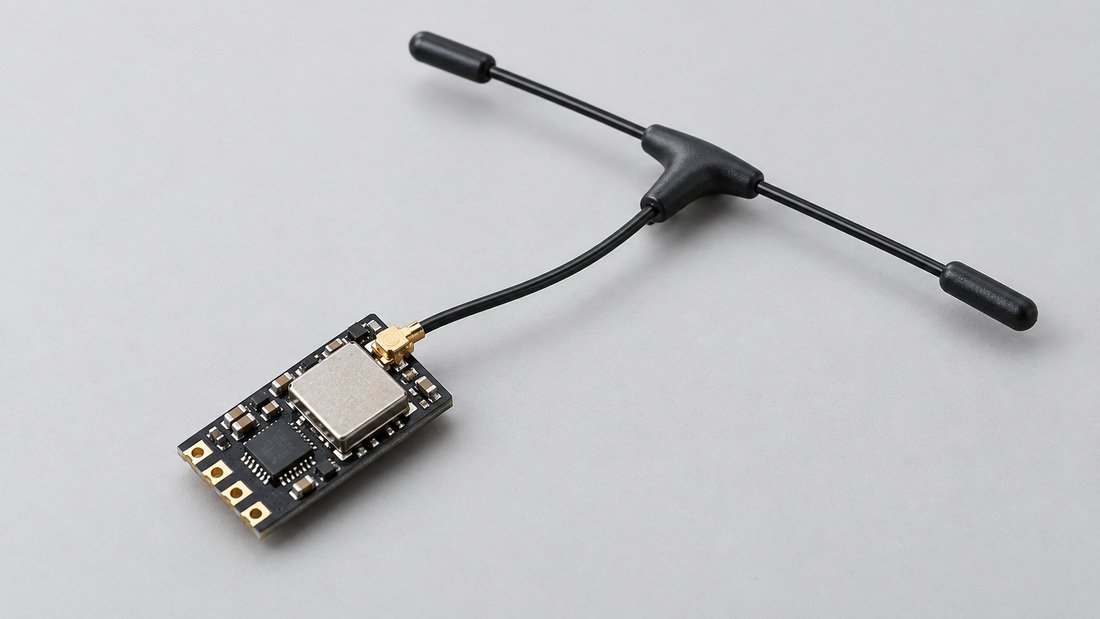
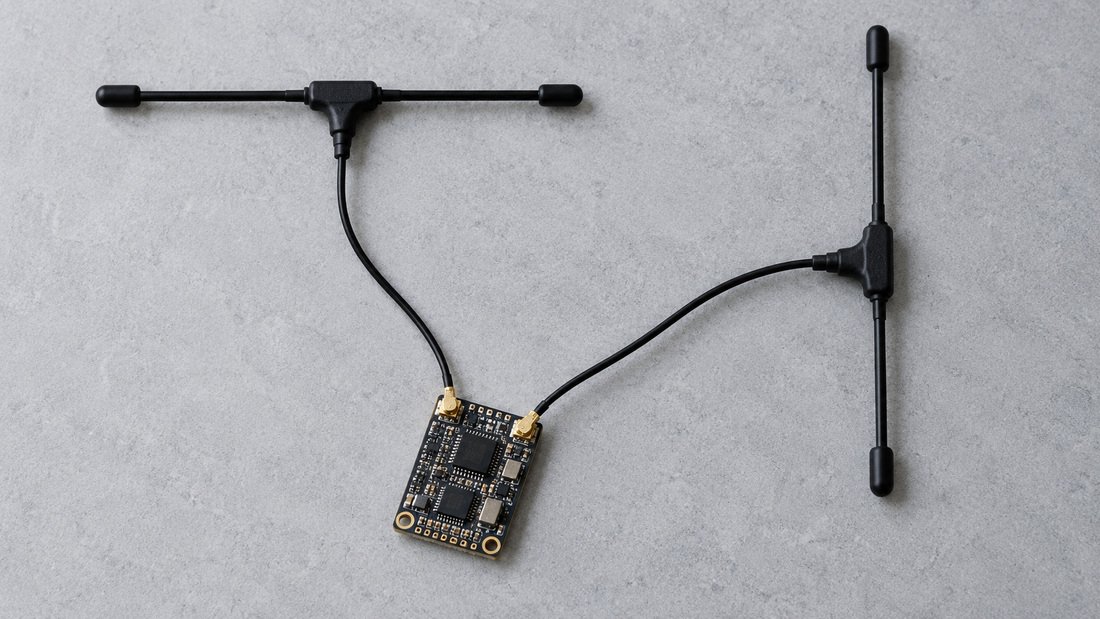
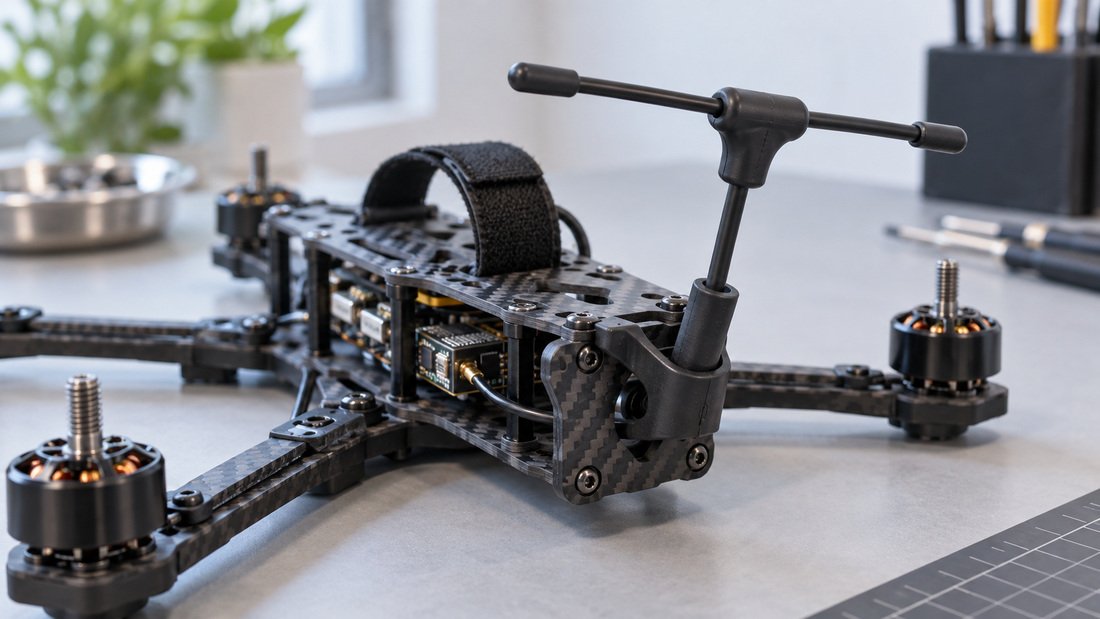
Competition fleets depend on stable, low-latency control links. Drone soccer systems are typically paired with compact receivers; many modern builds use ELRS (ExpressLRS, an open-source radio control link) receivers such as the BKR series. When you own equipment, someone must track firmware versions so that every airframe behaves identically.
Staff time is a line item
Inspection, charging, pairing, repairs and pack-down consume staff hours. If those hours are unpaid volunteer time today, they still become a cost when volunteer availability drops.
What a rental agreement should spell out
A rental quote tells you the price. The contract tells you the risk. Ask for these in writing before signing:
- Exact unit count, including spare airframes, transmitters and batteries.
- Damage, loss and theft policy, including excess or deposit terms.
- Battery state-of-health commitment and who supplies charged packs on match day.
- Delivery, setup, collection and late-return windows and fees.
- Who provides technical support on site, for how many hours, and the escalation route.
- Whether firmware and radio configuration are pre-set, and to which version.
- Insurance requirements and who covers third-party damage.
Renting is not automatically the safe option
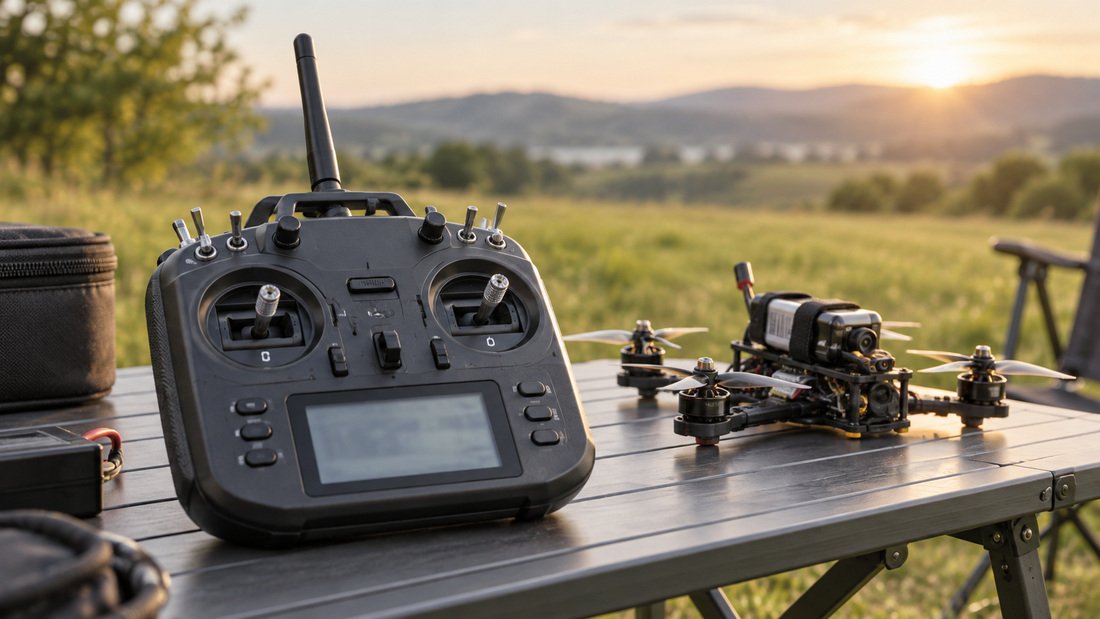
Rental reduces capital risk but introduces operational dependency. If a provider’s units arrive misconfigured, fail mid-competition or are late, your event absorbs the reputational damage, not theirs. For a flagship tournament, that risk may justify owning at least a small reserve fleet.
The reverse trade-off also applies: owned equipment can sit idle for months, and idle LiPo packs and unused transmitters still need periodic attention to remain competition-ready.
A hybrid model that works for many organizers
Split the fleet by cost and fragility. Buy the items that are cheap, heavily consumable and easy to store — guards, propellers, batteries, basic tools, spare receivers. Rent or lease the expensive, calibration-sensitive items such as charging infrastructure, field electronics and large airframe batches used only on match days.
This keeps your capital exposure moderate while giving you a guaranteed reserve for the equipment that breaks most often. It also makes multi-venue events easier, because you scale the rented portion per site.
Plan the rules before you plan the purchase
Drone soccer events usually involve youth participants, so flight rules matter to your schedule and to your insurance. In the United States, the FAA states that drones flown for educational purposes are regulated either under the Exception for Limited Recreational Operations of Unmanned Aircraft (49 U.S.C. § 44809) or under the Small Unmanned Aircraft Systems Rule (Part 107). The FAA notes that drones flown for educational and research purposes may be operated under § 44809 for qualifying educational organizations — including institutions of higher education, Junior Reserve Officers’ Training Corps (JROTC) programs, and educational programs chartered by an FAA-recognized Community Based Organization. Educational organizations that do not qualify must operate under Part 107 unless chartered by a recognized CBO. Source: FAA — Educational Users.
The same FAA page notes that educational institutions, including primary and secondary schools, trade schools, colleges and universities, are eligible to request the establishment of a FAA-Recognized Identification Area (FRIA), a location where drones can be flown without Remote ID. For indoor school gyms this is often less relevant, but for outdoor finals it can affect your venue choice.
This guidance is specific to the United States. If your event is elsewhere, confirm the applicable national or regional rules with the relevant authority rather than assuming US rules transfer.
Where equipment decisions connect to program design
Equipment choice follows curriculum and competition design, not the other way around. Schools building a season-long program need durable, repairable fleets and a training path; organizers running open drone soccer competitions need predictable match-day logistics. Both benefit from documenting your format first — team count, match length, field layout, substitution rules — then matching equipment to it.
For institutions combining classroom delivery with competition, DPF’s overview of STEM drone education and training covers how practice time, coaching and equipment availability interact, and the schools and training organizations page outlines program-level considerations.
Common mistakes organizers make
- Comparing rental price to purchase price only. The fair comparison includes spares, batteries, storage and staff hours over the full season.
- Not agreeing a spare ratio. Without a written spare count, a mid-event failure becomes your delay.
- Ignoring battery logistics. Charging capacity, not airframe count, is the usual bottleneck on match day.
- Assuming configurations match. Mixed firmware across transmitters and receivers causes intermittent, hard-to-diagnose faults.
- Leaving regulation to the last week. Venue, Remote ID and operator rules can change your field plan.
- Buying before testing. A pilot event with rented equipment de-risks a larger purchase.
Event equipment procurement checklist
- Confirm event frequency, team count and number of venues for the next 12 months.
- Estimate airframe loss and battery needs per event using your own history or a pilot event.
- Request rental quotes with a written spare ratio and damage policy.
- Request purchase quotes with spare parts, batteries, charging and storage included.
- Compare total cost across the full season, not per event.
- Confirm who configures radio links and which firmware version is used.
- Confirm on-site technical support hours and escalation contacts.
- Verify the regulatory framework for your venue and participants.
- Check insurance and liability requirements for both options.
- Decide the hybrid split, if any, and document it.
Frequently asked questions
Is renting drone soccer equipment cheaper for a single event?
Usually yes, because you avoid capital outlay, storage and maintenance. The advantage shrinks as event frequency rises.
At how many events per year does buying make sense?
Many organizers find ownership becomes competitive once equipment is used several times per season, but the crossover depends on your rental rates, spare consumption and storage costs. Model it with your own quotes.
Who is responsible for damage during a rental?
It depends entirely on the contract. Ask specifically about accidental damage, loss, theft and normal wear, and get the answer in writing before signing.
Do we need Part 107 to run a school drone soccer event in the US?
Not always. The FAA explains that educational flights may fall under § 44809 for qualifying educational organizations, while others must operate under Part 107. Confirm your organization’s status and read the FAA’s educational users guidance.
What is a FRIA and does it apply to our venue?
A FAA-Recognized Identification Area is a location where drones can be flown without Remote ID. Educational institutions are eligible to request one according to the FAA. Whether it helps depends on your venue and event format.
Can we brand rented equipment with sponsors?
Sometimes, but branding rights are set by the provider. Ask whether shells, field elements or signage can carry your sponsor marks before you sell sponsorship packages.
What should we buy first if we choose a hybrid approach?
Start with the highest-wear, lowest-cost items: guards, propellers, batteries and spare receivers. Defer large airframe batches and charging infrastructure until indoor or outdoor demand is proven.
Conclusion: match the model to your calendar
Rent when the event is occasional, the attendance uncertain or the budget one-off. Buy when drone soccer tournaments and events repeat, because the hardware keeps earning across seasons and you control configuration, branding and spares. For most organizers in between, a hybrid split gives the best balance of cost, resilience and logistics.
Whatever you choose, get unit counts, spare ratios, battery condition, damage terms, support hours and regulatory responsibilities confirmed in writing before committing. That single step prevents most match-day failures.
Planning your next event season? Request Event Equipment Support to discuss DKZ-series drone soccer systems, ELRS receiver options and event spares.