Quick summary
Replacing a motor or propeller on a drone soccer ball is a routine maintenance task: power down and remove the battery, unclip or unscrew the damaged propeller, disconnect the motor wires, mount the replacement motor, reconnect it to the ESC, and then spin-test the rotor direction before the ball goes back in the cage. Propellers are the most common wear item, but repeated cage impacts can also damage motor mounts and wire leads.
Key Takeaways
- Propellers first, motors second: Most match-day failures are bent or cracked props, not burnt motors. Keep spare props in the team kit and change them in minutes.
- Match parts to the platform, not the photo: Motor size, shaft diameter, propeller pitch and connector type must match your existing drone soccer system. Request the exact spec sheet before ordering.
- Direction matters: Motors and props are made in clockwise (CW) and counter-clockwise (CCW) versions. Installing the wrong rotation can flip the ball on takeoff.
- Post-repair checks are mandatory: Verify wire polarity, prop orientation, motor screw tension, and do a low-throttle spin test before competitive use.
- Buy by the team, not the unit: Ordering spares at club or program level reduces downtime and usually improves pricing and consistency.
What tools and parts do you need for this replacement?
A small, well-organised repair kit handles almost every motor and propeller job on a drone soccer ball. The goal is to avoid needing a full workshop for a task that should take a coach or student a few minutes between matches.
- Correct spare propeller set for your model (CW and CCW pairs)
- Replacement motor matched to the original spec
- Small Phillips and hex drivers
- Propeller removal tool if the platform uses press-fit hubs
- Tweezers for connectors and wire routing
- Replacement screws or motor mount hardware
- Multimeter or continuity tester for wiring checks
- Isopropyl alcohol and lint-free wipes
- Small parts tray so screws do not disappear on the gym floor
If you are maintaining multiple balls, label parts by position (front-left, rear-right, and so on). Position labels prevent the most common mistake: mixing CW and CCW motors during reassembly.
How do you replace a propeller on a drone soccer ball?
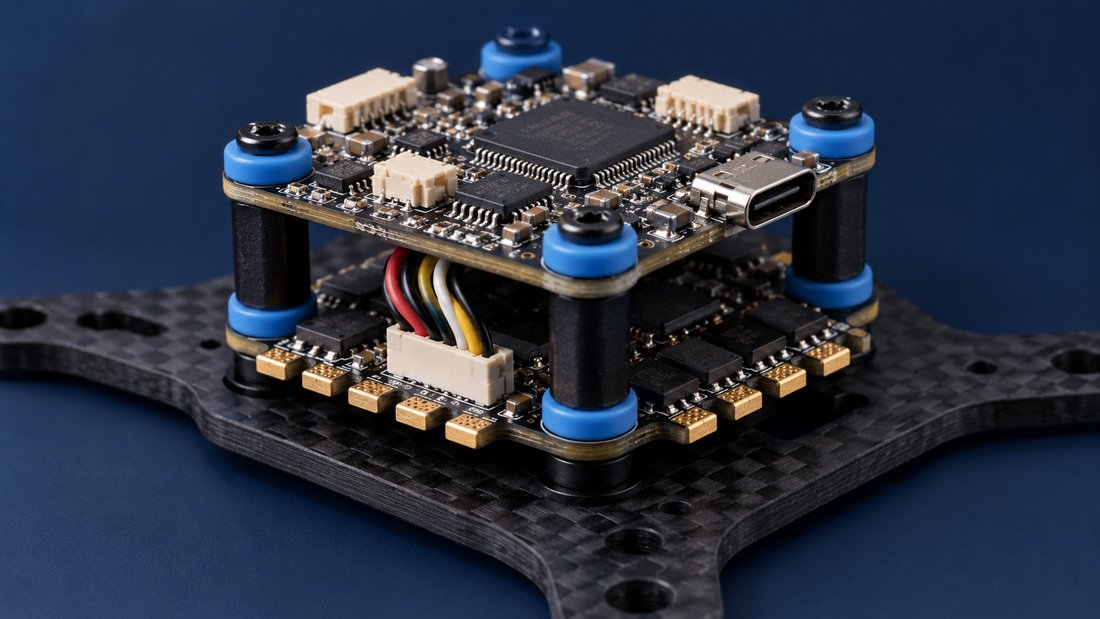
Propeller replacement is the fastest repair. Power down, remove the battery, then remove the damaged prop. Inspect the motor shaft and threads, fit the correct CW or CCW propeller, and tighten it without over-torquing. Spin-test at low throttle with the ball restrained.
Step-by-step propeller swap
- Disconnect power. Remove the battery and let the electronics sit for a moment.
- Note the original orientation. Photograph the propeller before removal so you can copy the blade angle and direction.
- Remove the propeller. Unscrew the retaining nut or use the removal tool if the hub is press-fit.
- Inspect the shaft. Look for bent shafts, stripped threads, or grit. Clean with a lint-free wipe.
- Fit the replacement. Confirm the propeller matches the motor rotation direction. CW motors take CW props; CCW motors take CCW props.
- Tighten and check clearance. The prop should spin freely without touching the cage or duct.
- Test. Reconnect power and run a brief low-throttle spin test. Stop immediately if you hear vibration or scraping.
Common propeller mistakes
- Fitting a CW prop on a CCW motor, or vice versa
- Over-tightening the nut and cracking the hub
- Reusing a propeller that has lost a blade tip or has stress whitening at the root
- Skipping the spin test and discovering the problem mid-match
How do you replace a motor on a drone soccer ball?
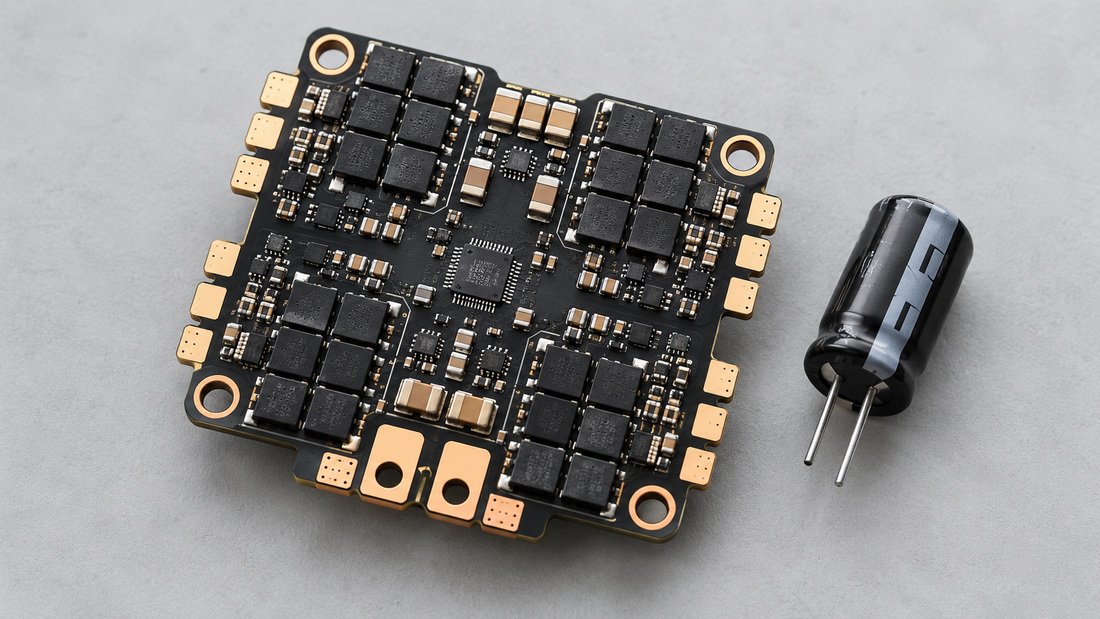
Motor replacement is more involved because you must disconnect and reconnect the ESC (electronic speed controller, the board that controls motor speed). Power down, remove the damaged motor from its mount, desolder or unplug the motor leads, install the replacement, and reconnect the leads in the original order.
Step-by-step motor swap
- Disconnect the battery and record the motor position.
- Remove the propeller so the motor is easier to handle.
- Free the motor mount. Undo the screws holding the motor to the frame or cage. Keep the hardware in a tray.
- Disconnect the motor leads. Depending on the design, these may be soldered to the ESC or use a plug. Note the wire order and position before removal.
- Remove and compare. Place the old motor next to the replacement. Check mounting hole spacing, shaft length and diameter, and connector type.
- Install the new motor. Use threadlocker sparingly if the manufacturer recommends it, and do not overtighten screws into plastic or thin carbon.
- Reconnect the leads in the original order. If the motor spins the wrong way after testing, swap any two leads to reverse direction — only do this after confirming with your platform documentation.
- Spin-test at low throttle with the propeller removed or the ball restrained. Confirm the correct rotation direction, then refit the propeller and test again.
Common motor mistakes
- Mixing up CW and CCW motors during reassembly
- Stripping motor screws by overtightening
- Pulling on motor wires instead of the connector body
- Forgetting to check that the new motor matches the ESC current rating
- Testing at full throttle without restraint or eye protection
If your program is new to this work, pair the repair guide with a short training session on your STEM drone education and training plan, so students learn safe handling before they touch a powered ball.
Which parts are worth keeping in your team spares kit?
A practical spares kit balances cost against downtime. Propellers are cheap and break often; motors are more expensive but fail less frequently. Schools and clubs that run regular sessions should hold enough spares to cover at least one full ball’s worth of propellers and a small number of motors.
| Spare part | Typical failure cause | Priority in team kit | What to confirm before ordering |
|---|---|---|---|
| Propellers (CW/CCW pairs) | Cage impacts, hard landings | High | Diameter, pitch, hub type |
| Motors | Wire fatigue, bearing wear, crash damage | Medium | Size, KV rating, shaft, connector |
| ESC modules | Overcurrent, solder joint failure | Medium | Current rating, firmware, connector type |
| Motor screws / mounts | Vibration, repeated disassembly | Medium | Thread size and length |
| Batteries | Cycle life, swelling | High | Voltage, capacity, connector |
For clubs that run internal leagues or travel to events, standardising on one drone soccer system across the team makes spares management far easier. Mixed fleets multiply the number of unique parts you must track.
Buyer checklist: what to confirm before ordering replacement parts
Use this checklist as a written record. It protects your program from ordering the wrong part and from disputes over what was supplied.
- Exact model name and revision of your drone soccer ball or platform
- Motor part number, KV rating, shaft diameter and length
- Motor rotation (CW or CCW) and quantity needed for each position
- Propeller diameter, pitch, blade count and hub mounting type
- ESC current rating and connector type if the motor is supplied with one
- Whether motors come with plugs, bare wires or pre-soldered leads
- Spare screw and mount hardware availability
- Packaging quantity: single units, pairs or team packs
- Price breaks at club or association volume
- Lead time, shipping method and any duties for your country
- Return or replacement policy for dead-on-arrival parts, in writing
- Technical documentation or wiring diagram supplied with the order
Confirm these points in writing with your supplier before payment. Where a supplier publishes commercial terms, read them carefully and ask for clarification on anything that is not explicit.
Trade-offs: repair or replace?
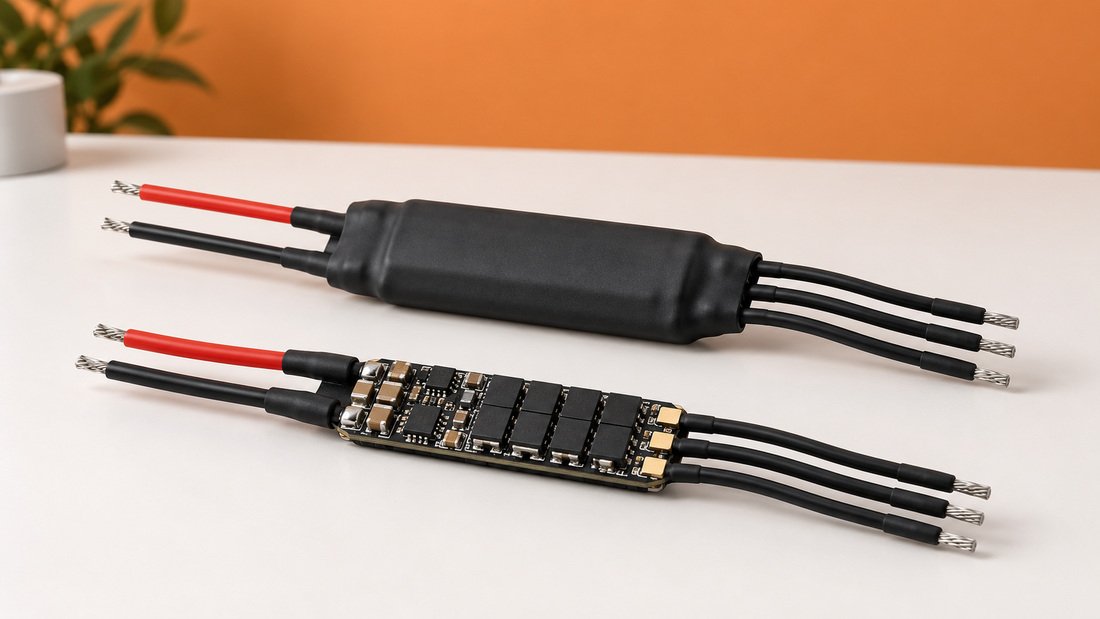
Not every fault is worth fixing. A bent propeller is a two-minute swap; a motor with a bent shaft or burnt windings usually is not repairable in a school setting. The table below helps coaches decide quickly.
| Symptom | Likely cause | Typical action |
|---|---|---|
| Visible crack or bent blade | Impact damage | Replace propeller |
| Vibration at low throttle | Unbalanced or damaged prop, bent shaft | Replace prop first; inspect motor |
| Motor does not spin | Loose lead, failed ESC, failed motor | Check connections; swap motor or ESC as needed |
| Motor gets very hot | Overcurrent, wrong prop, bearing wear | Stop use; diagnose before flying again |
| Ball drifts or flips on takeoff | Wrong prop direction or motor order | Recheck CW/CCW placement |
Keep a simple repair log per ball: date, symptom, parts replaced, and who did the work. Over a season, the log shows which parts you actually consume and how many spares to hold. It also helps when you discuss drone soccer clubs budgets with administrators who want evidence of maintenance costs.
Safety and compliance notes for school and club programs
Repair is only half the story. Programs that fly drones for education in the United States should understand which operating rules apply to them. According to the FAA, drones flown for educational purposes are regulated either under the Exception for Limited Recreational Operations of Unmanned Aircraft (49 U.S.C. § 44809) or under the Small Unmanned Aircraft Systems Rule, Part 107 (14 CFR Part 107). The FAA notes that qualifying educational organizations include institutions of higher education, Junior Reserve Officers’ Training Corps (JROTC) programs, and educational programs chartered by an FAA-recognized Community Based Organization. Educational organizations that do not qualify must operate under Part 107. Programs can read the FAA’s guidance at https://www.faa.gov/uas/educational_users.
This article does not provide legal advice. Requirements differ by country and by program type, so check with your local aviation authority and your school or club administrator.
From a workshop perspective, enforce basic safety rules: eye protection during spin tests, propeller removal before motor work, battery storage in a fire-safe container, and adult supervision for student repairs. These habits keep the maintenance bench safe and teach students disciplined technical practice.
Planning repairs into your season calendar
Repairs happen, so schedule for them. A short pre-session inspection catches loose screws, chipped props and frayed wires before they become match-day failures. A post-session wipe-down and battery check extends equipment life.
For clubs preparing for drone soccer competitions, build a spares kit that travels with the team: props, one or two motors, screws, tools and a multimeter. Label everything and assign a student or volunteer as equipment manager. This is also a genuine STEM learning opportunity in inventory, documentation and quality control.
Event organisers should think about spares at scale. A repair station with common parts, tools and a clear parts-matching chart reduces withdrawals and keeps matches on schedule.
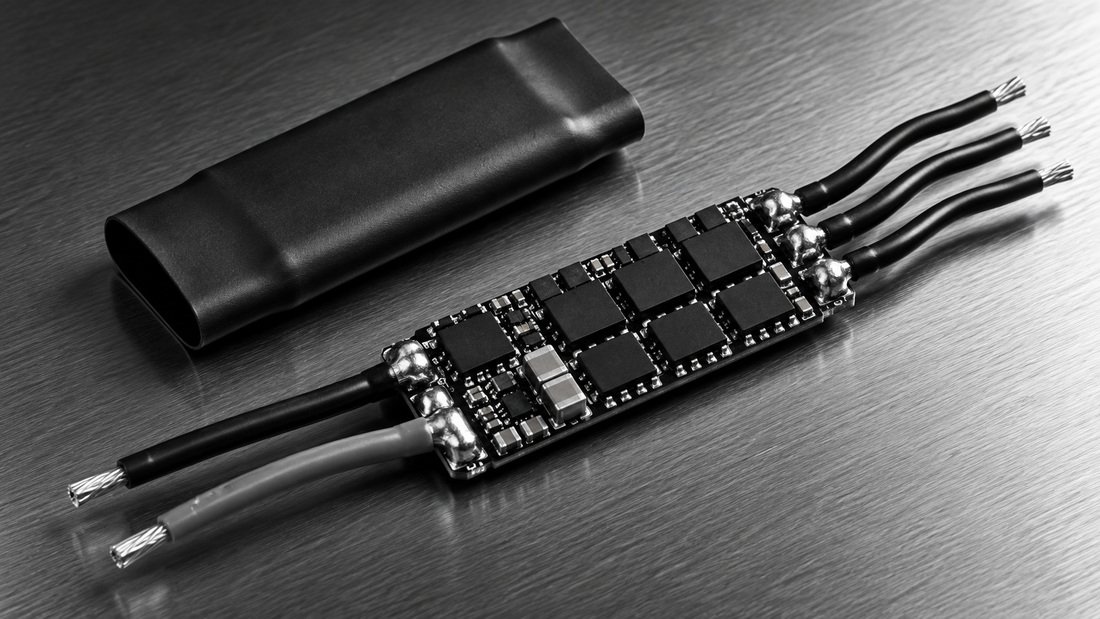
Distributors and OEM/ODM buyers often need motor and propeller spares in consistent batches rather than one-off units. If you supply schools or clubs, ask your manufacturer to confirm packaging quantities, labelling and documentation so your customers can reorder the same part reliably.
Frequently asked questions
How often should drone soccer propellers be replaced?
Replace any propeller that is cracked, bent, chipped or visibly stressed. In high-contact training, some teams inspect after every session and replace props as needed. There is no universal replacement interval because wear depends on impact frequency and surface type.
Can I use any propeller that fits the shaft?
No. Diameter, pitch, blade count and hub type all affect thrust and current draw. An incorrect propeller can overload the motor or ESC and cause unstable flight. Always match the original specification or confirm with your supplier.
How do I know if a motor needs replacing rather than the ESC?
Inspect the motor wires and connectors first, then test the motor on a known-good ESC channel if your setup allows. A motor that does not spin on a working channel is likely faulty; a channel that fails with a known-good motor points to the ESC. Follow your platform’s diagnostic guidance.
Do motors come with the correct connectors?
It varies by supplier and model. Some motors ship with plugs fitted, others with bare wires for soldering. Confirm this before ordering so you have the right tools and connectors on hand.
Is it safe for students to replace motors themselves?
Propeller swaps are a reasonable supervised student task. Motor replacement involves soldering or delicate connectors and should be demonstrated first, then supervised. Follow your school’s safety policy and local rules.
How many spare motors should a club keep?
A reasonable starting point is one spare per active ball, plus one or two for the team. Track failures over a season and adjust. If you run a large programme, ask your supplier about volume pricing and consistent packaging.
Will replacing a motor void any warranty?
Warranty terms differ by supplier, product and country. Ask for the written policy before you buy, and keep records of repairs and parts used. Do not assume that consumer warranty rules from one country apply to a B2B purchase in another.
Conclusion
Replacing a motor or propeller on a drone soccer ball is a predictable maintenance task when you have the right parts, the right tools and a simple checklist. Propellers are your fastest fix; motors take more care because of wiring and rotation direction. Standardise your fleet, keep a labelled spares kit, and log every repair so you can order smarter next season.
For clubs, schools and distributors sourcing drone soccer equipment in team quantities, DPF’s Request a Team Kit Quote is the practical next step: share your platform, part numbers and quantities, and confirm specifications, packaging and delivery terms in writing before you order.