Quick summary
For drone soccer, you almost always want self-level (also called angle or horizon mode), not acro. Self-level uses the accelerometer so the ball returns to a level attitude when the sticks are centred, which keeps play predictable for youth teams and protects the cage. Acro uses the gyroscope only, holds whatever angle you command, and does not self-correct — suitable for experienced FPV pilots, not beginner or school play. The mode is set by firmware on the flight controller (the drone’s onboard computer), not by the ball shell.Betaflight docs
Key Takeaways
- Self-level uses the accelerometer; acro uses only the gyroscope, so it never self-corrects.
- Drone soccer leagues and school programs standardise on self-level for fairness and safety.
- The mode lives in flight controller firmware (commonly Betaflight), configured through a configurator.
- Two or three switch positions — self-level, acro, and often a hybrid — matter more than chasing many modes.
- Before buying team kits, confirm in writing which flight controller, firmware version and switch layout ships with the ball.
What Is the Difference Between Self-Level and Acro?
The short answer: self-level automatically returns the ball to a flat attitude, while acro holds the last angle you command and lets the pilot manage everything.
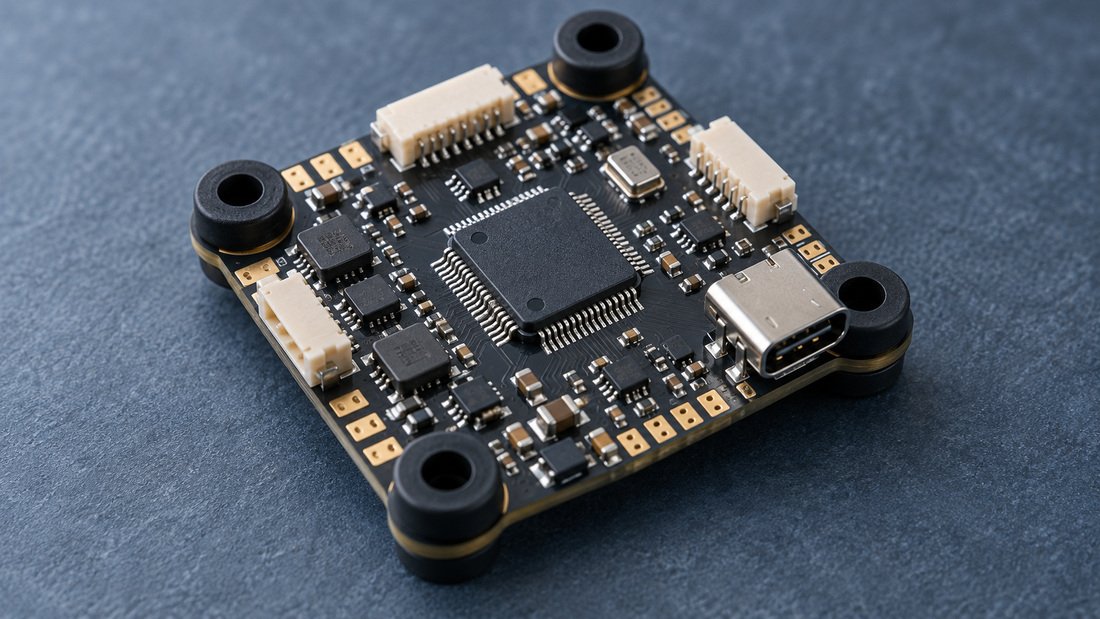
A flight controller is essentially a small computer that reads sensors, computes what the motors should do, and sends commands to the electronic speed controllers (ESCs) that drive the motors.Betaflight docs The two sensors that decide your flight mode are the gyroscope and the accelerometer.
The gyroscope measures rotation rate. Acro mode uses it alone: when you push the stick and release, the ball keeps the attitude it reached. That is why acro feels direct and smooth for cinematic or freestyle flying, and why it is unforgiving for a new pilot.
The accelerometer measures which way is down. Self-level mode blends that data so the controller actively drives the ball back toward level whenever the sticks are centred. The trade-off is a slightly softer, more assisted feel and less tolerance for aggressive, unusual attitudes.
Why Drone Soccer Standardises on Self-Level
Drone soccer is played indoors, close to other players, inside a protective cage with a fixed goal ring. Predictability matters more than raw agility. Self-level keeps the ball’s behaviour consistent between players of different skill levels, reduces the time a beginner spends recovering from a tumble, and lowers the chance of an uncontrolled impact.
Because of this, most youth and school programs treat self-level as the default and reserve acro for advanced demonstration or coach practice. If you are buying on behalf of a club or association, the mode question is really a fleet consistency question: every ball in the set should behave the same way.
When Acro Is Still Useful
Acro has legitimate uses in a drone soccer context. Coaches may fly acro to demonstrate recovery techniques or to film training. Older, experienced players may use it in exhibition formats. Some pilots also prefer a hybrid mode (often called horizon) where self-level applies at centre stick and acro-like freedom applies at the extremes.
Whatever the choice, it should be a deliberate setting, documented for the team, and not left to chance on a ball that arrives from a supplier.
Where the Setting Actually Lives: Drone Soccer Ball Electronics
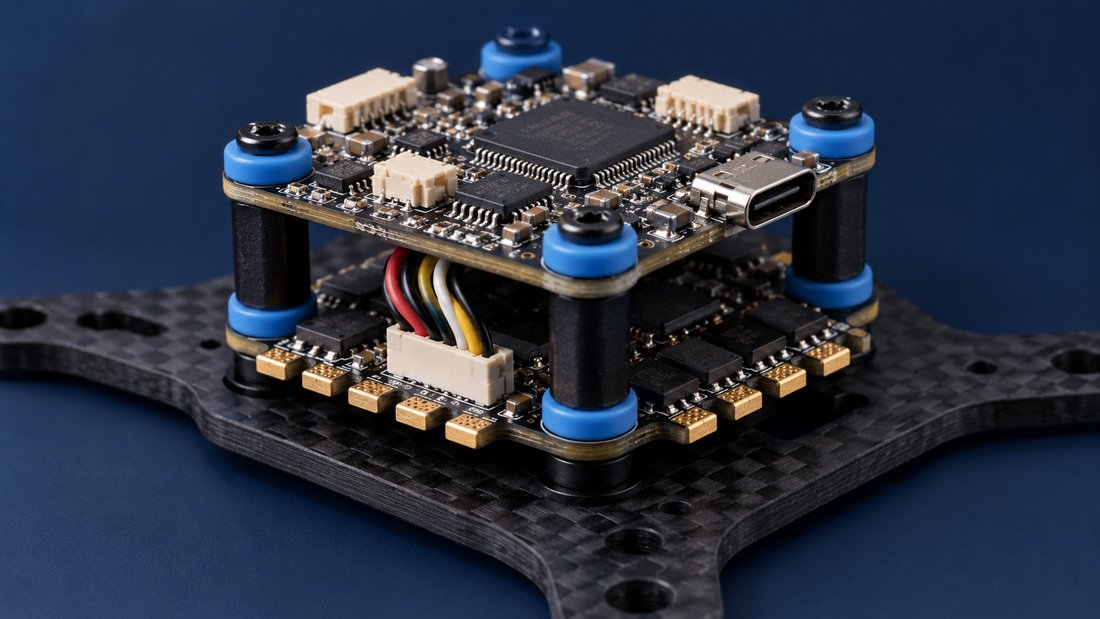
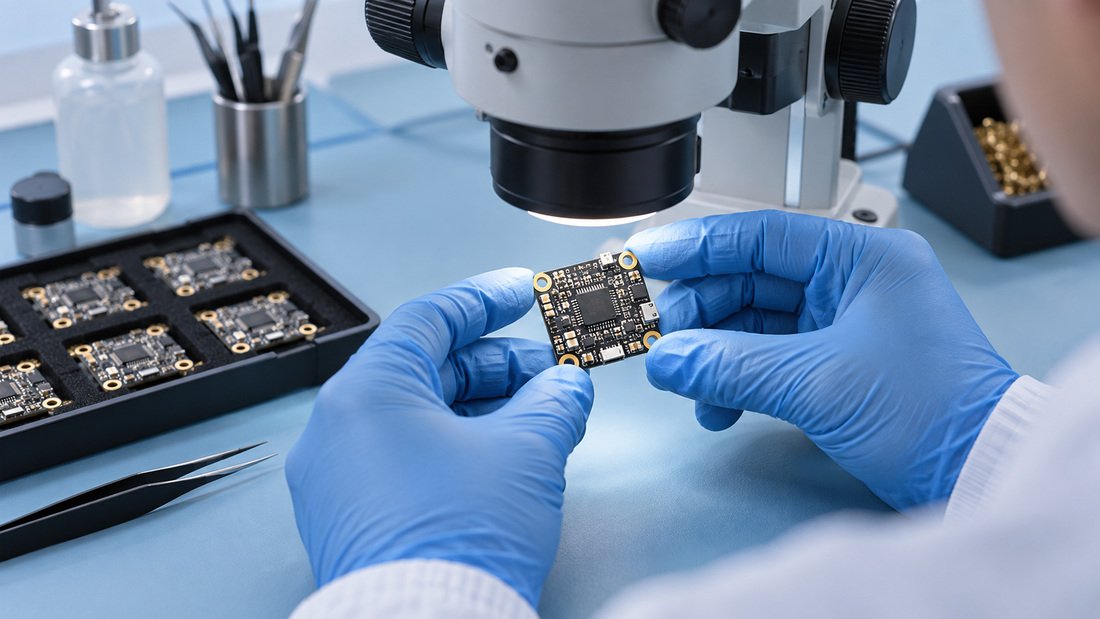
Beginners often look for a “mode switch” on the ball itself. In practice, drone soccer ball electronics are a small stack: a flight controller, one or more ESCs, a radio receiver, a video transmitter, and a camera, all powered from a battery.
The mode is configured in firmware on the flight controller and then mapped to a transmitter switch. Betaflight, an open-source flight control firmware, supports both self-level (via the accelerometer) and acro (gyro-only) control, and supports a wide range of receiver and ESC protocols so the same logic applies across many hardware combinations.Betaflight docs
That matters for procurement because it means two balls with identical shells can behave completely differently if their flight controllers or firmware versions differ.
Typical Hardware in a Drone Soccer Ball
- Flight controller: runs the firmware and holds the gyro and accelerometer.
- ESC: converts controller commands into motor drive. DShot is the common modern protocol.Betaflight docs
- Receiver: links the ball to the pilot’s radio; ELRS is a common modern option.
- VTX and camera: give the pilot or spectators a video feed.
- Power: battery and regulation for the whole stack.
If you are specifying a fleet, these components are the ones to standardise across every ball. The FPV electronics category is a good starting point for comparing them in one place.
How to Configure Self-Level vs Acro
The short answer: connect the flight controller to a configurator, enable the accelerometer, assign flight modes to transmitter switch positions, then set the arm and mode switches in the order pilots expect.
Betaflight notes that the gyroscope drives basic acro flight control, while the accelerometer enables self-levelling — so if the accelerometer is disabled or uncalibrated, self-level will not behave correctly.Betaflight docs
Because firmware menus change between versions, treat the steps below as a general sequence rather than a click-by-click guide for one release. Always check the documentation for the exact firmware version on your hardware.
General Configuration Sequence
- Confirm the flight controller firmware and version in use across your fleet.
- Enable and calibrate the accelerometer on a level surface.
- Assign modes to switch positions — for example, one position for self-level, one for acro, and optionally one hybrid.
- Set arm and mode switches so a pilot cannot accidentally fly in the wrong mode at launch.
- Verify the behaviour on a bench test with props removed before flight.
- Document the final switch map and share it with every pilot and coach.
Self-Level vs Acro: Comparison for Team Buyers
The short answer: self-level is the right default for drone soccer; acro is a specialist option for experienced pilots and demonstrations.
| Factor | Self-Level (Angle / Horizon) | Acro |
|---|---|---|
| Sensor used | Gyro plus accelerometer | Gyro only |
| Behaviour at centre stick | Returns toward level | Holds last commanded angle |
| Learning curve | Gentler for new pilots | Steeper |
| Drone soccer suitability | Default for leagues and schools | Advanced, demonstration, coaching |
| Fleet consistency risk | Lower if all balls match | Higher; needs skilled pilots |
| Damage risk in tight indoor play | Generally lower | Generally higher |
| Typical configuration | Accelerometer enabled and calibrated | Accelerometer not required |
These are general tendencies, not guarantees. Actual feel depends on tuning, weight, prop choice and the ball’s cage design.
Common Mistakes When Setting Up Drone Soccer Electronics
The short answer: most problems come from inconsistency across a fleet, not from the mode choice itself.
- Mixing firmware versions across a team set. Identical balls can fly differently, which causes disputes during play.
- Skipping accelerometer calibration. Self-level will drift if the accelerometer is not set up correctly.Betaflight docs
- Leaving mode mapping to chance. If switches differ per ball, pilots make mistakes under pressure.
- Assuming a ball ships in self-level. Confirm the default mode with your supplier in writing.
- Not budgeting for spares. A club needs replacement flight controllers and ESCs, not just complete balls.
- Forgetting receiver and video compatibility. A mixed FPV video receivers and radio setup slows repairs and training.
Choosing Electronics for Your Team: Mid-Article Checklist
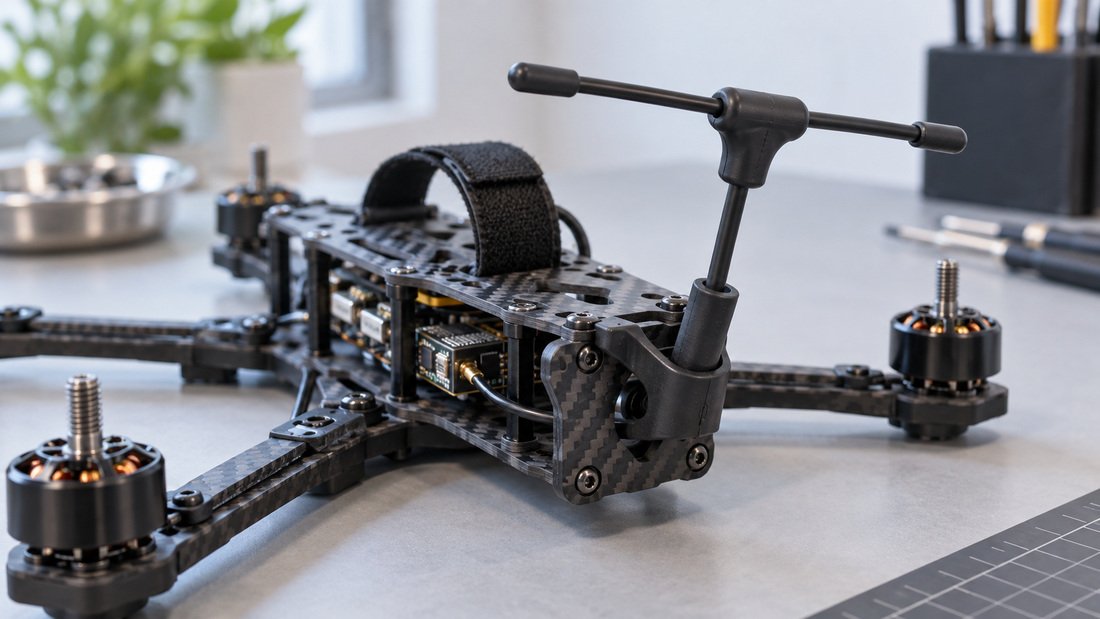
If you are sourcing for a school, club or association, match the electronics to how your program actually runs. DPF supplies electronic speed controllers and other stack components alongside drone soccer, flight controller and ELRS receiver lines, so you can standardise a fleet from one source.
- Mode default: Ask the supplier to confirm which mode ships enabled.
- Firmware: Request the firmware family and version, and whether it can be locked for consistency.
- Sensor set: Confirm the accelerometer is present and calibratable.
- Receiver protocol: Match to the radios your coaches already own.
- Spares plan: Ask which components are field-replaceable.
- Documentation: Request a written switch map and setup notes you can hand to volunteers.
Want to talk through what a team set should include? Start a conversation with our team before you finalise specifications.
Procurement Checklist Before You Buy Team Kits
The short answer: get the flight behaviour, compatibility and support terms in writing before purchase order.
- Confirm default flight mode (self-level expected) and how it is mapped.
- Confirm the flight controller model, firmware and version shipped.
- Confirm receiver type and compatibility with your existing radios.
- Confirm ESC protocol and whether replacements are available separately.
- Confirm video system type and whether a recording option such as an FPV DVR is supported.
- Request samples before committing to a full set where possible.
- Ask for a written statement of what is and is not covered commercially — pricing, quantities, lead times, warranty and support terms should all be confirmed by the supplier rather than assumed.
- Ask whether OEM or ODM customisation is offered if you need club or association branding.
Frequently Asked Questions
Should drone soccer balls use self-level or acro?
Self-level is the standard choice for drone soccer, especially for schools and youth programs, because it keeps the ball predictable and easier to control. Acro is a specialist option for experienced pilots and demonstrations.
Can a drone soccer ball switch between self-level and acro?
Yes, if the flight controller firmware supports flight modes and the pilot’s transmitter has spare switch positions. The mode is assigned in the configurator and then selected in flight.
Does self-level need GPS?
No. Self-level relies on the gyroscope and accelerometer, which are onboard sensors. GPS is a separate feature used for other functions such as rescue features.Betaflight docs
Why does self-level drift on some balls?
Usually because the accelerometer was not calibrated properly, or because the ball was not level during calibration. Recalibrating on a level surface is the first step to check.
Can we lock a fleet to self-level only?
Depending on the firmware and setup, mode access can be limited or simplified. Ask your supplier whether a restricted switch map is possible for your program.
Does acro mode damage the ball faster?
Acro is generally less forgiving, and a pilot in acro has less automatic help recovering from unusual attitudes. Whether that translates to more damage depends on the cage, the venue and pilot skill, so treat it as a risk to manage rather than a fixed rule.
What should a club standardise first?
Start with flight controller, firmware version and switch mapping. Those three determine whether every ball in your set behaves the same way during practice and competition.
Conclusion
For drone soccer, self-level is the practical default: it uses the accelerometer to keep the ball predictable, which suits school programs, youth leagues and mixed-ability teams. Acro remains a useful specialist mode for coaches and advanced pilots. Because the setting lives in flight controller firmware rather than the shell, the real procurement task is standardising electronics, firmware and switch mapping across your whole fleet — and confirming those details in writing with your supplier.
Ready to equip a team, club or association? Request a Team Kit Quote and tell us your program size, radio setup and mode requirements so we can help you specify consistently.