Quick summary
Teams should keep a small, tiered set of spares that covers the drone soccer ball cage and structure first: complete ball cage halves or shell sets, inner frame struts and connectors, and a few wing/frame spares. The cage absorbs nearly every collision, so it fails far more often than motors or electronics. Stock enough to cover one full round of simultaneous breaks plus one rotation, then match quantities to how many balls your squad flies. Before ordering, confirm material, fit, thread, and repair method in writing — those details decide whether a spare actually flies.
Key Takeaways
- The ball cage and structure are the highest-wear items in drone soccer; prioritize them over electronics spares.
- Stock at the shell/cage level and the inner structure level, not just whole replacement balls.
- Sizing depends on your ball count, session length, and how hard your team trains — not a universal number.
- Confirm material, wall thickness, fastener type, and repair method in writing before any bulk order.
- Pair cage spares with a few frame and propulsion spares so a broken ball does not end the session.
Why the cage and structure fail first
Drone soccer is a contact sport for airframes. The outer cage is designed to hit other balls, the net, the goal frame, and the floor. Each of those events loads the cage and the inner structure that holds the propeller and electronics assembly.
Electronics usually fail from crash energy or heat, but the cage fails from repeated deflection. That is why a well-run team’s spare box is cage-heavy, not motor-heavy.
If you are new to the category, the outer ball and its inner structure are separate parts with separate failure modes. Treating them as one item makes it hard to predict what to reorder.
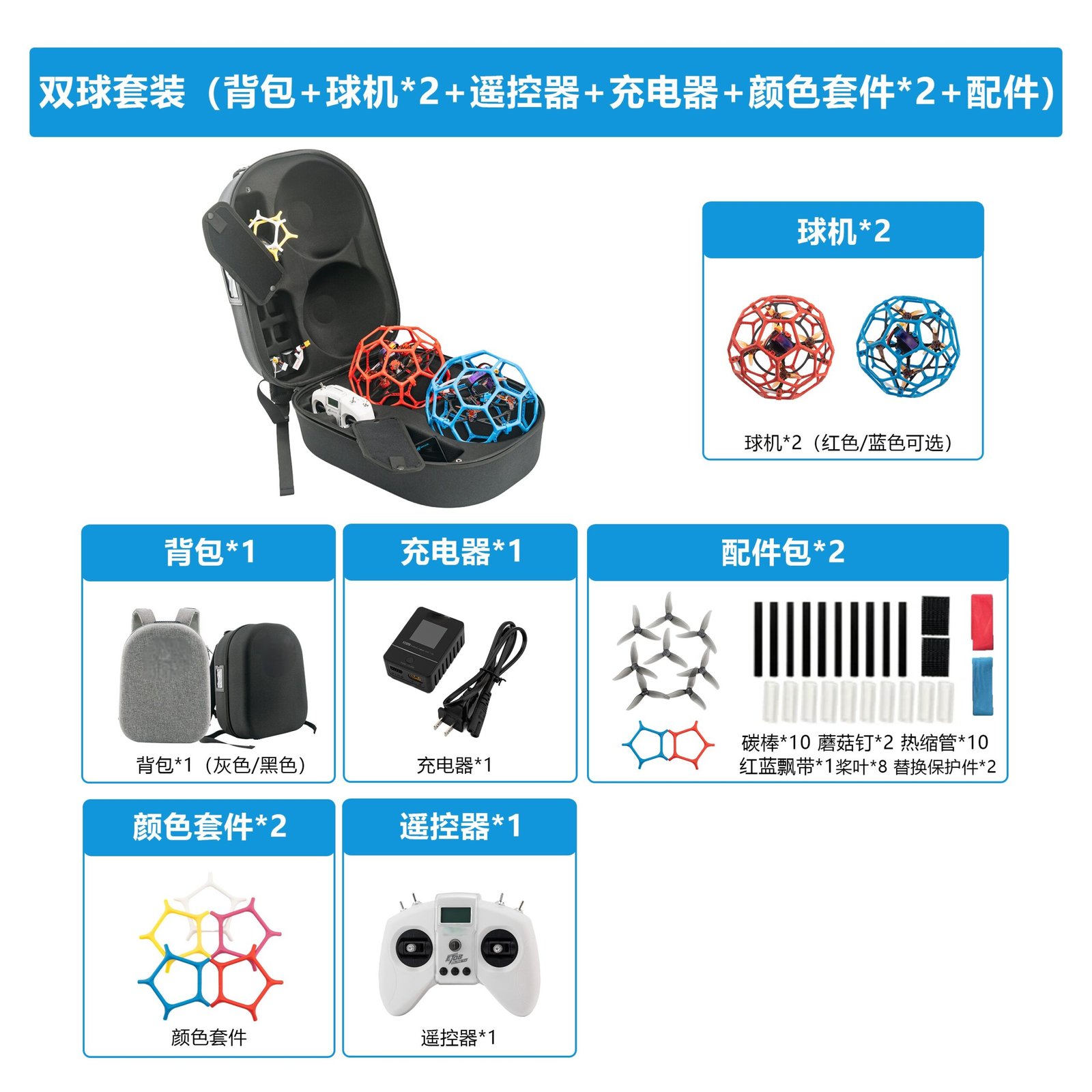
Which spare cage parts should teams keep?
Keep a two-tier kit: consumable cage parts that break in play, and structural parts that break less often but stop a ball from flying. The table below is a practical framework, not a fixed DPF bundle.
| Spare category | Examples | Why keep it | Typical priority |
|---|---|---|---|
| Outer cage / shell | Cage halves, protective shells, shell fasteners | Most common break from impacts | Highest |
| Inner structure | Ball cage inner struts, mounting posts, connectors | Keeps electronics aligned and flyable | High |
| Frame / airframe | Replacement arms and plates for the ball’s internal frame | Cracks from hard crashes | Medium |
| Propulsion | Motors, propellers, ESC boards | Heat and crash damage | Medium |
| Fasteners & small parts | Screws, clips, dampers | Cheap and easy to lose | High (low cost) |
| Complete spare ball | Fully assembled replacement unit | Fastest turnaround match day | Medium |
Teams often skip the small-parts line. In practice, a missing screw or clip can ground a ball as effectively as a cracked shell.
How many of each should you stock?
There is no universal number, because it depends on your ball count, training intensity, and reorder lead time you are willing to accept. Use a simple method instead of a fixed figure.
- Count how many balls fail in a typical hard training week.
- Multiply by two to cover a tournament weekend.
- Add one spare cage set per active ball so you can swap mid-session.
Ask your supplier what a recommended ratio is for a team of your size, and confirm it in writing. Any ratio is a planning aid, not a guarantee.
Build the kit around the parts that stop play
A spare is only useful if it restores flight during the session. Cage halves and protective shells usually do that fastest; internal structure parts take longer but prevent a bigger teardown.
For teams running multiple balls, keep one labeled repair tray per ball so parts do not migrate between units. This matters when cage halves are similar across a squad’s inventory.
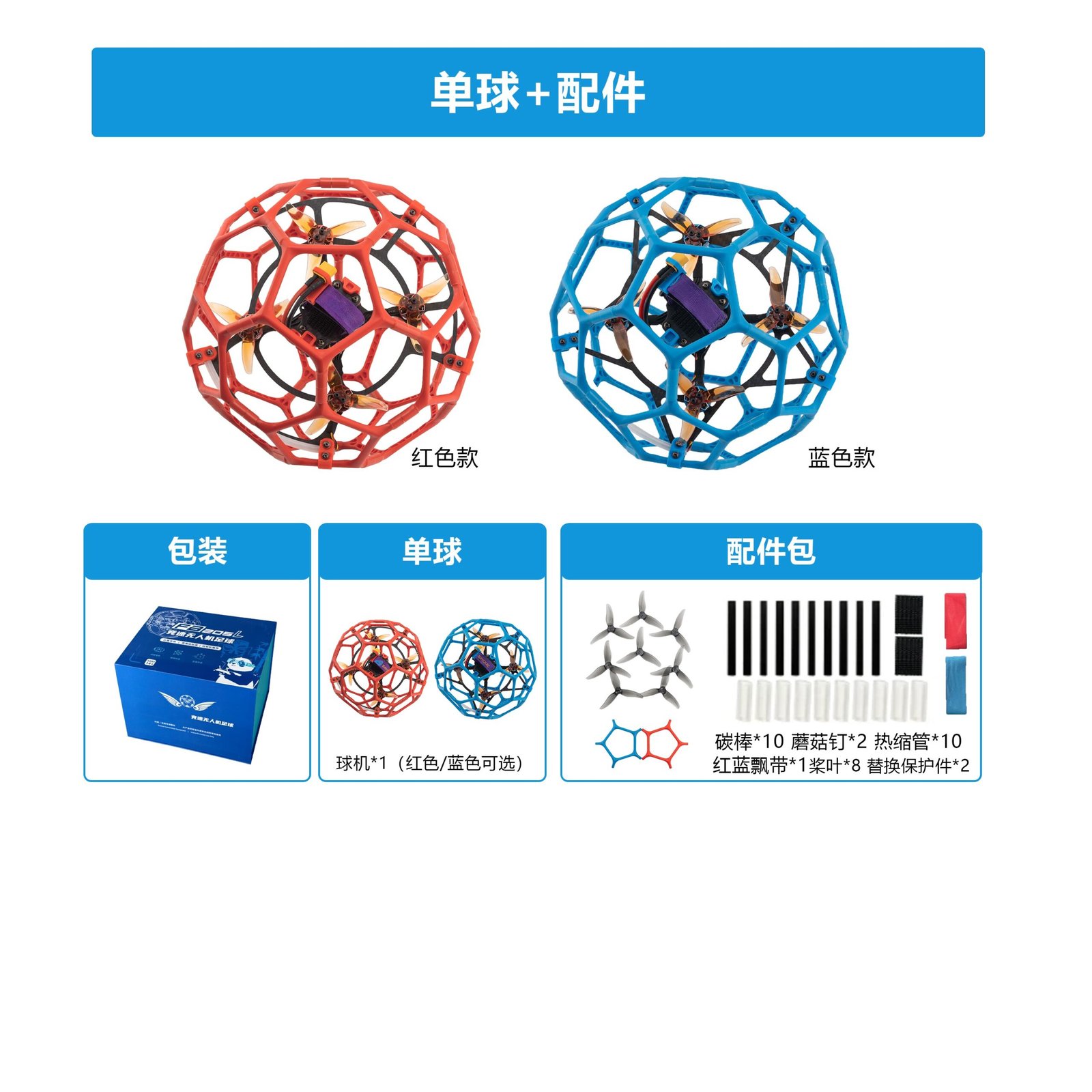
Match spares to your frame and propulsion choices
Cage spares only help if the rest of the ball still flies. Many programs pair drone soccer balls with standard drone frames and propulsion combo kits, so their spare box should include compatible frame and propulsion items too.
If you are buying replacement parts by category, DPF groups drone soccer replacement parts separately from frames, which makes it easier to build a two-tier kit.
Plan for power and control spares
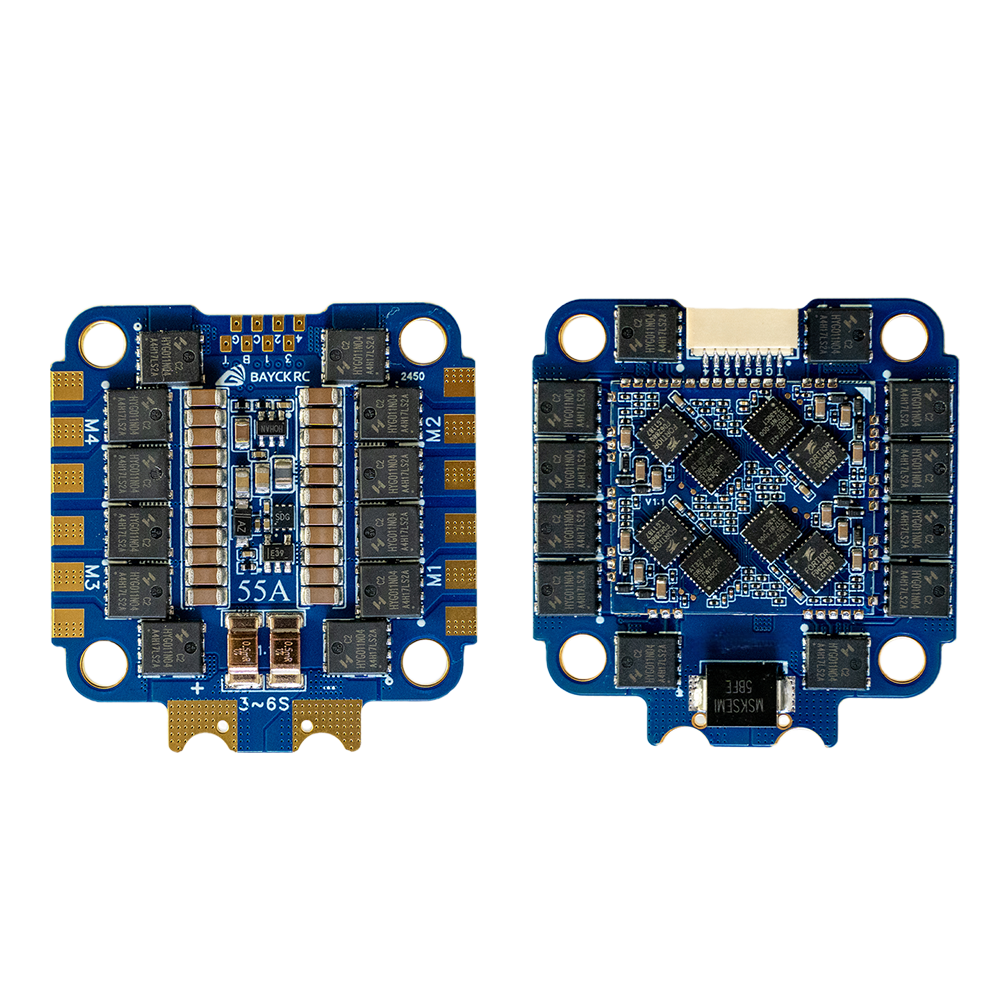
On the electronics side, a four-in-one ESC board is a common single point of failure. Keeping one known-compatible board per few balls can save a session.
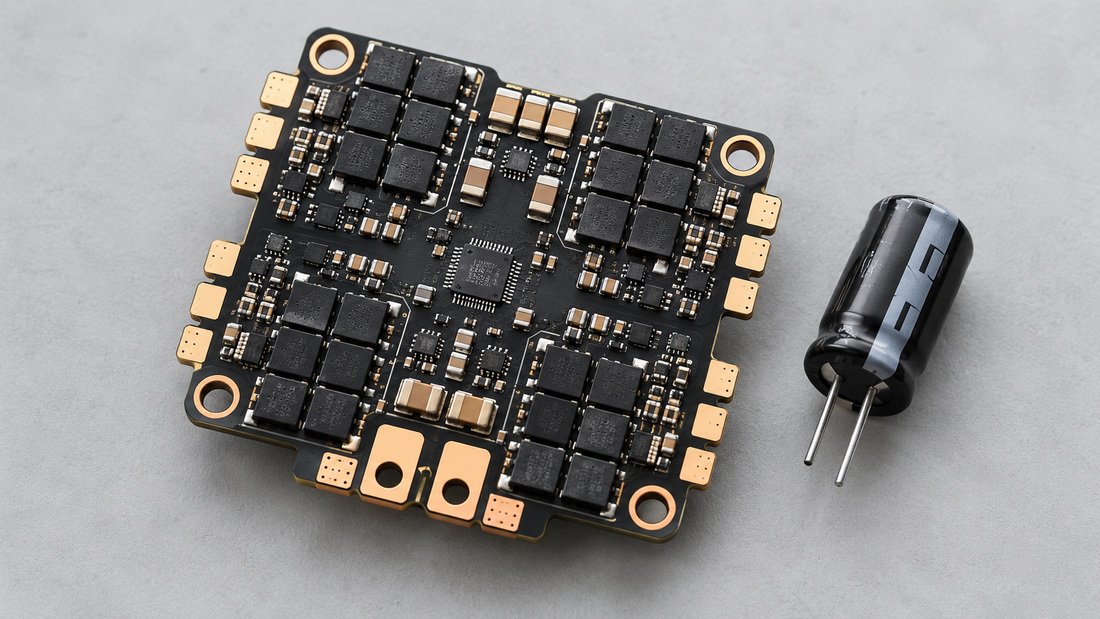
Flight control firmware choices matter for repair too. Betaflight describes itself as free, open-source flight control software that runs on flight controllers from many manufacturers, and it notes that support for each board comes from its manufacturer (see Betaflight getting started). Practically, that means when you replace electronics, confirm board support and configuration method with your supplier rather than assuming a drop-in swap.
Common mistakes when stocking spare cage parts
- Buying only complete balls. A whole spare ball is useful, but it hides the part that actually breaks — the cage.
- Ignoring internal structure. Teams replace shells and then find the inner mounting points are cracked.
- Mixing hardware. Different screw sizes or clip types across a squad slow repairs.
- No written spec. Ordering “the same cage” without confirming material, thickness, or fit invites mismatches.
- Overstocking electronics, understocking cages. The failure data usually runs the other way.
Procurement checklist before you order
Use this list when comparing quotes from any supplier, including DPF. It separates guidance from commercial terms you must verify yourself.
- Confirm the exact part name and whether it is a shell, a cage half, or an inner structural piece.
- Ask for material, wall thickness, and weight per piece.
- Confirm fastener type, thread, and whether tools are included.
- Confirm fit with your existing ball model and frame.
- Ask whether parts are sold individually, in sets, or as kits.
- Request the recommended spare ratio for a team of your size.
- Request minimum order quantity, price breaks, and lead time in writing.
- Confirm packing method and whether parts are labeled by ball position.
- Ask what documentation or drawings come with the order.
- Confirm the returns or replacement process for damaged or out-of-spec parts.
DPF publishes protective shells as a separate line, which is a good place to start a shell-level spare kit.
Illustrative example: sizing a school program’s kit
The following is a planning example, not a DPF specification.
A school program with six active balls might keep six spare cage sets, two inner structure sets, two complete spare balls, and a shared tray of fasteners. The coach then watches one training block and adjusts quantities based on actual breaks.
This approach works because it starts from observed failure, not from a catalogue. It also keeps budget for the parts that keep breaking.

Repair workflow that protects your spares
Label broken balls, log the failed part, and only then pull a spare. This habit turns your spare box into a data source for the next order.
Keep a small tool kit with the spares, and photograph each repair so new coaches can repeat it.
Ready to build a cage-first spare kit for your club or school program? Request a Team Kit Quote and confirm your quantities against your own failure log.
FAQ
What is the single most important spare for a drone soccer team?
A replacement outer cage or shell, because it is the part most exposed to impacts. Start there and add inner structure parts next.
Should we stock complete spare balls or individual parts?
Both serve different needs. Complete balls give fast match-day turnaround, while individual cage and structure parts are more economical for training repairs.
How many cage spares should a team keep?
There is no universal number. Track failures per training block, multiply for your busiest event, and confirm a recommended ratio with your supplier in writing.
Do cage parts fit every drone soccer ball model?
Not automatically. Fit depends on the ball model and inner frame. Confirm compatibility with your supplier before ordering, and request samples if you are unsure.
Are inner structure parts worth stocking?
Yes. A cracked inner structure can ground a ball even when the shell looks fine, and it takes longer to replace than a shell.
What should we confirm in writing before a bulk order?
Material, wall thickness, weight, fastener type, fit, MOQ, price breaks, lead time, packing, and the replacement process for out-of-spec parts.
Where can we source cage parts and related spares?
Start with dedicated replacement-part categories such as DPF’s drone soccer replacement parts line, then add frame and propulsion spares for the same ball platform.
Conclusion
The teams that stay in the air are the ones that treat the drone soccer ball cage and structure as consumables, not accessories. Stock outer shells and cages first, add inner structure and small hardware, then round out the kit with frame and propulsion spares.
Match quantities to your own failure log rather than a fixed list, and confirm every commercial and fit detail in writing before you buy in volume.
To turn this framework into a quote for your club, school, or association, Request a Team Kit Quote and share your ball count and typical training load.