Quick summary
Spare-part packages support school programs by grouping wear parts, spares and after-sales terms around how student drones actually break: crashed frames, bent propellers, worn motors and damaged receivers. A useful package should state what is covered, what counts as a consumable, how a faulty unit is replaced or repaired (the RMA process), and what documentation the school receives. Because warranty, RMA and after-sales terms vary by supplier, market and buyer type, schools should request these terms in writing before ordering, then match the package contents to their club size and flight hours.
Key Takeaways
- Match spare parts to the failure modes of student flying: crashes, hard landings, worn motors, damaged antennas and props — not to a generic toolkit.
- Ask for warranty, RMA and after-sales terms in writing, including whether the buyer is treated as a consumer or a business, since consumer warranty law differs by country.
- Decide in advance what is a consumable (props, batteries, antennas) versus a covered component, so nobody argues after a crash.
- Build the package around your repair workflow: who diagnoses, who swaps parts, and who ships faulty units back.
- Confirm lead times, MOQ and pricing in the quotation, not from a web page or a verbal promise.
What belongs in a school spare-part package?
A school spare-part package is a curated set of replacement components plus a documented service path. It should let a coach or technician return a grounded drone to service without ordering a whole new aircraft. The package answers three questions: what breaks, what replaces it, and who is responsible when a part fails early.
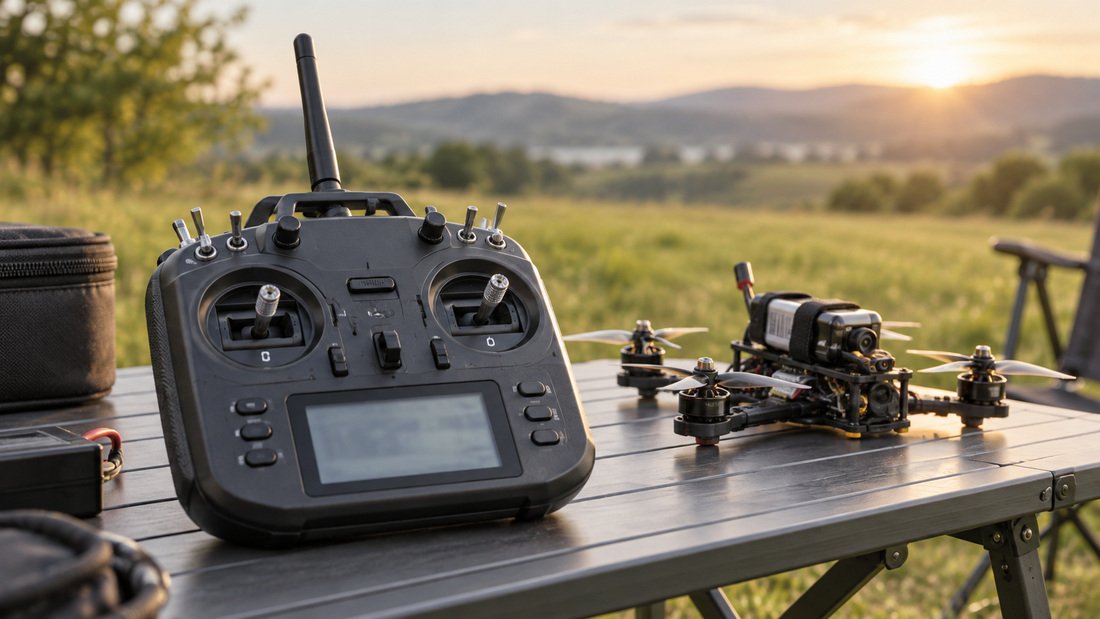
In drone soccer (also called drone ball or drone soccer, where teams fly small caged drones), the crash rate is high by design. Parts wear faster than in recreational flying. So a package should prioritise the components that touch the airframe, the propulsion system and the radio link.
Typical part categories
- Airframe and cage parts: frames, arms, prop guards and cages that absorb contact.
- Propulsion: motors, propellers and related fasteners — among the most frequently replaced items.
- Power: batteries and connectors, treated as consumables because of cycle life.
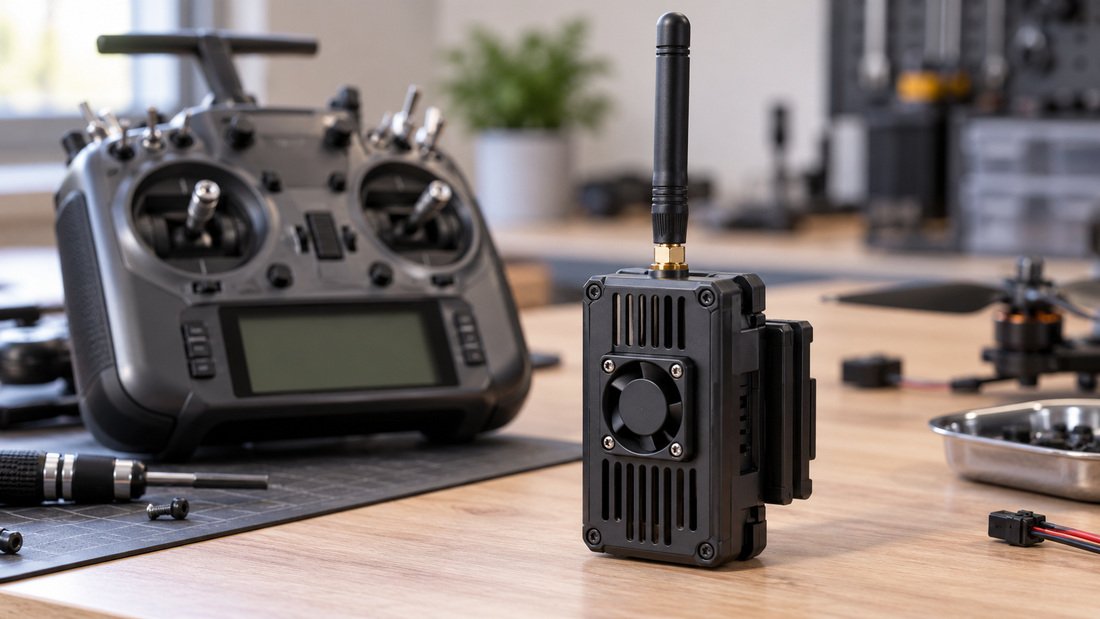
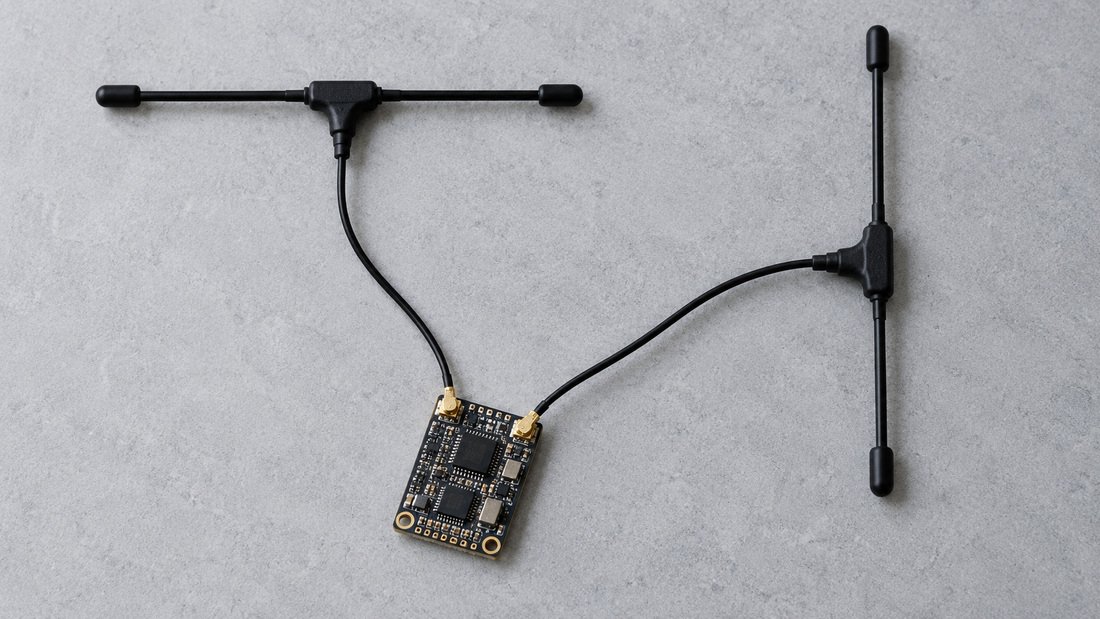
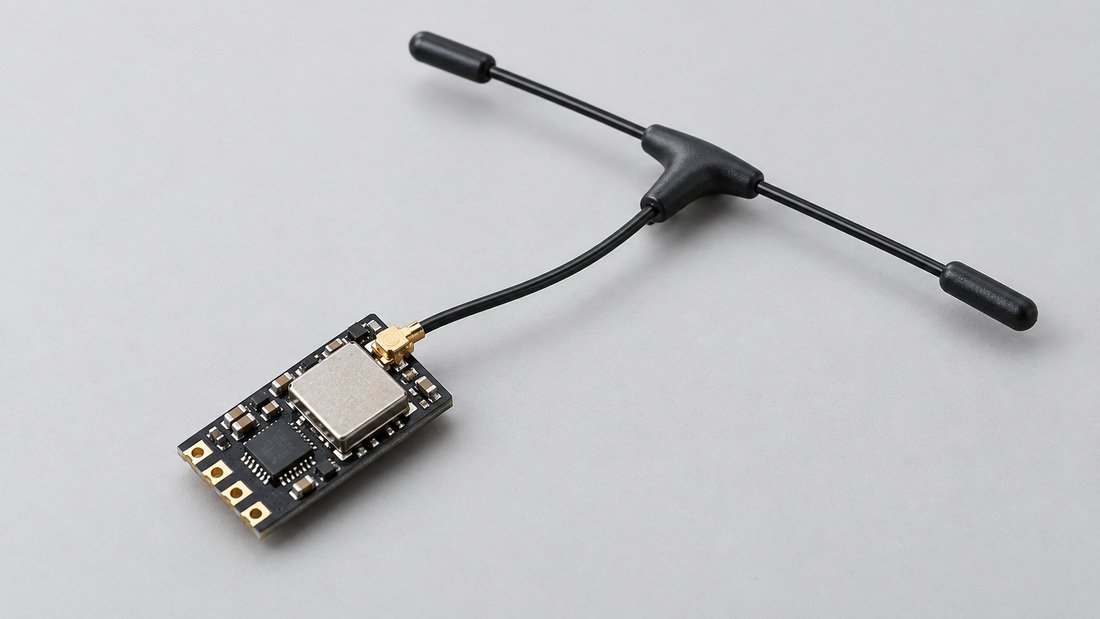
- Radio link: receivers and antennas. ELRS (ExpressLRS, an open-source radio control link) receivers and antennas are common in FPV and drone-soccer builds.
- Small hardware: screws, standoffs, cables and mounting accessories.
For programs flying FPV or drone-soccer platforms, receiver and antenna spares matter because a damaged antenna can end a session even when the airframe is fine.
How warranty, RMA and after-sales fit together
These are three different promises, and schools often conflate them. Warranty is the supplier’s commitment to correct certain failures. RMA (Return Merchandise Authorisation) is the administrative process for sending a faulty unit back or requesting a replacement. After-sales is the broader support layer: spare availability, technical help, documentation and how quickly a programme gets back in the air.
A package can look generous on parts but fail in practice if the RMA route is unclear or the school cannot tell which parts are covered.
Consumer versus business warranty context
Warranty rules depend on jurisdiction and on whether the buyer is a consumer or a business. In the United States, the Magnuson-Moss Warranty Act is the federal law governing warranties on consumer products, and the FTC’s business guidance explains that it covers written and implied warranties for consumer products and how terms may be worded or disclaimed (FTC, Businessperson’s Guide to the Federal Warranty Law).
The same guidance notes that implied warranties are created by state law and generally do not cover problems such as abuse, misuse, ordinary wear, failure to follow directions, or improper maintenance. That last point matters for schools: crash damage is usually ordinary wear in a training environment, not a manufacturing defect. Make sure your package and your internal repair policy agree on this.
If a school or district buys as an institution rather than as an individual consumer, the consumer-warranty framework may not apply in the same way, and local rules differ. Treat US consumer warranty guidance as context, not as the terms of your contract, and confirm the terms that apply to your purchase in writing.
Spare-part package tiers for different program sizes
The right tier depends on fleet size, flight hours and whether you have an in-house technician. The table below is a general planning framework, not a DPF price or SKU list. Confirm actual contents and terms with your supplier.
| Package tier | Best suited to | Typical focus | Service expectation to clarify |
|---|---|---|---|
| Starter / single-team | One club, low weekly flight hours | Props, batteries, a few arms or guards, basic hardware | How to request a replacement and who pays return shipping |
| Program / multi-team | School with several teams and regular sessions | Airframe spares, motors, receivers, antennas, consumables pool | Turnaround for RMA, restocking cadence, technical contact |
| District / event kit | Districts, leagues, event organisers | High-volume consumables plus a swap pool of critical parts | Bulk handling, documentation, replacement lead times |
Tier names are illustrative. What matters is that the package maps to your maintenance reality: how many drones are grounded on a typical session, and how long each stays grounded.
Trade-offs to weigh before you commit
- Breadth vs. depth: a wide kit with one of everything may leave you short on the parts you actually burn through. Depth on props, batteries and motors usually beats novelty items.
- Standardised vs. mixed platforms: standardising on one airframe and one radio link simplifies spares and RMA. Mixed fleets increase the number of SKUs you must hold.
- Repair vs. replace: replacing a whole drone is fast but costly; component-level repair is cheaper per incident but needs trained hands and a stocked parts bin.
- Genuine vs. compatible parts: compatible parts can lower cost but may affect performance and can complicate warranty claims. Ask how each affects coverage.
- Upfront cost vs. downtime: holding spare receivers and antennas costs money but prevents a cancelled practice session.
Common mistakes schools make with spares and RMA
Most failures of a spare-part programme are process failures, not parts failures. Watch for these.
- No written RMA procedure. Staff improvise, units sit in a box, and nobody knows the status.
- Treating consumables as warranty items. Expecting free replacement props or batteries after normal use leads to disputes. Clarify the boundary up front.
- Mixing consumer and institutional expectations. A district purchase may not sit under the same consumer-warranty rules as a parent’s online order.
- No failure log. Without records of what broke and why, you cannot right-size the next package or support a claim.
- Ignoring the radio link. A single damaged antenna or receiver can take a whole drone out of a session.
- Buying on price alone. The cheapest package can be the most expensive if replacement terms are unclear.
Suppliers with a documented quality control and inspection workflow make these conversations easier, because there is a traceable process behind the part.
Planning a program rollout? Tell us your fleet size, weekly flight hours and the parts you replace most often. We can help you shape a spare-part and support package that fits your budget and repair workflow.
Buyer checklist: what to confirm in writing
Use this checklist when comparing suppliers. Anything you cannot confirm in writing should be treated as unverified.
- Package contents: an itemised list with quantities, not a category summary.
- Warranty scope: what is covered, for how long, and what is excluded (crash damage, water, modification, misuse).
- Consumables definition: which parts are considered wear items and therefore not covered.
- RMA process: how to open a claim, what evidence is needed, who pays shipping, and the expected handling time.
- Repair or replace policy: when a component is repaired versus swapped.
- Documentation: manuals, wiring or pinout notes, and any compliance or safety paperwork relevant to your region.
- Commercial terms: price, MOQ (minimum order quantity), lead time, payment terms and shipping method.
- Technical support: a named contact and the channel (email, ticketing) for support requests.
- Spare availability: confirmation that key spares will remain orderable for the life of your programme.
- Compatibility: confirmation that spares match your exact airframe and radio-link generation.
When you request a quote, ask the supplier to put these points in the quotation itself. That turns a catalogue into a serviceable agreement.
Running the after-sales loop inside a school
Even a good package fails without an internal routine. Keep it simple enough that a coach can follow it between sessions.
A simple weekly routine
- Log every failure with date, drone ID, part and suspected cause.
- Separate crash damage from suspected defects before contacting the supplier.
- Swap from the spares pool first, then raise an RMA for the faulty unit.
- Track open claims in one place so nothing is forgotten.
- Review the log each term and adjust the next package order.
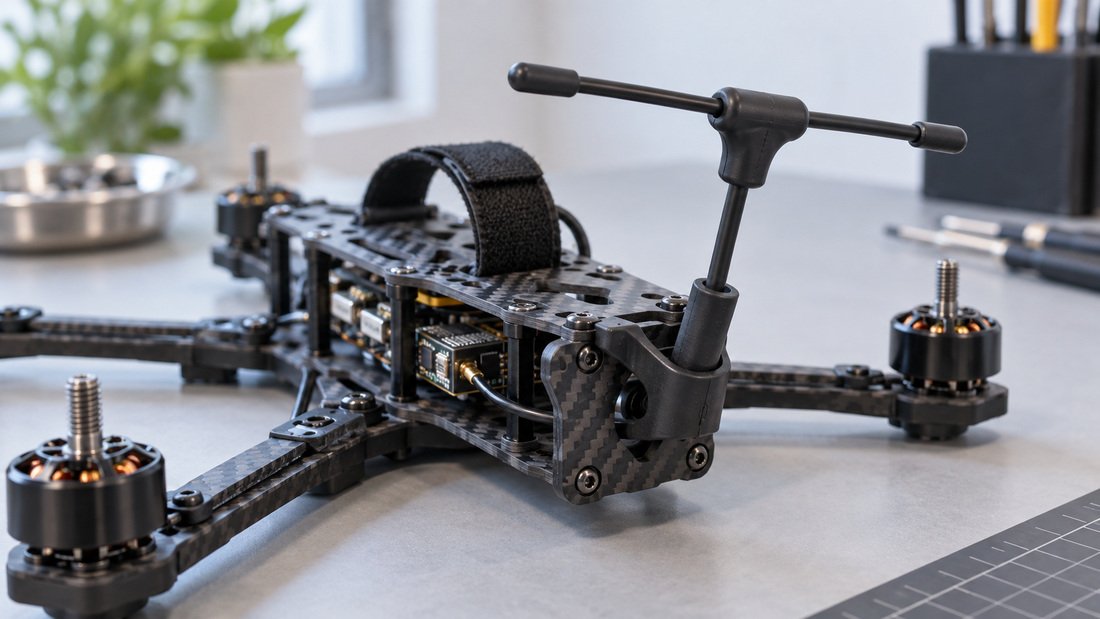
If you standardise on common components — for example a widely used ELRS receiver format — you simplify both training and spares. Mounting and antenna choices should be consistent across the fleet so that a single spare fits many drones.
Frequently asked questions
What exactly counts as a spare-part package?
It is a defined set of replacement components plus the terms for getting faulty units repaired or replaced. The parts list and the service terms matter equally. Ask for both in the quotation.
Does a school drone warranty cover crash damage?
Usually not. General warranty guidance treats ordinary wear, misuse and abuse as outside implied warranty coverage, and crash damage is normally a wear or abuse event rather than a defect (FTC guidance on implied warranties). Confirm the exclusions in writing for your specific purchase.
What is an RMA, and how long should it take?
RMA stands for Return Merchandise Authorisation: the approval step before you ship a faulty item back or request a replacement. Processing times depend on the supplier and destination, so ask for the expected handling time in writing rather than assuming a standard.
Do consumer warranty rules apply to a school purchase?
Not automatically. Rules such as the US Magnuson-Moss Warranty Act are framed around consumer products, and terms created by state law vary. Institutional purchases may fall under different arrangements, so confirm which terms apply to your order and jurisdiction.
How many spare props, batteries and motors should we hold?
Base it on your own failure log rather than a rule of thumb. Track how many units each fleet consumes per term, then hold enough to cover a typical session plus your RMA turnaround window. Start conservative and adjust each term.
Are compatible third-party parts safe to use in school programs?
That depends on the part and the programme’s risk policy. Ask the supplier whether compatible parts are supported, how they affect warranty coverage, and whether they meet the same specification as the original component.
Which package is best for drone soccer teams specifically?
Prioritise the components that contact and absorb impacts — frames, cages and guards — plus props, motors and a small stock of receivers and antennas. Match the tier to the number of teams and how often they fly. Confirm contents and support terms with your supplier.
Conclusion and next step
A school spare-part package works when three things are aligned: the parts match your real failure modes, the warranty and RMA terms are written down before purchase, and someone at the school owns the repair and claim routine. Focus on the airframe, propulsion and radio-link items that actually ground your drones, and treat batteries and props as planned consumables rather than warranty cases.
Before you order, ask your supplier to put package contents, exclusions, RMA handling, lead time and support contacts into the quotation. If you want help structuring a package for your fleet and budget, you can request a school program quote, or contact our team to discuss OEM/ODM requirements.