Quick summary
A TCXO (temperature-compensated crystal oscillator) is a small clock component on some ELRS receivers that keeps the radio chip’s reference frequency stable as temperature changes. The SX127x/SX128x family used in ELRS depends on that reference for frequency accuracy; a plain crystal can drift more, while a TCXO corrects for temperature. For ELRS receiver selection, a TCXO matters most where receivers get hot, cold, or run long sessions — indoor gyms, summer fields, and competition drones. It is one variable among antenna quality, sensitivity and build, not an automatic win.
Key Takeaways
- A TCXO is a compensated clock reference; it helps hold the receiver’s frequency accuracy when temperature changes.
- ExpressLRS builds typically offer receiver options with and without a TCXO — non-TCXO units often use a standard crystal or ceramic resonator, which is usually cheaper and lighter.
- The main practical benefits claimed for TCXO builds are better frequency stability across temperature and more consistent link behaviour; verify the actual oscillator spec with the supplier rather than assuming.
- TCXO alone will not fix a poor antenna install, a damaged u.FL connector, or an over-clocked packet rate for the flying environment.
- For drone soccer teams and clubs, standardise on a small number of receiver variants and document which ones carry a TCXO so spares are interchangeable.
What Is a TCXO, in Plain Terms?
Direct answer: a TCXO is a crystal oscillator with a compensation circuit built in. The crystal itself physically changes frequency with temperature; the compensation network actively adjusts the load on the crystal so the output frequency moves far less. The result is a reference clock that stays closer to its nominal value as the receiver warms up from power-on, sits in a hot fuselage, or cools down outside between rounds.
Why the radio chip cares about its clock
Every LoRa-based radio chip used in ExpressLRS generates its RF channel from a reference oscillator. If that reference moves, the actual transmit and receive frequencies move with it. Small offsets are normal and the system tolerates them; larger ones reduce the quality of the link and can show up as packet errors, weak telemetry, or a link that feels inconsistent between flights rather than genuinely failing.
TCXO versus a plain crystal or resonator
The difference is not a new radio protocol. Same packet rates, same binding procedure, same firmware family. The difference is the stability of the clock that the radio chip runs on, especially across temperature extremes.
TCXO vs Non-TCXO: What Actually Changes for a Drone Soccer Team
Direct answer: the practical difference is frequency stability across temperature, plus a small weight, size and cost penalty. Non-TCXO receivers are often lighter and cheaper and work fine in many builds. TCXO receivers are usually chosen when the environment swings widely or the receiver runs warm.
| Factor | Non-TCXO (crystal / resonator) | TCXO |
|---|---|---|
| Frequency stability over temperature | Typically looser; spec varies by component and vendor | Typically tighter; verify the ppm figure in writing |
| Cost | Usually lower | Usually higher |
| Weight and board space | Usually lighter and smaller | Slightly heavier, needs a little more board area |
| Warm-up behaviour | Frequency shifts as the board heats from cold | Compensation reduces that shift |
| Where it helps | Stable indoor environments, short sessions, weight-critical micro builds | Hot or cold venues, long practice days, dense RF environments |
| Where it does not compensate | Bad antenna install, damaged connector, wrong antenna band, poor power filtering, firmware mismatch | |
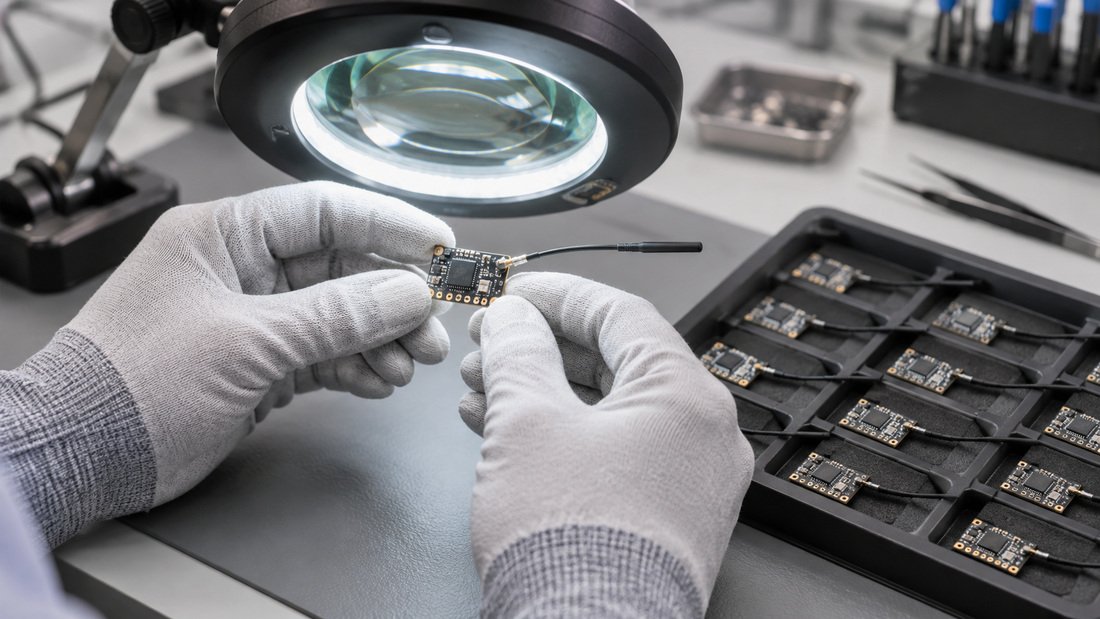
When TCXO Matters Most in ELRS Receiver Selection
Direct answer: treat a TCXO as a priority when temperature, session length, or RF congestion is high, and as optional when you fly short, stable sessions with light receivers.
High-temperature scenarios
Black-top outdoor fields in summer, receivers buried under a canopy or inside a crowded frame, and repeated back-to-back flights all push board temperature up. This is where a compensated clock has the clearest rationale.
Cold and rapid-temperature-change scenarios
Winter events and indoor-to-outdoor transitions move the receiver across a wide temperature range in minutes. Compensation is designed for exactly this kind of movement, although the real-world effect depends on the specific oscillator and the rest of the design.
Long sessions and practice days
A club running a full practice day does not want link behaviour to change as the day warms up. Standardising on TCXO receivers gives coaches one less variable to explain to students.
Dense RF environments
In a gym or hall with many drones and access points, every bit of frequency accuracy helps the receiver stay on its intended channel. TCXO is one contributor; antenna choice and placement matter at least as much. See RF antennas for how antenna selection interacts with the receiver.
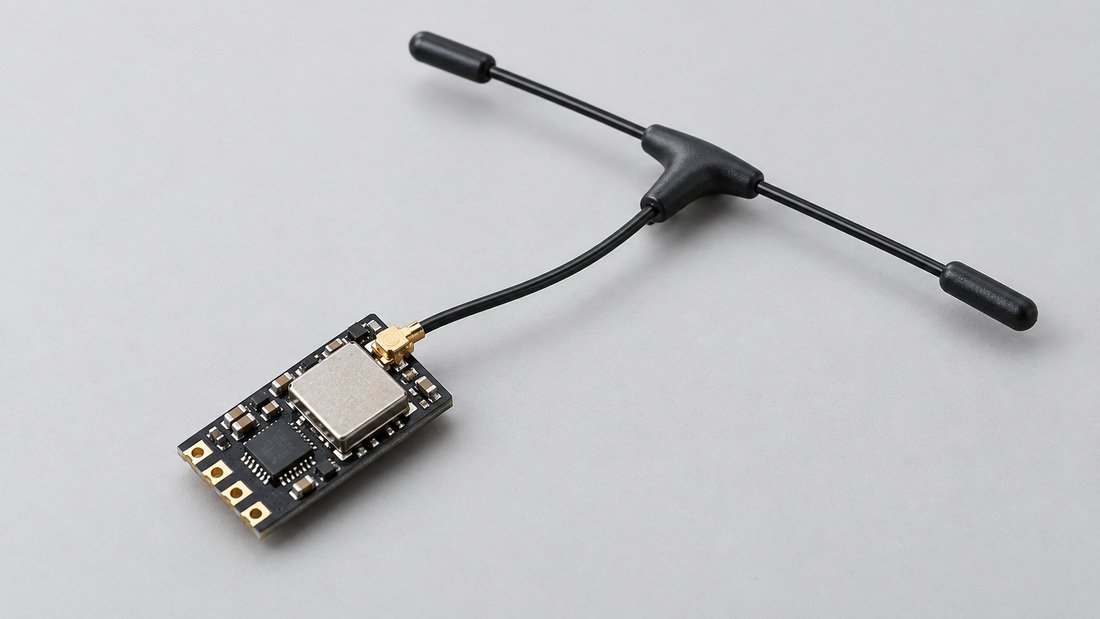
How a TCXO Interacts With the Rest of the RF Chain
Direct answer: a TCXO stabilises the receiver’s clock, but link quality is still the product of antenna, placement, transmitter module, packet rate and firmware. A TCXO cannot rescue a bad install.
Antenna and connector quality
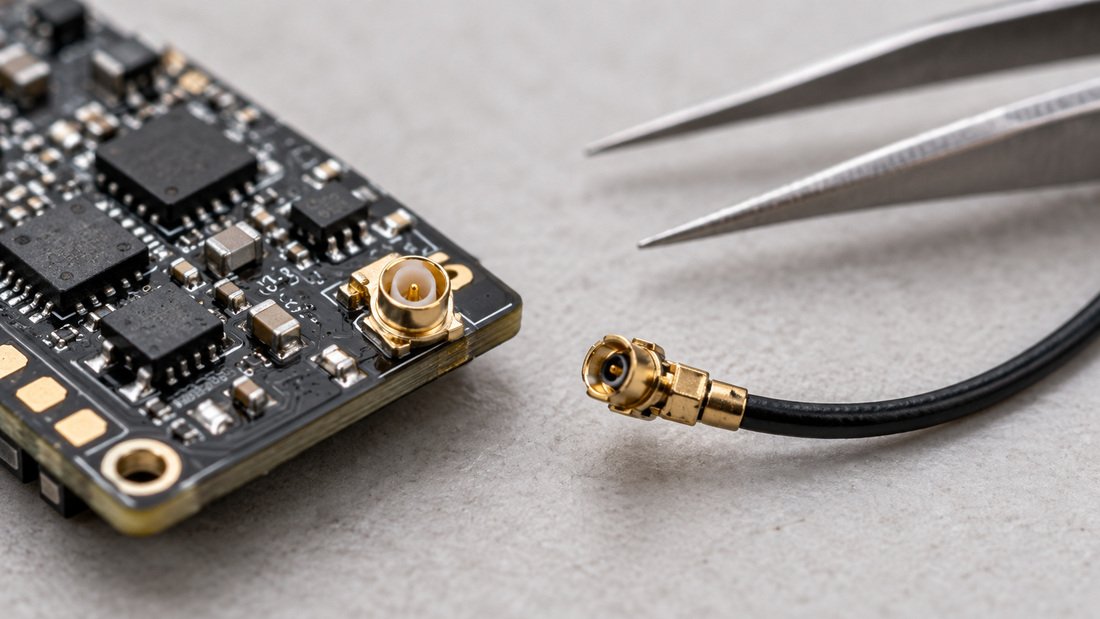
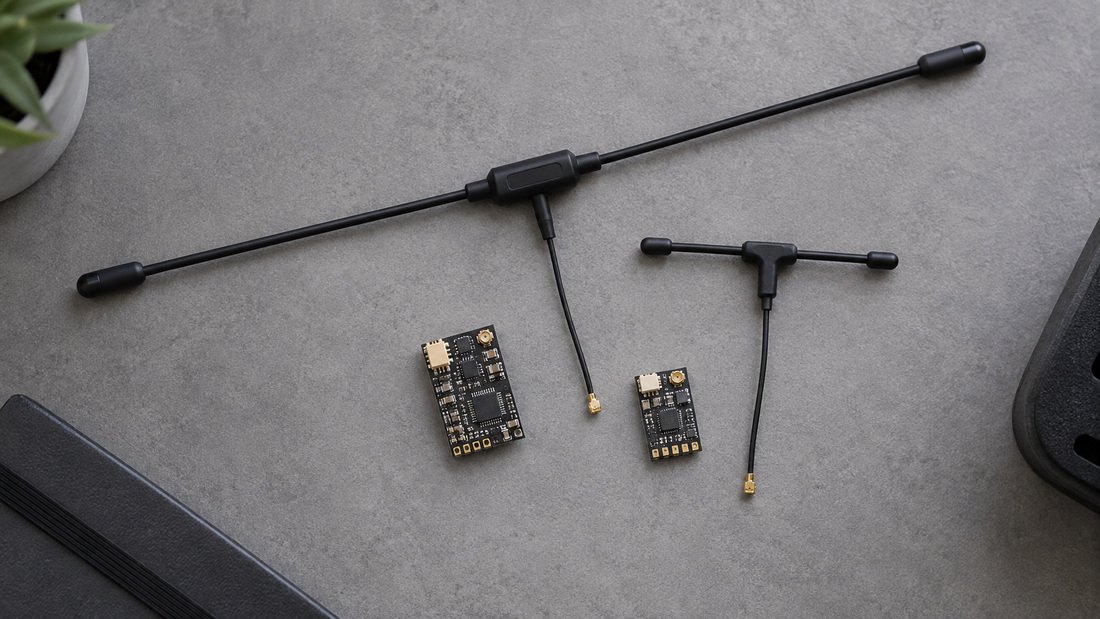
A damaged or poorly seated u.FL connector, a mismatched antenna band, or a stressed pigtail will degrade the link regardless of oscillator type. Check connectors before blaming the clock. The ELRS and RF systems range includes the antenna and connector options to match a receiver correctly.
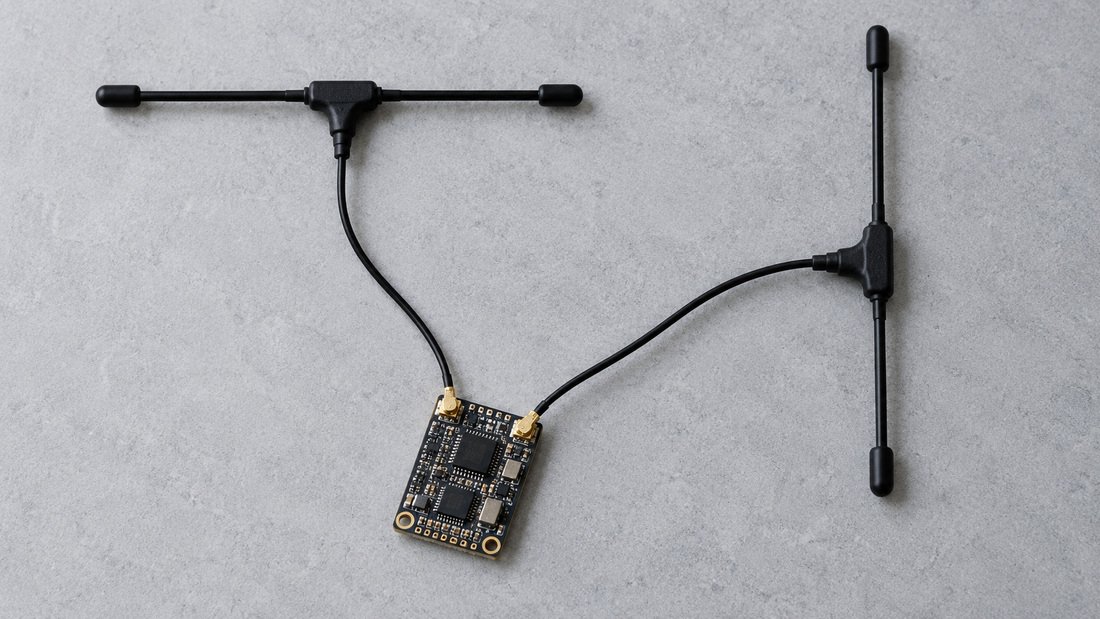
Diversity receivers and TCXO
Diversity receivers use two antennas and pick or combine the better signal. Frequency stability is still the job of the oscillator, so a diversity receiver without a TCXO can still drift. Evaluate diversity and TCXO as two separate decisions.
Transmitter side
The transmitter module also has a clock, and some modules offer TCXO options. Match discipline on both ends where it matters. Browse ELRS transmitter modules to see how the two sides are specified together.
Common Mistakes When Buying Receivers for Teams
- Assuming TCXO equals range. A TCXO is not an amplifier. It affects frequency stability, not transmit power or antenna gain.
- Mixing TCXO and non-TCXO units in one fleet without labelling them. Spares become confusing, and coaches cannot compare flight behaviour.
- Ignoring the antenna. A cheap antenna on a good receiver usually underperforms a correct antenna on a modest receiver.
- Buying by ppm claim without a written spec. If the supplier cannot state the oscillator’s frequency tolerance and temperature range, treat the claim as unverified.
- Over-clocking packet rates. A faster packet rate is not automatically better; it trades range and robustness for latency.
- Forgetting the charger and power path. Receiver instability is sometimes a power problem, not an oscillator problem.
Practical Procurement Checklist for Clubs, Schools and Distributors
Direct answer: buy receivers on a short, documented decision framework rather than per-unit impulse. Use this checklist when comparing quotes.
- Confirm whether the specific receiver variant includes a TCXO, and ask for the oscillator’s stated frequency tolerance and operating temperature range in writing.
- Confirm the RF band your club is licensed or permitted to use in your country, and order antennas matched to it.
- Confirm connector type (u.FL / IPEX and antenna side) and whether the antenna is supplied or separate.
- Confirm supported firmware target and whether the receiver binds to your existing transmitters.
- Confirm board dimensions and weight if you are fitting small drone soccer airframes.
- Confirm pack sizes and spare strategy: how many receivers per team, plus spares for damage and testing.
- Confirm the quality inspection and test process the supplier applies, and ask whether it is documented per batch.
- Confirm commercial terms in writing: pricing basis, payment, shipping, warranty and returns policy.
- Confirm whether OEM/ODM labelling or connector changes are possible, and what the minimum order and tooling implications are.
- Confirm documentation: pinout, wiring diagram and binding procedure in a form you can hand to students and volunteers.
For matching receivers to specific flight controllers and transmitter modules, start with the ELRS receiver compatibility reference before finalising an order.
If you are equipping a school programme or a league, the practical decision is usually: one receiver variant for training airframes, plus one slightly better-specified variant for competition airframes. Talk through your fleet plan with DPF and confirm the oscillator, band and connector details on the quote before committing budget — Request a Team Kit Quote.
Frequently Asked Questions
Does a TCXO increase range?
No. TCXO is about frequency stability, not output power or antenna gain. Range comes from the whole chain: transmitter power, antenna quality, receiver sensitivity, packet rate and the RF environment. A TCXO may contribute to more consistent link behaviour, but it is not a range multiplier.
Is a TCXO receiver always better?
Not universally. TCXO builds usually cost more and add a small amount of weight and board area. For stable indoor venues and short sessions, a non-TCXO receiver can be perfectly adequate. Choose based on your temperature range, session length and RF congestion.
How can I tell if a receiver has a TCXO?
Check the manufacturer’s description for an explicit TCXO mention and the oscillator tolerance. If it is not stated, ask the supplier directly and get the answer in writing on the quotation. Board photos may show an additional shielded component, but visual identification is not reliable on its own.
What frequency tolerance should I look for?
There is no single number that fits every application. What matters is that the stated tolerance and temperature range are appropriate for your venue conditions and are documented by the supplier. Ask for the oscillator specification rather than relying on marketing terms.
Can I mix TCXO and non-TCXO receivers on the same team?
Technically yes, provided they bind to the same transmitters and use compatible firmware. For coaching and troubleshooting, however, a mixed fleet makes it harder to compare behaviour. Label each unit clearly and keep spares grouped by variant.
Does TCXO help in a crowded gym with many drones?
Frequency accuracy is one positive factor in dense RF environments, but antenna placement, packet rate and channel choice often matter more. Do not treat a TCXO as a solution to interference on its own.
Should I request a sample before ordering for a whole club?
Yes, for any new variant. Ask for a sample or small trial pack, bind it to your existing transmitters, and test it in the actual venue and airframes your team uses. Confirm with DPF what sample options and terms are available for your region and order size.
Conclusion
A TCXO is a temperature-compensated clock that helps an ELRS receiver hold its frequency more consistently as conditions change. In ELRS receiver selection, it is one meaningful variable among several — antenna quality, connector integrity, firmware match, board size and build consistency all shape the link your pilots actually feel. For drone soccer clubs, schools and league organisers, the sensible approach is to define your environment and session length first, then decide whether TCXO receivers are worth the small cost and weight premium, and document that choice so spares stay consistent.
Next step: build your fleet list — training receivers, competition receivers, antennas and spares — and ask DPF to confirm the oscillator specification, RF band and connector details on a written quote. Request a Team Kit Quote when you are ready to compare options.