Quick summary
Before you file a warranty, RMA and after-sales claim, run a structured bench check: confirm the failure is repeatable, isolate which component actually failed, rule out configuration, firmware, wiring, power and crash damage, and document each step with photos and logs. Most problems schools report — a drone that will not arm, an ELRS receiver that will not bind, a motor that stutters — trace back to a handful of causes that can be verified in minutes with basic tools.
Key Takeaways
- Repeatability first: if the fault does not reproduce after a clean re-bind, re-flash or rewiring, it is usually a setup issue, not a defective part.
- Separate crash damage, reverse polarity, water ingress and wear from genuine manufacturing defects — warranty terms typically exclude the former.
- Document the failure sequence with photos, video and firmware versions before contacting your supplier; incomplete evidence is the most common reason RMA tickets stall.
- Know the rules that apply to you. In the US, the Magnuson-Moss Warranty Act governs written warranties on consumer products — it does not automatically create B2B or worldwide obligations, so read your purchase contract.
- A written RMA procedure should be part of every school drone program, agreed with your supplier before the first order ships.
What does “troubleshoot before claiming warranty” actually mean?
It means proving, on your own bench, that a part has failed in normal use before you ask a supplier to replace it. Suppliers of drone soccer (BKZ) kits, ELRS receivers (BKR) and spares cannot diagnose a fault from a single sentence like “it does not work.” A short, disciplined test sequence gives them what they need — and often reveals that nothing is broken.
Why schools and clubs should do this before every claim
Youth programs run many identical units in the hands of many students. That environment produces two very different kinds of failure: genuine defects and abuse. Troubleshooting separates them. It also cuts shipping costs, avoids disputes, and keeps a drone soccer squad flying instead of waiting weeks for a return.
What troubleshooting is not
It is not a substitute for a supplier’s legal warranty obligations, and it is not an invitation to open sealed assemblies that void coverage. If your contract says do not disassemble a receiver, do not. Record the symptom instead and let the supplier advise.
Start here: the five-minute triage
Before touching a screwdriver, answer five questions in writing.
- What changed? New firmware, new battery, new propeller, new field, new student.
- Is it repeatable? Does it happen every power-up, or only sometimes?
- How many units? One drone or the whole fleet? One unit points to a part; the whole fleet points to process, power or firmware.
- When did it start? Straight out of the box, after a crash, after a firmware update, after storage?
- What is the exact symptom? “Motor 3 stutters above half throttle” beats “it flies badly.”
Common failures by category, and how to test them
1. The drone will not arm
The most common causes are a transmitter not bound, a failsafe or arm switch in the wrong position, throttle not at minimum, an uncalibrated accelerometer, or an arming flag shown in the flight controller’s on-screen display. Check the arm switch and throttle first, then confirm the receiver shows a solid link light. A receiver that never binds is a different problem — go to the next section.
2. ELRS receiver will not bind or drops link
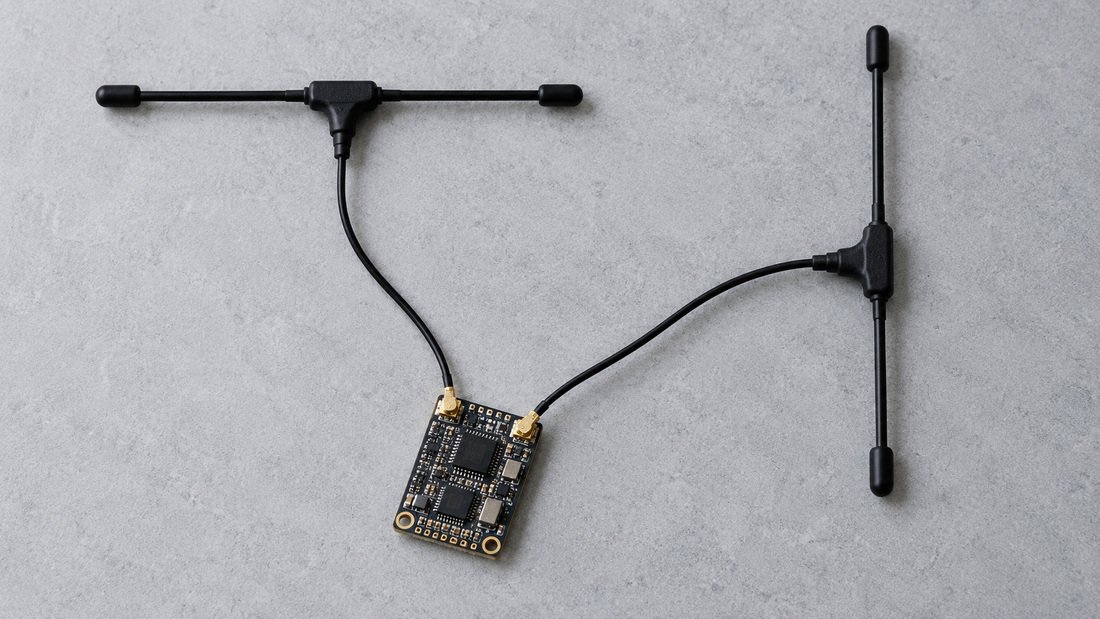
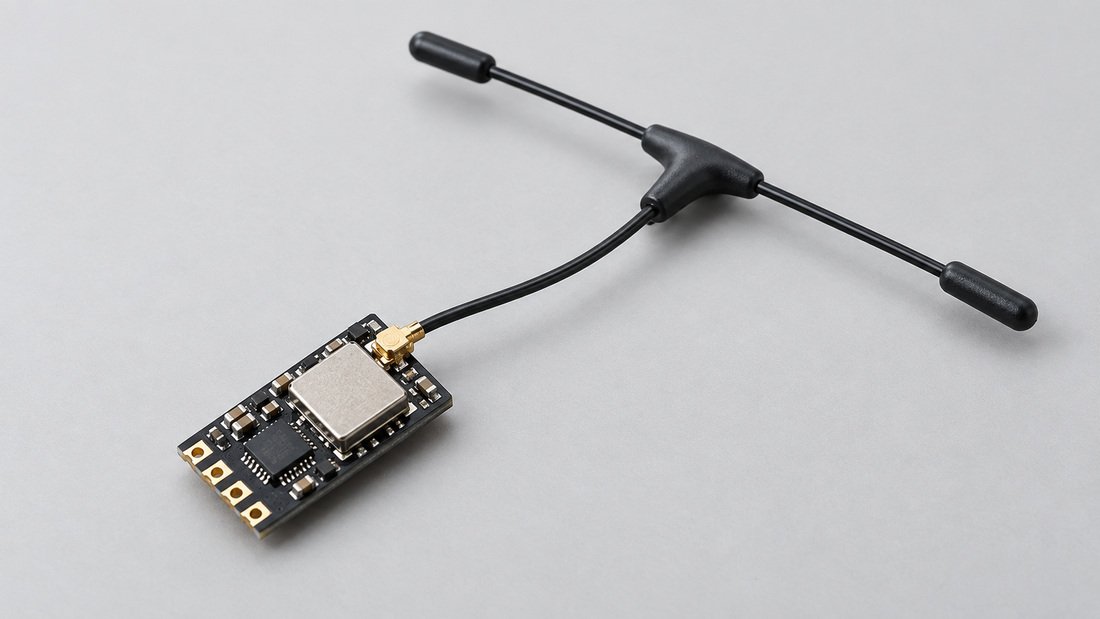
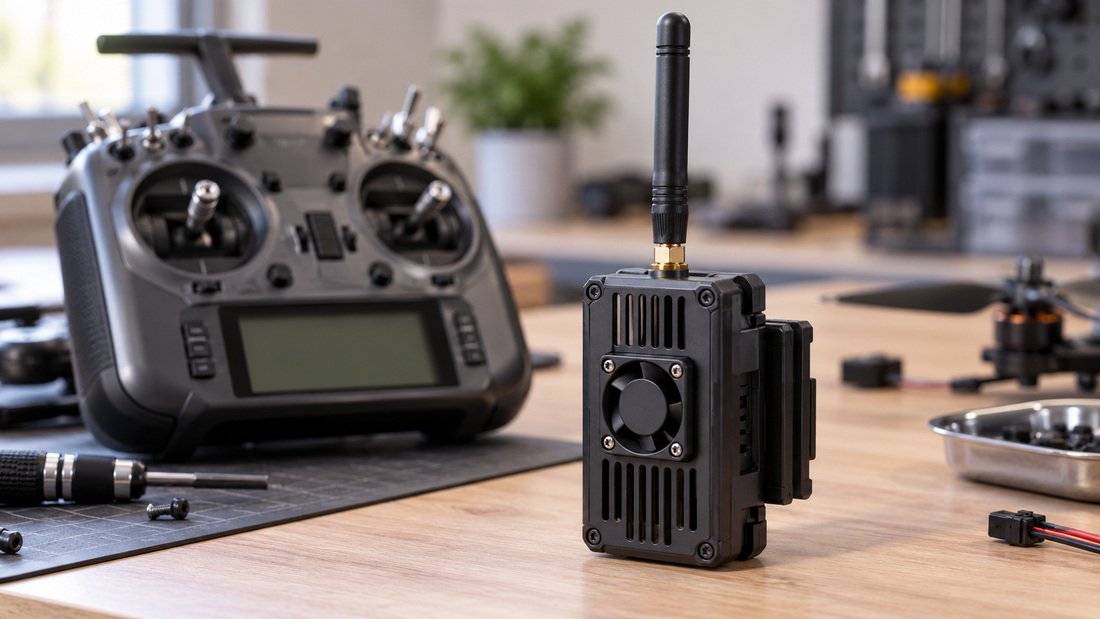
ELRS (ExpressLRS) is an open-source radio link protocol. Binding problems usually come from a firmware version mismatch between transmitter and receiver, the wrong binding phrase, or a receiver still in a factory state. Antenna condition matters too: a crushed or detached antenna will show as low link quality long before it fails completely. Test by re-flashing matched firmware, re-applying the binding phrase, and comparing link quality at a fixed distance against a known-good receiver.
3. Motor stutter, heat or one motor not spinning
Swap the suspect motor to another ESC (electronic speed controller) position. If the fault follows the motor, the motor is the likely cause. If it stays with the ESC position, the ESC or its signal path is the likely cause. Check for a bent motor shaft, debris in the bell, and a loose or partially broken motor wire before concluding the part is defective.
4. Props, frames and drone soccer hardware
Drone soccer airframes are designed to be hit. Cracked propeller guards, bent cage rods and loose mounting screws are wear items, not defects. Check fastener torque and cage geometry after every session. Damage that appears immediately after a known impact belongs in your own maintenance log, not an RMA request.
5. Power and charging faults
Before blaming a battery, charger or power board, measure pack voltage with a meter, try a known-good pack, and inspect connectors for corrosion or a pushed-back pin. A single bad connector in a shared charging station can look like six bad batteries.
Which failures are usually NOT warranty claims?
Most written warranties and the implied warranties behind them exclude the same categories of damage. The US Federal Trade Commission’s business guidance on the Magnuson-Moss Warranty Act notes that implied warranties do not cover problems caused by abuse, misuse, ordinary wear, failure to follow directions, or improper maintenance (FTC, Businessperson’s Guide to the Federal Warranty Law).
| Symptom | Typical root cause | Usually covered? | First test |
|---|---|---|---|
| Receiver will not bind | Firmware or binding-phrase mismatch | No — configuration | Re-flash matched firmware |
| Motor stutter on one arm | Debris, bent shaft or crash damage | Depends on inspection | Swap motor to another ESC |
| Dead-on-arrival board | Manufacturing defect or transit damage | Yes — document packaging | Photo of packaging and board |
| Cracked cage or guard | Impact during play | No — wear/impact | Check impact log |
| Battery swells after storage | Storage voltage or heat | Rarely | Measure storage voltage |
| Intermittent link dropouts | Antenna damage or interference | Depends on antenna condition | Compare against known-good unit |
This table is general guidance, not a legal interpretation, and not a statement of any supplier’s terms. Your actual coverage depends on the written warranty and the contract you signed.
Build a bench-test routine your students can follow
A repeatable routine beats expertise. Write it on a laminated card and keep it with the kit.
- Visual: inspect frame, guards, antennas, connectors, solder joints, screws.
- Power: known-good battery, meter reading, no heat or smell.
- Link: bind or confirm link, note link quality at a fixed distance.
- Function: arm, spin motors without props, check each channel direction.
- Record: unit serial or asset number, firmware versions, date, initials.
Run this before and after every practice block. The record it creates is exactly what a supplier needs to process an RMA quickly, and it doubles as evidence that your program maintains its equipment properly. Suppliers who publish their own inspection steps, such as our testing and inspection workflow, are useful references when you build yours.
Avoid these common mistakes
- Filing before reproducing. A fault that disappears after a re-bind was never a part failure.
- Mixing parts across drones. Swapping components between units without labelling them destroys your traceability.
- Opening sealed assemblies. Some coverage depends on the unit being returned unopened. Ask first.
- Sending one vague sentence. “It broke” cannot be triaged.
- Batching claims for months. Report faults while the evidence is fresh.
- Assuming your consumer rights transfer to a school purchase. Institutional purchases are often governed by the contract, not consumer statute.
Understand the warranty rules that actually apply to you
Warranty law differs by country and by the nature of the buyer. In the United States, the Magnuson-Moss Warranty Act governs written warranties on consumer products and defines implied warranties such as merchantability and fitness for a particular purpose. The FTC’s guide explains that these implied warranties are promises about the condition of a product at the time of sale and do not assure that a product will last a specific length of time (FTC).
Two cautions for schools and clubs. First, this framework is US-specific; if you buy in the EU, UK or elsewhere, different national rules apply. Second, purchases made by an institution for institutional use may be treated as business-to-business transactions rather than consumer sales, so statutory consumer protections may not apply in the same way. Treat the FTC material as background, not as a description of your contract.
What actually governs your claim is the written warranty and purchase agreement: what is covered, for how long, what voids coverage, who pays return freight, and how disputes are resolved. If you do not have that document, request it before you buy.
What to put in an RMA request
A complete request is short and evidence-based. Include:
- Invoice or order number, purchase date and quantity affected.
- Product name and any batch, serial or asset number.
- Firmware and configuration versions relevant to the fault.
- The exact symptom and the conditions that reproduce it.
- Tests already performed and their results.
- Photos or a short video, plus packaging photos for transit damage.
- What outcome you are asking for: replacement, repair, credit or technical guidance.
Ask your supplier for their RMA form, return address, return-freight policy and target response time, and get the answers in writing. If you are still evaluating suppliers, ask them to describe their warranty and after-sales program and their quality control process before you place a school-sized order.
Buyer checklist: before you send anything back
- Fault reproduced at least twice on a known-good battery and transmitter.
- Firmware versions matched and recorded for both transmitter and receiver.
- Suspect part isolated by swap testing, with the swap documented.
- Photos of the part, the connectors and the packaging.
- Written warranty and return policy on file.
- RMA number obtained before shipping.
- Return shipment insured and tracked; keep the receipt.
- Internal log updated so the same fault can be spotted early next time.
If your program needs help interpreting a fault pattern across a fleet, or wants parts and support structured around a school term, our team can walk through the options — talk to us about your program.
FAQ
Can a supplier refuse my claim because I did not troubleshoot first?
A supplier can refuse a claim if the damage falls outside the written warranty — for example, crash damage, reverse polarity or water ingress. Troubleshooting does not create that right, but it does prevent you from filing claims that will obviously be declined, and it strengthens the claims that are genuine.
Does the Magnuson-Moss Warranty Act protect a school buying drones?
Not automatically. The Act governs written warranties on consumer products in the US. Institutional purchases may be treated as B2B transactions, and the rules differ outside the US. Check your purchase contract and, for a definitive answer, seek local legal advice.
My whole fleet shows the same fault. Is that a warranty issue?
Possibly, but a fleet-wide symptom more often points to a shared cause: a firmware version, a charging practice, a storage method, a binding-phrase error or an environmental factor. Investigate the common process before assuming every unit is defective.
Should students open receivers to inspect them?
No. Opening a sealed assembly can void coverage under many warranty terms and risks damaging static-sensitive components. Record the symptom and let the supplier advise on next steps.
How long should we keep failed parts before returning them?
Keep them until the claim is closed, labelled with the asset number and fault note. Do not cannibalise them for spares, or you lose the evidence your claim depends on.
What if the supplier’s warranty document is unclear?
Ask for written clarification of duration, coverage, exclusions, freight responsibility and response times before you order. If a supplier will not put terms in writing, that is useful information about how after-sales support will go.
Do we need a formal RMA process for a small club?
Yes, even a one-page one. A simple log of asset numbers, faults, tests and outcomes prevents duplicate work and gives you leverage in any dispute. It also teaches students good engineering practice.
Conclusion
Troubleshooting before you claim is not about protecting the supplier — it is about protecting your program’s flying time. Reproduce the fault, isolate the component, rule out configuration and damage, document everything, and know which warranty rules actually apply to your purchase. Do that and the claims you file will be the ones that deserve to be approved.
Next step: review your written warranty and RMA terms with your supplier before your next order, and build the one-page bench-test card into your kit. If you are planning a school program and want parts, spares and after-sales support set up for a term schedule, Request a School Program Quote.