Quick summary
In practice, warranty, RMA and after-sales coverage for drone parts is split into two very different buckets. Manufacturing defects — dead-on-arrival components, faulty solder joints, a receiver that never binds, a motor that fails abnormally early — are normally covered, subject to the seller’s written terms. Crash damage, impact damage, water ingress, reversed polarity, modified firmware and ordinary wear are normally excluded, because they are caused by use rather than by the product leaving the factory in a defective condition. The exact split is defined by the written warranty you receive, not by general expectation, so schools and clubs should confirm inclusions, exclusions, RMA windows and shipping responsibility in writing before ordering.
Key Takeaways
- Warranty normally addresses defects present at the time of sale, not damage caused after delivery by a crash, impact, water, incorrect wiring or modification.
- Implied warranties are created by law and, depending on jurisdiction, may exclude problems caused by abuse, misuse, ordinary wear, failure to follow directions or improper maintenance — the same categories most written warranties exclude.
- An RMA (Return Merchandise Authorization) is a process, not a promise. Coverage depends on what the written warranty says and on what inspection finds.
- For drone soccer programs, the highest-risk items are airframe arms, propellers, motors and antennas after contact — all typically consumable or crash-related.
- Ask for the warranty document, the RMA procedure, the diagnostic process and the spare-parts list in writing before you sign a purchase order.
Why warranty language matters more for schools than for hobbyists
A school drone program buys in batches, operates on a fixed budget cycle, and must justify every replacement to a finance office or a grant administrator. That changes how warranty terms affect you. A single ambiguous clause about crash damage can turn a mid-season airframe break into an unbudgeted purchase, or into a club that cannot field a full team.
It also means you cannot rely on informal assurances. A supplier saying “we’ll take care of you” is helpful but not auditable. What you can audit is a written warranty statement, a defined RMA procedure and a documented inspection step. Those three documents are what a procurement officer can attach to a purchase file.
This article separates three things clearly: general guidance on how warranties typically work, illustrative examples of how a claim might be assessed, and the specific commercial terms you must confirm directly with Drone Parts Factory or any other supplier. Nothing here replaces your supplier’s written terms or your own legal advice.
What a drone parts warranty normally covers
Warranty coverage generally attaches to the condition of the product when it was sold. In plain terms, it answers the question: was this part defective before the customer used it?
Typical covered scenarios
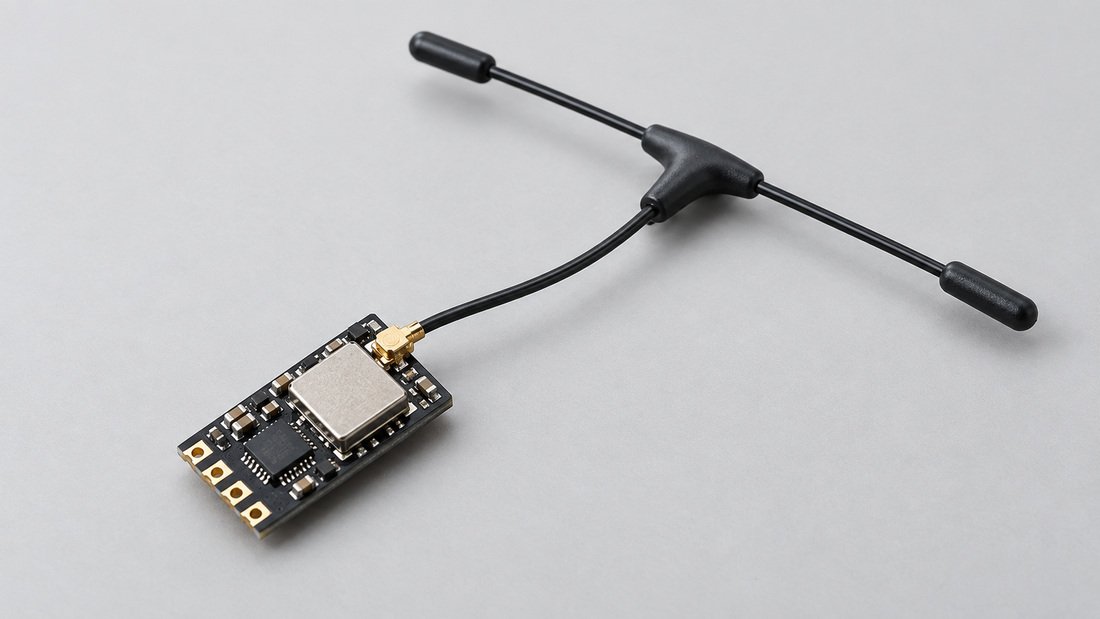
- Dead on arrival (DOA): a receiver or flight controller that does not power up or bind out of the packaging, with no signs of installation damage.
- Manufacturing defects: failed solder joints, cold solder on a connector, a connector fitted backwards, or a board fault traceable to production.
- Component failure under normal use within the stated period: for example, a motor that fails abnormally early when run within its rated voltage and load.
- Incorrect item shipped: wrong frequency band, wrong connector type or wrong firmware variant versus the confirmed order.
- Damage in transit: usually handled as a shipping claim, but often routed through the same RMA intake — check which process applies.
How the legal backdrop frames this
In the United States, the Magnuson-Moss Warranty Act governs warranties on consumer products and distinguishes implied warranties from express (written) warranties. Implied warranties are unwritten promises created by state law, including the implied warranty of merchantability — the merchant’s basic promise that goods will do what they are supposed to do and have nothing significantly wrong with them.
Critically for this topic, the same FTC guidance notes that implied warranties are promises about the condition of products at the time they are sold, and that implied warranties do not cover problems such as those caused by abuse, misuse, ordinary wear, failure to follow directions, or improper maintenance. You can read the FTC’s business guidance at https://www.ftc.gov/business-guidance/resources/businesspersons-guide-federal-warranty-law. The same source notes that implied warranties do not assure that a product will last for any specific length of time.
Scope warning: this is US federal consumer warranty law. It does not automatically apply to business-to-business supply contracts, and it does not apply in other countries. If you are buying on behalf of a school district, a club or a distributor, your rights and obligations come primarily from your purchase contract and the law of your jurisdiction. Treat the FTC material as a useful reference on how defect-versus-use distinctions are framed, not as a universal rule set.
What is normally NOT covered — crash damage and related exclusions
Crash damage is the single most common reason a warranty claim is declined, and the reason is structural rather than arbitrary. A part that survived production and worked correctly until impact was not defective at the time of sale. The failure was caused by an external event.
Common exclusions you should expect to see
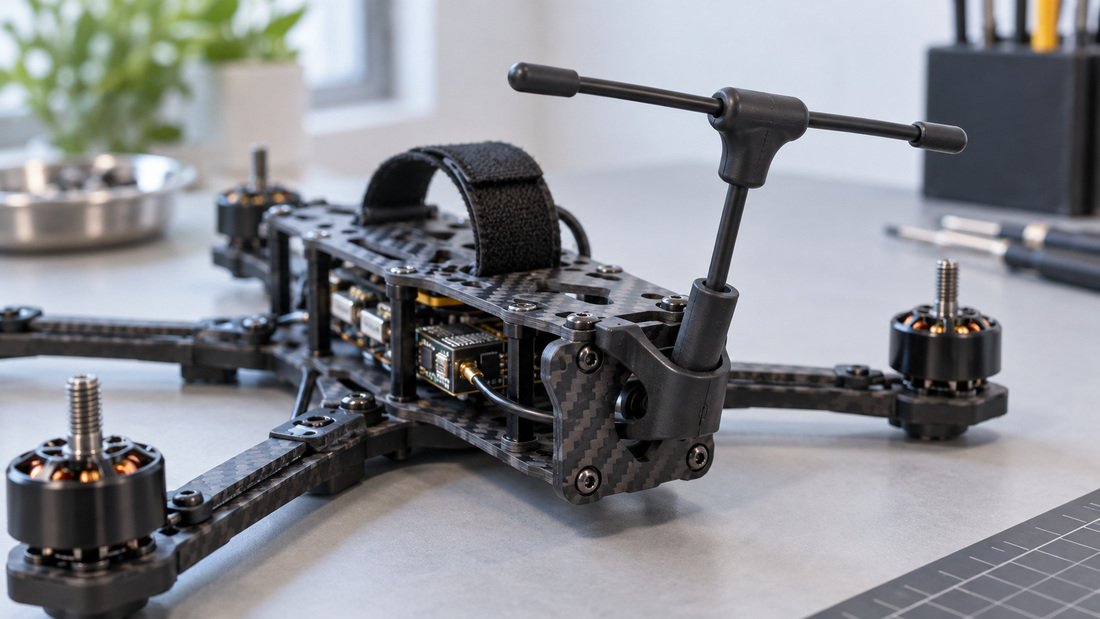
- Crash and impact damage: bent arms, cracked frames, crushed motors, snapped antenna mounts, delaminated propellers.
- Propeller strike and ingestion damage: damaged motor bells, shredded wiring, cracked ducts or guards.
- Water, moisture and dust ingress: corrosion on boards or connectors following outdoor or wet-condition use.
- Reversed polarity and miswiring: damage from incorrect battery connection or incorrect connector pinout.
- Overvoltage and overcurrent: running a component outside its stated voltage or current range.
- Unauthorised modification or repair: resoldered wires, replaced connectors, changed firmware, or altered antennas.
- Ordinary wear and tear: worn motor bearings after heavy use, fatigued plastic, degraded battery cells.
- Consumables: propellers, propeller guards, rubber dampers, battery straps and similar items are frequently excluded or given a very short coverage window.
- Indirect and consequential losses: competition entry fees, lost practice time, travel costs, or damage to third-party equipment.
- Freight costs in one or both directions: often the buyer’s responsibility unless the fault is confirmed as a defect.
Why the line is drawn there
The implied warranty of merchantability promises the goods will do what they are supposed to do — it does not promise the product will survive being flown into a goal frame. The FTC guidance’s list of exclusions (abuse, misuse, ordinary wear, failure to follow directions, improper maintenance) maps almost directly onto the mechanical realities of drone soccer and FPV flying.
Covered versus not covered: a practical comparison
The table below is general guidance for how these claims are typically classified. It is not a statement of any specific supplier’s terms. Always confirm against the written warranty you receive.
| Scenario | Usually covered? | Why | What to have ready |
|---|---|---|---|
| Receiver does not bind/power up out of the box | Usually yes | Defect present at sale | Order number, unboxing photos/video, bench test notes |
| Board fails with no impact history | Usually yes, subject to inspection | Possible manufacturing defect | Flight logs, installation photos |
| Wrong item shipped | Usually yes | Fulfilment error | Packing slip, photo of label and item |
| Crash damage to arm, frame or antenna mount | Usually no | External impact, not a defect | Repair parts order, not an RMA |
| Motor failure after propeller strike | Usually no | Impact-induced | Replace as consumable |
| Water or moisture damage | Usually no | Ingress, use condition | Repair or replace |
| Fault after firmware modification | Usually no | Unauthorised change | Confirm whether stock firmware restores eligibility |
| Worn bearings after a full season | Usually no | Ordinary wear | Planned spares budget |
| Damage in transit, packaging intact externally | Often a claim, not a warranty claim | Carrier liability | Photos before opening, keep packaging |
| Consequential costs (entry fees, lost sessions) | Usually no | Typically excluded | Contingency planning |
How an RMA actually works, step by step
An RMA is the administrative route for returning a product for assessment. “RMA” stands for Return Merchandise Authorization — a reference number and approval that lets a return be tracked. An approved RMA is not an approval of coverage; the coverage decision normally follows inspection.
A typical sequence looks like this:
- Contact support with evidence. Order number, part description, quantity, batch or serial if present, clear photos and video, and a short description of what happened.
- Obtain an RMA number. Do not ship anything without one — unauthorised returns are commonly refused.
- Pack and ship. Confirm who pays inbound freight and whether original packaging is required.
- Inspection and diagnosis. The supplier tests the part and looks for impact marks, corrosion, solder rework or firmware changes.
- Decision. Outcomes are typically: repair, replacement, credit, or return-as-is with a written explanation and photos.
- Resolution and closure. Confirm outbound shipping, replacement lead time and whether the replacement carries a new or remaining warranty period.
For a school, step 4 is where disputes happen, because the diagnosis is not always visible to you. Ask in advance whether the supplier documents findings with photos and written notes. A supplier with a defined warranty and after-sales program should be able to describe this workflow before you buy, not after you claim.
Illustrative example: a mid-season airframe break
Consider a club that breaks two airframe arms during a practice collision. The team submits an RMA expecting warranty replacement. On inspection, the arms show impact fractures at the joint — no manufacturing fault. The claim is declined and the arms are purchased as spares. This is the normal outcome, not an adversarial one.
Now consider a different case: a receiver that fails during a match with no impact, shows no physical damage, and fails the supplier’s bench test in the same way. That is much more likely to be treated as a defect. The distinguishing evidence is the absence of impact and the reproducibility of the fault.
Neither example describes a specific company’s decision. Both illustrate the reasoning pattern you should expect so you can prepare the right evidence.
Where schools get caught out: common mistakes
- Treating all failures as warranty claims. In drone soccer, most field failures are impact-related. Budgeting for spares separately is more realistic than assuming replacements are free.
- Not documenting the unboxing. A short video of opening a shipment is the strongest possible evidence for a DOA claim.
- Letting students repair before reporting. Solder rework or a replaced connector can void coverage because the part can no longer be attributed to manufacturing.
- Assuming verbal assurances are terms. Ask for the warranty statement as a document you can file.
- Ignoring consumables in the budget. Propellers, guards and battery straps are the highest-turnover items and are rarely covered for long.
- Mixing warranty and shipping claims. Transit damage with intact external packaging follows a different route.
- Overlooking jurisdiction. A consumer warranty framework in one country does not automatically define a school’s or distributor’s contract rights in another.
- Skipping the supplier’s quality documentation. Understanding a supplier’s quality control and testing and inspection approach tells you, in advance, how defect claims will be assessed.
Buyer checklist: what to confirm in writing before ordering
Use this list at quotation stage. Anything not answered in writing does not exist for procurement purposes.
- Warranty statement: the actual document, including duration, covered categories and full exclusion list.
- Start date: does the period begin at invoice, at shipment, or at delivery?
- Covered components list: which parts of an assembled drone are covered, and which are treated as consumables.
- Consumables list: propellers, guards, dampers, straps and similar items, with their coverage status.
- RMA procedure: how to request, required evidence, approval turnaround, and whether an RMA number is mandatory.
- Freight responsibility: inbound and outbound, and what changes if the fault is confirmed as a defect.
- Inspection and documentation: will findings be supplied with photos and written notes?
- Replacement terms: repair versus replace versus credit, and whether replacements carry a new warranty period.
- Spare parts availability: can you buy the parts most likely to break, in the quantities a school season requires?
- Diagnostic support: is technical guidance available to help you distinguish a defect from crash damage before shipping?
- Documentation for compliance: product documentation relevant to your country of use, and whether safety and compliance support is available.
- Escalation path: a named contact and turnaround for unresolved claims.
Note on commercial terms: specific warranty durations, MOQs, lead times, freight arrangements and RMA windows vary by product and by order. Drone Parts Factory does not state a single universal policy in this article. Request the written terms for your specific quotation and confirm them in writing before purchase.
Designing a school program around realistic coverage
Because crash damage is normally excluded, the practical answer for schools is not to negotiate harder on warranty — it is to plan for replacement.
Three planning habits that reduce warranty friction
- Build a spares ratio into the budget. Assume a proportion of airframes, arms, propellers and antennas will need replacement each season, and price them at the point of purchase so you are not buying urgently mid-season.
- Standardise on one platform. A drone soccer program using BKZ-series airframes and a common radio link such as ELRS receivers benefits from interchangeable spares across teams and age groups.
- Train a simple pre-flight and post-impact check. Documenting impact history is what allows a genuine defect claim to be distinguished from a crash claim later.
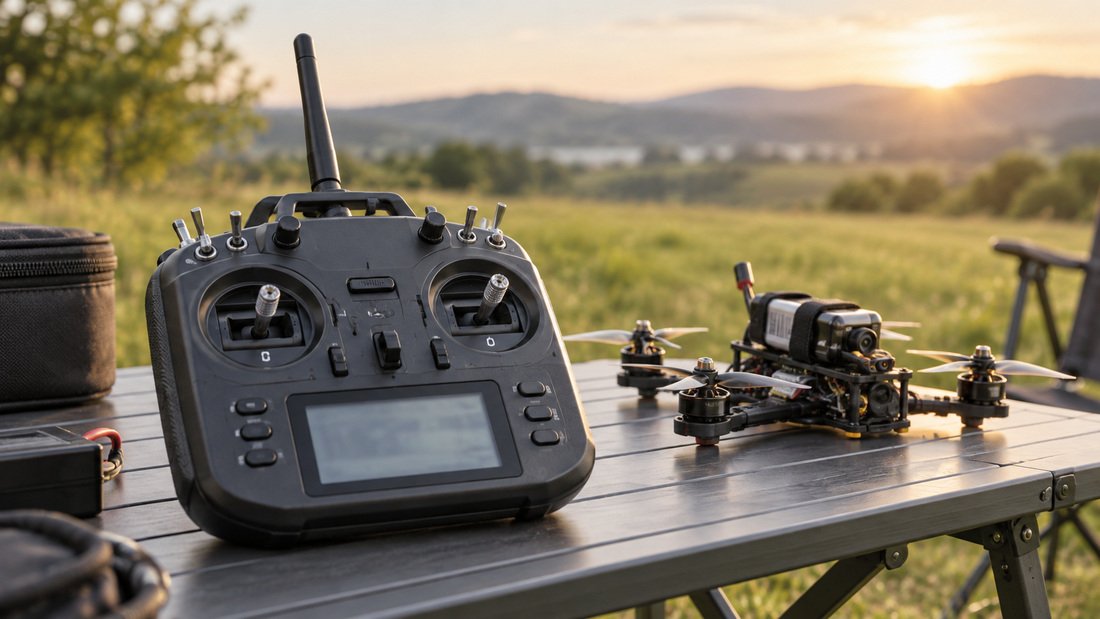
If your program involves classroom or club deployment at scale, our team can walk through component options for drone soccer airframes and ELRS receivers, and clarify how warranty, RMA and spare parts planning fit together for a multi-team order. Request a School Program Quote and we will respond with the documentation you need for your procurement file.
Frequently asked questions
1. Is crash damage ever covered by warranty?
Normally no. Warranty generally addresses defects present when the product was sold. Crash damage is caused by an external impact after delivery, which falls outside the typical scope. Exceptions may exist under a specific supplier’s goodwill policy or a particular contract, but you should treat that as something to confirm in writing rather than assume.
2. What is the difference between a warranty claim and an RMA?
An RMA is the authorisation and tracking number for returning a product. It starts the process but does not confirm coverage. The coverage decision normally follows inspection of the returned item.
3. Does an implied warranty cover more than a written warranty?
Not in the way people often expect. Under US federal guidance, implied warranties are promises about the condition of goods at the time of sale and do not assure that a product will last for a specific period. The same guidance notes they do not cover problems caused by abuse, misuse, ordinary wear, failure to follow directions or improper maintenance. The exact application depends on your jurisdiction and whether the transaction is treated as a consumer or business sale.
4. What evidence should a school keep for a defect claim?
Order number, unboxing photos or video, clear photos of the component and any connectors or solder joints, a short description of the failure, flight or bench-test notes, and confirmation that no post-delivery modification was made by staff or students.
5. Are propellers, guards and antennas covered?
These are commonly treated as consumables or impact-related parts and are frequently excluded or given limited coverage. Confirm their status in the written warranty for your specific order, and plan to stock them as spares.
6. Who pays shipping on a warranty return?
This varies. Some suppliers cover freight when a defect is confirmed and not when the claim is declined. Because this directly affects your budget, ask for it to be stated in writing at quotation stage rather than assumed.
7. Does replacing a part restart the warranty?
Not automatically. Depending on the supplier, a replacement may carry a new period, the remainder of the original period, or a shorter specific term. This is a normal clause to confirm before purchase.
Conclusion: separate defects from damage, then verify in writing
The warranty question has a simple shape once separated into two categories. Defects present at the time of sale — DOA parts, manufacturing faults, wrong item shipped — are the normal territory of warranty and RMA. Damage caused after delivery — crashes, impacts, water ingress, miswiring, modification and ordinary wear — is normally excluded, and that exclusion applies to implied warranties as well as written ones.
For schools, clubs, distributors and event organizers, the practical move is to stop treating warranty as a substitute for spares planning, and to make verification part of procurement. Request the warranty document, the RMA procedure, the inspection and documentation process, freight responsibility and the spare parts list in writing, and file them alongside the purchase order.
Next step: if you are equipping a school program, drone soccer team or multi-school league and need clarity on warranty, RMA and after-sales arrangements together with a spares plan, Request a School Program Quote and ask for the written terms for your specific components and quantities.