Quick summary
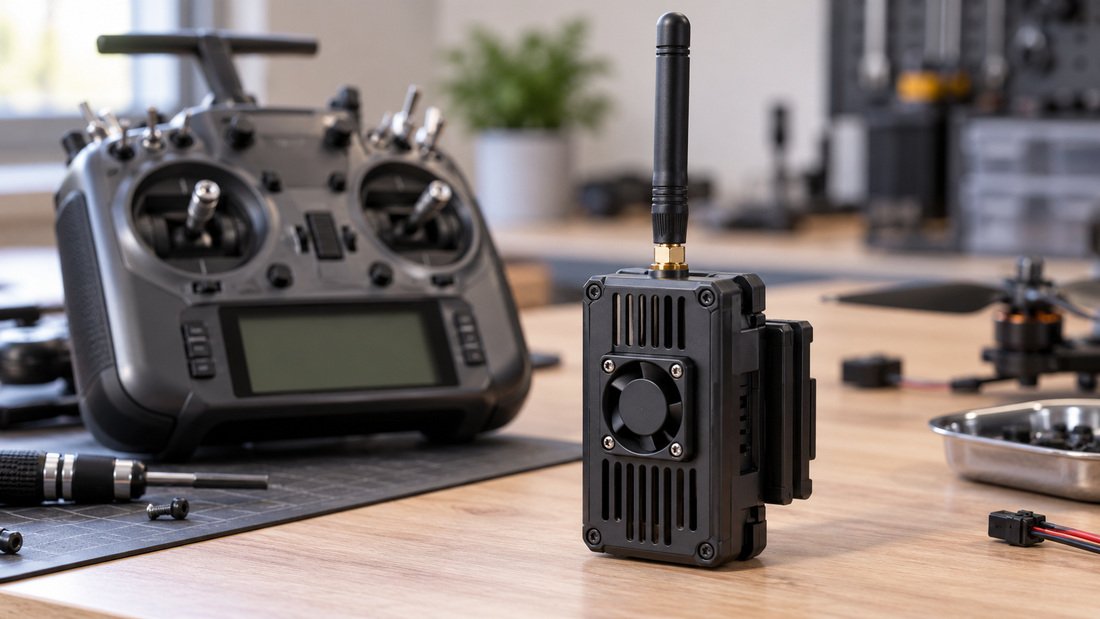
A Gemini TX module is an external radio transmitter module for ExpressLRS (ELRS), an open-source radio control link. In common usage, Gemini refers to ELRS transmitter modules that run two RF (radio frequency) front-ends transmitting the same control signal on two bands at once, usually 2.4 GHz and 900 MHz. The receiver side then combines both copies. The practical effect is that if one band is congested or blocked, the other can still deliver control packets. The module plugs into a compatible radio’s module bay or connects externally, replacing or supplementing the radio’s internal ELRS link.
Key Takeaways
- A Gemini TX module is an external ELRS transmitter that sends duplicate control packets over two bands for redundancy.
- It is not a magic range extender: antenna choice, mounting, receiver quality and RF environment matter as much as the module.
- The receiver must support the matching dual-band or diversity configuration; confirm this before purchase.
- For school and drone soccer programs, the main benefits are link resilience in crowded venues and a shared module standard across a team’s radios.
- Commercial terms, exact variants, warranty and lead times must be confirmed in writing with the supplier you choose.
What a Gemini TX module actually does
An ELRS transmitter module takes the control channel data from your radio and transmits it using the ELRS protocol. A standard single-band module transmits on one band, typically 2.4 GHz or 900 MHz sub-GHz. A Gemini-style module transmits the same information on two front-ends, often on different bands, so the aircraft can receive whichever copy arrives intact.
The module itself is only one part of the chain. The link depends on the transmitter module, its antennas, the receiver and its antennas, the firmware configuration on both ends, and the RF noise floor at the venue. Buyers should treat “Gemini” as a description of a dual-path transmit architecture, not as a guaranteed performance figure.
Why dual-band transmission interests drone soccer teams
Drone soccer is played indoors, often in gyms with metal structures, Wi-Fi access points, spectators’ phones and multiple teams transmitting at once. That environment is noisy for any radio link. A dual-band transmitter gives the link a second path, which can help when one band is locally crowded. It does not remove the need for good antenna placement, channel planning or receiver selection.
For clubs and associations, a shared transmitter module standard also simplifies coaching: one module type across many student radios makes firmware updates, spares and troubleshooting more consistent.
Gemini vs single-band ELRS transmitter modules
The table below compares the two approaches at a general level. Specific features vary by product, so always check the datasheet and firmware documentation for the exact module you are evaluating.
| Aspect | Single-band ELRS TX module | Gemini / dual-band ELRS TX module |
|---|---|---|
| Transmit paths | One RF front-end | Two RF front-ends, often different bands |
| Redundancy | None beyond packet repeats | Second band can carry the link if one band degrades |
| Receiver requirement | Matching single-band receiver | Receiver must support the dual-band or diversity setup |
| Antenna count | Typically one antenna port | Typically two antenna ports, one per band |
| Weight and size | Generally lighter | Generally heavier and bulkier |
| Power draw | Lower | Higher, especially at high output power |
| Setup complexity | Simple | More configuration and antenna care needed |
| Best fit | Practice, small venues, budget builds | Crowded venues, competition use where allowed |
How the module fits into a team’s radio setup
A Gemini TX module does not work alone. It needs a compatible radio with an appropriate module bay or external connection, correct firmware, suitable antennas, and receivers that match the transmission configuration. When one of these is wrong, the module may appear to work on the bench but behave poorly in a match.
Radio and firmware compatibility
Confirm the module’s physical form factor and electrical interface match your radio. ELRS firmware versions on the transmitter and receiver should be compatible; mismatches are a common source of binding and range problems. Ask the supplier which firmware target and version the module ships with, and whether update instructions are included.
Receiver pairing
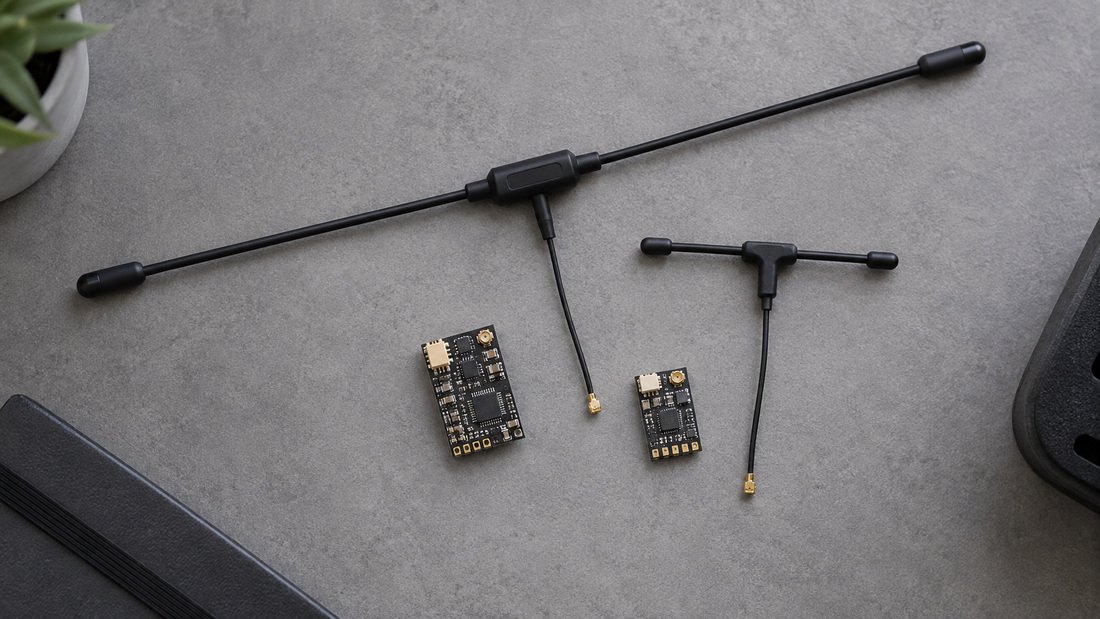
This is the most important check. A dual-band transmitter needs a receiver able to use both paths, or the second transmit path is wasted. Our ELRS receiver compatibility page is a starting point; verify the exact receiver model and firmware with the supplier before ordering in volume.
Antennas and mounting
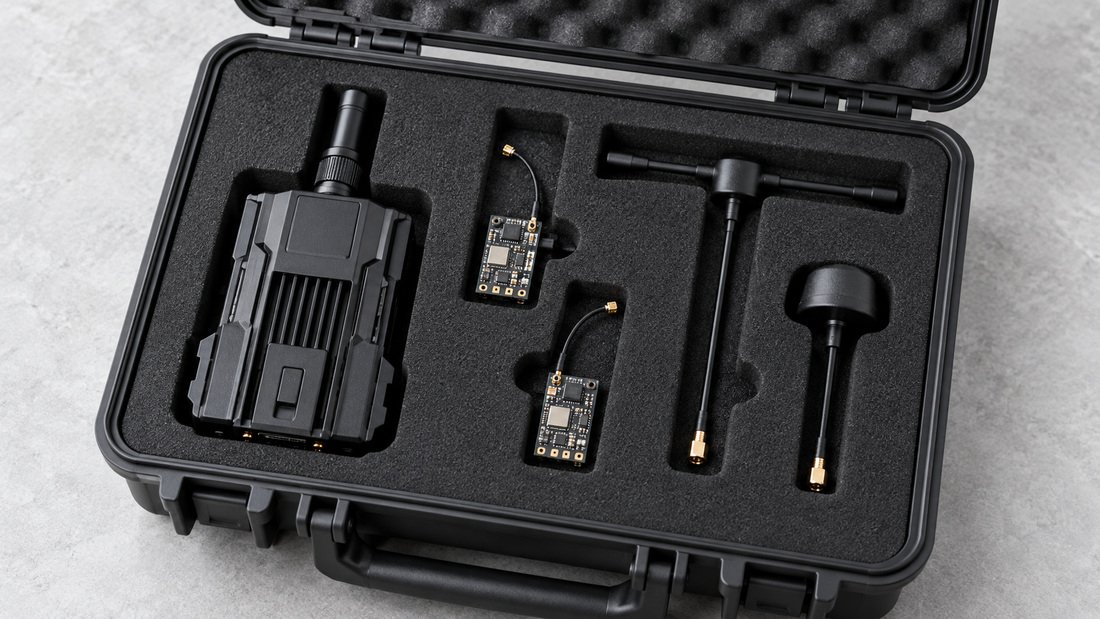
Antennas are part of the RF system, not an accessory. A dual-band module typically needs two antennas, one per band, and they should be mounted so they are not shielded by the radio body, battery or the pilot’s hands. Damaged or mismatched antennas can degrade a link more than a lower-cost module would. See our range of RF antennas for the connector and band options available.
Where Gemini modules help and where they do not
Dual-band transmission is a redundancy strategy. It helps most when the RF environment is unpredictable: busy venues, reflective indoor spaces, and events where many radios operate simultaneously. It helps least when the problem is elsewhere, such as a poor receiver antenna placement, a firmware mismatch or a damaged connector.
Teams should also check competition and local radio regulations. Output power, band use and duty cycle may be restricted depending on country and event rules. We cannot state what applies in your region; ask your national regulator or event organizer, and confirm the module can be configured to compliant settings.

Common mistakes when adopting Gemini TX modules
- Buying the module without checking the receiver. The receiver must support the dual-path configuration.
- Mixing firmware versions. Update transmitter and receiver together and record the versions used by each team radio.
- Ignoring antennas. Using a single-band antenna on a dual-band module, or a damaged antenna, undermines the whole link.
- Assuming dual-band equals longer range. Treat it as resilience, not a guaranteed distance increase.
- Overlooking power and heat. Higher output settings draw more current and generate heat; check the module’s rated input and cooling guidance.
- Skipping venue rules. Confirm permitted bands and power with the event organizer before a competition.
Practical procurement checklist for clubs and schools
Use this checklist when comparing ELRS transmitter modules for a team kit. It separates what you can verify yourself from what the supplier must confirm in writing.
| Check | What to confirm | Who confirms |
|---|---|---|
| Radio compatibility | Module bay type, pinout, voltage range | Supplier datasheet plus your own radio manual |
| Receiver compatibility | Supported dual-band/diversity receiver models | Supplier, in writing |
| Firmware | Shipped firmware target and version; update method | Supplier documentation |
| Antennas | Included antennas, connector type, band coverage | Supplier packing list |
| Power and heat | Input voltage, current draw, cooling guidance | Supplier datasheet |
| Regulatory settings | Configurable power levels and band options | You, with your regulator or event organizer |
| Commercial terms | Price, MOQ, lead time, warranty, spare parts | Supplier, in writing |
| Support | Technical contact, replacement process, documentation language | Supplier, in writing |
For a wider view of the category, browse our ELRS and RF systems and the matching ELRS receivers. For distributor and OEM/ODM discussions, ask specifically which terms are confirmed versus indicative.
Testing before you commit a team budget
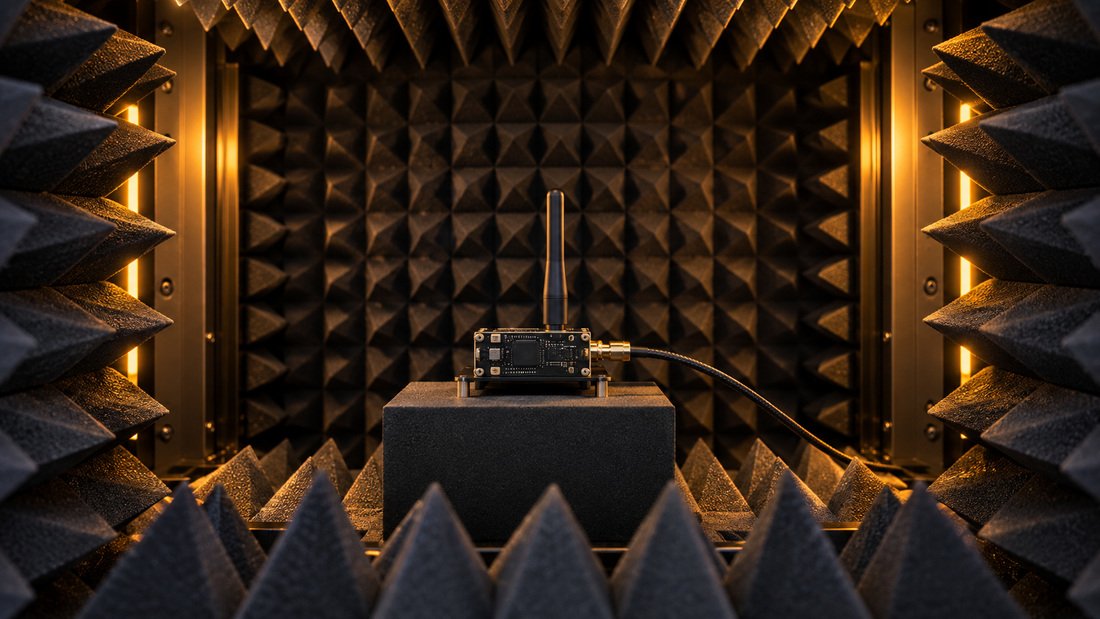
Before equipping a whole club, run a small trial. Bind one module to the receivers your team already uses, fly or bench-test at your typical venue, and record what you observe: link quality indicators, any dropouts, heat after a session, and battery consumption. Compare against your current single-band setup under the same conditions.
Keep the comparison honest by changing one variable at a time. If you change module, antenna and receiver together, you will not know which change mattered. Document firmware versions and antenna types so results can be repeated.
Frequently asked questions
Is a Gemini TX module the same as an ELRS transmitter module?
Not exactly. ELRS transmitter modules are the broad category of external modules that transmit the ExpressLRS protocol. “Gemini” describes a dual-path transmit architecture within that category. Always check the product description rather than the name alone.
Does a Gemini module increase range?
It may improve link resilience when one band is degraded, but range depends on the whole system: output power, antennas, receiver sensitivity and the RF environment. Treat dual-band as redundancy, not a guaranteed distance figure.
Can I use a Gemini module with any ELRS receiver?
No. The receiver must support the matching dual-band or diversity configuration. Confirm the exact receiver model and firmware with the supplier before ordering.
Do I need two antennas?
Dual-band modules typically have two antenna ports, one per band, so two suitable antennas are normally required. Check the connector type and band coverage in the product documentation.
Is it suitable for school drone soccer programs?
It can be, especially in crowded indoor venues, provided the radios and receivers are compatible and the setup is documented. For beginners, the extra configuration is a teaching point and a maintenance responsibility.
What about local radio regulations?
We cannot confirm what applies in your country or event. Ask your national regulator and the competition organizer about permitted bands and output power, then check the module can be set accordingly.
What should I ask a supplier before ordering?
Ask for the datasheet, receiver compatibility list, shipped firmware version, included antennas, input voltage and current draw, and all commercial terms in writing. Do not rely on verbal assurances.
Conclusion and next step
A Gemini TX module is a dual-path ELRS transmitter module that adds a second RF band for redundancy, which can suit crowded indoor drone soccer venues. It is only as good as its receivers, antennas and firmware configuration, so verify compatibility and run a small trial before committing a team budget. If you are outfitting a club, school or association, Request a Team Kit Quote and tell us your radios, receivers and venue so we can confirm what fits and what needs checking in writing.