Quick summary
Motor KV is a rating on a brushless motor that describes its speed constant: the approximate RPM the motor turns per volt of input, with no load. A 1000KV motor on a 4S (nominal 14.8V) battery is aiming for roughly 14,800 RPM unloaded. KV is not power, torque, or quality. Lower KV generally means more torque per amp and suits larger propellers; higher KV spins faster for smaller propellers. In drone soccer, KV choice is about matching the ball cage, propeller size and battery voltage to the flight feel your team needs.
Key Takeaways
- KV = RPM per volt (unloaded speed constant), not a measure of motor strength or efficiency.
- Lower KV favors bigger props and higher torque; higher KV favors smaller props and higher RPM.
- Battery cell count multiplies the effect: KV × voltage sets the target RPM window.
- Propeller load pulls real RPM below the calculated figure; the unloaded number is only a starting point.
- For drone soccer, prioritize durability, consistent spares and parts commonality over chasing a KV number.
What Does Motor KV Actually Measure?
KV is the motor’s velocity constant (sometimes written Kv). It tells you how many RPM the motor would turn for each volt applied when nothing is attached to the shaft. If a motor is rated 2300KV and you apply 14.8V, the no-load math gives about 34,000 RPM. Under a real propeller, it will spin slower because the prop is a load.
Two things KV is often confused with: it is not the same as kilovolts (kV) in electrical engineering, and it is not a power rating. A high-KV motor is not automatically “more powerful” than a low-KV motor of the same size and quality. They are built for different jobs.
Why KV Exists at All
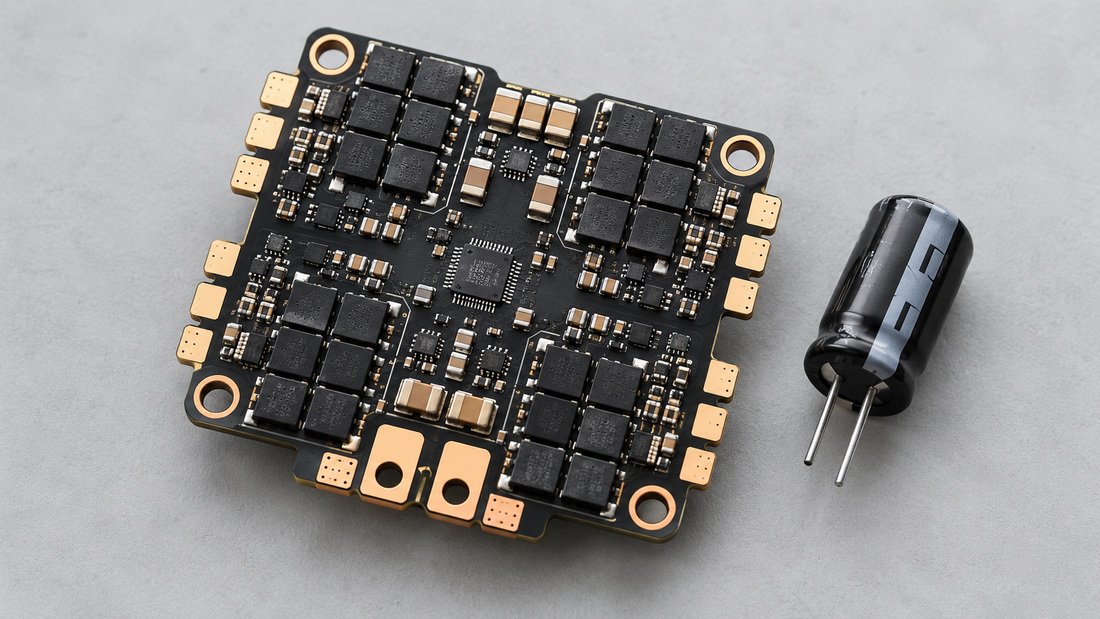
Motor designers trade off wire turns and magnetic configuration. More turns of thinner wire generally produce lower KV and higher torque per amp. Fewer turns of thicker wire generally produce higher KV and higher current capability. That is why you see the same motor size sold in several KV options.
How KV, Voltage and Propeller Size Work Together
The practical relationship is simple: KV × battery voltage gives a target RPM ceiling, and the propeller decides how much of that ceiling you can actually use. Choose a KV that is too high for your propeller, and the motor fights the load, draws excess current and runs hot. Choose too low, and the aircraft feels sluggish for its weight.
| Setup direction | KV tendency | Propeller | Typical feel |
|---|---|---|---|
| Small, light indoor frame | Higher KV | Small, low pitch | Quick response, lower inertia |
| Mid-size outdoor FPV | Medium KV | Mid-size, moderate pitch | Balanced speed and control |
| Larger frame or heavy payload | Lower KV | Larger, higher pitch | Torque and stability, less top speed |
| High cell count on same prop | Lower KV than the low-voltage build | Same prop | Similar RPM, different current path |
This table is general guidance, not a rulebook. Real results depend on motor size, stator geometry, magnet quality, propeller efficiency and the all-up weight of the aircraft.
A Worked Example
Suppose a team runs 4S and wants a calm, durable drone soccer platform. A 4S battery nominal is 14.8V. A 900KV motor targets about 13,300 RPM unloaded; a 1400KV motor targets about 20,700 RPM. With the same propeller, the 1400KV setup will pull more current and respond faster, while the 900KV setup will run cooler and feel steadier. Neither is “better” until you define the flight feel and the propeller.
Why This Matters for Drone Soccer Teams
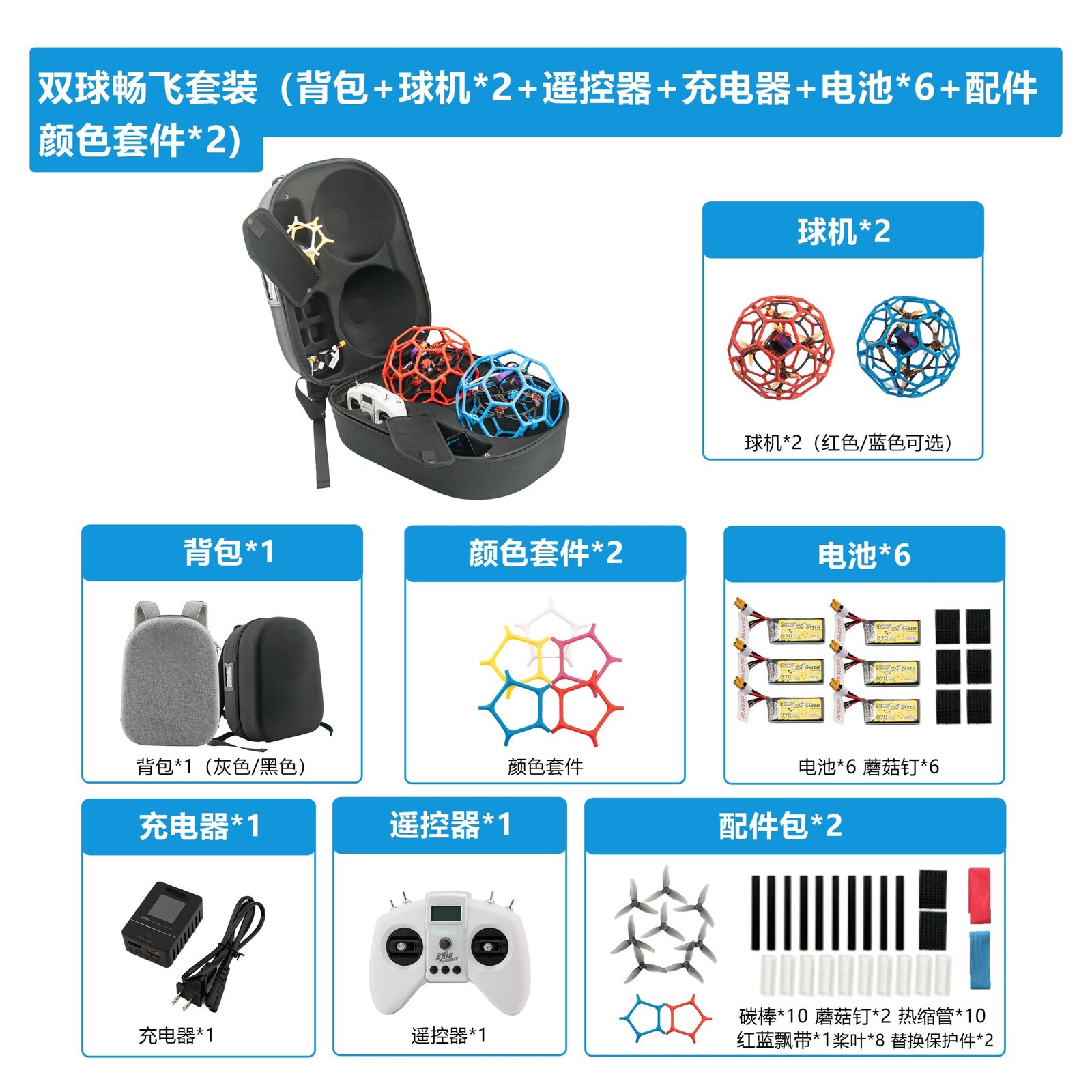
Drone soccer adds constraints that pure freestyle FPV does not. The aircraft flies inside a protective cage and often a ball shell, weight and impact durability matter, and clubs need repeatable setups across many identical airframes. A KV that is ideal for a solo racing pilot can be wrong for a school program that needs consistency.
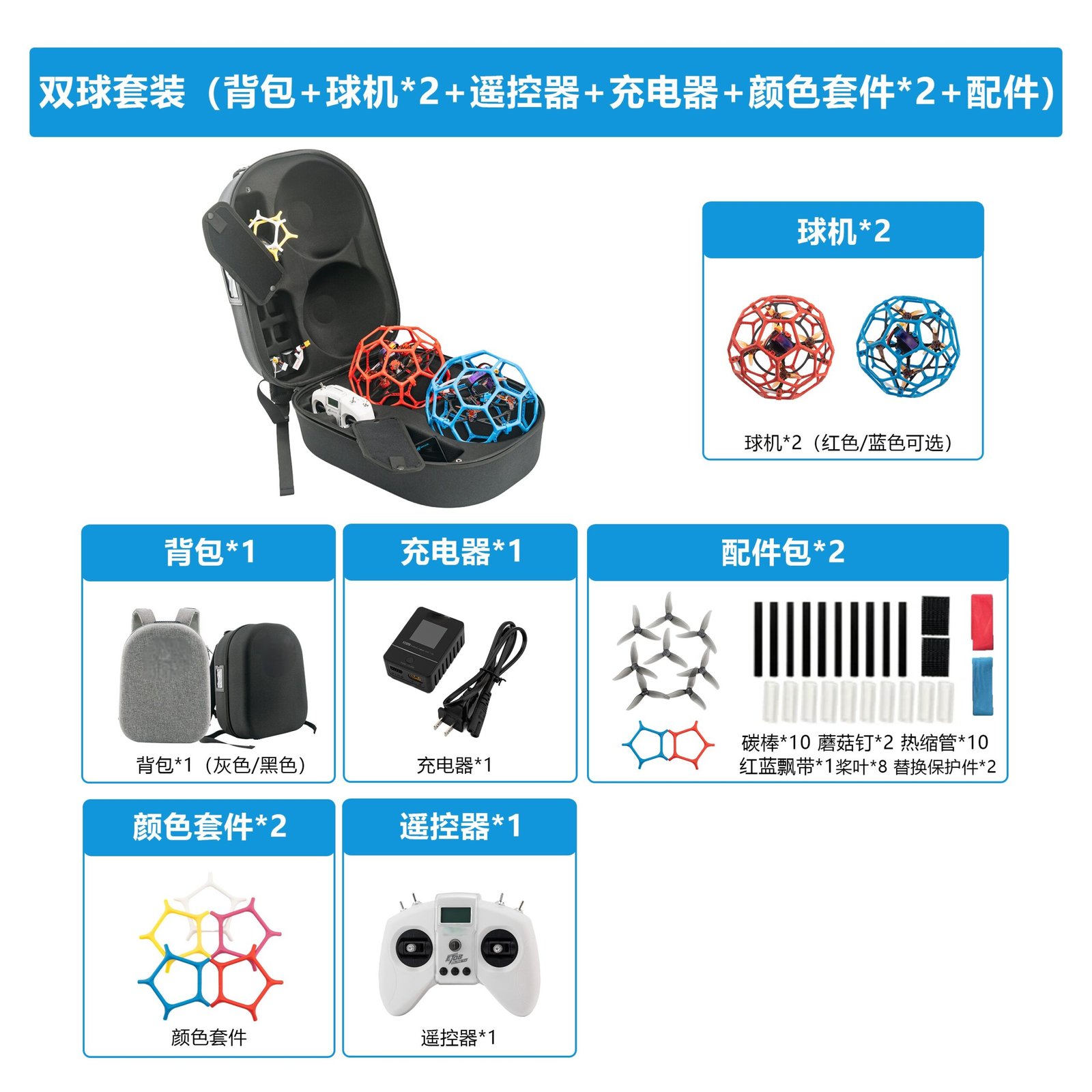
When clubs standardize, they usually standardize on one motor KV, one propeller and one battery cell count so that spares, tuning and coaching stay simple. That is why propulsion combo kits are popular with youth programs: fewer variables to manage across a fleet.
Ball Cage, Shell and Weight
Drone soccer balls carry extra structure. That added mass changes how much thrust the propulsion system must produce. A team that copies a freestyle KV onto a heavier caged airframe may find the drone feels underpowered or runs hot. The right move is to test a small number of candidate KV options with the actual cage and shell, not to assume a forum number transfers.
Common Mistakes When Choosing KV
- Treating KV as a power rating. Two motors with the same KV can differ significantly in torque, current handling and efficiency.
- Ignoring battery voltage. KV is meaningless without the cell count you plan to run.
- Copying a racing setup into a club fleet. Racing tunes favor peak performance; club fleets favor durability and consistency.
- Changing KV and propeller at the same time. If you change both, you cannot tell which change caused the result.
- Skipping current checks. A KV/prop/voltage combination can exceed what your ESC (electronic speed controller) and battery are rated for.
ESC and Battery Are Part of the Decision
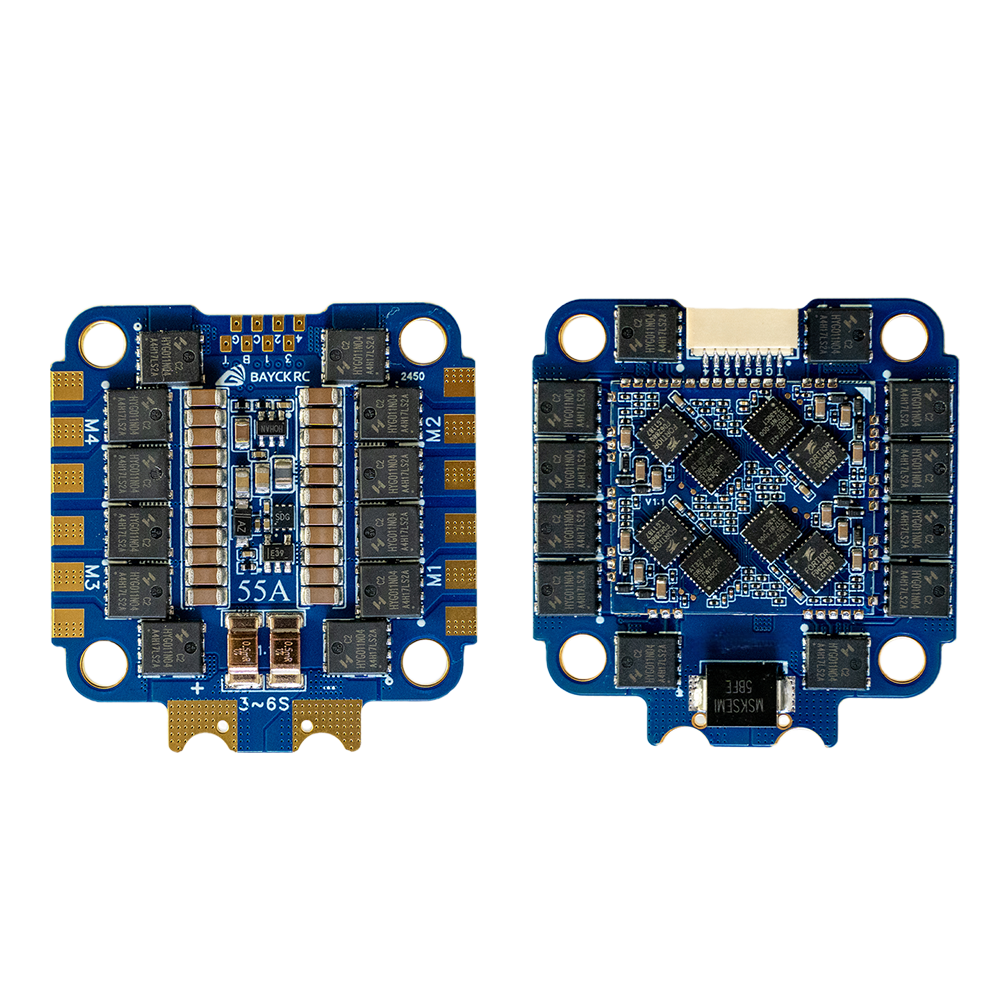
The motor is only one node. The ESC must handle the current the motor will draw, and the battery must deliver it without excessive voltage sag. If you raise KV without re-checking the ESC and battery, you risk overheating and reduced reliability. A four-in-one ESC package is common on small FPV and soccer airframes because it simplifies wiring.
How to Compare Motors Fairly
KV alone cannot rank motors. Use a structured comparison instead.
| Specification | Why it matters | What to ask the supplier |
|---|---|---|
| KV rating | Sets the RPM window for a given voltage | Confirmed KV value and tolerance |
| Stator size | Relates to torque and heat capacity | Exact stator dimensions |
| Max current | Guides ESC and battery choice | Continuous and burst current figures |
| Weight | Affects total aircraft mass and feel | Motor weight without connectors |
| Mounting pattern | Must fit your airframe | Screw spacing and shaft diameter |
| Shaft and bell design | Affects impact durability | Material and replacement parts availability |
Ask for datasheets rather than relying on marketplace listings. If a supplier cannot provide consistent specifications across batches, that is a warning sign for any club buying identical motors over multiple seasons.
For teams that want help aligning motor, propeller and battery before ordering, DPF’s motor and propulsion matching service is designed for exactly this conversation. You can also review the motor, propeller and battery matching resources before committing to a fleet configuration.
Practical Procurement Checklist for Clubs
- Confirm the target flight feel: stable training platform, agile competition platform, or a mix.
- Lock battery cell count before choosing KV.
- Select the propeller size and pitch range you can reliably re-order.
- Check ESC current rating against the motor’s expected draw.
- Request datasheets for KV, stator size, weight, current and mounting pattern.
- Buy a small sample batch before ordering for the whole team.
- Verify spare parts availability: bells, shafts, connectors, screws.
- Agree on packaging and shipping documentation for lithium batteries if they are included.
- Ask whether motors are available as part of a matched propulsion set to reduce configuration errors.
- Get all commercial terms in writing: pricing, quantity, lead time, warranty, returns.
Battery Shipping and Handling
If your team kit includes lithium batteries, note the transport restrictions. Spare lithium ion batteries must generally be carried in carry-on baggage rather than checked bags when flying, terminals must be protected from short circuit, and damaged or recalled batteries should not be carried aboard an aircraft. These are US FAA published rules for air passengers; they are a useful reference, but always confirm the rules of your own airline and jurisdiction. See the FAA guidance at https://www.faa.gov/hazmat/packsafe/lithium-batteries.
Matching KV to Your Program
Most drone soccer clubs end up with one or two configurations: a training configuration that is gentle and durable, and a competition configuration that is sharper. KV is one lever among several, and it should be chosen after weight, propeller and battery voltage are known.
If you are sourcing FPV motors for a club, ask for a small sample set at two or three KV values and test with your actual airframe. That small test is usually cheaper than replacing a mis-specified fleet order.
Frequently Asked Questions
Is higher KV always faster?
Higher KV targets higher RPM for the same voltage, which can mean higher top speed if the propeller and battery can supply it. It does not guarantee a faster or better aircraft, because thrust depends on the propeller and the aircraft weight.
Does higher KV mean more torque?
Usually the opposite in general terms. Lower KV motors tend to have more turns and produce more torque per amp, which suits larger propellers. Actual torque depends on motor design, not KV alone.
Can I use the same propeller with different KV motors?
Physically yes, but the current draw and heat will differ. A higher KV motor with a heavy propeller can overload the ESC or battery. Always check current ratings before mixing.
What KV should a drone soccer club choose?
There is no single answer, because it depends on cage weight, propeller and battery cell count. The reliable approach is to define those first, then test two or three KV options with your actual airframe before ordering for the whole team.
Is KV the same as kilovolts?
No. Motor KV is a speed constant in RPM per volt. Kilovolt (kV) is a unit of electrical potential. They share letters but describe different things.
Does KV change with battery voltage?
No. The KV rating is a property of the motor. What changes is the resulting RPM: higher voltage with the same KV produces a higher target RPM.
How do I verify a supplier’s KV claim?
Ask for a datasheet and, where practical, compare sample motors across batches. If a supplier cannot state KV, stator size and mounting pattern consistently, treat that as a risk for fleet purchasing.
Conclusion
Motor KV tells you the unloaded RPM per volt. It helps you match a brushless motor to a propeller and battery, but it does not describe power, torque or build quality by itself. For drone soccer clubs, associations and school programs, the useful process is to fix weight, propeller and battery voltage first, then test a small sample of KV options before committing to a fleet order.
If you are planning a team order and want help aligning motors, propellers and batteries, Request a Team Kit Quote and share your airframe details, battery cell count and target flight feel.