Quick summary
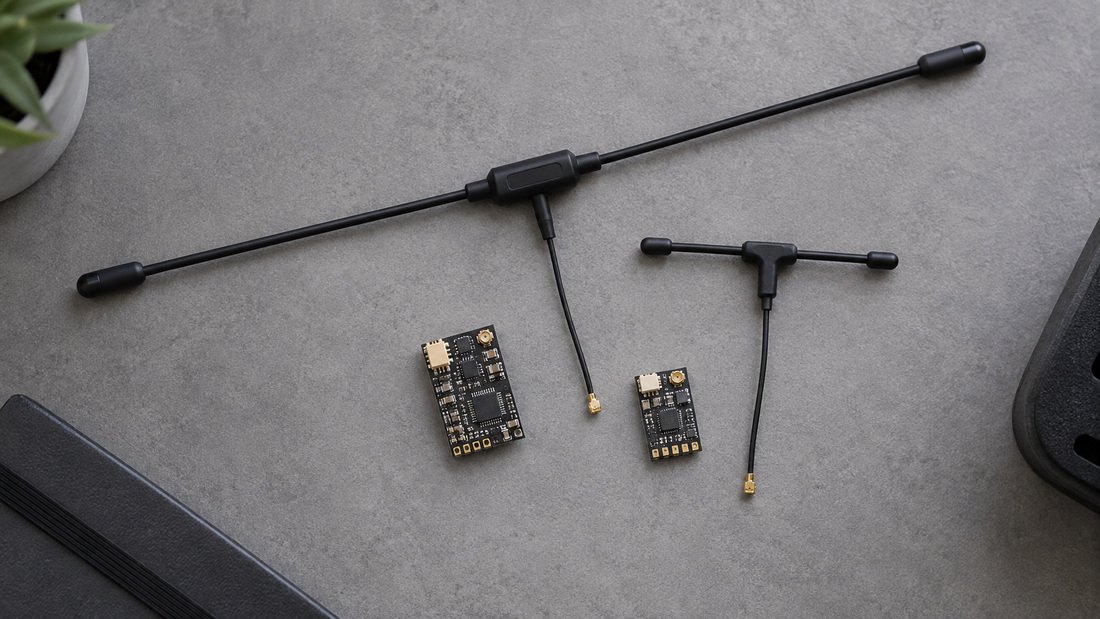
A RACE-series ELRS receiver is an ExpressLRS (ELRS) radio receiver marketed for racing, drone soccer, and similar fast, close-range drone sports. ELRS is an open-source radio control link known for low latency and flexible packet rates. A “RACE-series” label typically signals a receiver positioned for competition use, but the label alone does not guarantee a specific feature set. For drone soccer clubs, schools, and youth programs, the practical question is not the name on the box. It is whether the receiver’s frequency band, antenna style, size, and firmware match your transmitters, aircraft, and event rules. This guide explains what buyers should verify before ordering.
Key Takeaways
- A RACE-series ELRS receiver is best understood as a positioning label for competition-oriented ExpressLRS receivers, not a universal standard.
- Drone soccer teams and youth programs should select receivers by band, antenna, size, firmware, and connector compatibility with their existing radios.
- ELRS receiver selection is a system decision: transmitter module, receiver, antenna, and flight controller all interact.
- Before bulk purchasing, request written confirmation of firmware version, band, connector type, and supported packet rates from your supplier.
- Pilot-test a small sample with your exact transmitter and aircraft before committing a club or district to a large order.
What does “RACE-series” mean on an ELRS receiver?
In plain terms, “RACE-series” is a product-family or marketing label. It signals that a receiver is intended for racing, drone soccer, or similar competitive flying where low latency and fast response matter. The label is not a formal technical standard, and different manufacturers may use it differently. For that reason, treat the name as a starting point, not a specification.
What matters is the actual radio configuration. ELRS receivers are built around the ExpressLRS firmware ecosystem. They communicate with a compatible transmitter module and are configured through firmware settings such as packet rate, telemetry ratio, and binding phrase. Two receivers with similar “RACE” positioning can still differ in band, antenna, connector, and physical size.
Why the label alone is not enough
A club buying receivers for a fleet needs consistency. If half the receivers use one antenna connector and half use another, spare parts and repairs become harder. If some receivers ship with firmware that does not match the team’s transmitter configuration, every new aircraft becomes a setup task. The RACE-series label does not resolve those practical issues. Your procurement checklist does.
Where RACE positioning usually appears
You are most likely to see “RACE-series” language in product listings aimed at drone soccer leagues, school robotics programs, and racing clubs. These buyers need receivers that are small, light, and quick to bind. They also often need many identical units rather than one or two premium builds. That is a procurement pattern, and it shapes what you should ask suppliers.
Who actually needs a RACE-series ELRS receiver?
RACE-series ELRS receivers are most relevant to organized drone sports and youth programs that fly many similar aircraft in confined spaces. If you are a hobbyist flying one model, you can choose almost any compatible ELRS receiver. If you manage a team fleet, the receiver decision has operational consequences.
Drone soccer clubs and leagues
Drone soccer uses small, protected drones in a bounded arena. Teams often maintain multiple identical aircraft so that a crash does not end a match. In that environment, receivers should be easy to swap, easy to bind, and consistent across the fleet. A RACE-series ELRS receiver may fit that need, but confirm that the units are physically interchangeable and use the same firmware configuration.
Schools and youth education programs
Schools usually prioritize durability, simple setup, and predictable behavior over maximum performance. A teacher should be able to hand a student a drone and know it will connect. For these programs, ELRS receiver selection should favor receivers that match the school’s existing transmitter modules and require minimal configuration changes. Ask suppliers about documentation and support, since staff turnover can make tribal knowledge fragile.
Distributors, event organizers, and OEM/ODM teams
Distributors need a receiver they can stock and support across many customers. Event organizers need loaner or rental units that bind quickly and survive repeated use. OEM/ODM procurement teams need a receiver that fits a defined mechanical and electrical envelope. Each of these buyers should ask different questions, but all should insist on written specifications rather than marketing descriptions.
ELRS receiver selection: the variables that matter
ELRS receiver selection is easier when you separate the decision into a few concrete variables. The goal is not to find the “best” receiver in the abstract. It is to find the receiver that fits your radios, your aircraft, your rules, and your maintenance capacity.
Frequency band and regional rules
ELRS is commonly associated with the 2.4 GHz band, and some products use 900 MHz or sub-GHz bands. Band choice affects antenna size, range characteristics, and local radio regulations. Because rules vary by country and can change, verify the permitted band for your location before ordering. Ask your supplier to confirm the band clearly in writing, and check with your national regulator if you are unsure.
Transmitter compatibility
Your receiver must work with your transmitter module and your radio’s firmware. ELRS firmware versions and configuration settings, such as binding phrase and packet rate, must align. A mismatch can look like a defective receiver when it is actually a configuration issue. Before buying in volume, confirm that the receiver’s firmware can match your team’s standard setup.
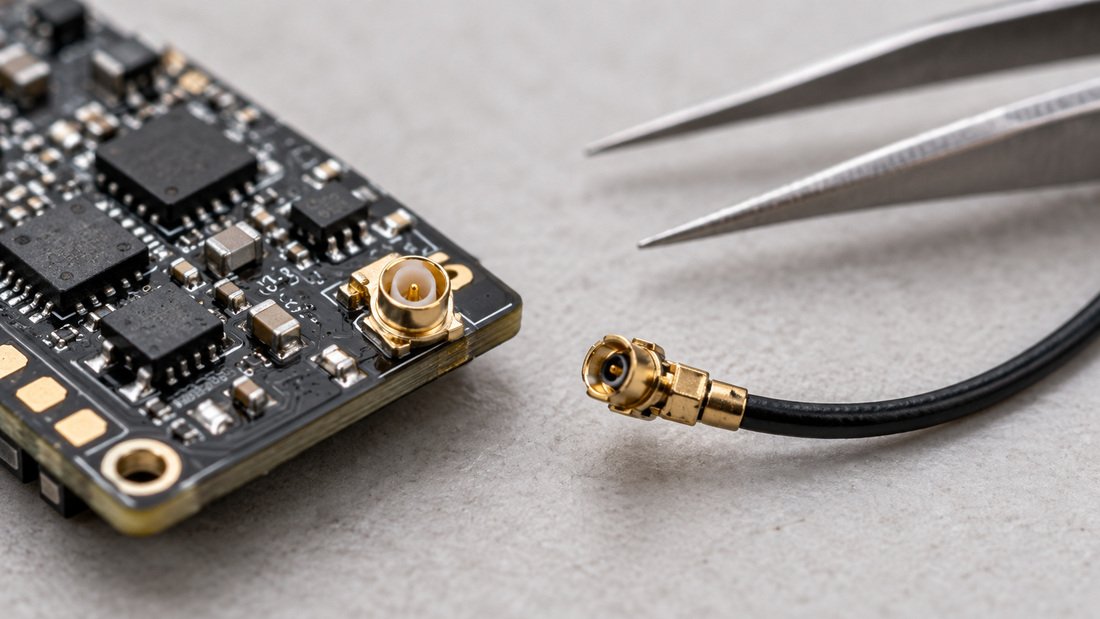
Antenna style and connector
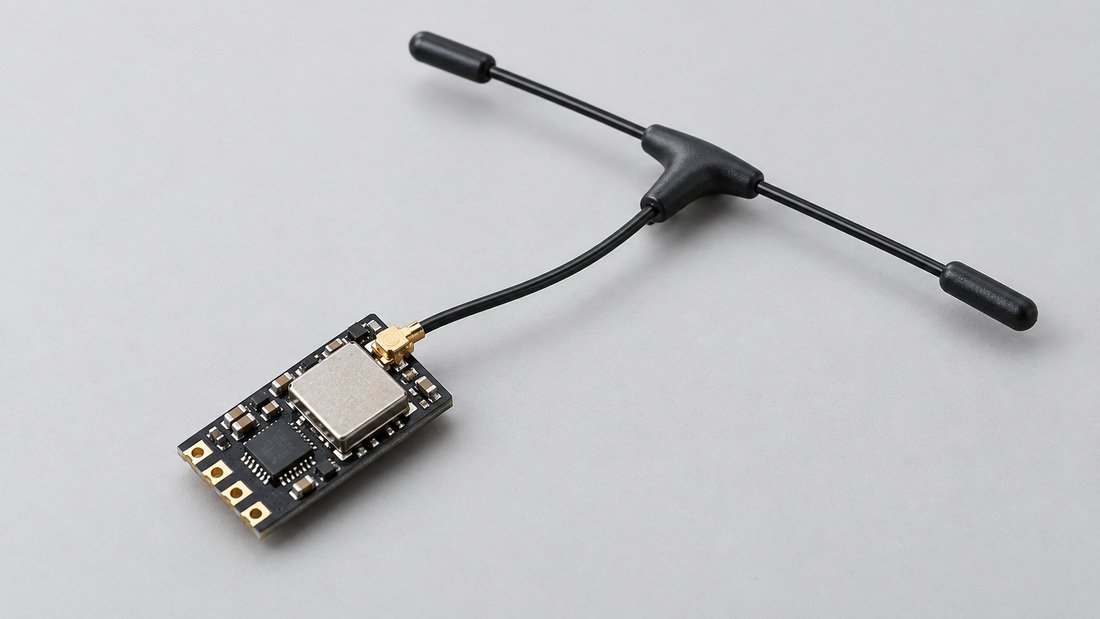
Antennas come in several styles, including ceramic, wire, T-antenna, and external connectors. The choice affects durability, mounting, and how the receiver fits inside a small frame. For drone soccer, a protected antenna that resists crash damage is often more valuable than a theoretically higher-gain design. Confirm the connector type so you can order spares that match.
Size, weight, and mounting
Small aircraft have little room and little payload margin. Receiver size and weight matter, especially when a team runs many identical drones. Check mounting hole spacing and whether the receiver will fit the frame without forcing connectors into stress. If you are equipping a fleet, measure one representative aircraft and confirm that the receiver fits before committing.
Telemetry and packet rate needs
ELRS supports configurable packet rates and telemetry ratios. Faster packet rates can reduce latency, while telemetry settings affect how much data returns to the transmitter. For drone soccer and youth programs, the practical target is a stable link with predictable behavior. Ask what packet rates the receiver supports and whether your transmitter can use them.
Comparing receiver approaches for teams
The table below compares common receiver considerations for drone sports programs. It is general guidance, not a product specification. Use it to frame questions for your supplier.
| Consideration | What to verify | Why it matters for teams |
|---|---|---|
| Band | 2.4 GHz, 900 MHz, or other; regional legality | Affects antenna size, range, and whether you can legally fly at events |
| Antenna style | Ceramic, wire, T-antenna, or external connector | Impacts crash durability, mounting, and spare-parts strategy |
| Connector | Antenna connector type and flight-controller wiring | Determines whether spares and repairs are simple |
| Size and weight | Dimensions, mounting pattern, mass | Constrains small frames and fleet consistency |
| Firmware | ELRS version, binding method, packet rates | Determines setup time and compatibility with your transmitters |
| Documentation | Wiring, binding, and configuration guidance | Reduces support burden for schools and clubs |
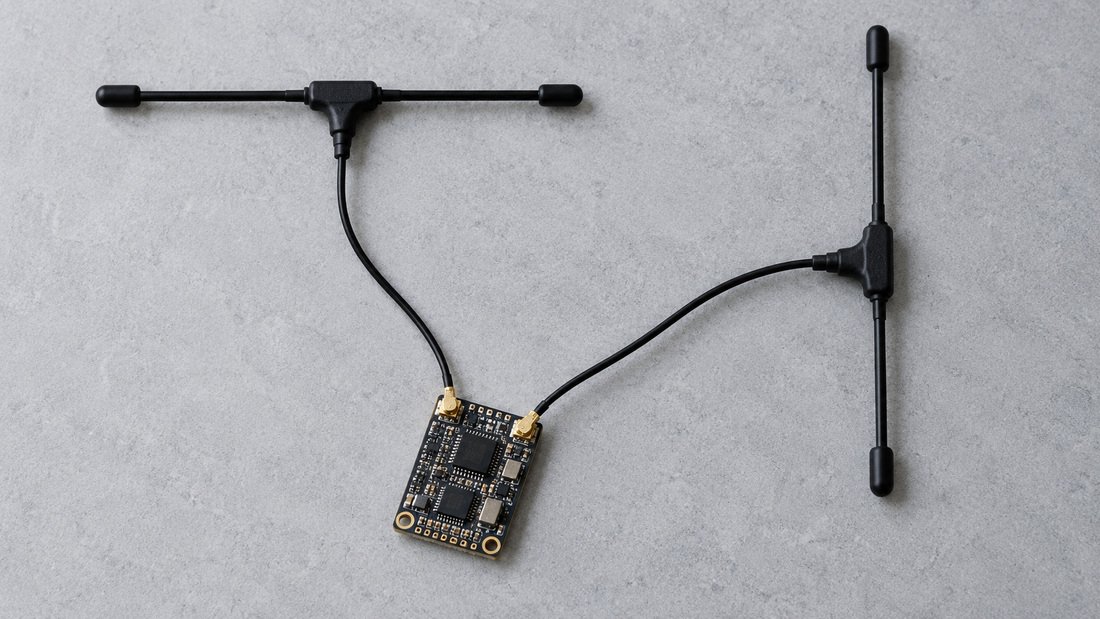
Single-antenna vs. diversity receivers
Some receivers use a single antenna, while others use two in a diversity arrangement. Diversity can help in environments with reflections or interference, but it also adds size and complexity. For a small drone soccer frame, a simpler, well-protected single antenna may be the more practical choice. Weigh theoretical performance against real-world durability.
Cost vs. fleet consistency
A lower unit price is attractive, but inconsistent units can cost more in staff time. If your club must re-bind or reconfigure receivers at every event, the savings disappear. Standardizing on one receiver configuration across the fleet is often worth a slightly higher unit cost. Ask suppliers whether they can supply consistent units over time.
Common mistakes in ELRS receiver selection
Teams often make the same avoidable errors. Knowing them in advance can save a season of frustration.
- Buying by label only. “RACE-series” does not confirm band, antenna, or firmware. Verify specifications.
- Assuming all ELRS receivers are interchangeable. They share a firmware ecosystem, but hardware and configuration differ.
- Ignoring the transmitter. The receiver must match your transmitter module and firmware settings.
- Forgetting regional rules. Band legality varies; confirm before you fly at events.
- Skipping a pilot test. Always test a small sample with your exact aircraft before bulk ordering.
- Neglecting spare antennas and connectors. Crash damage is normal in drone sports; spares keep the fleet flying.
Practical procurement checklist for clubs and schools
Use this checklist before you place a team or district order. It is written for buyers who need repeatable results, not one-off builds.
- Define the transmitter module and firmware version your team will standardize on.
- Confirm the permitted frequency band for your country and event venues.
- Measure one representative aircraft and confirm receiver dimensions and mounting.
- Choose an antenna style and connector that support easy spares and repairs.
- Request written confirmation of firmware version, binding method, and supported packet rates.
- Ask how units are tested before shipment and what documentation is included.
- Order a small sample and pilot-test with your exact transmitter and aircraft.
- Confirm commercial terms in writing, including lead time, minimum order quantity, warranty, and return policy, since these vary by supplier and order.
- Plan a spare-parts allowance for antennas, connectors, and at least one spare receiver per active aircraft.
What to request in writing
Because commercial and technical terms differ between suppliers, ask for a written specification sheet and a written quotation. The specification sheet should state band, antenna type, connector, dimensions, weight, firmware version, and supported packet rates. The quotation should state price, lead time, minimum order quantity, warranty, and return terms. If a supplier cannot provide these in writing, treat that as a risk.
Pilot testing before fleet rollout
A pilot test is not a formality. It reveals whether the receiver binds reliably, fits the frame, and behaves consistently across several units. Test at the venue where you will fly, with the same transmitter and aircraft you plan to use. Record what you observe so your team can repeat the setup later.
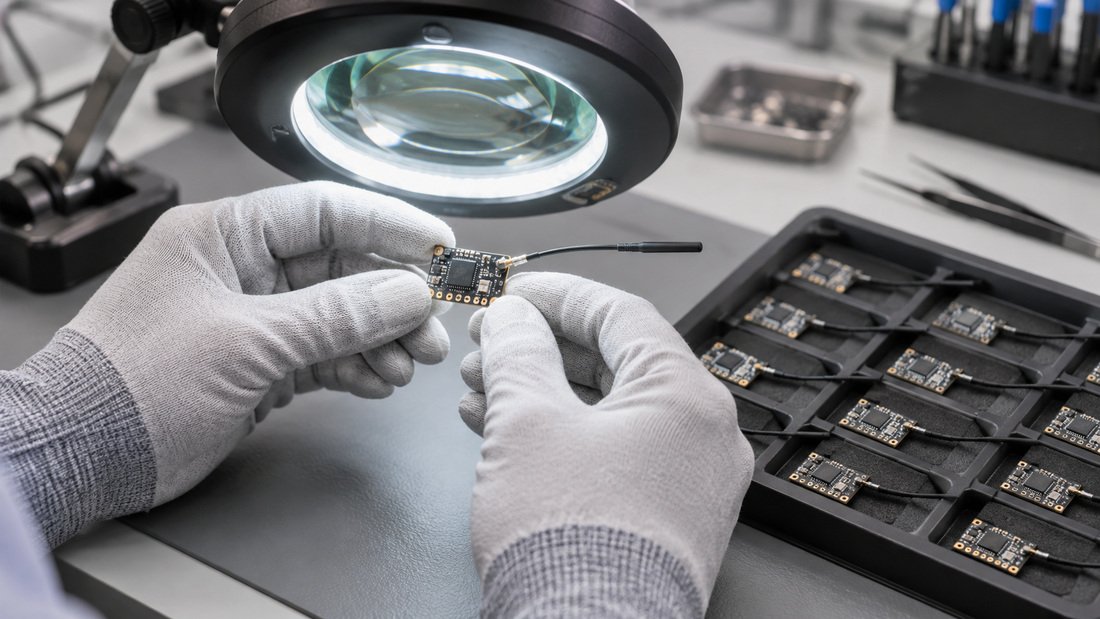
How receivers fit into the wider RF system
A receiver is one part of a radio link. The transmitter module, antenna, and receiver all interact. If you change one, you may need to review the others. For teams building or refreshing a fleet, it helps to look at the whole RF chain rather than replacing receivers in isolation.
You can review ELRS and RF systems to understand the categories involved, and compare ELRS receivers with compatible ELRS transmitter modules. Antenna choice also matters; browse RF antennas to see the styles available. If you are matching specific hardware, check the ELRS receiver compatibility guidance and confirm details with the supplier.
Frequently asked questions
Is a RACE-series ELRS receiver required for drone soccer?
No specific product family is universally required. Drone soccer rules and league equipment policies vary. What matters is that your radio link is legal, reliable, and compatible with your transmitter. Check your league’s rules and verify the receiver’s band and firmware before purchasing.
Can I mix RACE-series receivers with other ELRS receivers on one team?
Technically, different ELRS receivers can often work with the same transmitter if configured consistently. Operationally, mixing hardware complicates spares, firmware management, and troubleshooting. For a team fleet, standardizing on one receiver configuration is usually simpler.
How do I know which frequency band to choose?
Band choice depends on your region’s radio regulations, your transmitter module, and your venue. Because rules differ and can change, confirm the permitted band with your national regulator and ask your supplier to state the band in writing.
What firmware details should I confirm before ordering?
Ask for the ELRS firmware version, the binding method, and the supported packet rates. Confirm that these match your transmitter module and your team’s standard configuration. If the supplier cannot provide firmware details in writing, that is a warning sign.
How many spare receivers and antennas should a club keep?
There is no universal number. A practical approach is to keep at least one spare receiver and several spare antennas per active aircraft, based on your crash rate and event schedule. Confirm your spare-parts budget with your program leadership.
Do I need diversity receivers for a small drone soccer frame?
Not necessarily. Diversity can help in some RF environments but adds size and complexity. For small, crash-prone frames, a simpler antenna setup with good protection may be more practical. Decide based on your venue and your maintenance capacity.
What should I ask a supplier before placing a team order?
Ask for written specifications, a written quotation, and a sample for pilot testing. Confirm band, antenna, connector, dimensions, weight, firmware, supported packet rates, lead time, minimum order quantity, warranty, and return terms. Request the Request a Team Kit Quote to start that conversation.
Conclusion
A RACE-series ELRS receiver is best treated as a positioning label for competition-oriented ExpressLRS hardware, not a guaranteed specification. For drone soccer clubs, schools, and youth programs, the real work is ELRS receiver selection: matching band, antenna, size, connector, and firmware to your transmitters, aircraft, and event rules. Verify regional band legality, request written specifications and commercial terms, and pilot-test a small sample before scaling to a fleet.
Your next step is to define your team’s standard transmitter and aircraft, then request a written quotation and sample. When you are ready to equip a program, Request a Team Kit Quote and confirm the details in writing with your supplier.