Quick summary
Drone soccer teams typically use radio controllers built around ELRS (ExpressLRS) transmitter modules rather than proprietary radio systems. ELRS is an open-source RC link protocol that offers low latency, long range, and flexible hardware options from multiple manufacturers. Teams choose ELRS transmitter modules because they can pair with various receivers, support telemetry, and are widely available at different price points. The exact module and handset combination depends on league rules, budget, and the number of aircraft a team maintains. Schools and clubs should verify local regulations and supplier terms before purchasing.
Key Takeaways
- ELRS transmitter modules are a common choice for drone soccer because they balance cost, latency, and range.
- Compatibility between the module, handset, and receiver is the most important technical check before buying.
- Teams should standardize on one ELRS module type to simplify spares, training, and firmware updates.
- Buyers should confirm regulatory compliance (e.g., local RF power limits) and supplier support terms in writing.
- For bulk orders, request samples and a written quote that lists exactly what is included.
What is drone soccer and why does the controller matter?
Drone soccer is an indoor team sport where players pilot small quadcopters through hoops and attempt to score. The aircraft are typically enclosed in a protective cage, and matches are fast, with frequent collisions and quick direction changes. Because the drones fly close to each other, the radio link must be reliable and resistant to interference. A controller that drops signal or has high latency can cost a team a match. Therefore, the choice of transmitter module and receiver is a performance decision, not just a budget one.
Why ELRS is popular for drone soccer
ELRS (ExpressLRS) is an open-source radio control protocol. It is not a brand of controller; it is a set of firmware and hardware designs that many manufacturers implement. ELRS transmitter modules are popular in drone soccer for several reasons:
- Low latency: ELRS supports high packet rates, which helps with precise control.
- Long range: Even at low power, ELRS can maintain a link over the distances typical in indoor arenas.
- Telemetry: Teams can receive signal strength and other data back from the aircraft.
- Flexibility: ELRS modules come in different form factors (e.g., external modules, internal modules) and can work with many handsets.
- Community support: Being open-source, ELRS has a large user base and regular firmware updates.
These factors make ELRS a practical choice for clubs that need to equip multiple pilots without locking into a single vendor.
Common controller configurations for drone soccer teams
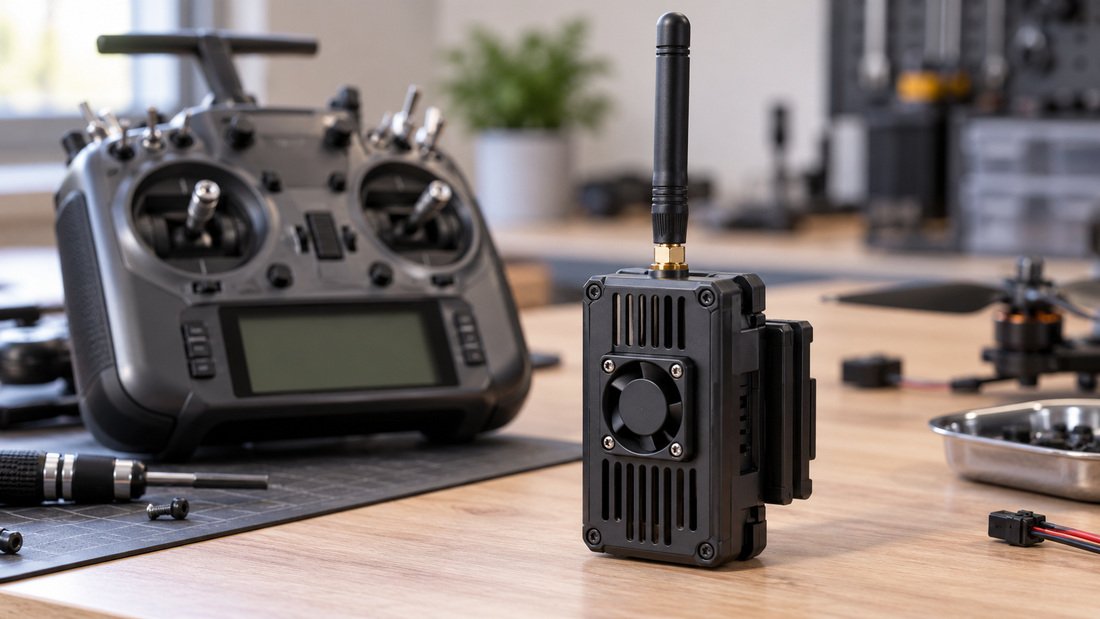
There is no single “official” controller for drone soccer. Teams use a variety of handsets and transmitter modules. The most common setup is an external ELRS transmitter module plugged into a compatible handset. Some teams use handsets with built-in ELRS modules. The choice often depends on what the team already owns, what the league allows, and what the coach is familiar with.
External ELRS transmitter modules
External modules are popular because they can be added to many existing handsets. They typically connect via a JR bay or a nano bay. Teams that already have handsets can upgrade to ELRS by buying external modules. This is often more cost-effective than replacing entire controllers.
Handsets with built-in ELRS
Some manufacturers sell handsets with ELRS built in. These can be simpler for new teams because there is no need to match an external module. However, they may offer less flexibility if the team wants to change protocols later.
Comparison: ELRS transmitter module options for teams
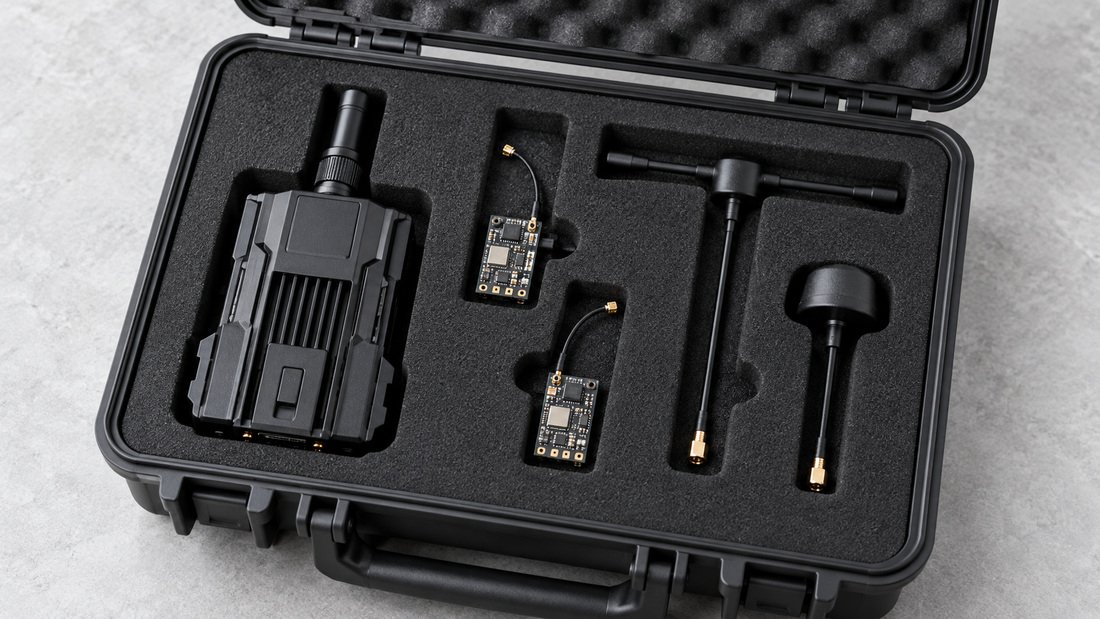
The table below compares general characteristics of different ELRS transmitter module types. It is a guide, not a recommendation for a specific product. Teams should verify details with suppliers.
| Feature | External ELRS module | Built-in ELRS handset | Multi-protocol module with ELRS |
|---|---|---|---|
| Compatibility | Works with many handsets via JR/nano bay | Limited to that handset | Often works with multiple protocols |
| Cost | Lower if you already own a handset | Higher initial cost | Varies widely |
| Flexibility | High; can move between handsets | Low; integrated | High; can switch protocols |
| Complexity | Requires setup and firmware matching | Usually pre-configured | Requires configuration |
| Spares | Easy to replace module separately | Repair may be harder | Module can be replaced |
Key technical considerations for drone soccer
When selecting ELRS transmitter modules for a team, consider these factors:
- Packet rate: Higher packet rates reduce latency but may reduce range. Indoor arenas are small, so high rates are often fine.
- Telemetry ratio: Telemetry uses bandwidth. Teams may need to adjust the ratio to balance control and data.
- Antenna type: The choice of antenna affects range and interference rejection. See RF antennas for options.
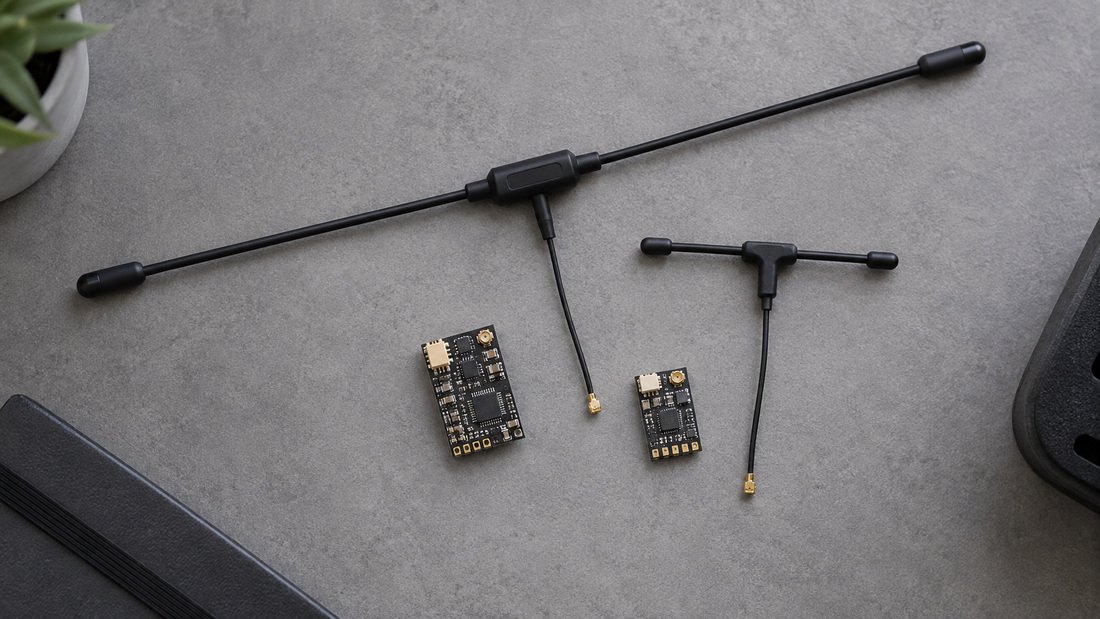
- Receiver compatibility: The transmitter module must be compatible with the receivers in the drones. Check ELRS receiver compatibility before buying.
- Power output: Higher power can improve link reliability but may be limited by local regulations. Teams must confirm what is allowed in their region.
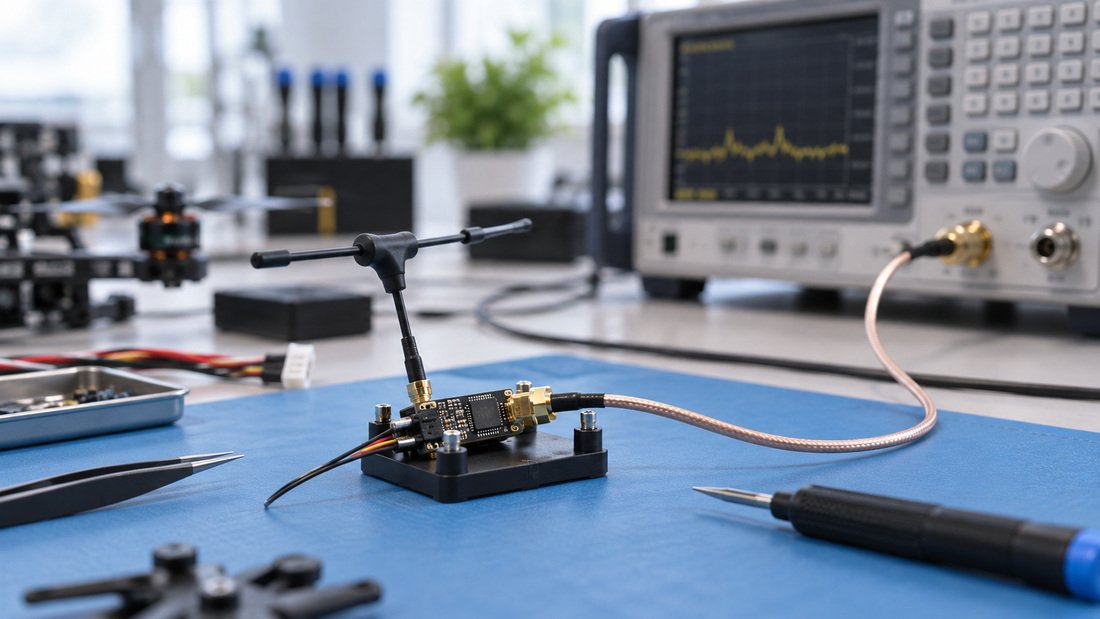
- Firmware version: All modules and receivers should run compatible firmware. Mismatched firmware can cause binding failures.
Procurement checklist for schools and clubs
Use this checklist when buying ELRS transmitter modules for a drone soccer program:
- Define the number of pilots and drones: Decide how many controllers and receivers you need. Consider spares.
- Check league or school rules: Some leagues may restrict certain frequencies or power levels. Verify before purchasing.
- Standardize on one module type: This simplifies training, firmware updates, and spare parts.
- Confirm handset compatibility: Ensure the module fits the handsets you have or plan to buy.
- Verify receiver compatibility: Check that the module works with the receivers in your drones. Use the compatibility center if available.
- Request samples: Test a small number before committing to a bulk order.
- Ask about firmware support: Confirm how firmware updates are handled and whether the supplier provides guidance.
- Get a written quote: The quote should list exactly what is included (module, antenna, cables, documentation) and the terms of sale.
- Check regulatory compliance: Ensure the module can be legally used in your country. Ask the supplier for documentation.
- Plan for support and spares: Confirm how to order replacement units and whether technical support is available.
Ready to equip your team? Request a Team Kit Quote and tell us your requirements.
Common mistakes when buying controllers for drone soccer
- Ignoring compatibility: Buying a module that does not fit existing handsets or receivers.
- Overlooking firmware: Assuming all ELRS gear works together out of the box. Firmware versions must match.
- Buying without testing: Ordering a large batch without testing a sample first.
- Forgetting spares: Not having backup modules or antennas for match days.
- Assuming regulations: Using high power settings without checking local rules.
- Not standardizing: Mixing different module types, which complicates training and maintenance.
Frequently asked questions
1. Are ELRS transmitter modules allowed in all drone soccer leagues?
Rules vary by league and country. Some leagues may have specific equipment requirements or frequency restrictions. Teams should check their league’s rulebook and local regulations before purchasing. Ask the supplier for documentation that can help you verify compliance.
2. Can I use any ELRS transmitter module with any handset?
No. External modules require a compatible bay (e.g., JR or nano) and may need specific firmware. Built-in modules are specific to the handset. Always check the module’s compatibility list and your handset’s specifications.
3. How many controllers does a drone soccer team need?
This depends on the number of players and practice stations. A typical team may have one controller per active pilot, plus spares. For a school program, consider having at least one spare for every five controllers.
4. What is the difference between ELRS and other protocols like FrSky or Crossfire?
ELRS is open-source and known for low latency and long range at low cost. FrSky and Crossfire are proprietary systems with their own ecosystems. The best choice depends on your existing equipment and budget. ELRS is popular for drone soccer because of its flexibility and community support.
5. Do I need a special receiver for drone soccer?
You need an ELRS-compatible receiver that fits your drone’s size and weight constraints. Many small receivers are available. Check ELRS receivers for options and ensure they match your transmitter module’s firmware.
6. How do I update firmware on ELRS modules?
Firmware updates are typically done via a USB connection or Wi-Fi using configuration software. The exact process depends on the module. Suppliers may provide instructions. It is important to keep all modules and receivers on compatible firmware versions.
7. What should I confirm in writing before ordering in bulk?
Ask for a written quote that includes: exact model numbers, included accessories, quantity, price, estimated lead time, warranty terms, and return policy. Also confirm technical support availability and any compliance documentation. Do not rely on verbal assurances.
Conclusion
ELRS transmitter modules are a practical choice for drone soccer teams because they offer low latency, flexibility, and broad compatibility. The key is to standardize on a compatible set of modules and receivers, test samples before bulk purchase, and confirm all terms in writing. Schools and clubs should also verify local regulations and league rules. For distributors and event organizers, offering a consistent ELRS ecosystem can simplify support and spares. To discuss your team’s needs, Request a Team Kit Quote and we will help you plan your procurement.