Quick summary
For most long-range flying, 900 MHz ELRS is the better default because lower frequencies generally penetrate obstacles and hold link through vegetation better than 2.4 GHz at the same output power and antenna setup. However, 2.4 GHz often wins for compact builds, higher packet rates, worldwide availability and smaller antennas. Dual-band ELRS aims to combine both. The “best” band depends on whether your priority is maximum link margin, latency, antenna size, local interference or regional rules you must confirm.
Key Takeaways
- 900 MHz ELRS is usually the stronger choice for long-range when penetration, obstacle tolerance and link margin matter more than antenna size.
- 2.4 GHz ELRS remains popular for compact builds, higher packet rates and simpler component availability, but it can struggle in wet or obstructed environments.
- Dual-band ELRS can improve resilience by using two bands, but it adds cost, weight, antenna count and configuration complexity.
- Band choice is only one variable: output power, receiver sensitivity, antenna gain, diversity, packet rate and local interference all shape real range.
- For schools, clubs and teams, standardising one band per fleet simplifies training, spares and troubleshooting.
ExpressLRS, often shortened to ELRS, is an open-source radio control link. It is not the same as a video link. When people ask which ELRS band is best for long-range flying, they are usually asking which frequency band will give the most reliable control link at distance in their flying environment. The answer is not a single number. It is a trade-off between physics, hardware, local noise and how you fly.
What “ELRS band” actually means
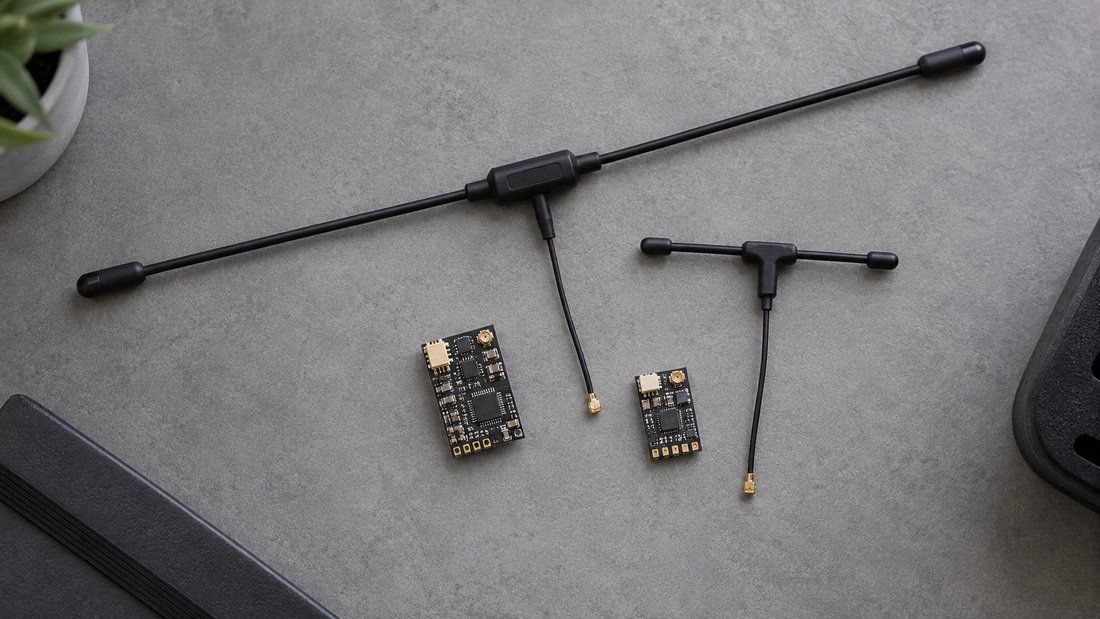
An ELRS band refers to the radio frequency range the control link uses. The common ELRS bands are 900 MHz and 2.4 GHz, with dual-band hardware using both. Frequency affects how the signal travels, how large the antennas need to be and how the link behaves around obstacles, moisture and other radio users.
Lower frequencies generally travel further and bend around obstacles better at the same power. Higher frequencies can carry more data quickly and use smaller antennas, but they are more easily blocked by terrain, buildings and wet vegetation. These are general radio principles, not specific test results for any product.
900 MHz ELRS
900 MHz ELRS is often chosen for long-range control because it tends to hold link better through trees, behind low terrain and in non-line-of-sight conditions. The trade-off is larger antennas and, in some regions, different legal power and frequency rules that you must verify locally.
2.4 GHz ELRS
2.4 GHz ELRS is widely used because hardware is compact, antennas are small, and many transmitters and receivers are available. It can offer very low latency, which matters for racing and drone soccer. However, 2.4 GHz is also crowded with Wi-Fi, video transmitters, Bluetooth and other users, so interference can reduce usable range in urban or event environments.
Dual-band ELRS
Dual-band ELRS uses both 900 MHz and 2.4 GHz, usually with separate antennas or a combined antenna system. It can improve resilience when one band is noisy or blocked. It also adds weight, drag, cost, setup steps and more failure points to check. It is not automatically better for every long-range mission.
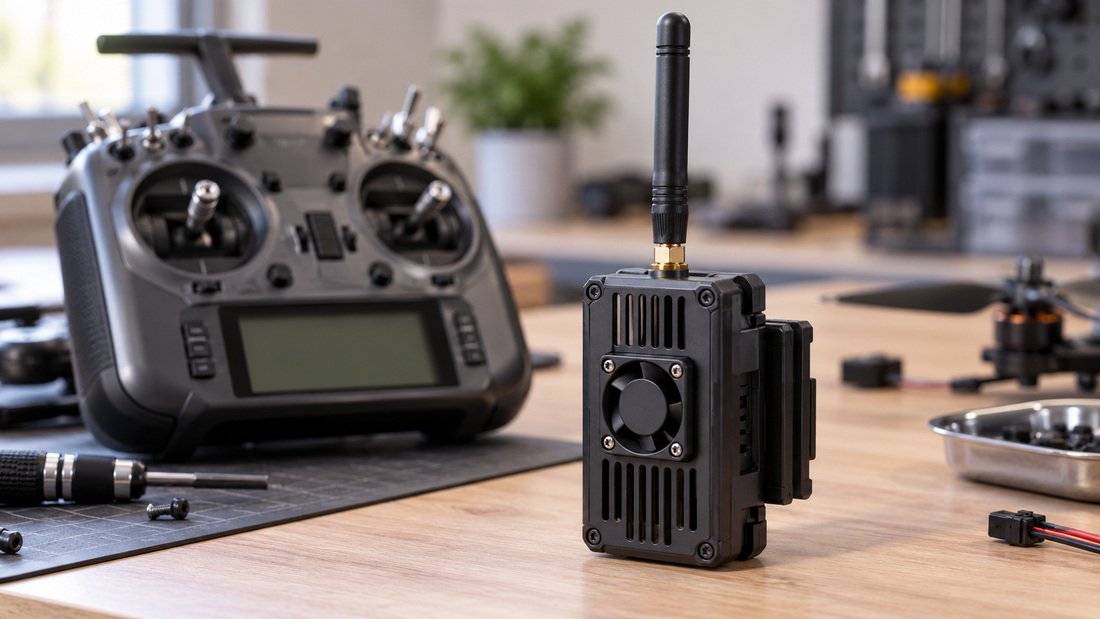
900 MHz vs 2.4 GHz vs dual-band: comparison
Use this table as a starting point. Real performance depends on your hardware, antennas, environment and local regulations.
| Factor | 900 MHz ELRS | 2.4 GHz ELRS | Dual-band ELRS |
|---|---|---|---|
| Typical long-range strength | Strong in obstructed or vegetated areas | Strong in clear line of sight, weaker through obstacles | Aims to combine both; depends on implementation |
| Antenna size | Larger | Smaller | Largest or multiple antennas |
| Latency potential | Good; depends on packet rate | Often very low; popular for racing and drone soccer | Depends on which band is active |
| Interference environment | Usually less crowded in many areas, but verify locally | Often crowded by Wi-Fi and video links | Can switch or combine to improve resilience |
| Build complexity | Moderate | Low | High |
| Best fit | Long-range exploration, rural and wooded sites | Compact builds, racing, indoor and event use | Teams wanting redundancy, with room and budget |
What really determines long-range performance
Band is only one part of the link budget. A well-set-up 2.4 GHz system with good antennas and a clean RF environment can outperform a poorly installed 900 MHz system, and the reverse is also true.
Transmitter output power and receiver sensitivity
More output power can help, but it is not unlimited. Regulatory limits vary by country and band, so confirm what is legal where you fly. Receiver sensitivity also matters greatly: a sensitive receiver can hear weaker signals and extend usable range without increasing transmit power.
Antenna gain and orientation
Antennas shape where the energy goes. A higher-gain directional antenna on the ground can focus power toward the aircraft, but it must be aimed. Omni-directional antennas are easier for moving aircraft and drone soccer, but they spread energy in all directions. Polarisation mismatch between transmitter and receiver antennas can sharply reduce range.
Diversity and antenna placement
Diversity receivers use two antennas and select or combine the better signal. This can reduce dropouts when the aircraft banks or when one antenna is shadowed by the frame. Placement matters: keep antennas away from carbon fibre, metal, battery packs and video transmitters.
Packet rate and telemetry
Higher packet rates reduce latency but can reduce sensitivity and range. Lower packet rates often extend range at the cost of response speed. Telemetry ratio and other link settings also consume airtime, so long-range setups sometimes use lower telemetry rates to protect the control link.
Choosing a band for different drone programs
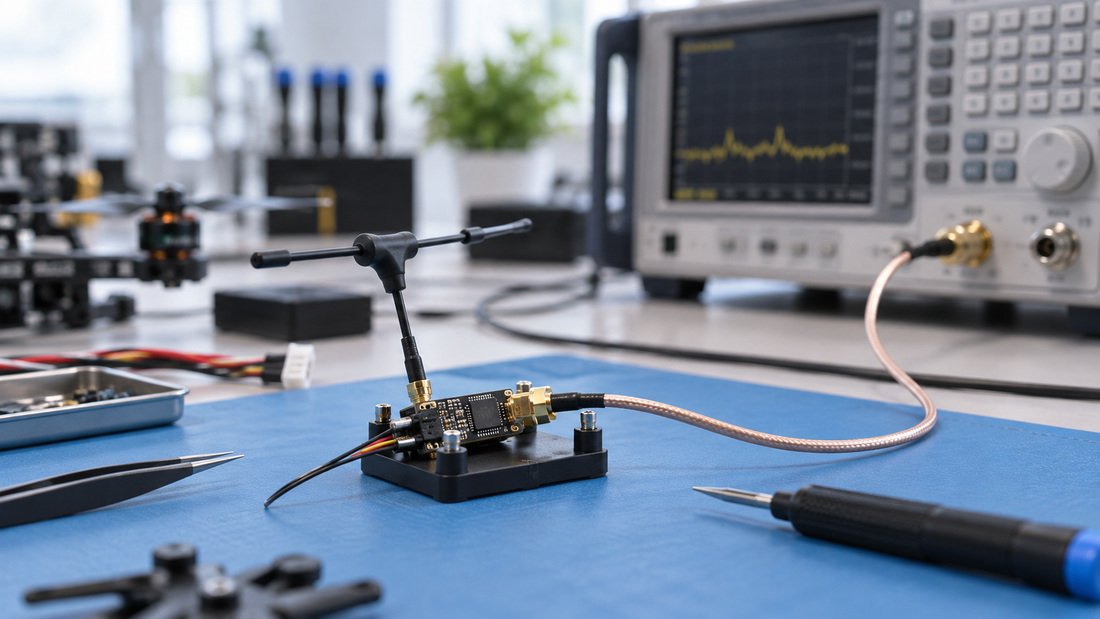
For schools, youth programs and drone soccer clubs, the best band is often the one that is easiest to standardise, train and support. Long-range capability may be secondary to reliability in a gym or on a fixed field.
Drone soccer and indoor training
Drone soccer is typically flown indoors or in compact arenas where 2.4 GHz compact hardware and low latency are valued. Interference from Wi-Fi and spectators’ devices can be a challenge, so channel planning and event RF hygiene matter. If your team also flies outdoors at long range, you may need two setups or dual-band hardware.
School and youth long-range projects
For educational long-range projects, 900 MHz ELRS can be a good teaching platform for link budgets, antenna theory and failsafe planning. It also requires more space for antennas and careful rules compliance. Confirm local frequency and power rules before purchase.
Club and event organisers
Event organisers should agree on a band policy, publish RF rules and provide a way to check gear before flying. Standardising on one band per event reduces interference surprises and simplifies troubleshooting. Distributors and OEM/ODM buyers should confirm regional variants, labelling and documentation requirements in writing.
If you are equipping a team, review our ELRS and RF systems range and the ELRS receiver compatibility guidance before ordering. For a tailored configuration, request a team kit quote and confirm the exact band, region and quantity you need.
Common mistakes when choosing an ELRS band
- Assuming a lower frequency always means more range without checking power limits, antennas and local rules.
- Buying a high-power module but using a mismatched or damaged antenna.
- Mixing polarisation or poorly placing antennas near carbon fibre and video transmitters.
- Using the highest packet rate for long range, reducing link margin.
- Forgetting failsafe and return-to-home behaviour testing before long-range flights.
- Standardising a fleet on dual-band without budgeting for extra weight, cost and setup time.
- Ignoring local RF regulations and event rules.
Buyer checklist for team and club procurement
Use this checklist when comparing ELRS receivers, transmitter modules and antennas. Confirm any commercial terms in writing with your supplier.
- Band and regional variant: 900 MHz, 2.4 GHz or dual-band, and the correct regulatory variant for your country.
- Transmitter compatibility: confirm your radio handset and module bay support the module you are considering.
- Receiver form factor: antenna connector type, size, weight and mounting method for your airframes.
- Antenna plan: type, gain, polarisation, connector and spare parts for field repairs.
- Firmware and configuration: confirm supported firmware targets and how updates are handled.
- Power and telemetry: confirm what output power is legal and how telemetry will be configured.
- Documentation: ask for wiring, pinout, regulatory labels and safety instructions in your required language.
- Support: ask how technical questions, replacements and firmware issues are handled for clubs and schools.
- Total cost: include antennas, spares, shipping, duties and training time, not just the receiver price.
How to test and verify your setup
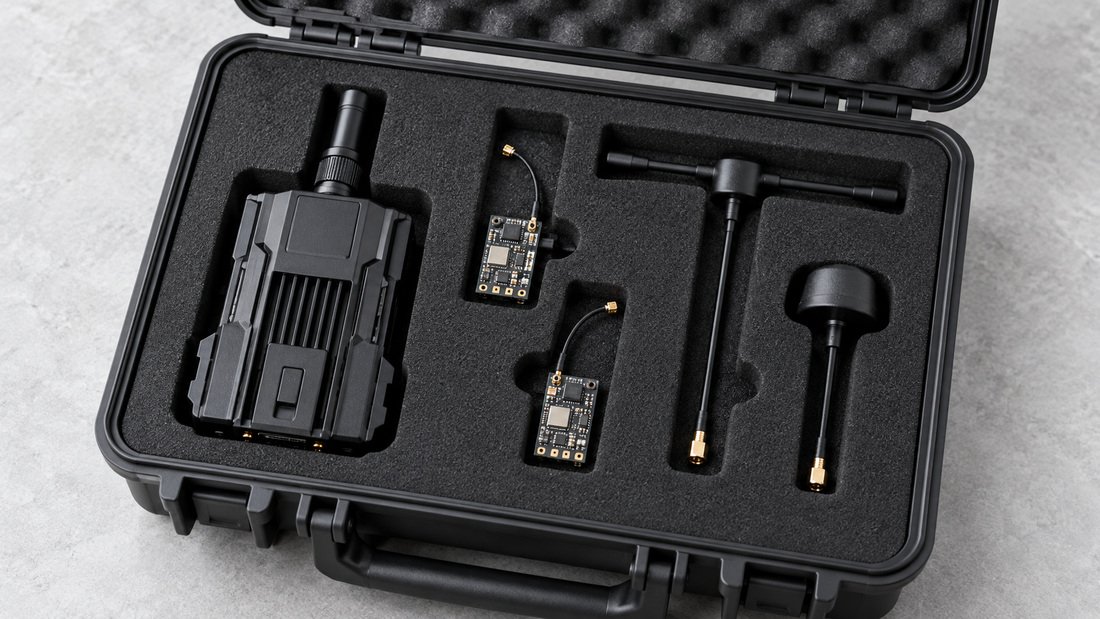
Before flying long range, verify the link in controlled conditions. Start with a ground range check at low power where permitted, then test at increasing distance in an open area with a spotter. Log link quality and RSSI or LQ values if your firmware supports it, and repeat with different antenna orientations.
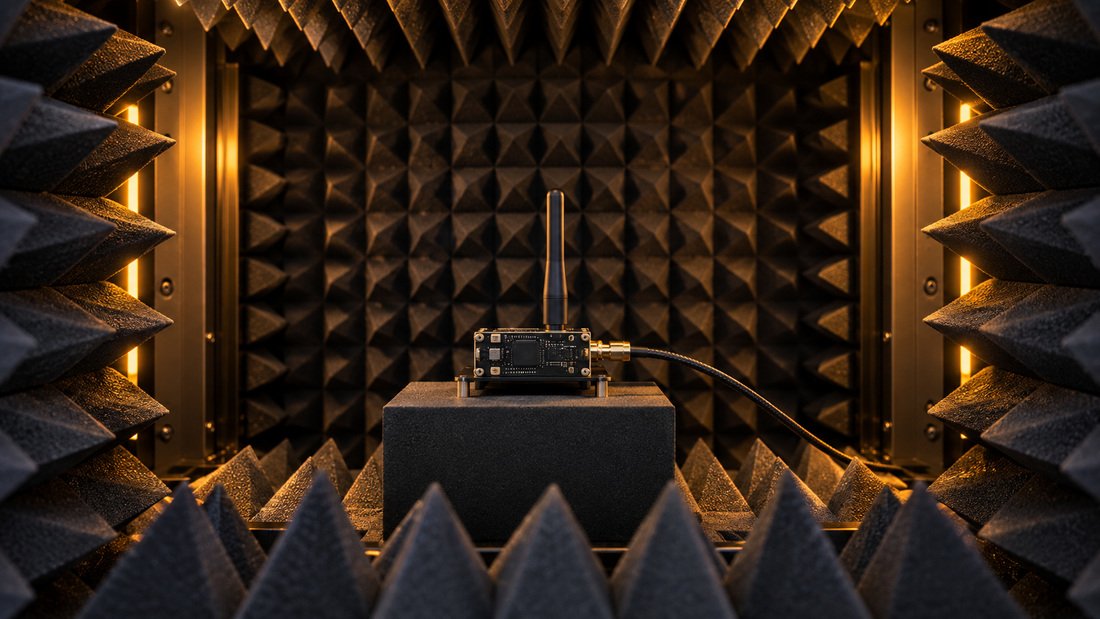
Bench testing can reveal antenna and wiring problems before flight. If you have access to proper RF test equipment, use it. Otherwise, compare known-good hardware against your build to isolate faults. Always follow local rules, respect privacy and avoid flying over people.
FAQ
Is 900 MHz always better than 2.4 GHz for long range?
No. 900 MHz often has an advantage through obstacles and vegetation, but 2.4 GHz can perform very well in clear line of sight and offers lower latency and smaller antennas. The best choice depends on your environment, hardware and rules.
Is dual-band ELRS worth it for a club fleet?
It can be worth it if you need redundancy across different environments and have budget, space and training capacity. It adds cost, weight and setup complexity, so confirm whether your team can support it before standardising.
What output power is legal for ELRS?
Regulations vary by country and band. Do not assume a module’s maximum setting is legal where you fly. Check your national radio authority rules and any event-specific limits, and confirm with your supplier what settings and variants are available.
Does a higher-gain antenna always increase range?
Not always. Higher gain focuses energy in a narrower pattern, so it must be aimed correctly. For moving aircraft, a misaimed high-gain antenna can perform worse than a good omni-directional antenna.
Which packet rate should I use for long range?
Lower packet rates often extend range but increase latency. For long-range cruising this may be acceptable; for racing or drone soccer, higher rates are usually preferred. Test and confirm what works for your mission.
Can I mix 900 MHz and 2.4 GHz receivers in one fleet?
You can, but it complicates spares, training and event RF planning. If you do, keep clear records of which aircraft use which band and ensure your transmitter supports both.
What should I ask a supplier before ordering ELRS gear for a team?
Ask for regional variants, regulatory labels, firmware support, antenna compatibility, documentation, spare parts, warranty terms, lead times and MOQ in writing. Confirm how technical support is handled for schools and clubs.
For product families, see our ELRS receivers, ELRS transmitter modules and RF antennas.
Conclusion
For most long-range flying, 900 MHz ELRS is the stronger default when obstacles and link margin matter most. 2.4 GHz ELRS remains excellent for compact builds, low latency and event environments. Dual-band ELRS can add resilience at the cost of complexity. The best band for your program is the one that matches your environment, rules and support capacity.
Next step: list your aircraft, radios, flying sites and local rules, then Request a Team Kit Quote with the exact bands, quantities and regional variants you need.