Quick summary
For most 10-inch long-range builds on 6S (22.2 V nominal) lithium polymer packs, a brushless motor in the 280–380 KV range with a 2810–3110-class stator is the common starting point. If you run 8S, step down toward roughly 210–280 KV. KV is unloaded RPM per volt, so it is not a standalone answer: propeller diameter and pitch, all-up weight, target cruise speed, ESCs and cooling all shift the correct value. Confirm final numbers with your motor supplier and test data before ordering team quantities.
Key Takeaways
- KV describes unloaded RPM per volt (RPM/V); lower KV suits higher voltage or larger props, higher KV suits lower voltage or smaller props.
- 10-inch long-range platforms usually prioritize flight time and smooth video over peak thrust, so a moderate KV with efficient props beats a race-tuned KV.
- Cell count is the first decision, KV the second — a 6S pack and an 8S pack need different KV to spin the same propeller safely.
- The 280–380 KV / 6S pairing is an illustrative starting range, not a guarantee; motor mass, magnet grade, winding and cooling determine real limits.
- Ask suppliers for bench data (thrust, current, temperature) at your target voltage before committing to a season’s worth of parts.
What does KV actually mean on a brushless motor?
Direct answer: KV is the motor’s velocity constant, expressed as RPM per volt of input, measured with no load. A 330 KV motor on a 22.2 V pack theoretically spins about 7,326 RPM unloaded; a 220 KV motor on the same pack spins about 4,884 RPM.
Two practical consequences follow. First, higher voltage at the same KV means higher RPM and usually higher current draw. Second, real RPM is always below the unloaded figure because the propeller loads the motor down. KV does not tell you torque, efficiency, or maximum continuous current — those come from stator size, winding, magnets and construction.
Teams often confuse KV with power. A lower KV motor is not automatically weaker; it may simply be wound for more voltage. This is why motor and propulsion matching should be done as a system, not as a single specification.
Why does a 10-inch long-range build change the KV decision?
Direct answer: A 10-inch propeller produces more thrust per revolution than a 5-inch prop, so it needs fewer RPM to hold cruise. Lower RPM generally means lower current for a given flight speed, which is where long-range efficiency comes from.
Long-range flying is usually a steady cruise with gentle throttle, not repeated full-throttle bursts. That favors a motor wound for a moderate KV that sits near its efficient operating band during cruise rather than a high-KV motor idling at low throttle.
Weight matters too. A 10-inch platform typically carries a larger battery and camera payload than a freestyle quad, so the motor must produce enough torque to accelerate that mass without excessive prop wash or overheating. Larger stators generally deliver more torque at a given KV, which is why 2810–3110-class motors are common on this frame size.
How do cell count and KV interact?
The same propeller and KV scale with voltage. Moving from 6S to 8S at unchanged KV raises RPM and current, which can overheat motors and stress ESCs. Moving from 6S to 4S at unchanged KV lowers RPM, which may leave the aircraft underpowered for its weight.
| Pack (nominal) | Illustrative KV range for 10-inch props | What it usually favors | Main trade-off |
|---|---|---|---|
| 4S (14.8 V) | Roughly 480–650 KV | Lighter trainers, lower-cost packs | Higher current for the same thrust; less headroom |
| 6S (22.2 V) | Roughly 280–380 KV | General long-range cruise and video | Requires careful prop and weight matching |
| 8S (29.6 V) | Roughly 210–280 KV | Heavier payloads, longer endurance goals | Higher system cost; ESC and BEC compatibility |
These ranges are illustrative planning bands, not certified specifications. Motor mass, winding, magnet grade, propeller pitch and ambient temperature can move the right number outside these bands.
Which propeller and battery pair with which KV?
Direct answer: Choose the propeller first, then the KV, then the battery. A larger diameter or higher pitch loads the motor more, so it needs lower KV to stay within its safe RPM band.
- 10 × 4.5 to 10 × 5 props with 6S generally sit comfortably with 280–380 KV motors.
- Higher-pitch 10-inch props increase load; if current or temperature rises, reduce KV or reduce pitch.
- Battery capacity affects weight, which affects the throttle needed for cruise and therefore average current.
- ESC current rating must exceed the motor’s expected peak current with margin, not the average.
Because these three parts interact, use a structured motor, propeller and battery matching process rather than changing one item at a time. For clubs standardizing a fleet, document the approved combination so replacements do not silently change performance.
What about drone soccer and education fleets?
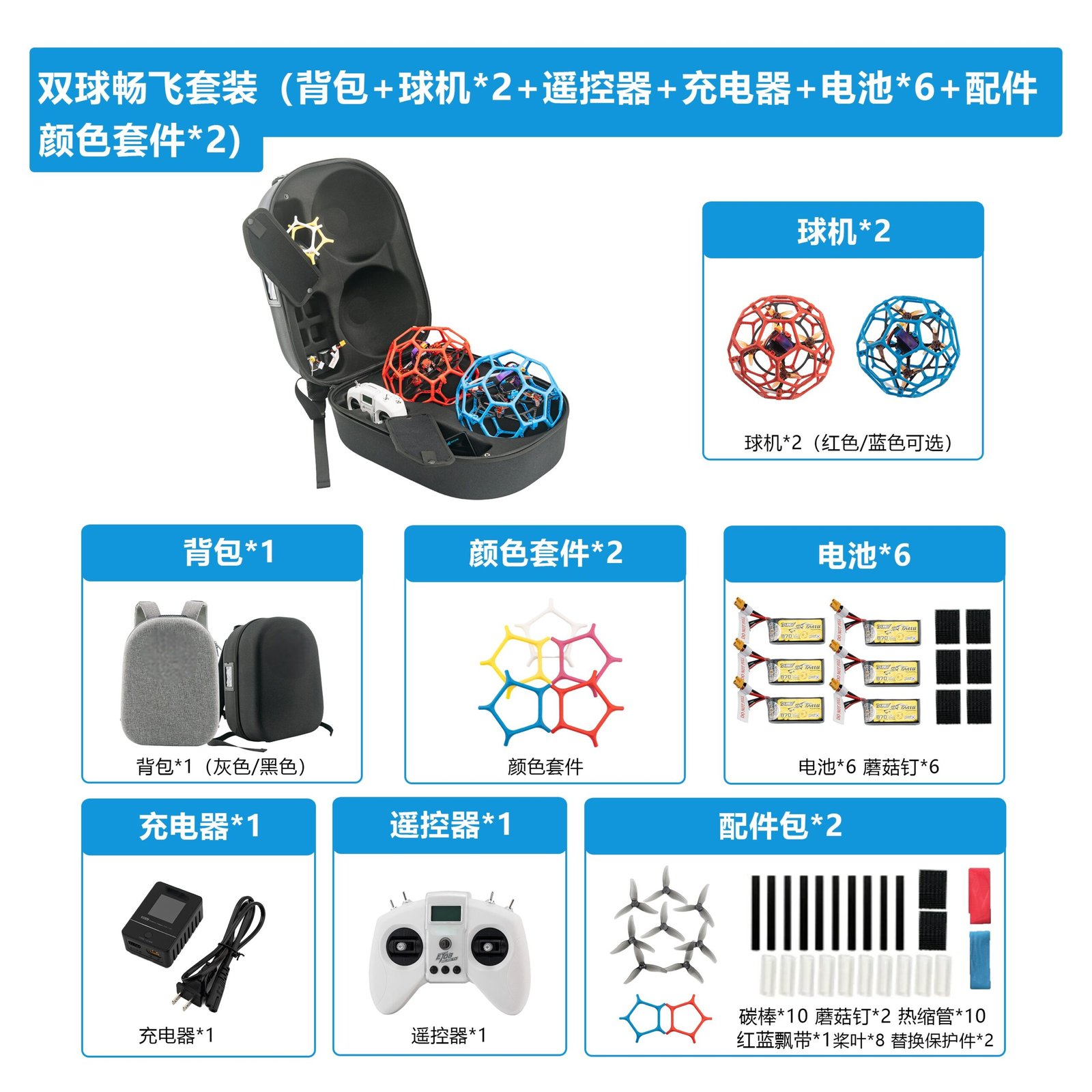
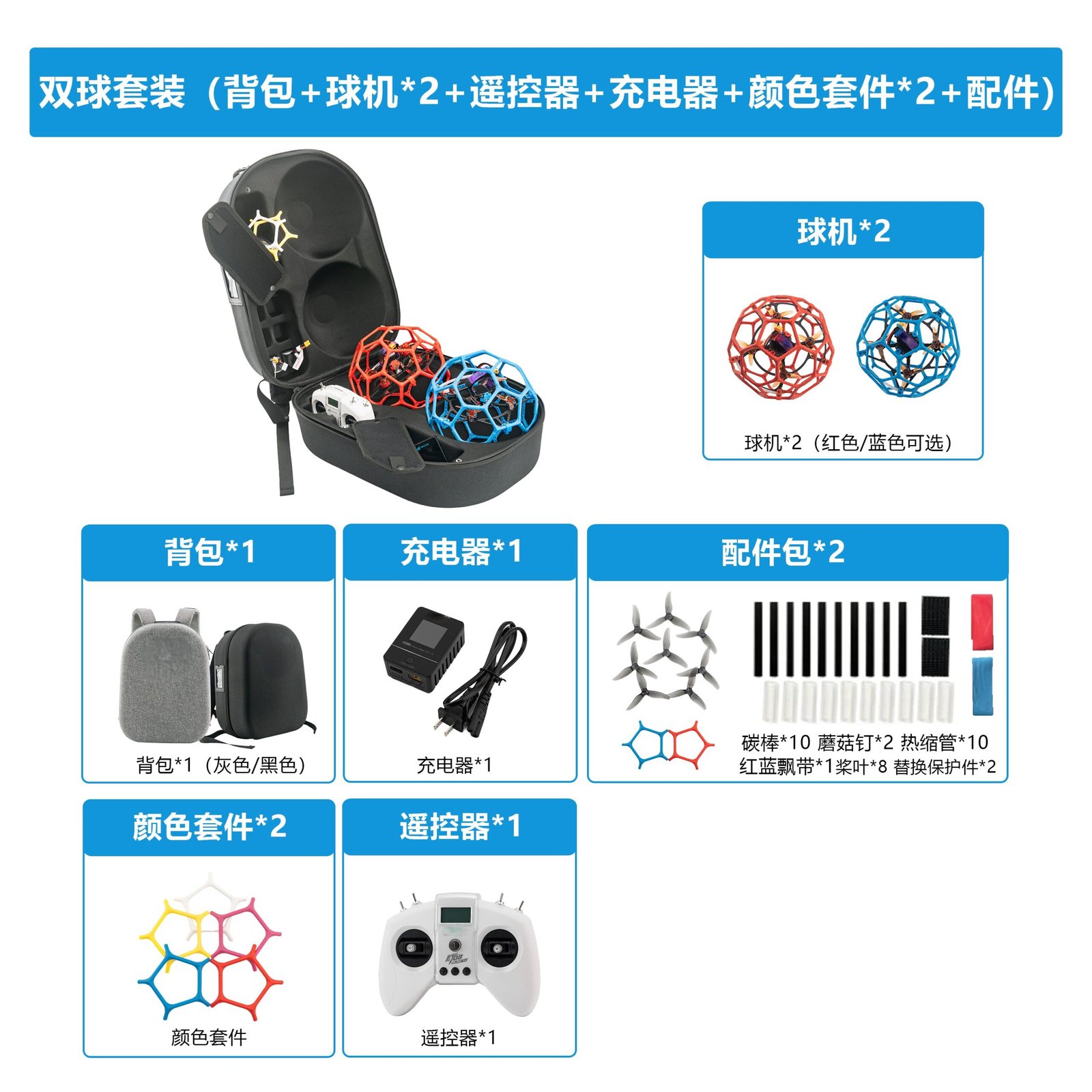
Drone soccer airframes are enclosed and flown in short, high-maneuver bursts, so their propulsion priorities differ from a long-range cruiser. Teams that also run long-range practice platforms should not assume the same KV works for both.
For program managers, the practical rule is to separate airframe classes in the parts catalogue: one approved motor and propeller set per class, one battery class per set. That reduces the risk of a student fitting a high-KV motor to a long-range airframe or vice versa. If your program mixes soccer and long-range airframes, ask your supplier to help map parts across both rather than relying on a single KV figure.
Planning a fleet purchase or a club build session? Talk to our team about your requirements and we can help you frame the right questions for your motor supplier.
Common mistakes when choosing KV for 10-inch long range
Choosing KV before choosing voltage
Cell count determines the voltage the KV multiplies. Pick the pack first, then narrow KV.
Copying a 5-inch race KV onto a 10-inch airframe
Smaller props need more RPM to make thrust. A KV suited to 5-inch props will over-speed a 10-inch prop.
Ignoring all-up weight
A heavier build needs more thrust and torque. If the aircraft struggles to hold altitude at cruise throttle, KV alone will not fix it.
Overlooking cooling and mounting
Long-range flights can run motors hot at low airflow. Bell design, ventilation and mounting stiffness affect real-world limits.
Assuming published numbers are comparable
Different suppliers measure thrust and current under different conditions. Ask for the test voltage, propeller and ambient temperature.
Buyer checklist for clubs, schools and procurement teams
- Define the airframe class, all-up weight target and required cruise endurance.
- Lock the battery class (cell count and capacity) before requesting motor quotes.
- Request thrust, current and temperature data at your intended test voltage and propeller.
- Confirm ESC current rating, firmware and connector compatibility with the motor.
- Ask about spare parts availability for a full season, not just initial delivery.
- Request a sample unit for bench verification before a fleet order.
- Get commercial terms — price validity, MOQ, lead time and warranty — confirmed in writing.
- Keep a one-page approved configuration sheet for each airframe class.
Frequently asked questions
Is lower KV always more efficient for long range?
No. Lower KV suits higher voltage or larger props, but efficiency depends on the whole system. A motor running far below its efficient band can be less efficient than a slightly higher KV at the same cruise speed.
Can I use the same KV on 6S and 8S?
Technically the motor will spin, but RPM and current rise with voltage. Unless the motor and ESC are rated for it, changing cell count at fixed KV risks overheating and component damage.
What KV is best for a 10-inch build carrying a camera?
There is no single value. Start from pack voltage and all-up weight, then choose a moderate KV that lets the aircraft cruise without excessive throttle or heat. Bench-test before buying fleet quantities.
Does KV affect flight time directly?
Indirectly. KV influences RPM for a given voltage, which influences current draw and heat. Flight time also depends on battery capacity, weight, propeller efficiency and flying style.
How do I verify a motor before ordering for a whole team?
Request a sample, run it on your intended propeller and battery at your target voltage, and record current and temperature over a realistic flight profile. Ask for the test method so results are comparable.
Where should I start if I run both drone soccer and long-range programs?
Treat them as separate airframe classes with separate approved motor, propeller and battery sets. Ask your supplier to help map compatible parts across both rather than forcing one KV to serve both.

Conclusion
For a 10-inch long-range build, start with cell count, then all-up weight and propeller, and only then choose KV. A 280–380 KV motor on 6S (or roughly 210–280 KV on 8S) is a reasonable planning band with 2810–3110-class stators, but the final answer comes from bench data at your voltage and propeller. Clubs and schools should standardize approved combinations per airframe class and verify samples before committing to fleet quantities.
Browse FPV motors and propulsion combo kits, and use our motor, propeller and battery matching guide to narrow your options. For OEM or program-level sourcing, our motor and propulsion matching service can help you define the right specification.
Request a Team Kit Quote with your airframe class, pack voltage and target endurance, and we will help you confirm the details before you order.